John Hawkwood is one of those figures who feels half historical, half myth. An Englishman who rose from modest beginnings to become the most feared mercenary captain in Italy, he spent decades fighting for and against the great city states. If medieval warfare had its freelancers, Hawkwood sat at the very top of the market.
What makes him compelling is not just his success, but his adaptability. He survived shifting alliances, brutal campaigns, and the deeply political world of Italian warfare. That alone says a great deal about the man.
Early Life and Rise to Power
Hawkwood was likely born in Essex around 1320. His early life is not well documented, which usually means he came from relatively humble origins. Some sources suggest he was the son of a tanner or small landholder, not a knight by birth.
His military career began during the Hundred Years’ War, probably fighting under Edward III. Like many English soldiers of the time, he learned his craft in the harsh campaigns across France. Discipline, aggression, and a willingness to exploit weakness became his trademarks.
After the Treaty of Brétigny, when large numbers of soldiers found themselves unemployed, Hawkwood did not retire quietly. He joined the mercenary companies roaming Europe and soon made his way to Italy, where his reputation would truly form.
The White Company
Hawkwood became the leader of the White Company, one of the most effective mercenary bands of the 14th century. Their name likely came from their polished armour or distinctive surcoats, though the exact origin remains debated.
This was not a loose band of opportunists. It was a disciplined, professional force known for:
- Tight formations and coordinated manoeuvres
- Effective use of dismounted men-at-arms
- A reputation for both brutality and reliability
Italian city states valued results above sentiment, and Hawkwood delivered.
Arms and Armour
Hawkwood fought during a period of transition in European warfare, where armour was becoming more refined and effective.
Typical Equipment of Hawkwood and His Men:
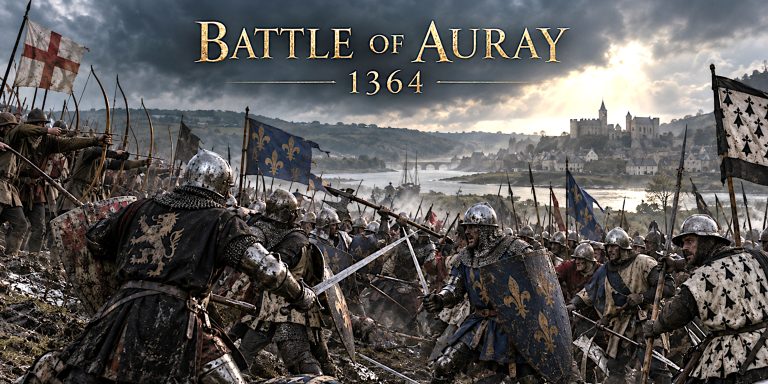
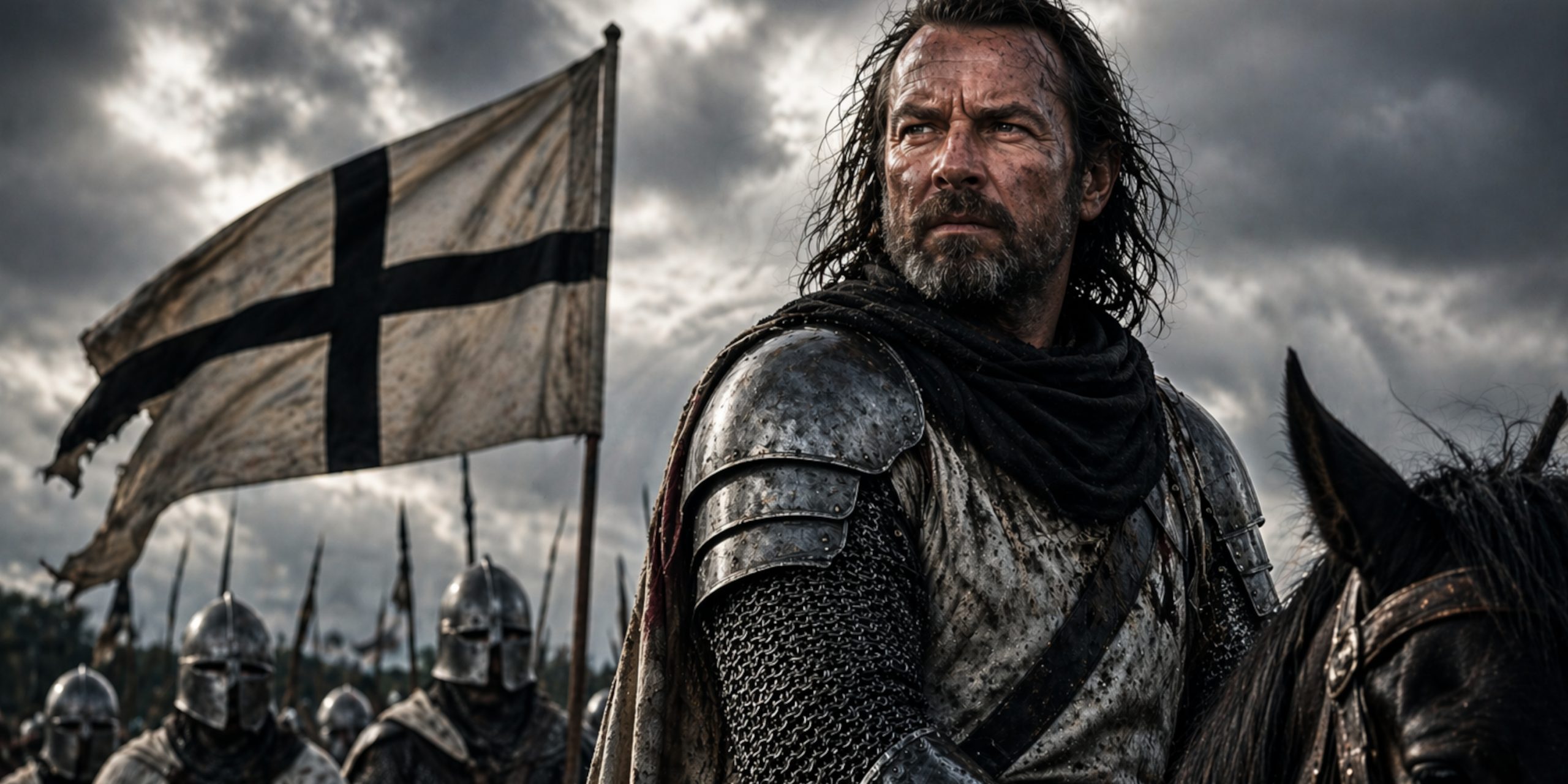
- Plate armour combined with mail, offering strong protection without excessive weight
- Bascinet helmets with visors, often paired with aventails
- Longswords for close combat, alongside daggers for finishing blows
- Lances for mounted engagements
- Shields used less frequently as plate armour improved
English influence remained visible. Many of Hawkwood’s troops favoured the pragmatic fighting style seen in the Hundred Years’ War, focusing on discipline rather than flamboyance.
There is also evidence that crossbows and early handguns appeared within mercenary forces in Italy during his later career, though these were not yet dominant.
Battles and Military Acumen
Hawkwood’s career is a long series of contracts, betrayals, and battlefield successes. He fought for Florence, Milan, the Papal States, and others, sometimes switching sides when it suited him.
Key Campaigns and Engagements
- His campaigns in Lombardy demonstrated his ability to manoeuvre quickly across difficult terrain
- Service to Florence brought him into conflict with Milanese forces in prolonged wars
- His involvement in the War of the Eight Saints showed his political as well as military importance
One of his most famous moments came during the defence of Florence. Faced with overwhelming odds, Hawkwood used terrain and delay tactics to avoid decisive defeat. It was not always about winning battles outright. Often it was about surviving long enough to shift the balance.
Tactical Strengths
- Mastery of defensive positioning
- Skilled use of terrain, especially rivers and marshland
- Flexibility in both mounted and dismounted combat
- A clear understanding of logistics, which many commanders ignored at their peril
He understood something quite modern. A mercenary captain did not need to win every battle. He needed to remain valuable.
Reputation and Personality
Hawkwood’s reputation was complicated. To some, he was a ruthless opportunist. To others, he was a disciplined professional in a chaotic world.
Italian chroniclers often describe him with a mixture of respect and suspicion. He could be harsh, even brutal, but he was rarely reckless. That balance made him dependable, which in mercenary terms meant everything.
There is a sense that Hawkwood saw war as a business first. Honour mattered, but survival and payment mattered more.
Artefacts and Where to See Them
Despite his fame, physical artefacts directly linked to Hawkwood are limited.
The most famous memorial is his painted funerary monument in Florence Cathedral. It shows him mounted, calm and commanding, almost idealised. It tells us as much about how Florence wanted to remember him as it does about the man himself.
Other material evidence comes from broader studies of mercenary equipment in Italy, including:
- Armour pieces from Italian and English workshops
- Weapons typical of mercenary companies in the 14th century
- Documentary records such as contracts and payment logs
These are scattered across museums in Italy and the UK, rather than tied to Hawkwood alone.
Archaeology and Historical Evidence
Archaeological work on 14th century battlefields in Italy has provided indirect insight into Hawkwood’s world.
Findings include:
- Arrowheads and crossbow bolts, showing mixed weapon usage
- Fragments of plate armour, confirming the spread of advanced protection
- Camp remains and logistical traces, highlighting the scale of mercenary operations
Written records remain the strongest source. Italian city states kept detailed financial and military accounts, and Hawkwood appears frequently in them. These documents reveal contracts, troop numbers, and the constant negotiation behind every campaign.
Later Life and Death
Hawkwood eventually entered Florentine service more permanently and was granted land and status. This was an unusual level of trust for a foreign mercenary.
He died in 1394 and was honoured with burial in Florence Cathedral, a remarkable end for a man who began life far from the centres of power.
It says something about his reputation that a city known for its suspicion of outsiders chose to commemorate him so prominently.
Legacy
Hawkwood helped define the role of the mercenary captain in late medieval Europe. He was not just a soldier, but a strategist, negotiator, and political actor.
His influence can be seen in:
- The professionalisation of mercenary companies
- The tactical blending of English and Italian military traditions
- The rise of condottieri as dominant figures in Italian warfare
There is a quiet irony in his story. An Englishman became one of the central figures in Italian military history, not by conquest, but by contract.
Takeaway
Looking at Hawkwood, I am always struck by how modern he feels. He navigated alliances, managed risk, and treated warfare as a profession rather than a calling.
There is no clean heroism here, and perhaps that is the point. Hawkwood thrived in a world where loyalty shifted as quickly as coin changed hands. He understood that reality and made it work for him.
History tends to celebrate kings and conquerors. Yet figures like Hawkwood remind us that the people who shape events are not always the ones wearing crowns.