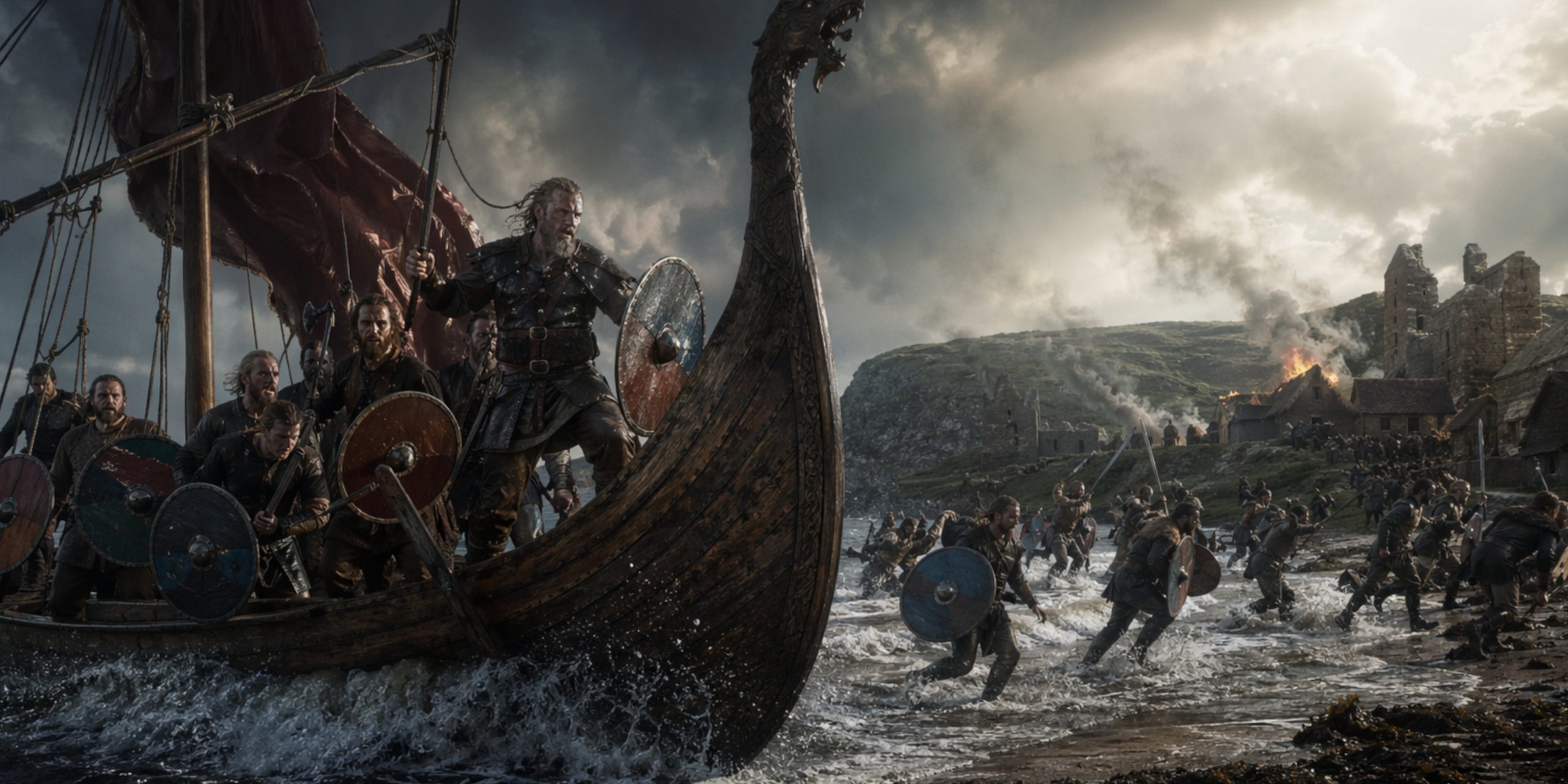
There is a temptation to picture the Vikings arriving in Ireland as a sudden storm, all fire and shouting, longships cutting through mist with theatrical precision. The truth is both quieter and more unsettling. Their presence unfolded in phases, sometimes brutal, sometimes pragmatic, and often entangled with Irish politics in ways that defy simple labels of invader and victim.
As a historian, I find Ireland’s Viking Age oddly intimate. The sources are patchy, occasionally biased, and yet they preserve moments that feel almost uncomfortably close. A monastery burned. A king betrayed. A harbour town rising where none stood before. It is history that breathes, though not always politely.
The First Raids
The earliest recorded Viking raid in Ireland appears in 795, when monasteries along the western coast were struck. These were not random targets. Monasteries held wealth, livestock, metalwork, and, perhaps most appealing of all, very little in the way of organised defence.
Places such as Lambay Island and Iona Abbey were attacked in the following years, part of a wider pattern across the Irish Sea.
The raids followed a rhythm:
- Fast coastal strikes
- Withdrawal before organised resistance
- Return the following season
It was efficient, calculated, and deeply disruptive. Monks recorded these attacks with a mixture of horror and resignation. One entry simply notes that the sea “vomited forth” heathens. It is vivid, if not entirely flattering.
From Raiders to Settlers
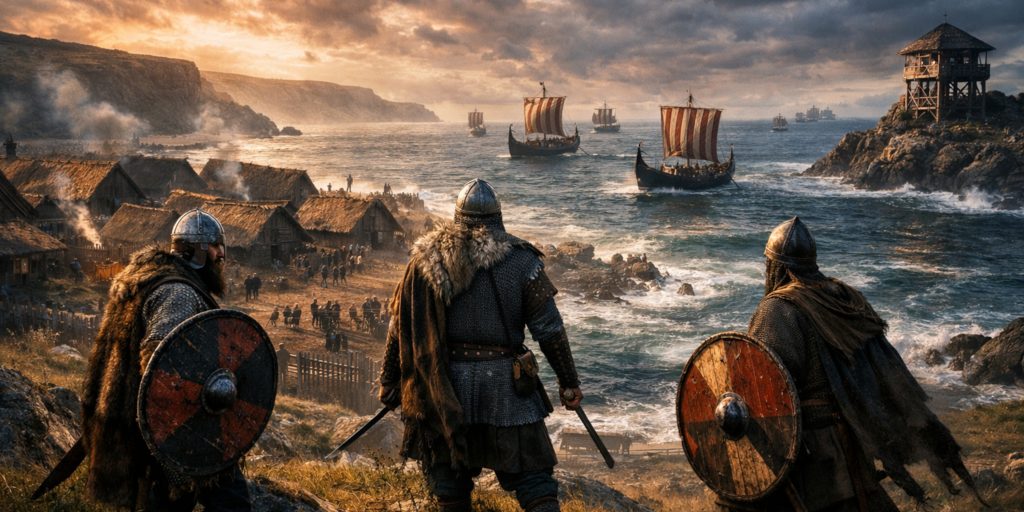
By the mid ninth century, something changed. The Vikings stopped leaving.
They established fortified camps known as longphorts, often positioned along rivers for easy access inland. These were not temporary shelters but strategic footholds. Over time, some evolved into permanent settlements.
The most significant of these was Dublin, founded as a longphort around 841. Others followed:
- Waterford
- Wexford
- Limerick
- Cork
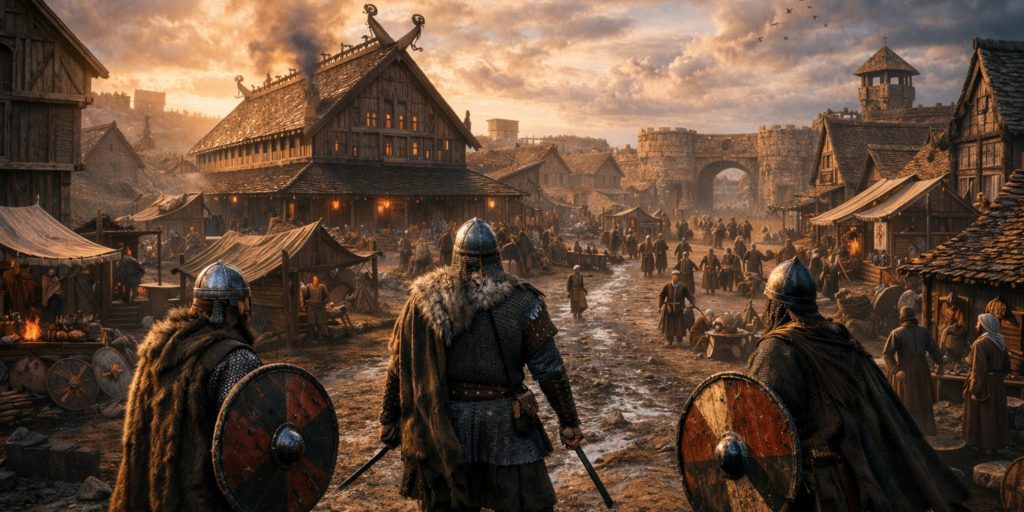
These towns became hubs of trade rather than mere raiding bases. Silver, slaves, textiles, and weapons passed through them. The Vikings, often accused of simple brutality, proved rather adept merchants when the mood took them.
It is worth noting that many Irish kings quickly recognised the usefulness of Viking allies. Hiring former raiders to fight your neighbour may seem questionable, but it was effective.
Viking Kings in Ireland
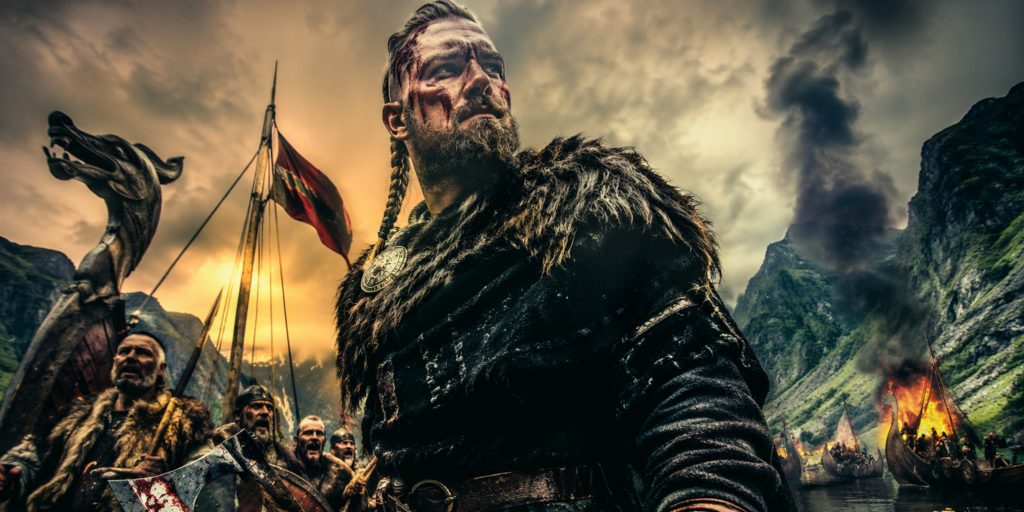
The emergence of Norse kings in Ireland complicates the narrative further. These were not isolated warlords but figures embedded in a wider Norse world.
Among the most prominent:
- Amlaíb Conung, who appears in Irish annals as a powerful ruler with connections to Scandinavian and British networks
- Ímar, associated with the Uí Ímair dynasty
- Sitric Cáech
These kings ruled Dublin as a Norse kingdom, but their authority was rarely secure. Alliances shifted constantly. A king might be driven out one year and restored the next.
It is tempting to admire their resilience. It is equally fair to say they spent a great deal of time fighting each other.
Interaction with Irish Kingdoms
The Vikings did not simply oppose the Irish. They became part of the political landscape.
Irish kings used Viking forces as mercenaries. Vikings adopted aspects of Irish culture. Intermarriage blurred distinctions. Over time, a hybrid Norse Gaelic identity emerged, particularly in coastal towns.
This was not peaceful integration. Battles were frequent, loyalties unreliable. Yet it produced something lasting. Trade networks expanded. Urban life developed in ways previously rare in Ireland.
One cannot help noticing that conflict often accelerates innovation, though that is a rather uncomfortable truth.
The Battle of Clontarf
The most famous confrontation came in 1014 at the Battle of Clontarf.
Led by Brian Boru, Irish forces faced a coalition that included Viking contingents from Dublin and overseas.
The outcome is often framed as a decisive Irish victory over the Vikings. This is a little too neat. The battle was bloody, chaotic, and politically complex. Brian himself was killed, which rather complicates the idea of triumph.
What it did mark was the decline of Viking political dominance in Ireland. Their settlements endured, but their role shifted. They became participants in Irish society rather than its most disruptive outsiders.
Archaeology and What Remains
Archaeology has transformed our understanding of Viking Ireland. Excavations at Wood Quay revealed a remarkably detailed picture of daily life in Viking Dublin.
Finds include:
- Silver hoards and coinage
- Tools for crafting and trade
- Imported goods from as far as the Middle East
- Evidence of shipbuilding and repair
These discoveries show a society far more complex than the raiders of popular imagination. They were traders, craftsmen, and settlers with global connections.
There is something quietly humbling about holding a fragment of worked silver and realising it travelled further a thousand years ago than many people do now.
Legacy of the Vikings in Ireland
The Viking legacy in Ireland is visible in its cities, its trade routes, and even its language. Place names, especially along the coast, retain Norse roots.
More importantly, the Vikings helped shape Ireland’s transition toward urbanisation. Before their arrival, Ireland was largely rural, structured around kingdoms and monastic centres. Afterward, towns like Dublin became enduring centres of commerce and power.
They arrived as opportunists. They stayed as neighbours, rivals, and occasionally rulers. It is not a neat story, but then history rarely is.
If anything, the Viking Age in Ireland reminds us that identities are rarely fixed. They shift, adapt, and sometimes collide in ways that leave marks long after the shouting has stopped.