Vikings have a habit of turning up in history with an axe in one hand and a saga in the other. Some were kings, some were raiders, some were explorers, and a few managed the remarkable trick of being all three before breakfast. The difficulty is that the further back one goes, the more the line between fact and legend starts to wobble like a longship in rough weather.
Still, enough survives in chronicles, sagas, archaeology and contemporary accounts to sketch out the men, and occasionally women, who shaped the Viking Age.
1. Ragnar Lothbrok
Lived: Possibly c. 820-865
Sources: Ragnars saga loðbrókar, Tale of Ragnar’s Sons, Gesta Danorum, Frankish chronicles
Modern portrayal: Vikings (History Channel), numerous novels and films
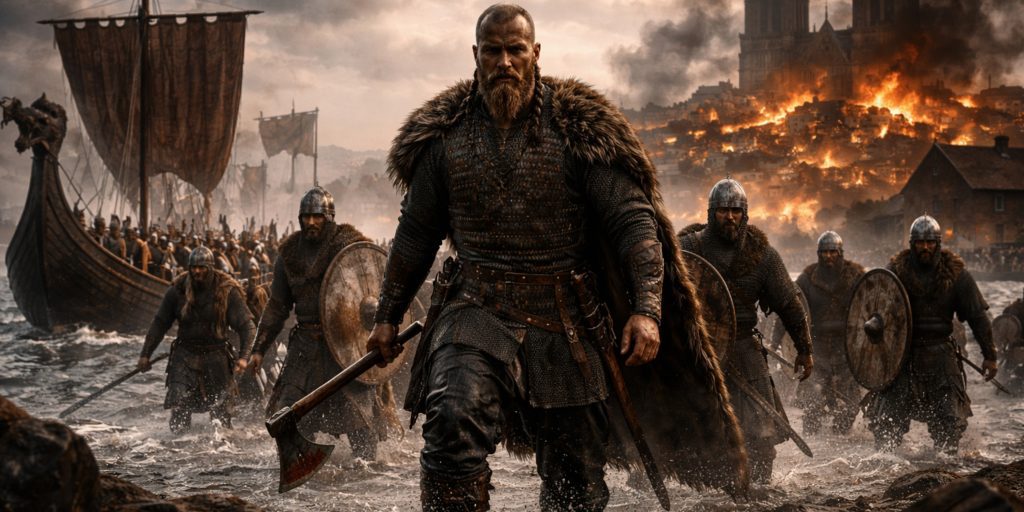
Ragnar Lothbrok remains the best-known Viking of all, despite the fact that historians still cannot agree whether he was a single person. He may instead represent several 9th-century warlords woven together by later saga writers into one larger-than-life figure.
According to Norse tradition, Ragnar raided England and Francia, led the siege of Paris in 845, and fathered some of the most feared Viking leaders of the age, including Bjorn Ironside and Ivar the Boneless. The Anglo-Saxon and Frankish sources are frustratingly vague, but there is enough overlap to suggest that a powerful Danish leader inspired the later stories.
Ragnar is said to have died after being captured by King Ælla of Northumbria and thrown into a pit of snakes. Whether that happened or not, the story gave medieval writers precisely the dramatic ending they wanted.
“How the little pigs would grunt if they knew how the old boar suffers.”
That line, attributed to Ragnar shortly before his death, has outlived almost everything else about him.
2. Leif Erikson
Lived: c. 970–1020
Sources: Saga of the Greenlanders, Saga of Erik the Red
Modern portrayal: Vikings: Valhalla (Netflix)
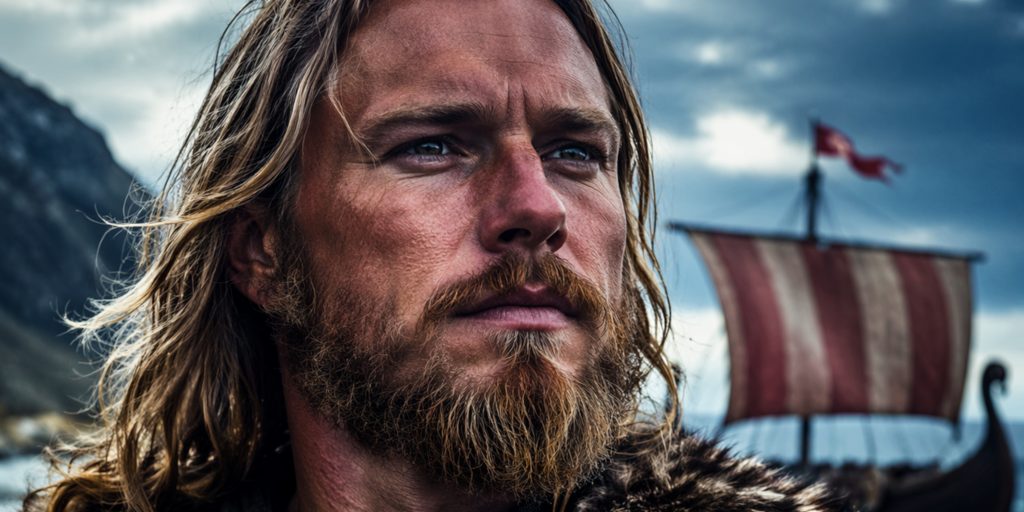
Leif Erikson was not remembered for conquest but for exploration. Around the year 1000, he sailed west from Greenland and reached North America, nearly five centuries before Columbus.
The sagas call this new land Vinland. Most historians believe Leif landed somewhere in Newfoundland or nearby Atlantic Canada. Archaeological excavations at L’Anse aux Meadows in Newfoundland have confirmed the presence of Norse settlers there.
Leif was the son of Erik the Red, who founded the Norse colonies in Greenland. One suspects that in this family, being told to stay at home and behave was never especially likely to work.
Unlike many Viking figures, Leif’s story is strengthened by archaeology. Timber buildings, iron-working evidence and Norse artefacts all point to a genuine Norse presence in North America.
Why Leif Matters
Leif showed that Viking exploration was not confined to raiding and conquest. Viking ships connected Scandinavia to Russia, Byzantium, Baghdad, Greenland and North America. Few societies of the early medieval world ranged so widely.
3. Harald Hardrada
Lived: 1015–1066
Sources: Heimskringla, Morkinskinna, Anglo-Saxon sources
Modern portrayal: Historical documentaries, Vikings: Valhalla references
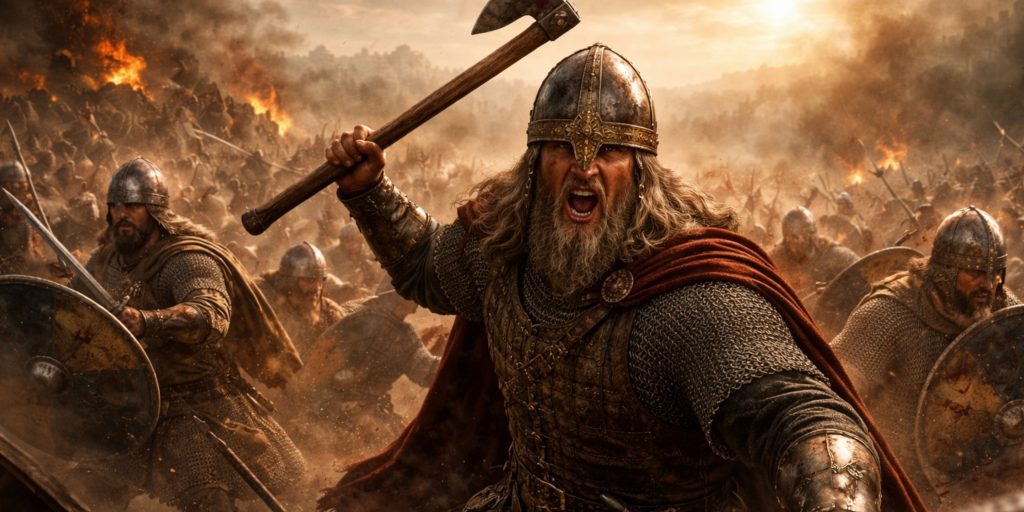
If one were forced to choose the last great Viking, Harald Hardrada would be difficult to beat. He lived in the 11th century, when the Viking Age was already beginning to fade, yet he seemed determined to wring every last drop of adventure out of it.
Harald fought as a mercenary in the Varangian Guard of the Byzantine Empire, campaigned in Sicily and the eastern Mediterranean, returned to Norway, and eventually became king.
He invaded England in 1066, claiming the throne. For a brief moment he looked close to success. He defeated the northern English earls at Fulford, then marched on York. A few days later he met Harold Godwinson at Stamford Bridge and was killed.
The defeat at Stamford Bridge is often described as the end of the Viking Age. That is perhaps slightly too neat for real history, but it does feel like the closing scene. Harald died with sword in hand, thousands of miles from Constantinople, after a career that reads like three separate epics stitched together.
Battles
- Battle of Stiklestad, 1030
- Campaigns with the Varangian Guard
- Battle of Fulford, 1066
- Battle of Stamford Bridge, 1066
Contemporary Quote
“Then King Harald Sigurdsson was struck in the throat by an arrow.”
The Norse sagas report Harald’s death with a brutal simplicity. No flourish, no speech, just one arrow and the end of an age.
4. Ivar the Boneless
Lived: Mid-to-late 9th century
Sources: Tale of Ragnar’s Sons, Anglo-Saxon Chronicle, Irish annals
Modern portrayal: Vikings (History Channel)
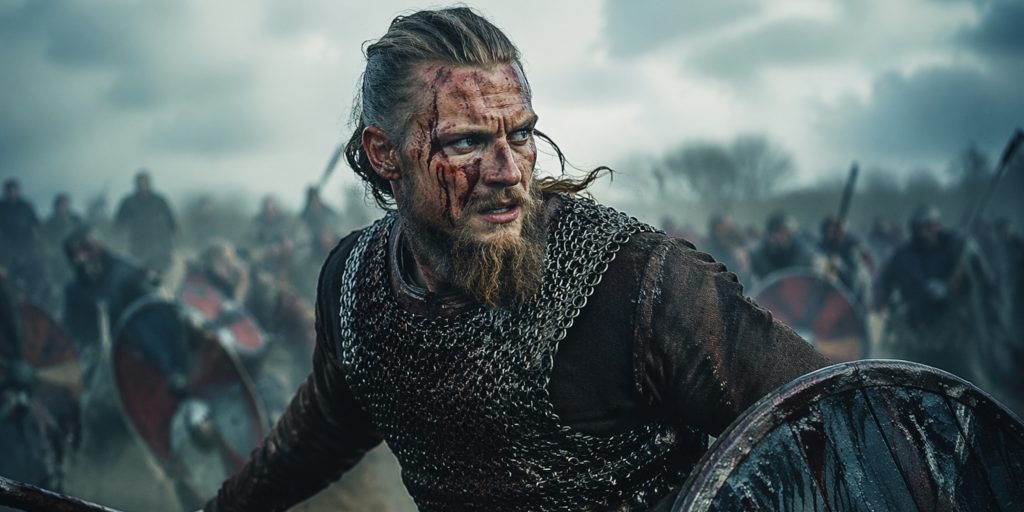
Ivar the Boneless was among the most formidable Viking leaders of the 9th century. Unlike many famous Vikings, he appears in several contemporary sources, which makes him more solidly historical.
He was one of the commanders of the Great Heathen Army that landed in England in 865. Over the following years, the army conquered Northumbria, East Anglia and much of Mercia. Ivar appears to have been less interested in quick plunder and more interested in building a durable Norse power base.
The meaning of his nickname remains debated. Some think it referred to a physical disability, perhaps brittle bone disease. Others suggest it described unusual flexibility, or simply that he was a man who preferred cunning to brute force.
Contemporary chroniclers feared him. The Irish annals later described him as the “king of the Norsemen of all Ireland and Britain”. That is not the sort of title handed out lightly.
Battles
- Capture of York, 866
- Defeat of Kings Ælla and Osberht of Northumbria
- Campaigns in Mercia and East Anglia
- Possible involvement in Dublin and Ireland after 870
Contemporary Quote
“The Northmen overran all the land.”
The Anglo-Saxon Chronicle is often terse to the point of sounding exhausted, but its description of Ivar and the Great Heathen Army captures the sense of alarm spreading through England.
5. Bjorn Ironside
Lived: 9th century
Sources: Tale of Ragnar’s Sons, Frankish annals
Modern portrayal: Vikings (History Channel)
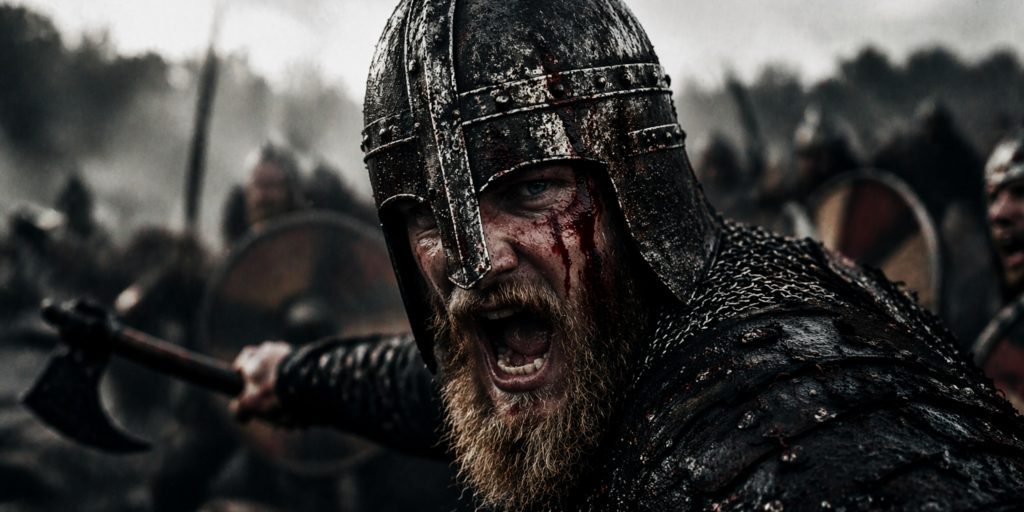
Bjorn Ironside, usually described as one of Ragnar’s sons, became famous for carrying Viking warfare far beyond northern Europe.
Frankish sources mention a Viking leader named Bjorn who raided Francia before leading an expedition into the Mediterranean. Alongside the chieftain Hastein, he attacked parts of Spain, North Africa and Italy.
The most famous story claims that Bjorn entered the town of Luna by pretending to be dead and being carried inside in a coffin. Once within the walls he leapt out and opened the gates. It sounds ridiculous, which is exactly why medieval chroniclers loved it.
6. Erik the Red
Lived: c. 950-1003
Sources: Saga of Erik the Red, Saga of the Greenlanders
Modern portrayal: Exploration documentaries and historical dramas
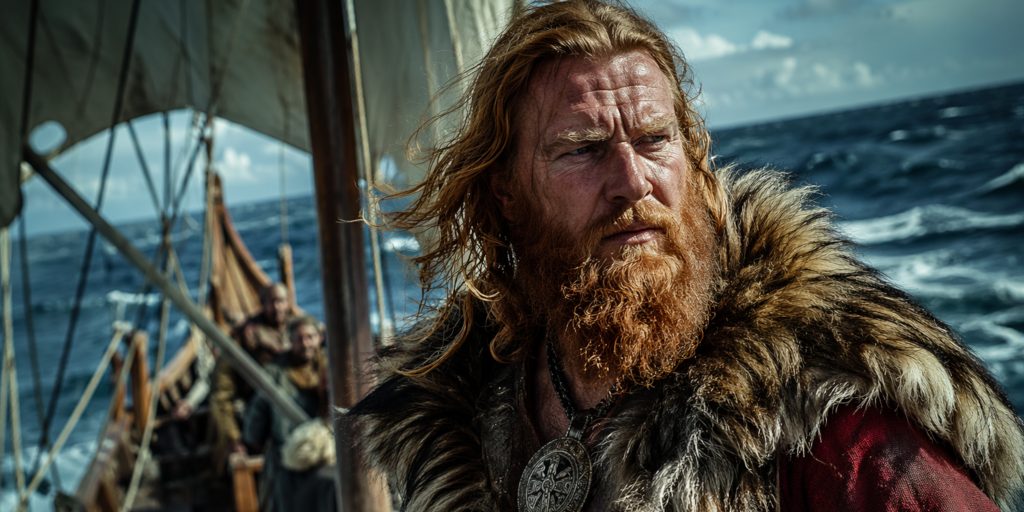
Erik the Red founded the Norse settlements in Greenland after being exiled from Iceland for killing several men. Faced with banishment, Erik did what many Vikings did when in trouble. He sailed somewhere else and started again.
Having discovered Greenland, Erik returned to Iceland and persuaded settlers to join him. Calling the island Greenland was either clever marketing or the greatest act of optimism in medieval history.
“People will be attracted there if the land has a good name.”
The Greenland settlements survived for centuries, and their ruins still remain.
7. Rollo of Normandy
Lived: c. 860-930
Sources: Gesta Normannorum Ducum, Frankish chronicles
Modern portrayal: Vikings (History Channel)
Rollo began his career as a Viking raider in Francia, but he became famous for something far more unusual. He settled.
In 911 the Frankish king Charles the Simple granted him land around Rouen in exchange for protecting the region from other Vikings. That territory became Normandy.
Rollo’s descendants eventually included William the Conqueror. In other words, the descendants of a Viking raider eventually conquered England.
8. Freydís Eiríksdóttir
Lived: Early 11th century
Sources: Saga of the Greenlanders, Saga of Erik the Red
Modern portrayal: Vikings: Valhalla (Netflix)
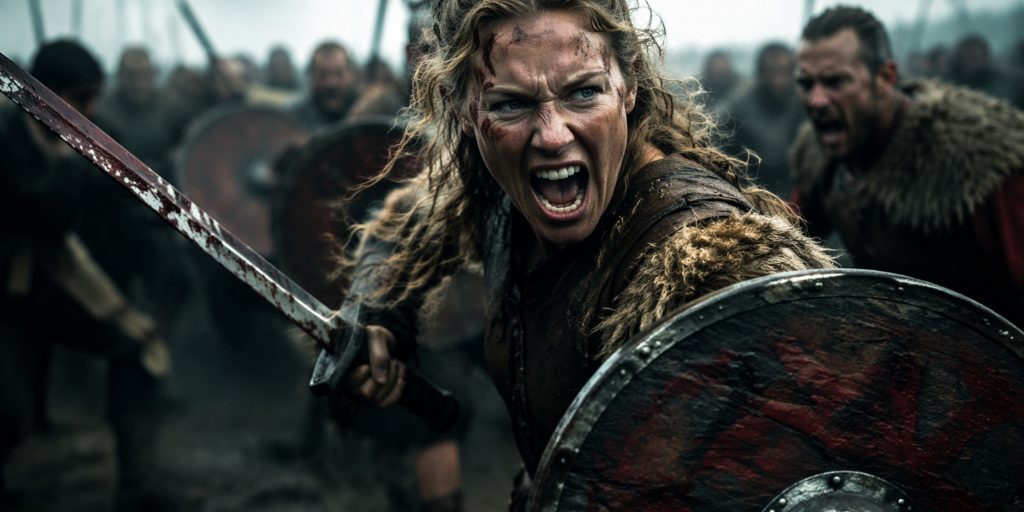
Freydís Eiríksdóttir, daughter of Erik the Red, is one of the most striking women in the Viking sagas.
According to the Saga of the Greenlanders, Freydís was heavily pregnant when hostile Skrælings attacked the Norse camp in Vinland. She picked up a sword, bared her breast and frightened the attackers away.
How much of the story is true is impossible to know, but Freydís has endured because she represents the fierce independence that saga writers admired.
9. Gunnar Hamundarson
Lived: 10th century
Sources: Njáls saga
Modern portrayal: Icelandic literature and stage adaptations
Gunnar Hamundarson was an Icelandic warrior and chieftain remembered through Njáls saga. Although less famous outside Scandinavia, he is one of the great heroes of Norse literature.
Gunnar was renowned for his skill with spear and bow, but also for his tragic fate. Outlawed after a feud, he was meant to leave Iceland. Instead he looked across his farm and decided he could not bear to go.
“Fair is the hillside, so fair that it has never seemed so fair to me.”
He stayed, and was eventually killed in his home.
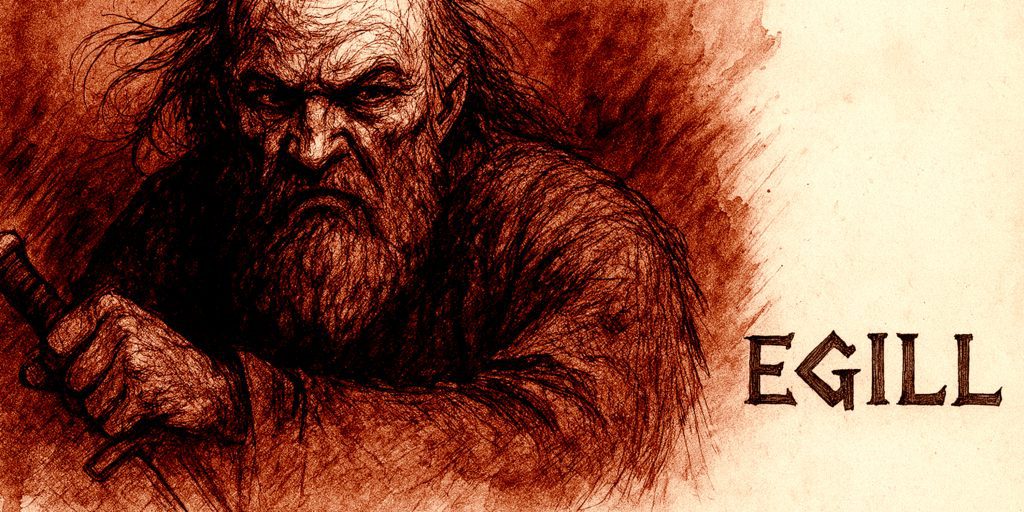
10. Egill Skallagrímsson
Lived: c. 904-995
Sources: Egils saga
Modern portrayal: Literary and academic works
Egill Skallagrímsson was both warrior and poet, which made him unusual even by Viking standards.
He fought in Scandinavia and England, but he is best remembered through his poetry and his ferocious temper. Egill’s saga contains killings, feuds, exile, revenge and moments of surprisingly moving verse.
He captures something essential about the Viking world. Its heroes could be brutal in battle, yet also capable of remarkable intelligence and artistry.
Honourable Mentions
- Aud the Deep-Minded – Aud the Deep-Minded was one of the most important women of the Viking Age. Widowed after the death of her husband in Scotland, she travelled to Iceland and established a powerful family there. Unlike many Viking figures, Aud is remembered not for battle but for leadership, migration and settlement. The sagas describe her as intelligent, wealthy and deeply respected. Her story is a reminder that the Viking Age was shaped not only by warriors, but also by the people who built new communities after the fighting was over.
- Sigurd Snake-in-the-Eye – Sigurd Snake-in-the-Eye was said to be one of Ragnar Lothbrok’s sons. His strange nickname came from a mark in his eye that supposedly resembled a serpent. The sagas place him among the leaders who avenged Ragnar’s death in England. Beyond that, very little can be proved with confidence. Sigurd survives less as a historical figure than as part of the wider Ragnar legend.
- Sweyn Forkbeard – Sweyn Forkbeard was the father of Cnut the Great and the first Viking king to rule England. After years of raiding and invasion, Sweyn conquered England in 1013 and forced King Æthelred to flee. His triumph did not last long. Sweyn died only weeks later, perhaps after falling from his horse or suffering a stroke. Even so, his brief victory laid the foundations for Cnut’s later empire.
- Cnut the Great – Cnut the Great was arguably the most successful Viking ruler of all. By the early 11th century he controlled England, Denmark and Norway, creating what historians call the North Sea Empire. Unlike earlier Viking leaders, Cnut ruled not simply through force but through administration, diplomacy and law. He worked with the English church, issued coins, and governed through local earls. The old story of Cnut ordering the tide not to come in has often been misunderstood. He was not trying to prove he could command the sea. He was trying to show his courtiers that kings are not all-powerful. Frankly, it is one of the few moments in medieval history when a ruler seems to have understood the dangers of his own publicity.
- Harald Bluetooth – Harald Bluetooth was king of Denmark and helped unite Denmark and Norway. He is best known for introducing Christianity to Denmark. The Jelling runestones, raised in his honour, remain among the most important monuments of the Viking Age. They describe Harald as the king who “won all of Denmark and Norway and made the Danes Christian”. Rather improbably, his name survives today in Bluetooth technology, because modern developers liked the idea of a ruler who united different things.
Summary Table
| Name | Century | Primary Sources | Modern Portrayals |
|---|---|---|---|
| Ragnar Lodbrok | 9th | Tale of Ragnar’s Sons, Krákumál | Vikings (TV) |
| Leif Erikson | 10th–11th | Saga of the Greenlanders | Vikings: Valhalla (TV) |
| Harald Hardrada | 11th | Heimskringla | Vikings: Valhalla (TV) & numerous Documentaries |
| Ivar the Boneless | 9th | Anglo-Saxon Chronicle | Vikings (TV) |
| Bjorn Ironside | 9th | Frankish annals | Vikings (TV) |
| Erik the Red | 10th | Saga of Erik the Red | Historical references |
| Rollo of Normandy | 9th–10th | Frankish chronicles | Vikings (TV) |
| Freydís Eiríksdóttir | 11th | Vinland sagas | Vikings: Valhalla (TV) |
| Egill Skallagrímsson | 10th | Egils saga | Academic circles |
| Gunnar Hamundarson | 10th | Njáls saga | Icelandic literature |
The Seven Swords Takeaway
The most famous Vikings in history still stand between fact and legend. Ragnar Lothbrok may never be fully untangled from myth. Harald Hardrada and Cnut the Great are far easier to pin down. Leif Erikson and Erik the Red are strengthened by archaeology.
What unites them is that they changed the medieval world. Viking fleets reached from North America to Byzantium. Their raids terrified kingdoms, their settlements reshaped countries, and their descendants founded dynasties.
For all the exaggeration that later ages attached to them, the truth is impressive enough. Few societies travelled so far, fought so widely, or left such a long shadow behind them.
Watch the documentary: