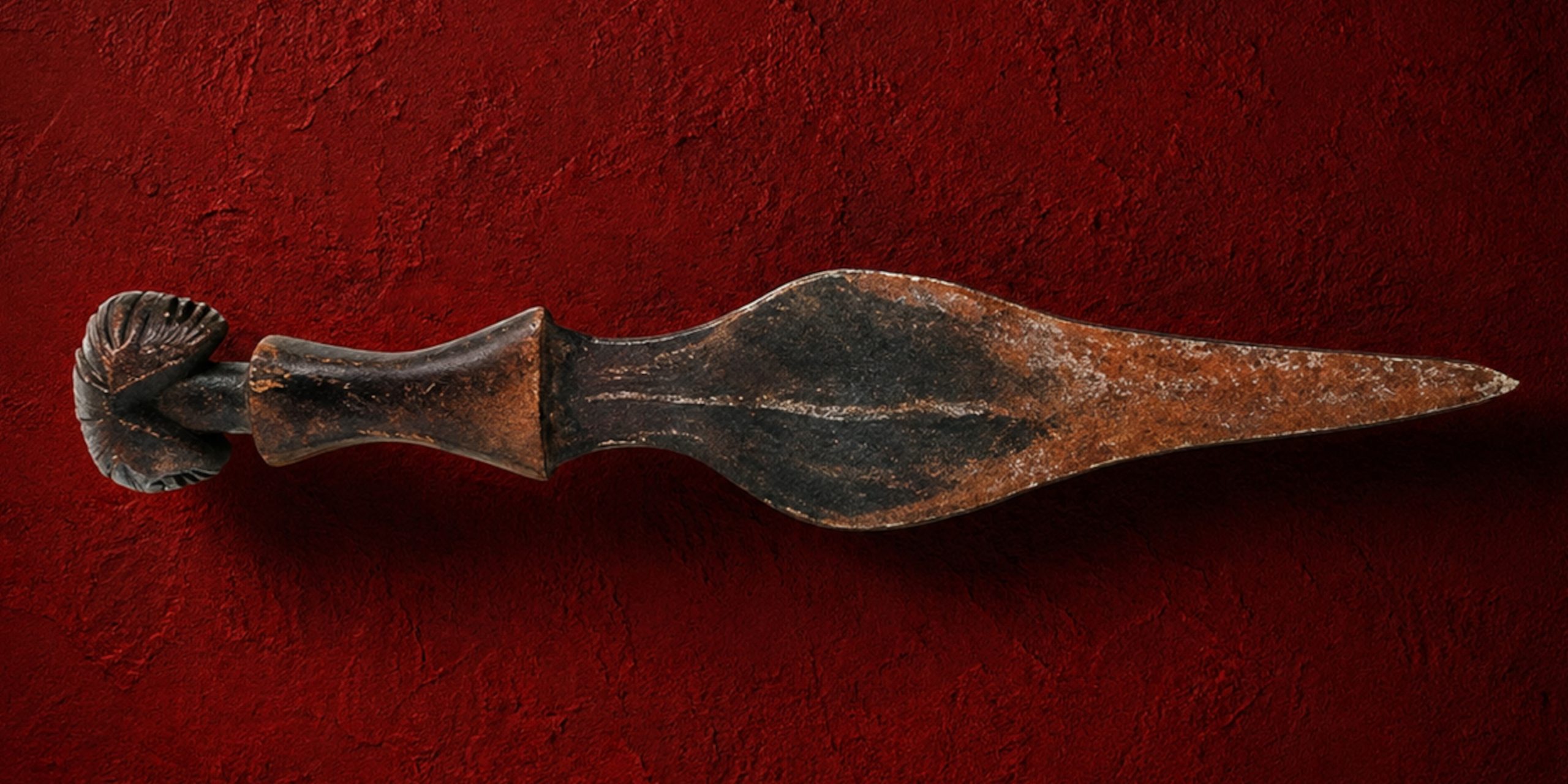
The Songye ceremonial sword sits somewhere between weapon, sculpture, and status symbol. Originating from the Songye people of the Democratic Republic of Congo, it was never just about cutting power. These blades carried authority. They were tied to leadership, ritual, and identity, often held by chiefs or high ranking figures.
At first glance, the exaggerated shapes can feel almost abstract. Spend a little more time with one, and it becomes clear these forms are deliberate, expressive, and loaded with meaning.
Specifications
| Feature | Details |
|---|---|
| Blade Type | Broad, often leaf-shaped or flared |
| Blade Length | Typically 30 to 60 cm |
| Overall Length | Around 50 to 80 cm |
| Material | Iron or steel blade, wooden hilt |
| Hilt Style | Anthropomorphic or geometric carvings |
| Edge | Usually single edged, sometimes symbolic rather than functional |
| Balance | Forward weighted, though not optimised for combat |
Key characteristics:
- Bold, stylised blade profiles rather than practical symmetry
- Carved wooden handles, often depicting human or ancestral forms
- Decorative elements such as incisions, pigments, or metal inlays
- Strong visual emphasis on identity over utility
History and Evolution
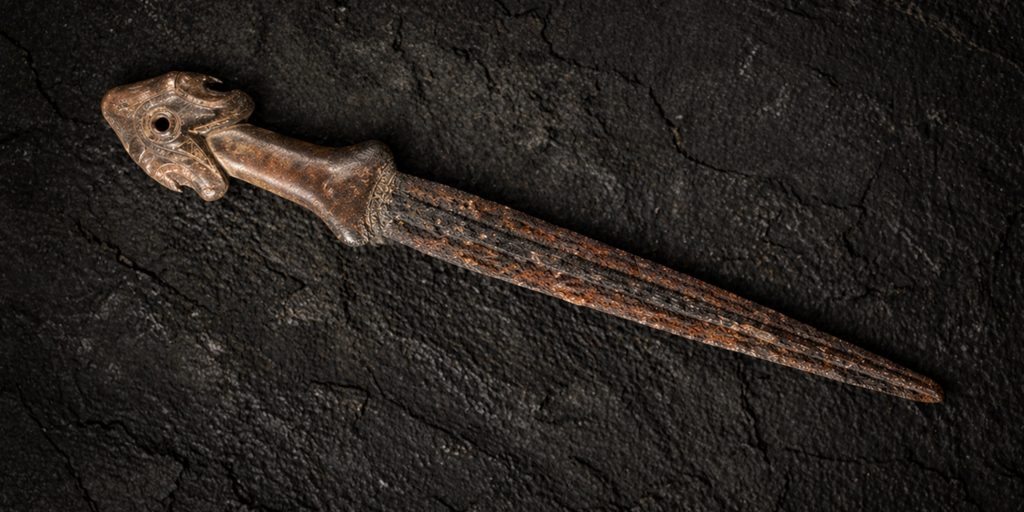
The Songye people developed a rich artistic tradition where objects carried spiritual weight. Swords formed part of that system. While Central Africa had a wide range of functional weapons, the Songye approach leaned heavily into symbolism.
Early examples suggest a connection to prestige and hierarchy. These were not issued to warriors in bulk. Instead, they were tied to authority, often appearing in ceremonies, initiations, or displays of power.
Over time, the designs became more elaborate. Blades widened and curved in unusual ways, while hilts evolved into carved representations of ancestors or spiritual figures. By the nineteenth century, many examples prioritised visual impact over battlefield practicality.
European contact introduced new metals and trade dynamics, but the core identity of the sword remained intact. Even when materials changed, the symbolic language did not.
Advantages and Disadvantages
Advantages
- Strong cultural and symbolic value
- Distinctive design, instantly recognisable
- High artistic craftsmanship in both blade and hilt
- Significant appeal for collectors of African artefacts
Disadvantages
- Limited practical combat effectiveness
- Balance and ergonomics vary widely
- Authentic examples can be difficult to verify
- Market flooded with later replicas and tourist pieces
Comparison with Similar Weapons
| Weapon | Region | Key Difference |
|---|---|---|
| Kuba Short Sword | Central Africa | More restrained blade shape, less exaggerated symbolism |
| Ngombe Ceremonial Knife | Congo Basin | Often smaller, with more emphasis on ritual use than display |
| Mangbetu Knife | Northeast Congo | Finer, elongated forms with different aesthetic priorities |
| Throwing Knives (Hunga Munga) | Central Africa | Functional projectile weapons, unlike the largely symbolic Songye sword |
The Songye sword stands apart for its sculptural quality. Many African blades blend function and form, but this one leans heavily into identity and presence. It is closer to a carved artefact than a battlefield tool.
Legacy
Today, the Songye ceremonial sword is recognised as part of the broader canon of African art. It appears in major collections, often displayed alongside masks and figures rather than grouped strictly as weaponry.
Its influence shows up in modern interpretations of African design, especially in sculpture and mixed media work. For historians, it offers a clear example of how weapons can shift from practical tools into symbols of power and belief.
Where to See
Authentic Songye swords can be found in major museum collections, particularly those focused on African art:
- The British Museum
- Musée du quai Branly
- Metropolitan Museum of Art
These institutions often rotate displays, so availability can vary. When on show, they are usually presented within cultural or artistic contexts rather than arms and armour galleries.
Collector’s Guide
What to look for
- Age indicators such as patina on the blade and wear on the hilt
- Hand carved details rather than machine finished symmetry
- Provenance, ideally with documentation or prior collection history
- Natural ageing in wood and metal, not artificially distressed surfaces
Common pitfalls
- Tourist market replicas from the twentieth century onward
- Over restored pieces that lose original character
- Misattributed items labelled broadly as “African ceremonial sword”
Auction Prices
| Type | Typical Price Range |
|---|---|
| Decorative replicas | £50 to £300 |
| Mid 20th century pieces | £300 to £1,000 |
| Authentic 19th century examples | £1,500 to £5,000 |
| High quality, well provenanced pieces | £6,000 to £12,000+ |
Prices depend heavily on provenance, condition, and artistic quality. A striking hilt carving can push a piece well beyond typical estimates.
Takeaway
The Songye ceremonial sword does not behave like a conventional weapon, and that is the point. It communicates authority, heritage, and artistic identity in a single object. If you approach it expecting battlefield efficiency, it feels strange. If you treat it as a cultural statement, it starts to make a lot more sense.
For collectors and historians, it offers something rare, a blade that tells a story without needing to be swung.