Denis Villeneuve’s sequel delivers extraordinary science fiction, but its most unsettling achievement is making you question the hero you have been cheering for.
There is a point in Dune: Part Two when Paul Atreides begins to sound less like someone you want to rescue and more like someone you should probably stop giving a microphone.
That shift is what makes Denis Villeneuve’s film so compelling. The sandworms are magnificent. The battles have weight. The costumes suggest that even an interplanetary dictatorship needs an excellent tailoring department. Yet beneath all that scale sits a nastier, more interesting story about how grief, faith and political ambition can become indistinguishable.
Picking up after Dune (2021), this second instalment gives the earlier film’s careful groundwork a powerful dramatic purpose. It is more immediate and emotionally involving, although its rush towards the final confrontation leaves some characters fighting for breathing space.
Spoiler note: This review discusses the film’s central themes and character development, with a clearly marked section on the ending.
What Is Dune: Part Two About?

Following the destruction of House Atreides, Paul and his mother, Lady Jessica, seek refuge among the Fremen of Arrakis. Paul learns to survive in the desert, grows closer to Chani and joins the campaign against Harkonnen rule.
His position is complicated by a religious prophecy that some Fremen believe he fulfils. That belief offers protection and influence, but Paul’s visions suggest that accepting it could unleash violence far beyond Arrakis.
The question becomes increasingly uncomfortable: can he avenge his family and help the Fremen without turning their struggle into an instrument of his own power?
You should watch the first film before this one. Villeneuve offers little introductory hand-holding, and the emotional stakes depend heavily on knowing what Paul has lost.
Paul Atreides Is a Hero Worth Worrying About
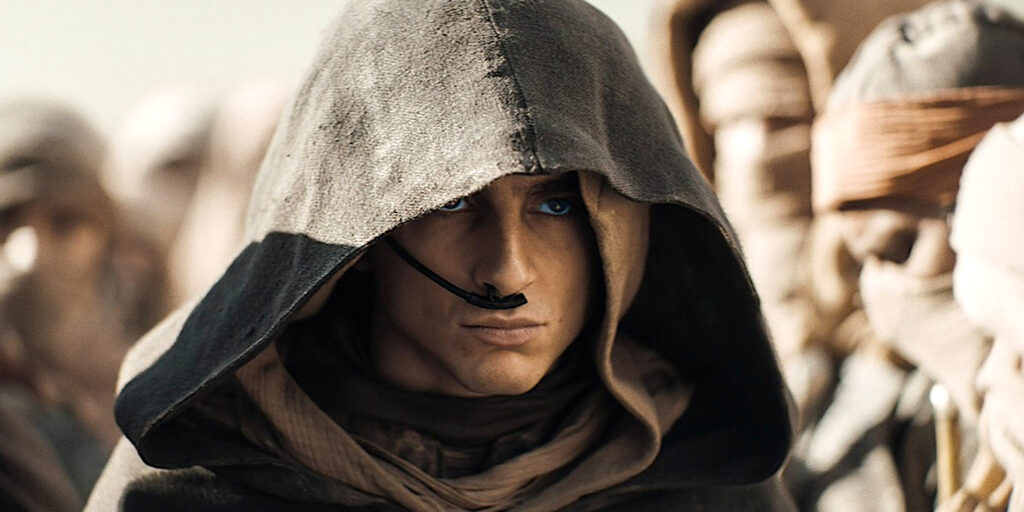
Timothée Chalamet’s strongest contribution is the distance he creates between Paul’s private uncertainty and public authority.
Early on, Paul still looks like a young man trying to earn his place. His exchanges with Chani give him room to be awkward, curious and occasionally pleased with himself. These scenes matter because they establish a person beneath the titles.
As his influence grows, his manner changes. His voice becomes firmer. His gestures become more deliberate. He learns how to command a room rather than ask for its acceptance.
I find that progression more disturbing than a sudden descent into obvious villainy would have been. His motives remain understandable even as his choices become harder to defend. Love, survival and revenge provide remarkably convenient reasons to keep taking more power.
The film also implicates its audience. Paul receives the stirring speeches and monumental imagery usually reserved for triumphant heroes. It feels thrilling. Then Chani looks at him, and the mood changes.
Chani Gives the Film Its Strongest Perspective
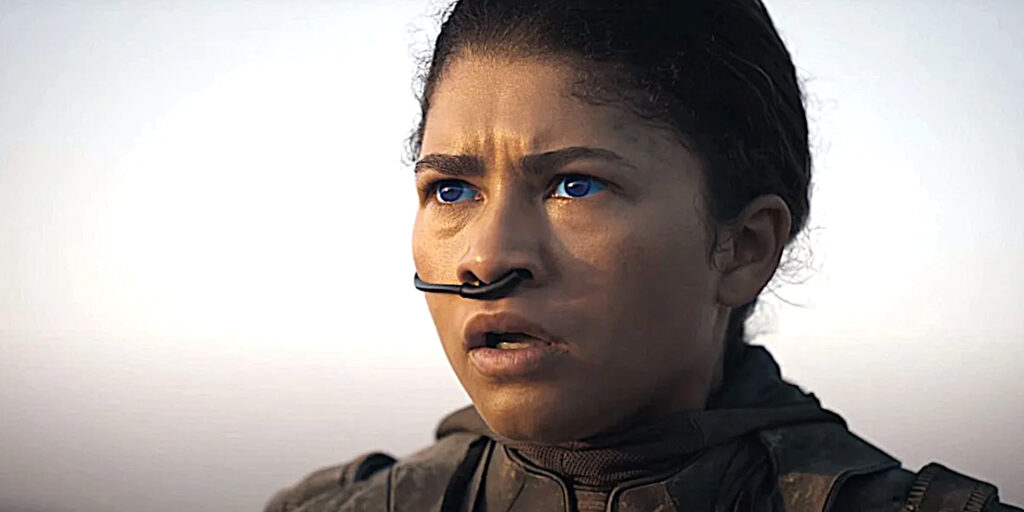
Zendaya’s expanded role is one of the sequel’s best decisions.
Chani has affection for Paul, but she also has political convictions that exist independently of him. She wants her people to be free. She is considerably less enthusiastic about the possibility that freedom requires submitting to another aristocrat.
Her scepticism gives the film a necessary point of resistance. Without it, Paul’s rise could become too easy to consume as a straightforward liberation story.
The romance works best in its quieter moments. Shared looks and brief conversations give their relationship a warmth that the imperial scenes deliberately lack. Arrakis becomes somewhere people live, rather than simply somewhere important people intend to conquer.
There are limits. Chani sometimes carries so much of the film’s critical perspective that she has less room for contradictions of her own. Even so, her changing response to Paul provides the emotional thread I care about most.
Jessica and Stilgar Show How Belief Becomes Power
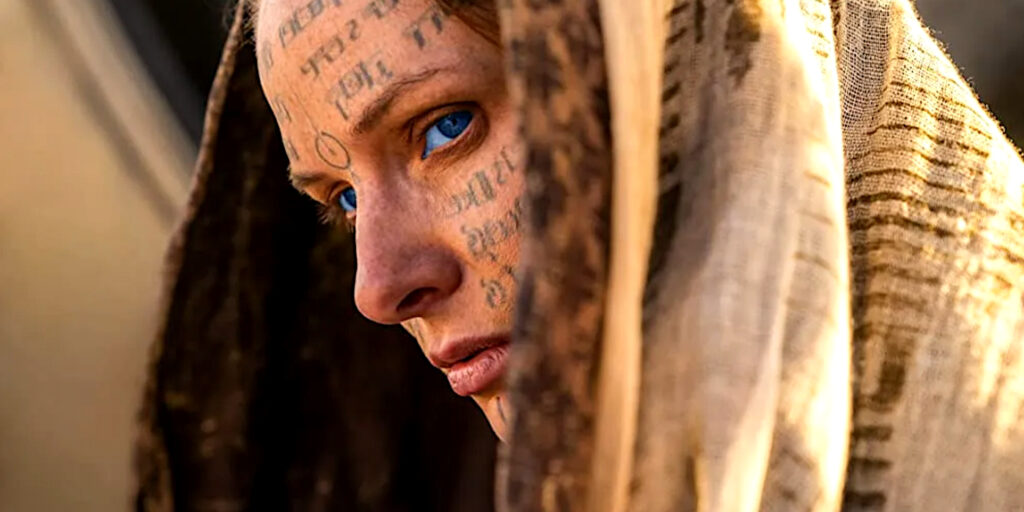
Rebecca Ferguson makes Lady Jessica increasingly difficult to read.
Her actions combine maternal protection, religious calculation and an unsettling willingness to manipulate other people’s hopes. Those motives overlap. She can believe she is protecting her son while helping construct something dangerous around him.
Javier Bardem’s Stilgar approaches belief from another direction. His warmth and humour initially make him reassuring company, but his devotion gradually becomes troubling. Evidence against Paul’s supposed destiny can be absorbed as further proof of it.
Some of these moments are funny. The repetition is deliberate, although it occasionally brings Stilgar close to becoming a running joke.
Bardem preserves enough sincerity to make the implications uncomfortable. Stilgar is an experienced leader whose certainty begins to override his judgement. That is more interesting than presenting faith as a simple failure of intelligence.
Austin Butler Makes Feyd-Rautha Horribly Watchable

Austin Butler’s Feyd-Rautha brings a different kind of danger.
Where Paul learns to exercise authority, Feyd appears thoroughly at home with domination. His stillness is particularly effective. Butler does not need constant shouting to suggest that everyone nearby should be reviewing their employment options.
The arena sequence on Giedi Prime gives him a memorable introduction. Its drained, unnatural appearance turns public violence into a ritual of state power.
That effect came from infrared cinematography, rather than an eclipse captured during filming. Greig Fraser has explained how modified cameras and filtration produced the sequence’s otherworldly look.
Feyd is compelling, although the film gives him relatively little time to develop beyond his function as Paul’s threatening counterpart. Butler makes the available space count.
Florence Pugh’s Princess Irulan faces a similar restriction. She suggests intelligence and political awareness, but spends much of the film observing events whose consequences she will have to manage.
Combat, Crysknives and Warfare on Arrakis
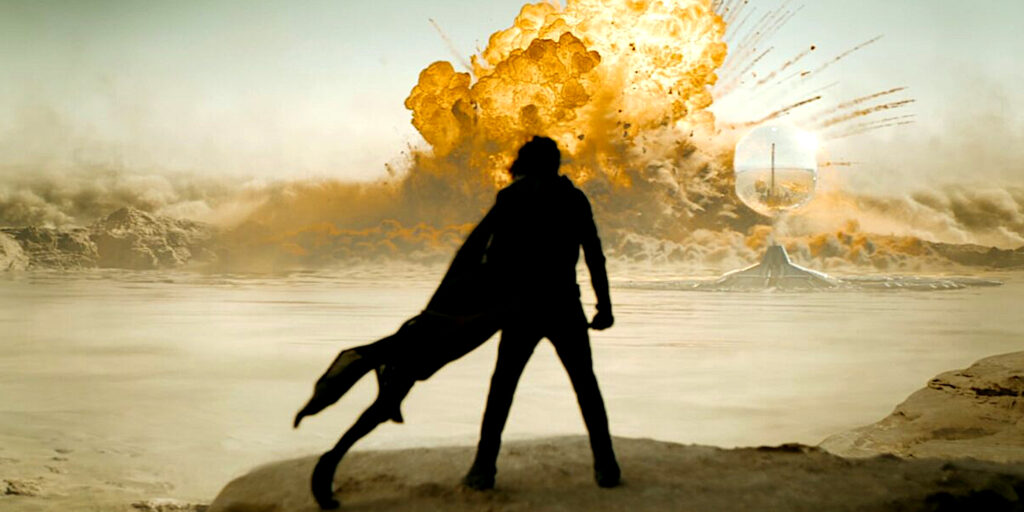
For a film operating on such an enormous scale, Dune: Part Two understands the value of a blade held close.
Its warfare moves between Fremen ambushes, attacks on industrial machinery and intimate duels. These encounters feel connected to the same struggle over territory, resources and control.
Fremen tactics
The Fremen’s effectiveness comes from their relationship with the desert. They use concealment, surprise and local knowledge against an occupying force dependent on equipment and extraction infrastructure.
The opening action establishes this well. Terrain determines what fighters can see, where they can move and how vulnerable they become. The desert participates in the battle.
That gives the conflict more texture than a simple contest between larger armies.
Crysknives and personal combat
The crysknife, associated with the teeth of Arrakis’s sandworms, connects Fremen fighting to their environment and culture.
Its visual appeal comes partly from that sense of belonging. It looks like an object produced by this world, with significance beyond its usefulness in a fight.
The close combat is tense because distance matters. A small opening can become decisive, and the fighters rarely look comfortably beyond each other’s reach. The final duel benefits from this intimacy after so much large-scale destruction.
Shields and fictional fighting rules
Personal shields help explain the prominence of blades within the wider Dune setting, where controlled penetration matters. Their use on Arrakis is also constrained by the dangers of the desert.
The films apply these ideas selectively, so it would be unwise to treat every encounter as a perfectly consistent technical demonstration.
As screen combat, though, the approach works. The choreography communicates danger and character without requiring the viewer to complete a training module first.
Why the Visuals Feel So Powerful
Greig Fraser’s cinematography makes scale legible.
Figures are often tiny against the desert. Buildings dwarf their occupants. Machines seem almost absurdly large until a sandworm arrives and adjusts everyone’s understanding of the food chain.
These compositions support the story. Individuals can look insignificant within an empire, a landscape or a mass movement. Paul’s growing ability to dominate those images becomes part of his transformation.
The sandworm-riding sequence is especially effective because it takes time to establish the physical problem. Paul must judge movement, commit himself and survive the consequences. The achievement feels earned.
Giedi Prime supplies a striking visual contrast. Its pale bodies and dark architecture create an oppressive world with its own coherent appearance.
The film’s technical achievements received recognition at the 2025 Academy Awards, where it won Sound and Visual Effects.
Hans Zimmer’s Score Knows Exactly When to Overwhelm You
Hans Zimmer’s music gives Paul’s rise an almost physical force.
The score can make a gathering feel sacred, a journey feel dangerous and a romantic moment feel painfully fragile. Its effectiveness comes partly from how closely it follows the film’s movement between intimacy and public spectacle.
The sound design is equally important. Machinery, aircraft and worms have distinct textures and apparent weight. You hear the systems of this world working, straining and breaking.
Occasionally, the combined assault becomes so forceful that I want a little more quiet. A film this confident in its images can afford to leave them alone.
Still, the overwhelming quality often serves a purpose. The audience experiences some of the emotional pressure that makes Paul’s public image so persuasive.
Where Dune: Part Two Falls Short
The film’s biggest weakness is compression.
Paul’s growing importance, the development of his relationship with Chani and the escalation of the wider conflict must all fit within the same forward drive. Some changes feel more thoroughly dramatised than others.
The Fremen also deserve more everyday life on screen. We see their survival skills, religious divisions and military organisation, but fewer of the ordinary relationships that might make their society feel less defined by Paul’s arrival.
The imperial court is another area where the film feels relatively thin. Christopher Walken brings weariness and unease to Emperor Shaddam IV, yet the machinery of imperial power remains less developed than the forces opposing it.
These omissions do not derail the story. They become noticeable because Villeneuve makes the surrounding world so interesting. I kept wanting the film to linger in places where it needed to move on.
Dune: Part Two Ending Explained
Major spoilers follow.
Paul’s victory resolves his immediate struggle for power while making the wider situation more dangerous.
He defeats his enemies and claims imperial authority, using the prospect of marriage to Princess Irulan as a political instrument. His relationship with Chani becomes subordinate to the dynastic logic he is now willing to use.
Her response prevents the ending from settling into comfortable triumph. Through her, we see the personal cost of decisions that Paul presents as necessary.
The rejection of his claim by the Great Houses then opens the way to a broader war. The Fremen’s struggle on Arrakis is carried into a far larger campaign under his authority.
My reading is that Paul has become increasingly willing to inhabit the future he once feared. His visions complicate his freedom, but they do not make his choices morally weightless.
That ambiguity gives the ending its force. We understand why he wanted victory. We have much less reason to feel safe now that he has it.
Is Dune: Part Two Better Than Part One?
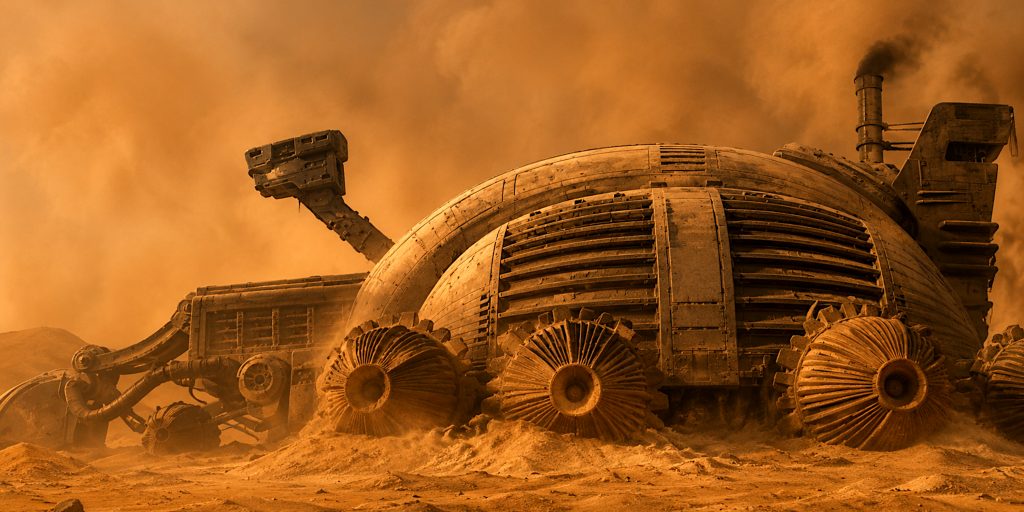
For me, yes, although the first film does much of the work that allows this one to succeed.
Dune establishes the political relationships, the Atreides family and the vulnerability beneath its power. Part Two turns those foundations into sharper conflict.
The sequel has a stronger emotional centre through Paul and Chani, more varied action and a clearer sense of the danger within its protagonist.
The first film has advantages of its own. Its slower pace gives places and relationships more room to settle, while the impending destruction of House Atreides creates a sustained atmosphere of dread.
Together, they form a more satisfying experience than either does separately. Watching the second without the first would mean arriving at the argument halfway through and wondering why everyone is so upset about spice.
Verdict: Is Dune: Part Two Worth Watching?
Dune: Part Two is an exceptional science-fiction film with a few conspicuous gaps around its supporting characters and political world.
Its scale is extraordinary, but the reason I would return to it is Paul’s transformation. Villeneuve makes his ascent persuasive enough to enjoy and troubling enough to question.
Chalamet gives that change conviction. Zendaya supplies its strongest emotional challenge. Ferguson, Bardem and Butler make the forces surrounding Paul feel seductive, sincere or frightening in distinct ways.
The film asks for patience, attention and familiarity with its predecessor. It rewards all three.
Rating: 4.5 out of 5