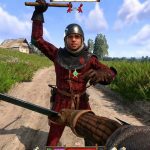
Kingdom Come: Deliverance 2 has done something rare in modern gaming. It treats medieval weapons like actual objects from history rather than glowing loot sticks stolen from a fantasy dungeon. Every sword feels heavy, dangerous, expensive, and slightly terrifying in the hands of someone who knows what they are doing.
Quite honestly, after years of games handing players a “Legendary Dragon Slayer Katana of Infinite Doom,” seeing a battered knight carry a practical longsword feels refreshing. Medieval Europe was already dramatic enough without adding flaming skull runes to everything.
What makes the game especially interesting is how many of its weapons are rooted in genuine historical designs from the late 14th and early 15th centuries. Some are noble battlefield weapons. Others are brutal peasant tools pretending to be swords. A few exist purely because humans have always looked at sharp metal and thought, “What if this was slightly longer?”
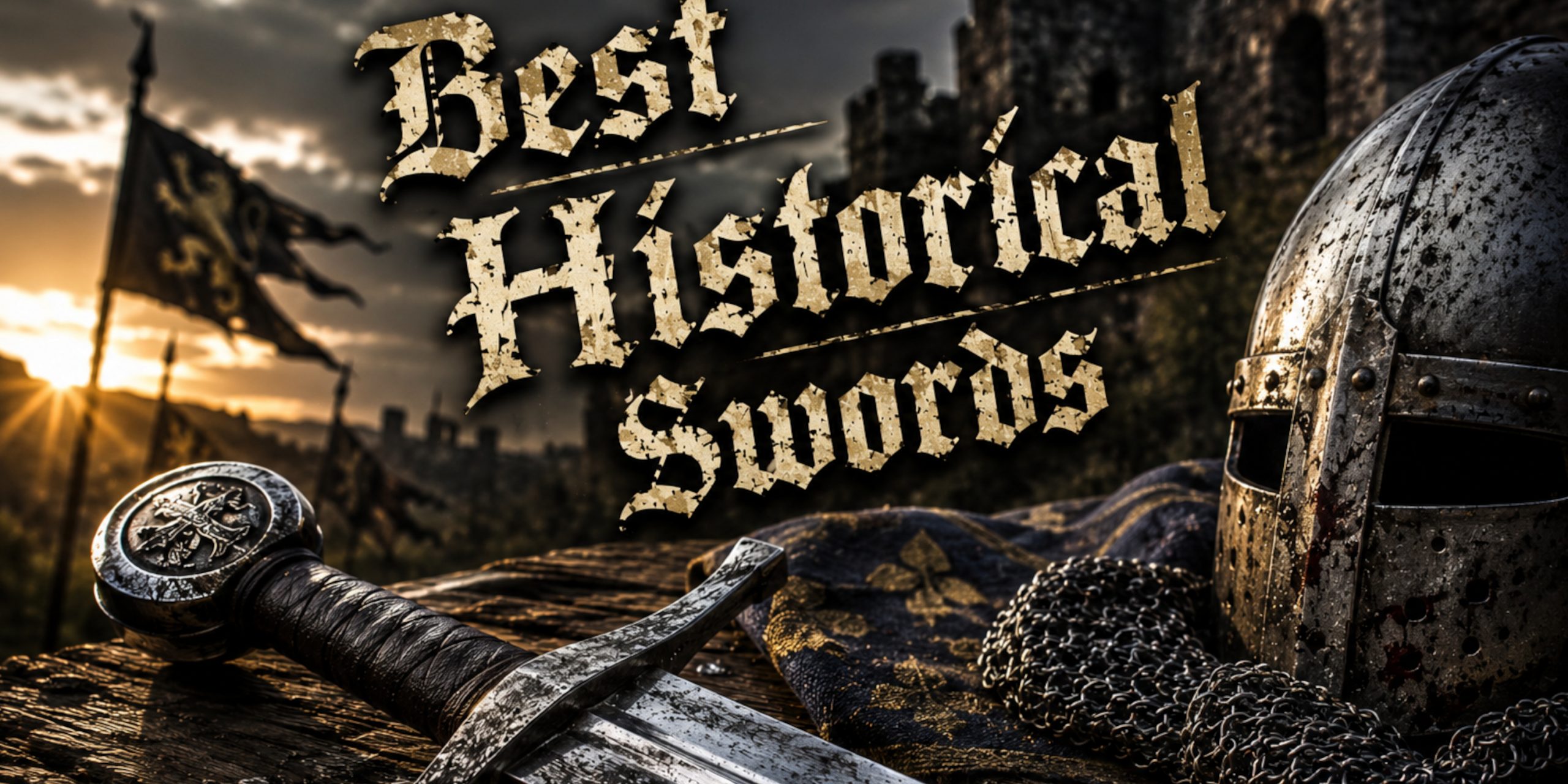
Here are the best historical swords represented in Kingdom Come: Deliverance 2, along with the real history behind them.
Longsword
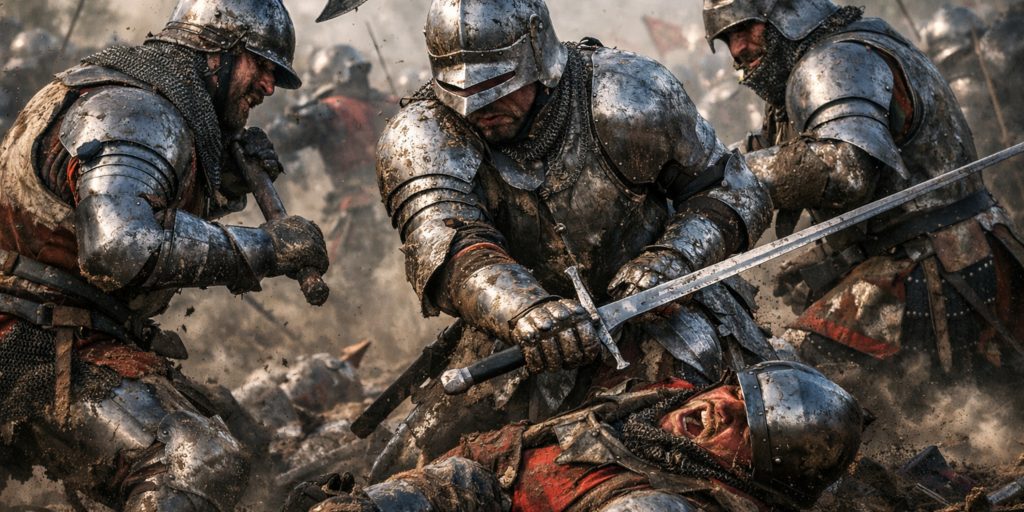
The longsword is the undisputed king of late medieval Europe, and naturally it dominates Kingdom Come: Deliverance 2. If medieval swords had a celebrity hierarchy, the longsword would be standing in sunglasses outside a Prague tavern refusing interviews.
These weapons became especially common during the 14th and 15th centuries among knights, mercenaries, and professional soldiers. Designed for two-handed use, they balanced reach, speed, and versatility better than almost any weapon of the era.
Historically, longswords were not the absurd slabs of steel fantasy games often portray. Most weighed somewhere between 1.2 and 1.8 kilograms. Light enough for quick movement, heavy enough to ruin somebody’s afternoon permanently.
In Kingdom Come: Deliverance 2, longswords are ideal for:
- Armoured combat
- Reach and spacing
- Counter-attacks
- Half-swording techniques
- Duels against skilled opponents
The game’s combat system reflects genuine historical fencing surprisingly well. Techniques such as thrusting into gaps in armour, binding blades, and controlling distance all mirror surviving medieval fight manuals from masters like Johannes Liechtenauer and Fiore dei Liberi.
Real longswords from this period can still be seen in collections across Europe, particularly in museums in Germany, Austria, and the Czech Republic.
Falchion
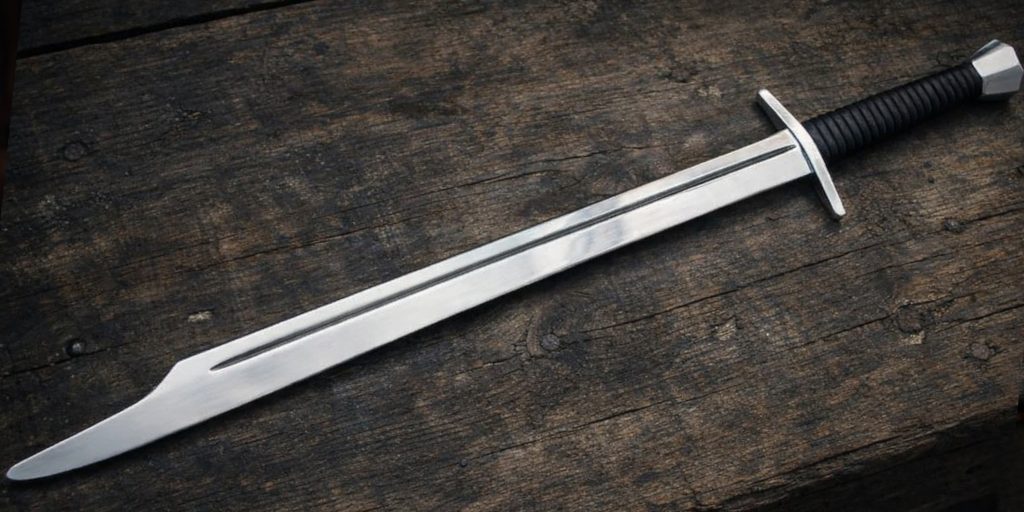
The falchion is what happens when a sword and a meat cleaver develop mutual respect.
Single-edged, forward-heavy, and brutally efficient, the falchion was designed for cutting power. It never had the aristocratic glamour of knightly swords, but soldiers loved it because it worked. Medieval warfare rewarded practicality far more than elegance.
Historically, falchions appeared across Europe between the 13th and 15th centuries. Some resembled oversized knives, while others had surprisingly refined construction. Surviving examples show considerable variety.
In Kingdom Come: Deliverance 2, falchions are devastating against lightly armoured enemies. Their chopping power feels vicious, particularly during chaotic close-range fights.
The beauty of the falchion is its honesty. It does not pretend to be noble. It exists to hit things extremely hard. There is something weirdly admirable about that.
Notable historical examples include:
- The Conyers Falchion in England
- The Thorpe Falchion
- Several surviving Central European military falchions
Many historians believe these weapons bridged the gap between swords and working tools, making them cheaper and easier to produce than finely crafted knightly blades.
Arming Sword
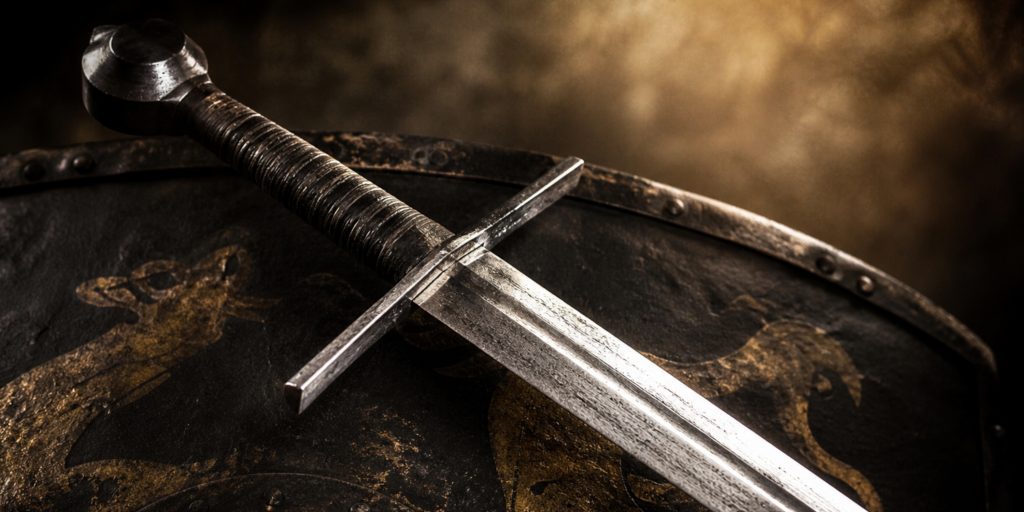
Before the longsword took over medieval battlefields, the arming sword was the standard sidearm of European knights.
This classic one-handed cruciform sword defined medieval warfare for centuries. Straight blade, simple crossguard, reliable cutting and thrusting ability. No nonsense.
In Kingdom Come: Deliverance 2, arming swords remain incredibly useful because they pair naturally with shields. That combination mattered enormously in real medieval combat. Surviving manuscripts and artwork constantly show sword-and-shield fighting because, unsurprisingly, people preferred not getting stabbed.
Historically, these swords evolved from Viking Age weapons and eventually influenced later knightly blades. They were common across Europe from roughly the 11th to 14th centuries.
Strengths included:
- Fast handling
- Excellent defensive capability
- Versatility on foot and horseback
- Lower fatigue during extended combat
There is something deeply satisfying about using an arming sword in the game. It feels grounded. Not heroic in the fantasy sense, just practical in the “I would like to survive this ambush” sense.
Sabre
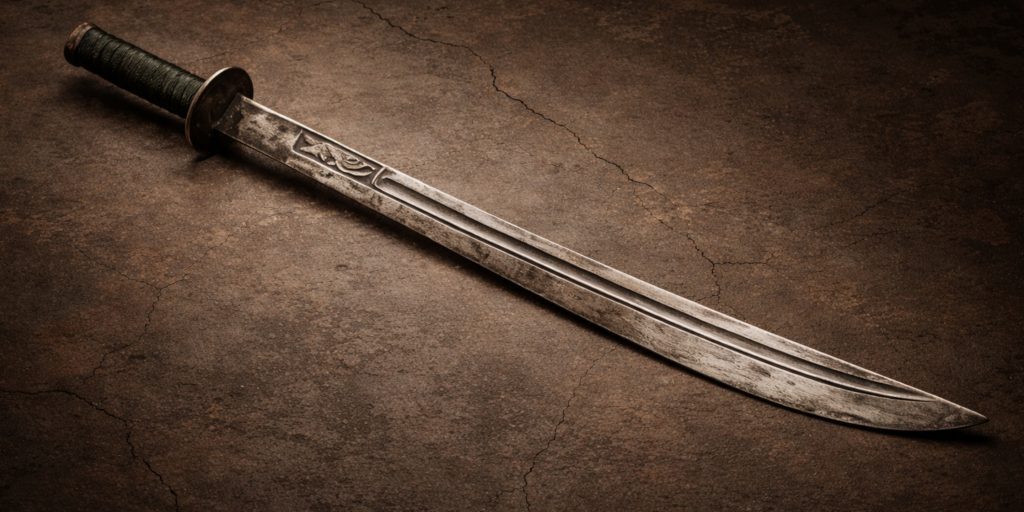
The sabre reflects the growing eastern influences shaping warfare in Central and Eastern Europe.
Curved blades existed in Europe earlier, but sabres became increasingly associated with Hungarian, Balkan, Ottoman, and steppe cavalry traditions. By the late medieval and early Renaissance periods, they were spreading more widely across the region.
Kingdom Come: Deliverance 2 sits in a fascinating historical crossroads where western knightly traditions collided with eastern cavalry warfare. Including sabre-style weapons makes perfect sense historically.
The curve of the sabre made it especially effective from horseback. Slashing attacks flowed naturally during mounted combat, allowing cavalry to strike quickly without losing momentum.
Historically, sabres offered:
- Powerful draw cuts
- Fast mounted attacks
- Effective light cavalry combat
- Excellent mobility
Also, let us be honest, curved swords simply look cool. Medieval soldiers absolutely understood aesthetics. Half the surviving weapons of Europe look like somebody spent six months trying to impress rivals at a tournament.
Hunting Sword and Messer
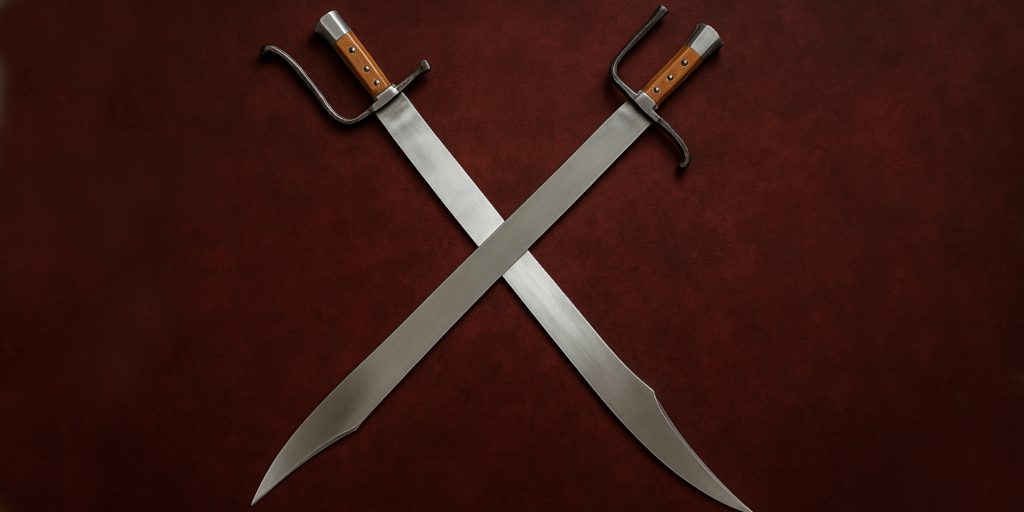
The messer deserves far more appreciation than it usually gets.
Part sword, part oversized knife, the messer was hugely popular in German-speaking regions during the late Middle Ages. Unlike aristocratic knightly weapons, messers were often associated with townsmen, mercenaries, and civilians.
In Kingdom Come: Deliverance 2, messer-style weapons fit the social atmosphere perfectly. Not every fighter wandering Bohemia would own an expensive knightly longsword. Many carried practical sidearms suited to travel, self-defence, and ugly tavern disputes.
Historically, the messer featured:
- A single-edged blade
- Knife-style construction
- Compact handling
- Excellent cutting ability
German fencing manuals even include sophisticated messer combat systems. Masters treated these weapons seriously because they were serious weapons.
The hunting sword evolved alongside similar traditions. Nobles often carried shorter blades during hunts, partly for practicality and partly because medieval aristocrats enjoyed turning every activity into a fashion competition.
Executioner’s Sword
Executioner swords are among the strangest weapons represented in medieval culture.
Unlike battlefield swords, these enormous two-handed blades were designed specifically for executions. Many lacked sharp points entirely because thrusting was unnecessary. Their sole purpose was delivering powerful decapitating blows.
Cheerful subject matter, medieval Europe.
While these weapons were not common battlefield tools, their existence reveals how specialised swordmaking became by the late Middle Ages.
Executioner swords often featured:
- Broad heavy blades
- Rounded tips
- Decorative inscriptions
- Long grips for controlled strikes
Several famous surviving examples exist in museums throughout Germany and Central Europe. Many are disturbingly beautiful objects considering their purpose.
Kingdom Come: Deliverance 2 captures that uncomfortable medieval contradiction well. The same society producing illuminated manuscripts and cathedral art also built ceremonial decapitation swords with engraved biblical verses. Humanity has always been complicated.
Why Kingdom Come: Deliverance 2 Gets Medieval Swords Right
Most games misunderstand medieval combat because they prioritise spectacle over reality. Kingdom Come: Deliverance 2 does the opposite.
Weapons feel dangerous because historically they were dangerous. Armour matters. Technique matters. Stamina matters. Charging wildly into five armed opponents usually ends badly, which turns out to be extremely authentic.
The game also respects regional history. Bohemia during this period sat at the centre of major military and cultural changes. German fencing traditions, knightly warfare, peasant uprisings, mercenary culture, and eastern influences all collided here.
That complexity appears in the weapons themselves.
You are not just choosing damage statistics. You are choosing social class, military tradition, economic status, and fighting style. A knight with a longsword projects authority. A mercenary with a falchion projects menace. A peasant with a battered messer projects the energy of someone who has absolutely had enough of taxes.
Takeaway
The best swords in Kingdom Come: Deliverance 2 are not magical because history already made them interesting.
These weapons evolved through centuries of warfare, craftsmanship, and survival. Every curve, fuller, grip, and crossguard existed for a reason. Some swords were built for cavalry charges. Others for armoured duels. Some were status symbols. Others were simply affordable ways to stay alive.
That historical authenticity gives the game real personality. It feels lived-in, grounded, and occasionally brutal in ways few RPGs manage.
And frankly, after spending enough time with these weapons, it becomes very difficult to return to games where somebody defeats an army using a sword larger than a dining table.