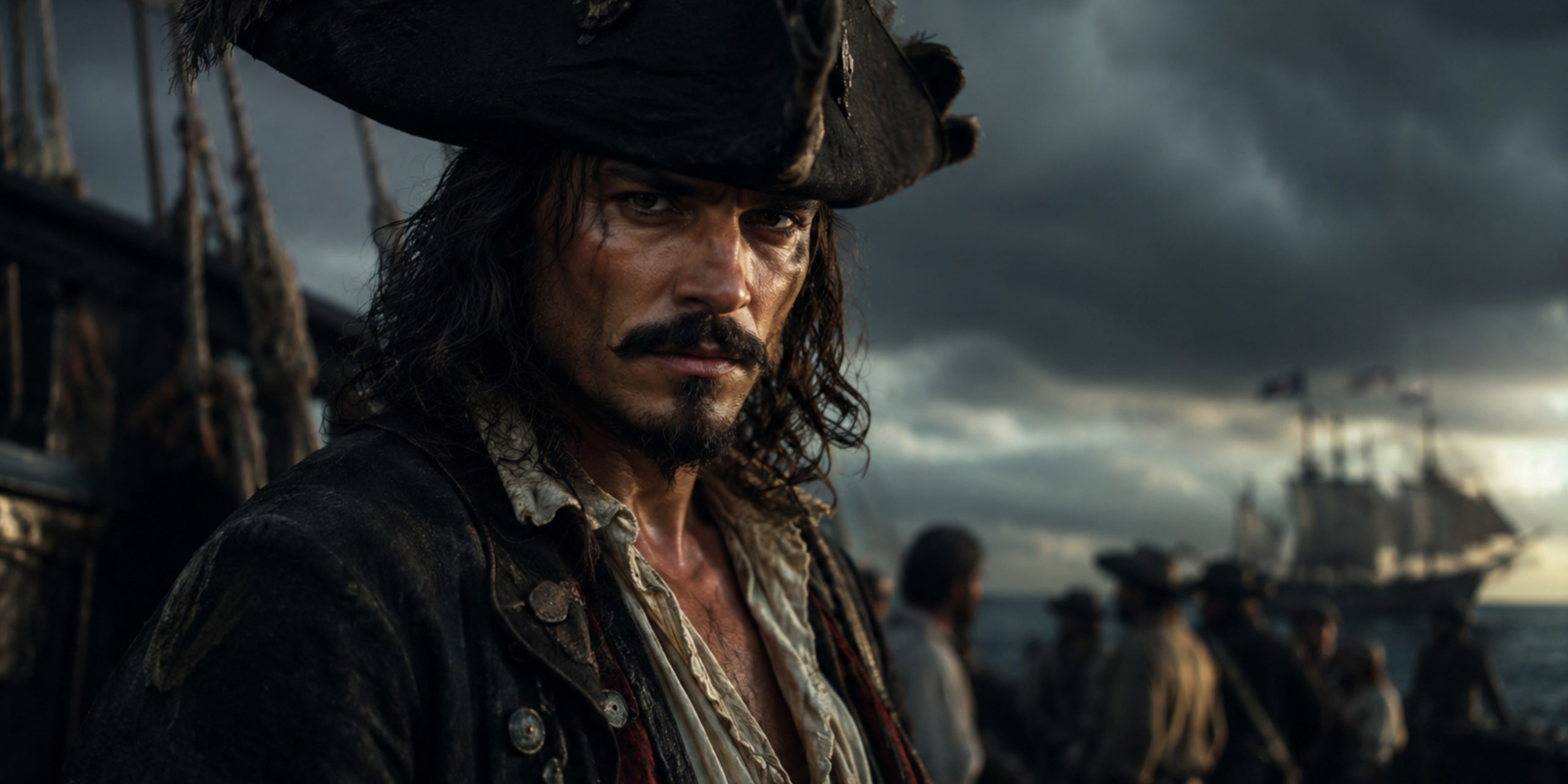
Jean Lafitte remains one of the most fascinating figures from the final years of the Golden Age of Piracy. Depending on who was telling the story, he was a criminal, businessman, patriot, spy, smuggler, gentleman or outright pirate. The truth, as usual with pirates, managed to be considerably messier.
Operating from the Gulf of Mexico in the early 19th century, Lafitte built a powerful network around Barataria Bay, Louisiana. His organisation moved captured goods, challenged government authority, and somehow managed to become valuable enough that the United States accepted his help during the War of 1812.
Pirates rarely get the chance to become national heroes. Lafitte somehow managed it, although it helped that everyone briefly forgot about the smuggling.
Quick Facts About Jean Lafitte
| Detail | Information |
|---|---|
| Full name | Jean Lafitte |
| Born | c. 1780 |
| Birthplace | Disputed, possibly France or Saint-Domingue |
| Died | Unknown, possibly c. 1823 |
| Occupation | Privateer, smuggler, businessman |
| Main base | Barataria Bay, Louisiana |
| Active period | Early 1800s to 1820s |
| Famous for | Barataria operations and the Battle of New Orleans |
| Ships associated | Various privateering vessels including those linked to his fleet |
| Allegiance | Complex: himself first, occasionally governments second |
Origins: The Mystery Before the Legend
The early life of Jean Lafitte is surrounded by uncertainty. Several accounts claim he was born in France, while others place his origins in Saint-Domingue (modern Haiti) during a period of major colonial upheaval.
He appears in Louisiana records alongside his brother Pierre Lafitte, and together they became involved in trade networks around New Orleans. Officially, they were merchants. Unofficially, their business model involved a surprising number of goods that had recently belonged to someone else.
Much of Lafitte’s early biography was shaped after his disappearance, making it difficult to separate documented history from the romantic image of the clever pirate gentleman.
Jean Lafitte’s Other Names and Aliases
Lafitte’s secretive activities and later legends created several variations of his identity.
Known spellings and names include:
- Jean Lafitte
- Jean Laffite
- John Lafitte
- Captain Lafitte
- The Pirate of Barataria
- The Gentleman Pirate of New Orleans
- The Terror of the Gulf
The spelling “Lafitte” is now the most commonly accepted, though historical documents also record “Laffite”.
Like many privateers, he benefited from uncertainty. A confusing paper trail was not exactly bad for business when your business occasionally involved avoiding customs officers.
Barataria: Lafitte’s Pirate Kingdom
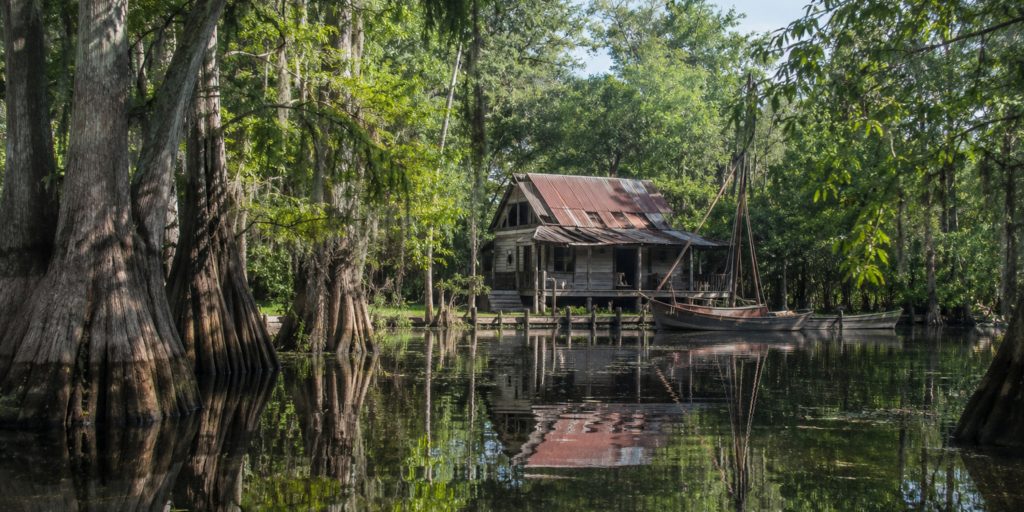
Lafitte’s greatest success came through the Barataria network, located in the wetlands south of New Orleans.
This was not simply a pirate hideout. Barataria operated almost like an independent trading centre, with:
- Warehouses
- Armed vessels
- Skilled sailors
- Auctions for captured goods
- Connections with merchants and buyers
Lafitte’s men captured Spanish ships and sold goods cheaply to local customers. Many people in Louisiana tolerated or even supported the operation because Lafitte supplied items that were expensive or difficult to obtain legally.
The authorities saw things differently. To them, Barataria was organised smuggling on a massive scale.
Both sides had a point.
Pirate or Privateer?
One reason Lafitte’s reputation remains complicated is the difference between piracy and privateering.
A pirate attacked ships without legal authority. A privateer operated under a government licence called a letter of marque.
Lafitte insisted he was a privateer targeting Spanish interests rather than a common pirate. His enemies argued that paperwork did not magically transform theft into respectable commerce.
The line between pirate and privateer was often extremely thin. In the early 1800s Caribbean, it was sometimes thin enough to sail straight through.
Weapons, Ships and Equipment
Lafitte’s crews used the typical weapons of early 19th-century naval raiders.
Weapons
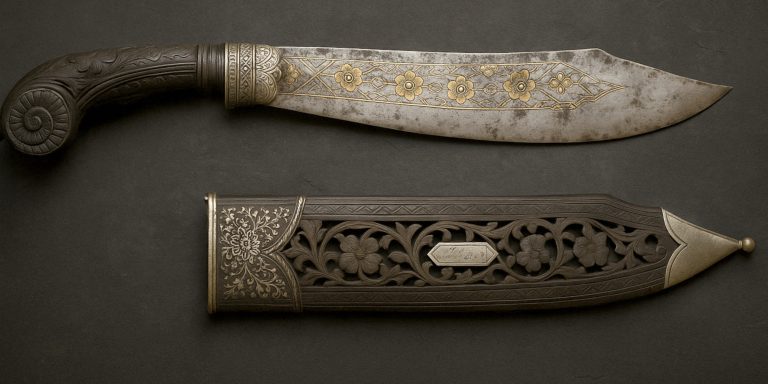
- Cutlasses for close combat during boarding actions
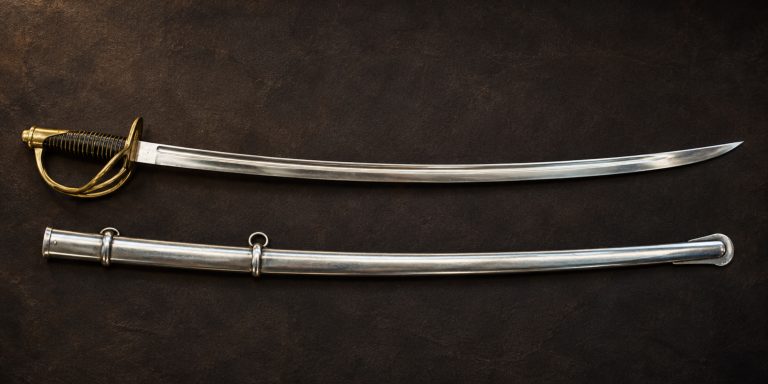
- Naval sabres used by officers and experienced fighters
- Boarding axes for breaking through obstacles and fighting at close range
- Flintlock pistols for ship combat
- Muskets and carbines
- Cannons mounted on fast privateering vessels
Ships
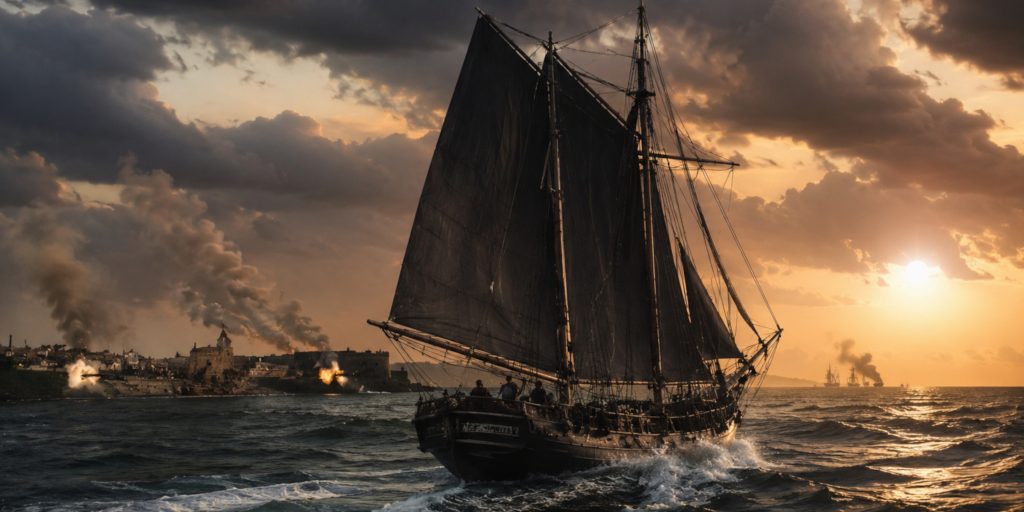
Lafitte’s forces favoured smaller, faster vessels rather than huge warships.
Common types included:
- Schooners
- Brigs
- Light privateering craft
Speed mattered more than size. A pirate ship that could not escape was usually just a floating court appointment.
The British Offer During the War of 1812
During the War of 1812, Britain attempted to recruit Lafitte and his men. The British recognised that his knowledge of Louisiana waterways and his experienced sailors could be extremely useful.
Lafitte instead warned American authorities about the offer.
He later wrote:
“I may have evaded the payment of duties to the custom-house, but I have never ceased to be a good citizen.”
The quote perfectly represents Lafitte’s preferred image of himself: a man who might ignore certain laws but still possessed loyalty and honour.
His critics were less convinced.
Jean Lafitte and the Battle of New Orleans
Lafitte’s most famous moment came during the Battle of New Orleans in January 1815.
General Andrew Jackson accepted assistance from the Baratarians despite their criminal reputation. Lafitte provided:
- Experienced artillery crews
- Supplies
- Intelligence
- Men familiar with the Gulf coastline
Jackson later praised the Baratarians, stating:
“The Baratarians have manifested the same courage and fidelity as the rest of the army.”
After the American victory, Lafitte and his followers received pardons.
It was one of history’s stranger career moves: hunted smuggler one month, celebrated defender the next.
Later Years and Galveston
After leaving Barataria, Lafitte established another base at Galveston Island, then outside firm American control.
From there he continued privateering operations, although increasing pressure from the United States Navy made his activities harder to maintain.
By the early 1820s Lafitte disappeared from reliable records. His final fate remains debated.
Possible theories include:
- Death during a naval encounter
- Illness in the Caribbean
- Retirement under another identity
The last option remains popular because mysterious pirates apparently have a professional obligation to vanish dramatically.
Contemporary Views of Jean Lafitte
Opinions about Lafitte varied greatly.
Some Americans viewed him as a brave defender after New Orleans. Others never forgot his criminal operations.
Andrew Jackson described the Baratarians positively after the battle:
“To the Baratarians, my brothers, I have much pleasure in giving the praise which is their due.”
Governor William C. C. Claiborne of Louisiana, who opposed Lafitte’s activities, saw Barataria as a major threat and repeatedly worked to suppress his organisation.
These conflicting opinions created the Lafitte legend: criminal to some, hero to others.
Archaeology and Historical Evidence
Researchers continue to study sites connected with Lafitte, particularly around Louisiana and Galveston.
Evidence includes:
- Ship remains linked to Gulf privateering
- Weapons from early 19th-century maritime conflict
- Documents relating to Barataria trade networks
- Records from customs officials and naval authorities
Finding direct Lafitte artefacts is difficult because many objects attributed to famous pirates were connected later through legend rather than evidence.
A surprising number of “pirate treasures” become less convincing once historians ask annoying questions like “where did this actually come from?”
Legacy: The Pirate America Could Not Quite Condemn
Jean Lafitte survives because he represents a historical contradiction. He broke laws but defended New Orleans. He profited from smuggling yet claimed loyalty. He operated outside normal society while maintaining connections with powerful figures.
The romantic version of Lafitte as a noble pirate is probably too generous. The image of him as only a criminal is too simple.
He belonged to a world where empires, trade, revolution and war overlapped. In that uncertain space, Lafitte built his own power and left behind enough mystery to keep historians arguing two centuries later.
For a man who spent much of his life avoiding attention from governments, becoming permanently famous was perhaps his greatest accidental achievement.