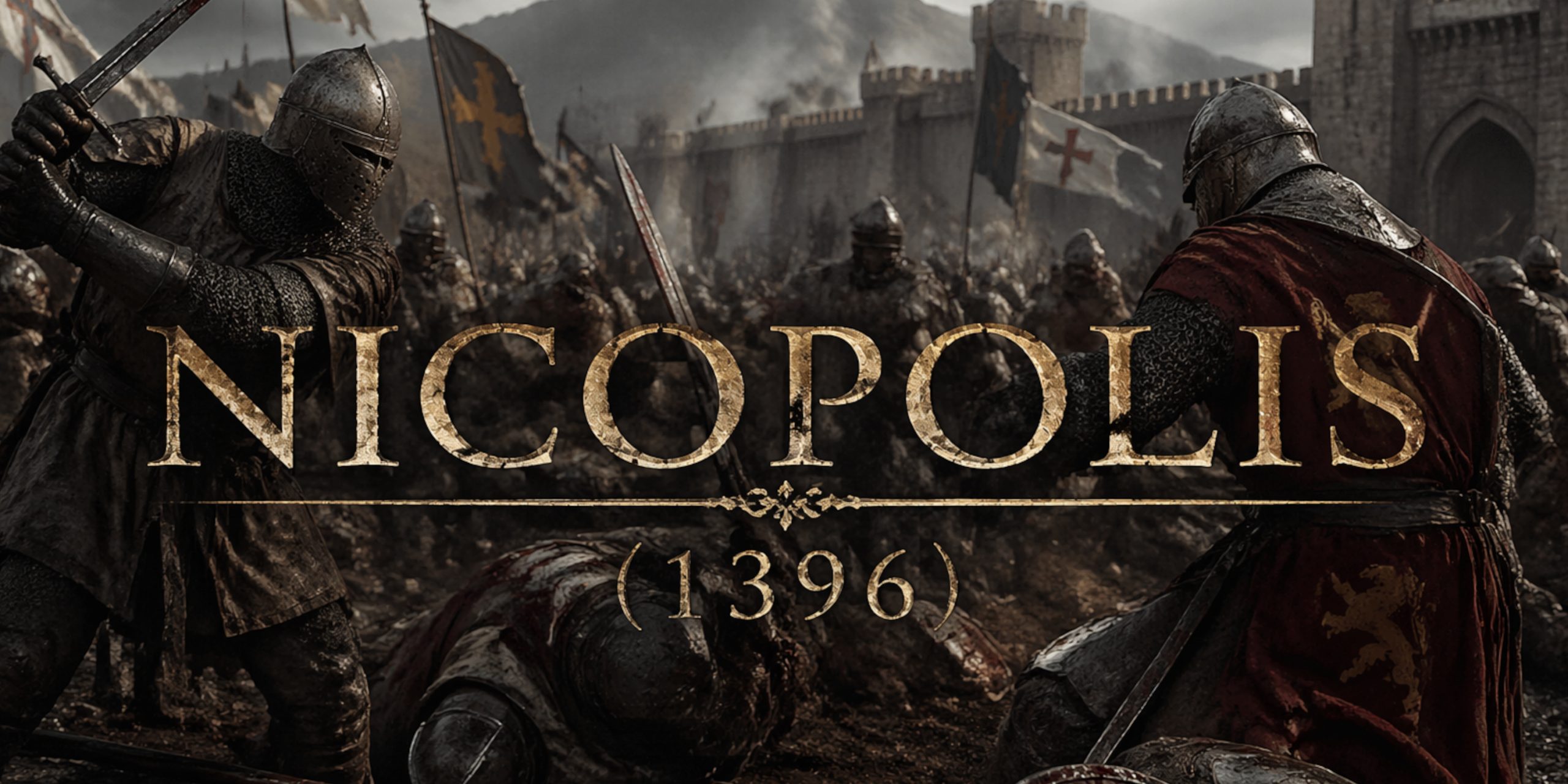
The Battle of Nicopolis, fought on 25 September 1396 near the Danube fortress of Nicopolis in modern Bulgaria, was supposed to be a glorious answer to Ottoman expansion in Europe. Instead, it became one of the great military disasters of the late Middle Ages.
A huge crusading army led by French, Burgundian, Hungarian and allied nobles marched east with all the confidence of men who had spent rather too much time listening to their own heralds. They believed they would sweep aside Sultan Bayezid I and perhaps even drive the Ottomans from the Balkans. What followed was very different. The crusaders ignored good advice, underestimated their enemy, charged uphill into a prepared position, and then watched their army collapse in stages.
Nicopolis was not simply a defeat. It was a warning. The age of the heavily armoured western knight, charging without restraint or discipline, was beginning to meet its limits.
Background to the Battle
By 1396 the Ottoman Empire had become the dominant power in the Balkans. Sultan Bayezid I had already defeated Serbian, Bulgarian and other regional rulers, and had laid siege to Constantinople. The Christian kingdoms of Europe finally responded.
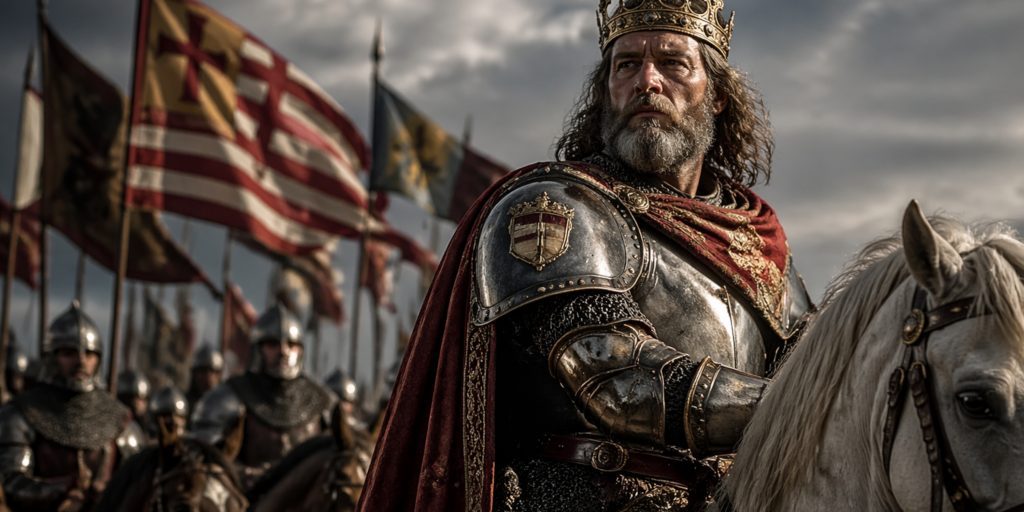
King Sigismund of Hungary organised a crusade with support from across western Europe. The largest contingent came from France and Burgundy, led by some of the most famous nobles of the age. They were eager for battle, eager for glory, and rather less eager to listen.
The crusading army marched down the Danube, capturing several towns before laying siege to Nicopolis. Bayezid reacted far faster than expected. Marching with remarkable speed, he arrived with a large Ottoman force reinforced by Serbian troops under Stefan Lazarević.
The crusaders suddenly found themselves facing an enemy they had expected to be days away.
Foces
| Army | Estimated Strength | Composition |
|---|---|---|
| Crusader Army | 12,000 to 16,000 | French and Burgundian knights, Hungarian troops, German infantry, Wallachians, Hospitallers, crossbowmen, archers |
| Ottoman Army | 15,000 to 20,000 | Janissaries, azaps, archers, cavalry, sipahis, Serbian heavy cavalry |
Although exact numbers remain disputed, the Ottomans probably had a slight advantage in manpower and a very large advantage in discipline.
Crusader Forces
- French and Burgundian heavy cavalry formed the elite striking force
- Hungarian infantry and cavalry under King Sigismund formed the core of the army
- German, Bohemian and Wallachian troops supported the main line
- Knights of St John and other crusading orders provided experienced soldiers
- Crossbowmen and archers were present, though badly used during the battle
Ottoman Forces
- Light infantry and archers screened the front line
- Janissaries formed the disciplined centre
- Sipahi cavalry waited behind the infantry
- Serbian heavy cavalry under Stefan Lazarević formed Bayezid’s reserve
- Ottoman forces prepared defensive obstacles before the battle began
Commanders
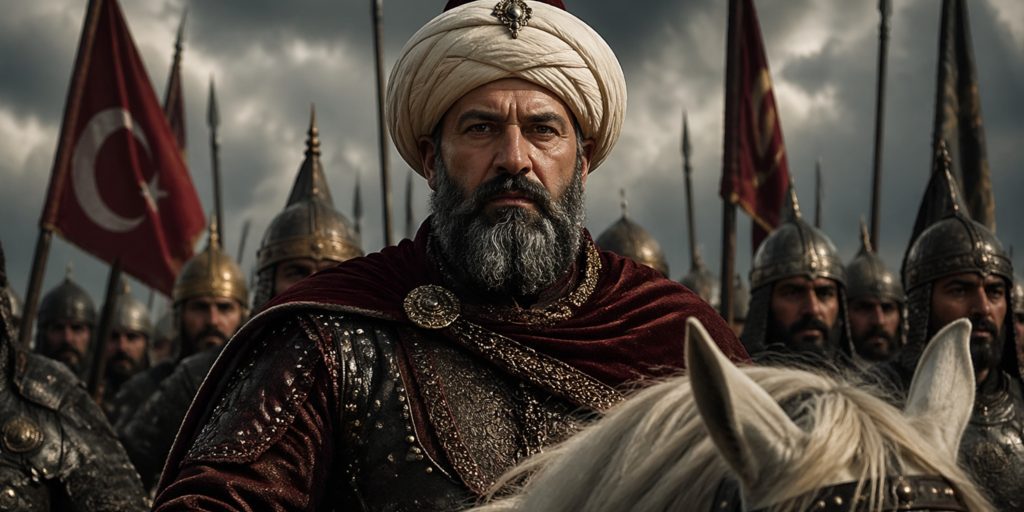
| Side | Commander | Role |
| Crusader | King Sigismund of Hungary | Overall commander |
| Crusader | John of Nevers | Leader of the French and Burgundian knights |
| Crusader | Jean de Vienne | Senior French commander and adviser |
| Crusader | Enguerrand VII de Coucy | French noble commander |
| Crusader | Philippe d’Artois, Count of Eu | French cavalry commander |
| Ottoman | Sultan Bayezid I | Ottoman commander |
| Ottoman | Stefan Lazarević | Commander of the Serbian cavalry reserve |
| Ottoman | Yakub Çelebi | Ottoman prince and field commander |
Jean de Vienne urged caution and wanted the infantry and archers sent ahead first. Sigismund agreed. The French nobles did not. They insisted on leading the attack themselves. Medieval aristocrats had many admirable qualities. Calmly accepting military advice was not always among them.
Troop Composition
| Troop Type | Crusader Army | Ottoman Army |
| Heavy Cavalry | Very strong | Moderate |
| Infantry | Mixed quality | Strong and disciplined |
| Missile Troops | Crossbowmen, archers | Large numbers of archers |
| Elite Troops | French knights, Hospitallers | Janissaries, Serbian cavalry |
| Tactical Flexibility | Limited | High |
The crusaders depended heavily on the charge of their mounted knights. The Ottomans used a layered defence designed to absorb that charge and then destroy the attackers once they lost momentum.
Arms and Armour
The Battle of Nicopolis sits at an interesting point in military history. Western knights wore some of the finest armour yet produced, while the Ottomans relied on a mixture of mobility, missile fire and carefully organised reserves.
Crusader Arms and Armour
| Item | Description |
| Plate Armour | French and Burgundian knights wore near-complete plate armour over mail |
| Helmets | Bascinets with visors were common, along with great helms for some nobles |
| Shields | Heater shields and smaller cavalry shields |
| Lances | The main weapon of the mounted charge |
| Swords | Longswords, arming swords and estocs were widely used |
| Polearms | Pollaxes, maces and war hammers |
Specific sword types likely used by the crusaders included:
- Oakeshott Type XV and XVIII arming swords
- Early longswords suited for both cut and thrust
- Estocs designed to punch through armour gaps
- Falchions carried by some infantry and lesser nobles
Many of the French nobles carried richly decorated swords and armour intended as much for display as battle. Nicopolis proved, rather brutally, that gold decoration does not stop arrows.
Ottoman Arms and Armour
| Item | Description |
| Armour | Mail, lamellar and padded armour |
| Helmets | Conical helmets with mail aventails |
| Bows | Composite bows with excellent range and power |
| Spears | Used by cavalry and infantry |
| Swords | Kilij-style sabres, straight swords and maces |
| Defensive Obstacles | Stakes and sharpened barriers placed before the line |
Specific sword types likely used by Ottoman troops included:
- Early kilij sabres with a slight curve
- Straight double-edged swords inherited from earlier Turkic traditions
- Broad cavalry sabres carried by sipahis
The Ottoman composite bow was arguably the most effective weapon on the battlefield. While the crusaders focused on the glorious charge, Ottoman archers quietly turned large sections of the battlefield into a rather unhealthy place to stand.
How the Battle Began
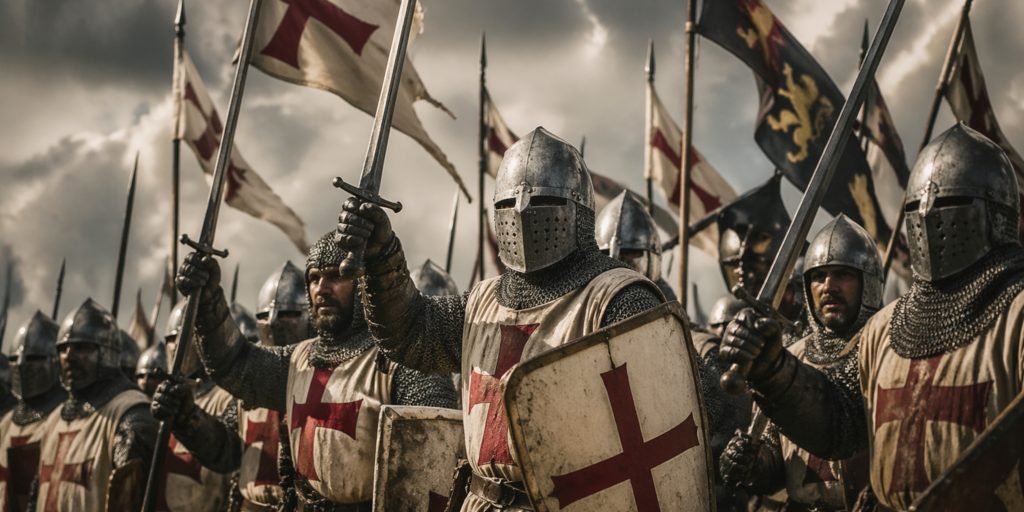
The crusaders deployed with the French and Burgundian knights at the front. Sigismund wanted a more careful advance. His Hungarian troops and infantry would begin the attack, supported by missile troops, while the heavy cavalry remained in reserve.
The French ignored this plan.
Driven by pride and perhaps by the belief that no enemy could withstand a direct charge by mounted nobility, they advanced immediately. At first the attack appeared successful. The French knights scattered the Ottoman light troops and reached the hill where the Janissaries and archers stood.
Then the problems began.
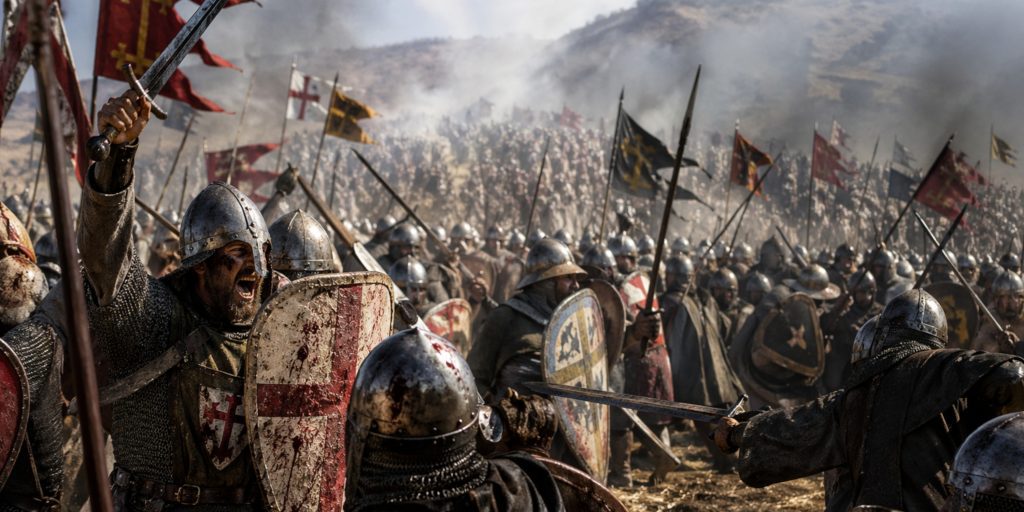
The knights had already ridden through a line of sharpened stakes and obstacles. Many dismounted to clear them. They then advanced uphill, exhausted and disorganised, against fresh Ottoman troops.
Battle Timeline
| Time | Event |
| Early Morning | Crusader army deploys before Nicopolis |
| Mid-Morning | French and Burgundian knights launch an unsupported charge |
| Shortly After | Ottoman archers and obstacles slow the crusader advance |
| Late Morning | French knights reach the Janissary line and become disorganised |
| Noon | Bayezid orders his sipahi cavalry forward |
| Early Afternoon | Serbian cavalry under Stefan Lazarević attacks the crusader flank |
| Mid-Afternoon | Hungarian and allied forces collapse and retreat |
| Late Afternoon | Remaining crusaders are surrounded or captured |
The Turning Point
Once the French charge stalled, Bayezid committed his cavalry reserves. Ottoman sipahis attacked the exhausted knights, while Stefan Lazarević and the Serbian heavy cavalry struck the crusader flank.
This was the decisive moment.
The French nobles, separated from the rest of the army and already worn down, could no longer resist. Behind them, Sigismund’s Hungarian troops attempted to save the battle but were overwhelmed.
King Sigismund escaped by boat down the Danube. According to later tradition he remarked:
“We lost the day through the pride and vanity of the French.”
It is difficult to say whether he actually used those exact words, but after the battle he was probably not sending many Christmas cards to Burgundy.
Casualties and Aftermath
| Side | Estimated Casualties |
| Crusader Army | 5,000 to 10,000 killed or captured |
| Ottoman Army | Possibly 2,000 to 5,000 |
Many important western nobles were captured and later ransomed. Others were executed. Bayezid ordered the deaths of many prisoners, partly in revenge for atrocities committed by the crusaders during their advance.
The defeat shattered hopes of a major western crusade against the Ottomans for decades. The Ottoman Empire remained dominant in the Balkans, and Constantinople remained under threat.
Nicopolis also damaged the reputation of the French nobility. Their courage was never in doubt. Their judgement, unfortunately, had taken a severe and very public blow.
Contemporary Quotes
The battle left a deep impression on chroniclers across Europe.
“Never since the defeat at Roncesvalles had there been such sorrow in France.”
Jean Froissart
“The French wished to have all the honour of the battle for themselves.”
Chronicler of Sigismund’s court
“The Turks stood firm, and the Christians were broken before them.”
Ottoman chronicler tradition
These accounts differ in detail, but they agree on one point. The crusaders lost not because they lacked bravery, but because they had too much confidence and too little discipline.
Archaeology and the Battlefield Today
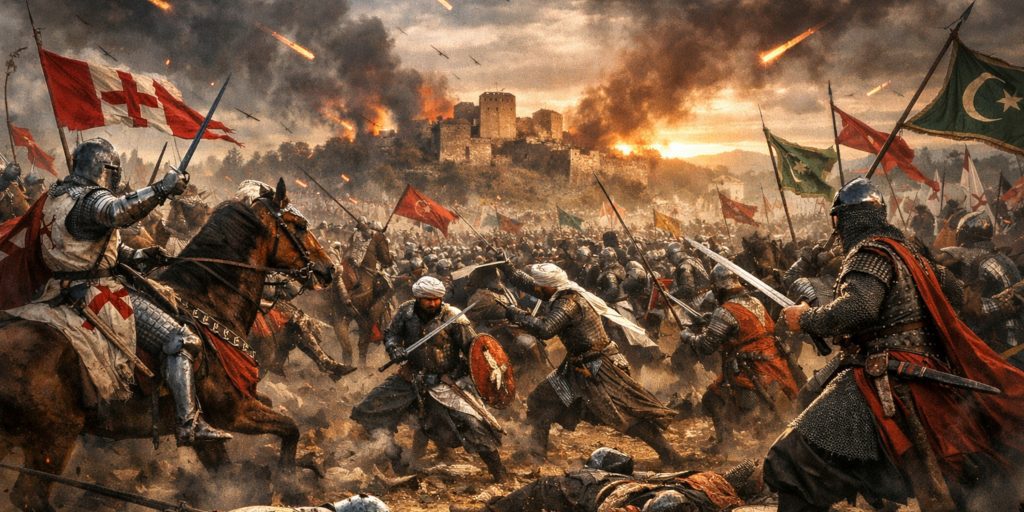
The exact battlefield lies near modern Nikopol in Bulgaria. Archaeological work has uncovered weapon fragments, arrowheads, horse fittings and pieces of armour from the late fourteenth century.
Finds from the area include:
- Iron arrowheads of both western and Ottoman style
- Fragments of mail and plate armour
- Horse harness fittings and stirrups
- Remains of defensive earthworks and battlefield positions
Archaeologists believe the Ottoman defensive line was carefully prepared before the battle, supporting the accounts of sharpened stakes and layered formations.
The fortress of Nicopolis itself still survives in ruined form above the Danube. Standing there today, it is easy to understand why the crusaders believed they held the advantage. It is equally easy to see how quickly that confidence evaporated once Bayezid arrived.
Why the Crusaders Lost
Several factors explain the defeat:
- Poor discipline among the French and Burgundian nobles
- Failure to follow Sigismund’s battle plan
- Underestimation of Ottoman tactics
- Effective use of terrain and defensive obstacles by Bayezid
- Strong Ottoman reserves, particularly the Serbian cavalry
- Exhaustion and disorder among the crusader heavy cavalry
Nicopolis has often been compared to later battles such as Agincourt. In both cases heavily armoured knights attacked with confidence and found themselves trapped, exhausted and destroyed by a more disciplined enemy.
Legacy of the Battle of Nicopolis
The Battle of Nicopolis marked the end of the last major international crusade of the Middle Ages. Future campaigns against the Ottomans would be smaller, more cautious and usually less romantic.
For historians, Nicopolis remains fascinating because it captures a moment of change. The old world of noble cavalry charges and heroic individual combat was colliding with a new style of warfare based on planning, discipline and combined arms.
The French nobles at Nicopolis fought with enormous bravery. They also made nearly every mistake available to them. It is one of those battles where the lesson seems painfully obvious from a distance, though perhaps rather less so when you are sitting on a warhorse wearing forty kilograms of steel and being told that honour demands an immediate charge.
Further Reading
- Jean Froissart, Chronicles
- Aziz Atiya, The Crusade of Nicopolis
- Kelly DeVries, Nicopolis 1396: The Last Crusade
- David Nicolle, Nicopolis 1396: The Last Crusade
Watch the documentary: