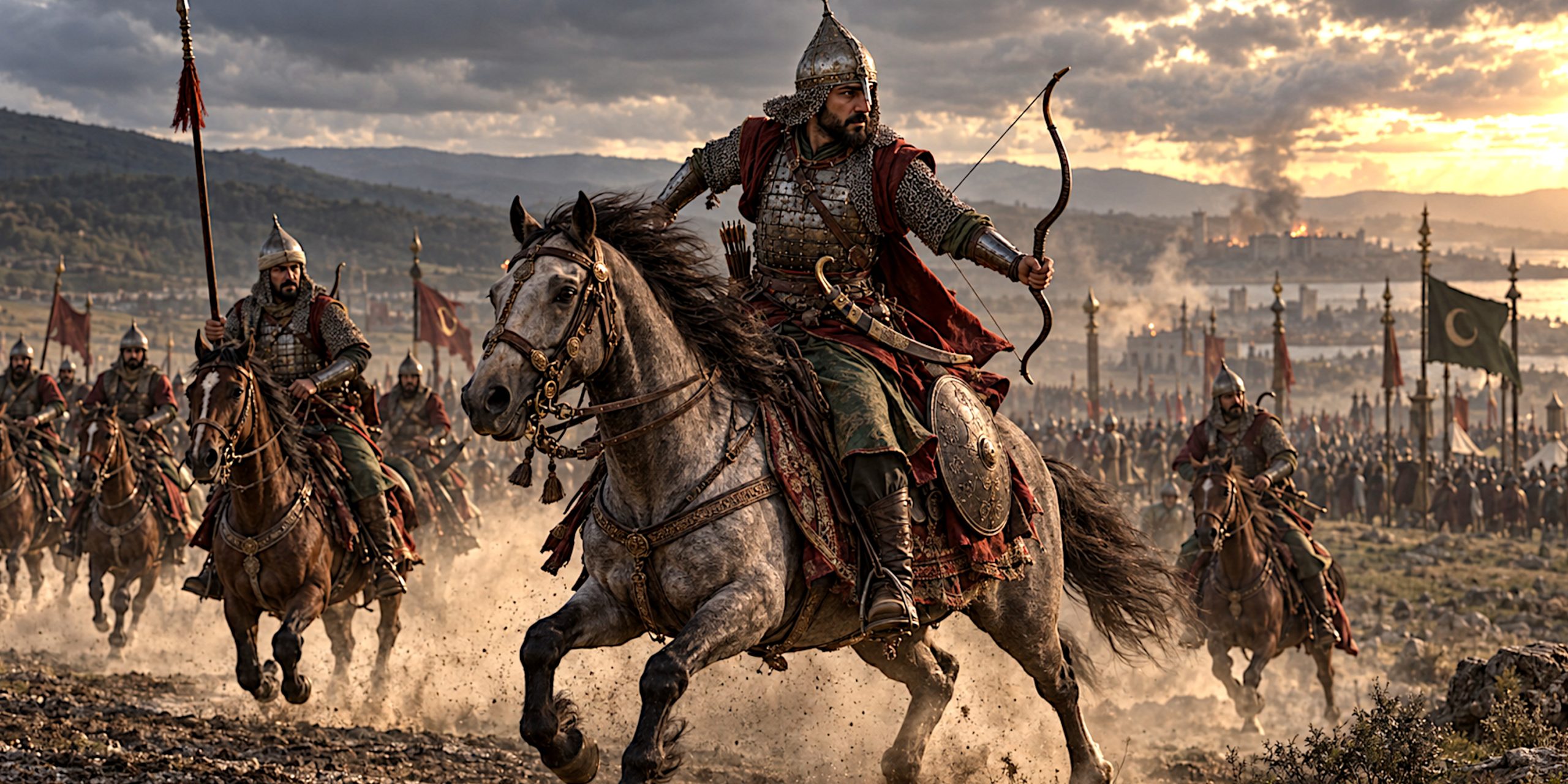
The sipahis were mounted soldiers of the Ottoman Empire, but that simple definition conceals a complicated military and social institution. Some served in the provinces in return for rights to collect specified tax revenues. Others belonged to the sultan’s salaried household cavalry. They ranged from modest provincial horsemen to magnificently equipped guardsmen riding close to the centre of imperial power.
At their height during the fifteenth and sixteenth centuries, provincial sipahis allowed the Ottoman state to mobilise tens of thousands of cavalry without maintaining every man permanently on the central payroll. They supervised rural revenues in peacetime, assembled under provincial commanders when summoned and arrived with their own horses, weapons and armed retainers.
They are often described as “Ottoman knights”. The comparison is tempting, and sometimes useful, but it is also rather too tidy. A sipahi did not ordinarily own his grant as private hereditary property, and the Ottoman state retained considerably more control over land, revenue and appointment than the label “feudal knight” suggests.
Sipahi Facts at a Glance
| Detail | Description |
|---|---|
| Name | Sipahi, derived from the Persian sepāhī, meaning soldier |
| Principal period | Fourteenth to nineteenth centuries |
| Empire | Ottoman Empire |
| Military role | Cavalry, provincial administration and household service |
| Main categories | Timarlı sipahis and Kapıkulu cavalry |
| Typical weapons | Composite bow, lance, kilij, mace and shield |
| Later weapons | Pistols, carbines and the broader-bladed pala |
| Common armour | Mail, mail-and-plate armour, helmets and arm defences |
| Provincial support | Revenue assignments known as timars and zeamets |
| Armed retainers | Cebelüs, supplied according to the value of the holder’s revenue |
| Main theatres | Anatolia, the Balkans, Hungary, the Mediterranean borderlands and the Middle East |
| Decline | Gradual transformation from the late sixteenth century onwards |
| Final abolition | The remaining sipahi organisations disappeared during nineteenth-century military reforms |
What Does Sipahi Mean?
The word sipahi ultimately derives from the Persian sepāhī, broadly meaning a soldier or member of an army. Variants of the name travelled widely. The British colonial term “sepoy” and the French spahi share the same linguistic ancestry, although they refer to quite different military institutions.
Within Ottoman history, sipahi could be used broadly for cavalrymen, but two principal groups must be separated:
- Timarlı sipahis were provincial cavalrymen supported by assigned tax revenues.
- Kapıkulu sipahis were salaried members of the sultan’s household cavalry.
The distinction matters. A provincial timar holder in Bosnia or Anatolia occupied a different position from a palace cavalryman stationed close to Istanbul. Modern illustrations and games have a habit of placing every Ottoman horseman beneath one convenient label. History, as usual, refuses to organise itself for the benefit of the character-selection screen.
Sipahis must also be distinguished from the akıncıs, irregular or semi-regular frontier raiders who specialised in reconnaissance, plundering and disruption. Both fought on horseback, but they belonged to different traditions and performed different functions.
Origins of the Sipahis
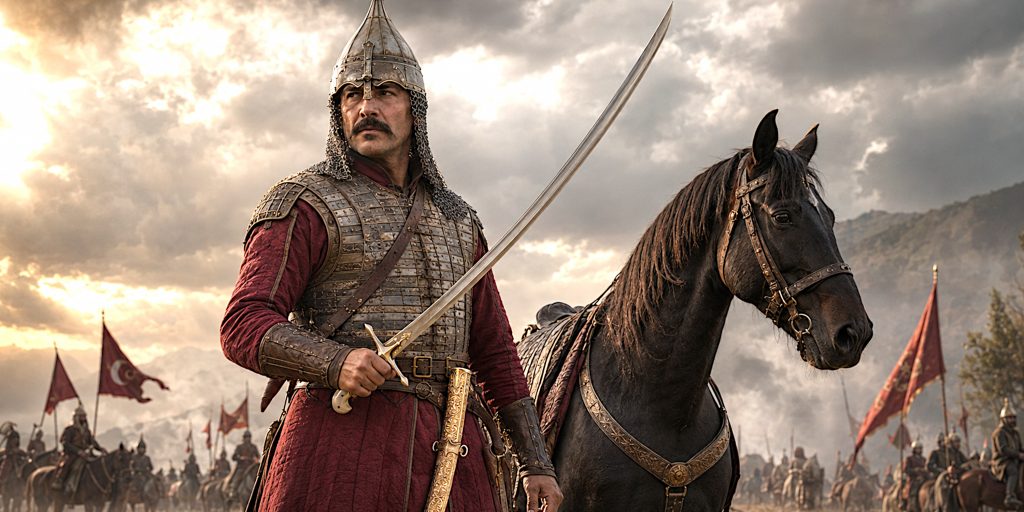
Ottoman mounted warfare developed from a mixture of Turkic, Persianate, Islamic, Byzantine and Balkan military traditions. The earliest Ottoman rulers operated in a frontier world where mounted followers, tribal warriors, local Christian lords, dervish networks and ambitious adventurers all contributed to expansion.
The timar system had precedents rather than a single identifiable parent. Islamic iqta arrangements assigned revenue from land in return for service, while the Byzantine pronoia system also connected revenue rights with military and administrative obligations. The Ottomans adapted practices inherited from conquered territories and neighbouring states, then subjected them to increasingly elaborate registration.
During the fourteenth century, mounted warriors received shares of revenue from conquered districts. Under Murad I, Bayezid I and their successors, these arrangements became more systematic. Mehmed II’s centralising reforms in the fifteenth century strengthened the state’s supervision of provincial revenues and military obligations.
By the sixteenth century, especially under Süleyman I, the timar system had reached its most developed form. Registers recorded villages, households, crops, mills, taxes and anticipated revenues with an administrative appetite that was impressive, intrusive and relentlessly Ottoman.
The Timar System Explained
A timar was not usually a private estate handed permanently to a cavalryman. It was an assignment of specified revenues, generally derived from agricultural taxation and other local dues. The underlying land frequently remained state land, while peasants retained recognised cultivation rights.
The sipahi was entitled to collect the revenues allocated to him, subject to established laws and local regulations. In return, he owed mounted military service and might be required to bring additional equipped horsemen.
Revenue assignments were commonly divided into three broad levels:
| Revenue assignment | Approximate annual value | Typical holder |
|---|---|---|
| Timar | Up to 19,999 akçes | Provincial cavalryman or lower official |
| Zeamet | 20,000 to 99,999 akçes | Senior cavalryman or provincial official |
| Has | 100,000 akçes or more | Sultan, governor, prince or high official |
The exact obligations varied by province and period. In principle, greater revenue brought greater military responsibility. A prosperous holder was expected to provide one or more armed retainers known as cebelüs, along with horses, equipment and campaign provisions.
The state could remove or redistribute a timar if its holder failed to report for duty, neglected his obligations or lost official favour. Some grants remained within families over extended periods, particularly in later centuries, but inheritance was neither automatic nor equivalent to unrestricted ownership.
This gave the government a means of supporting cavalry while limiting the emergence of a fully independent landed aristocracy. It did not always work perfectly. No fiscal system involving armed men, provincial influence and valuable income has ever remained entirely free of creative interpretation.
Life in the Provinces
A provincial sipahi lived between the military and rural worlds. He might reside on or near the revenues assigned to him, oversee collection through agents and maintain relationships with village communities, officials and judges.
His responsibilities could include:
- Collecting authorised taxes and dues
- Encouraging the continued cultivation of agricultural land
- Reporting abandoned or newly occupied holdings
- Assisting in local security
- Pursuing suspected criminals
- Supporting provincial administration
- Maintaining horses, equipment and retainers
- Reporting for campaign when summoned
A sipahi did not possess unlimited judicial authority. Formal punishments depended upon legal decisions made by a kadı, or judge. In practice, of course, the balance between official law and local power varied. A mounted revenue holder with armed followers was not a socially insignificant neighbour.
Christian sipahis existed, particularly during the early incorporation of Balkan territories. Ottoman registers reveal Christian timar holders in regions such as Bosnia and Serbia. Their presence shows that the early system could absorb members of pre-existing military elites. Over time, Muslim holders became increasingly dominant, although the process differed across provinces.
How the Sipahis Mobilised
When the sultan ordered a campaign, provincial authorities issued commands through the empire’s administrative hierarchy. Sipahis assembled beneath their local commanders and joined larger contingents led by a sanjakbeyi, the governor of a district. These forces then gathered under the appropriate beylerbeyi, or governor-general.
The mobilisation structure followed the empire’s provincial divisions:
- Individual sipahis assembled with their cebelüs.
- Local contingents gathered under district commanders.
- District forces joined the provincial army.
- Provincial armies marched towards the imperial rendezvous.
- The combined force operated alongside the sultan’s household troops, Janissaries, artillery and auxiliary units.
Sipahis generally supplied their own horses and personal equipment. Campaign orders could specify when and where they were expected to appear. Inspections attempted to confirm that men were properly mounted and armed rather than presenting a particularly optimistic interpretation of military readiness.
The system could place a large cavalry force in the field without requiring the treasury to pay every soldier throughout the year. Its weakness was that provincial troops were tied to the agricultural and fiscal calendar. Long campaigns, distant theatres and extended winter operations placed growing pressure on men whose income depended upon revenue collected elsewhere.
How Many Sipahis Were There?
Numbers are difficult because Ottoman records may count revenue holders, retainers, household cavalry or theoretical obligations rather than the men who actually reached a battlefield.
Sixteenth-century registers suggest that the empire could draw upon tens of thousands of timar holders. Once their cebelüs were included, the potential provincial cavalry establishment was considerably larger. Estimates approaching 80,000 or 90,000 men sometimes appear for the combined theoretical force at the system’s height, but this should not be mistaken for a reliable battlefield total.
Not every registered holder served simultaneously. Illness, distance, exemptions, administrative failures, local emergencies and ordinary fraud all reduced effective strength. Ottoman chroniclers and European observers also had reasons to inflate numbers. Large armies impress friends, frighten enemies and make defeats easier to explain.
Organisation of the Ottoman Cavalry
Timarlı Sipahis
These were the provincial, revenue-supported cavalrymen most closely associated with the classic timar system. They served under provincial commanders and formed large mounted wings in Ottoman field armies.
Rumelian sipahis from the European provinces and Anatolian sipahis from Asia Minor were frequently positioned on opposing wings of the battle line. The precise arrangement changed according to the army, terrain and campaign.
Kapıkulu Cavalry
The Kapıkulu cavalry belonged to the sultan’s household establishment and received salaries from the central treasury. They were more closely connected to court service and the imperial army than provincial timar holders.
The household cavalry was conventionally organised into six divisions, collectively known as the Altı Bölük Halkı, or People of the Six Divisions:
| Division | General position or association |
|---|---|
| Sipahis | Senior household cavalry division |
| Silahdars | “Weapon-bearers”, another prestigious division |
| Right Ulufecis | Salaried cavalry division |
| Left Ulufecis | Salaried cavalry division |
| Right Garips | Household cavalry division |
| Left Garips | Household cavalry division |
Their duties extended beyond charging enemy formations. Household cavalry protected the sultan, guarded standards and valuable equipment, carried messages and performed ceremonial or administrative functions.
The Kapıkulu sipahis were prestigious, but they should not be confused with the entire sipahi class. Saying “the sipahis were palace cavalry” is only half right. Saying “the sipahis were provincial timariots” is also only half right. Ottoman terminology occasionally behaves like a trap laid for hurried writers.
Arms and Armour
Sipahi equipment varied across three centuries, several continents and enormous differences in wealth. There was no single uniform kit worn by every Ottoman cavalryman. A prosperous sixteenth-century household sipahi could possess extensive metal armour and decorated weapons. A modest provincial holder might carry simpler equipment, while a cebelü could be more lightly protected.
The Kilij
The kilij was the sword most strongly associated with Ottoman cavalry. It developed from earlier Turco-Mongol and Islamic sabres and was designed primarily for powerful cuts from horseback.
Typical characteristics included:
- A single-edged, curved blade
- A comparatively narrow section near the hilt
- A widening near the point known as the yelman
- A short crossguard
- A grip often angled slightly forward
- A wooden scabbard covered in leather, textile or decorative metal
The expanded yelman added cutting mass near the blade’s forward section while preserving a manageable weapon. Surviving examples differ considerably in curve, width and decoration.
The Pala
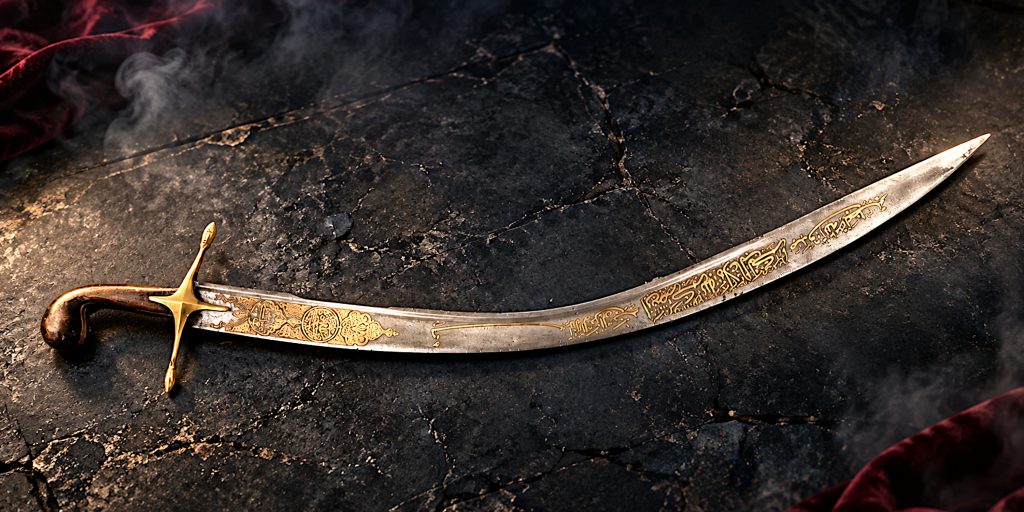
The pala was a broad and often strongly curved Ottoman sabre that became especially prominent during the seventeenth and eighteenth centuries. The word could be used somewhat loosely, but surviving weapons often have substantial blades suited to close mounted combat.
Compared with many earlier kilij forms, a pala could feel more forward-weighted and visually imposing. It was not subtle. Then again, subtlety has limited value when striking at an armoured opponent from a moving horse.
Straight Swords and Imported Blades
Curved sabres dominated the popular image of the sipahi, but Ottoman horsemen also used straight and slightly curved blades, particularly during the empire’s earlier centuries. Weapons and blades circulated across the Balkans, Italy, Hungary, the Caucasus and the Islamic world.
European blades could be mounted with Ottoman hilts, while captured weapons might return to service in altered form. Attempting to assign every surviving sword to one rigid national category can obscure the lively international trade in sharp objects.
Composite Bow
The Ottoman composite bow was one of the sipahi’s most important weapons. Constructed from wood, horn, sinew and glue, it combined a short overall length with considerable power. Its compact form suited mounted use.
A trained horse archer could:
- Shoot while approaching or withdrawing
- Harass enemy formations
- Strike horses and lightly protected troops
- Disrupt an opponent before close combat
- Carry several arrow types for different purposes
Ottoman mounted archery remained significant well into the age of gunpowder. Firearms did not instantly persuade the bow to retire, despite what neat military timelines sometimes imply.
Lance
The lance gave sipahis reach and impact during charges and close formations. It could be used against cavalry or infantry, although its form and length varied. Some depictions show relatively light lances suitable for mobile combat rather than the extremely heavy couched lances associated with certain western European men-at-arms.
Mace and War Hammer
Maces and war hammers provided compact alternatives for fighting heavily protected opponents. A metal mace concentrated force without relying upon an edged blade. Ottoman examples range from plain functional weapons to lavishly decorated objects that may also have served as insignia of status.
Firearms
Pistols and carbines became increasingly common among Ottoman cavalry during the seventeenth and eighteenth centuries. Adoption was uneven and did not automatically replace traditional weapons. A cavalryman might carry pistols alongside a sabre, retaining whichever tool was best suited to the immediate unpleasantness.
Shields
Sipahis used several shield forms, most famously the round kalkan. These were often constructed from spirally wound cane or wicker, reinforced with thread, leather and metal fittings.
A kalkan was relatively light and could offer useful protection against cuts and missiles. Metal shields also existed, especially among wealthy or elite warriors.
Body Armour
The principal forms of sipahi body protection included:
- Mail shirts
- Mail-and-plate armour
- Circular or rectangular plates connected by mail
- Arm defences and vambraces
- Thigh or knee protection
- Padded garments worn beneath metal armour
- Textile coats worn over or instead of mail
One notable Ottoman and Persianate form used rows of metal plates joined by mail, combining flexibility with protection. Modern terminology varies, and museum catalogues do not always classify these armours in precisely the same way.
Helmets
The çiçak, or chichak, became a recognisable Ottoman helmet form. It commonly featured a bowl with a peak, sliding nasal bar, cheek protection and mail defence for the neck.
Other helmets included conical forms with mail aventails and richly decorated parade pieces. Surviving elite helmets may be covered with inscriptions, gilding and intricate ornament. They are beautiful objects, although their beauty should not distract from the rather practical purpose of preventing a man’s skull from being opened.
Horse Armour
Wealthy cavalrymen could protect their mounts with mail, textile coverings or metal shaffrons for the head. Full horse armour was expensive and probably never universal. Museum survivals naturally favour prestigious equipment, creating a risk that we imagine every provincial sipahi dressed like an imperial treasury display.
Sipahi Battlefield Tactics
Sipahis were versatile cavalry rather than a single-purpose shock force. Their tactics combined mounted archery, manoeuvre, pursuit and close combat.
They could operate on the wings of an Ottoman army, protecting the centre and threatening the enemy’s flanks. Depending upon circumstances, they might:
- Screen the army’s deployment
- Probe enemy positions
- Exchange arrows with hostile cavalry
- Support or exploit attacks by irregular horsemen
- Encircle an exposed formation
- Charge disordered troops
- Pursue a retreating enemy
- Protect the army during withdrawal
The Ottoman centre often contained Janissaries, artillery, field defences and the sultan’s command position. Provincial cavalry on the wings provided mobility around this comparatively stable core.
Claims that the Ottomans used one permanent “crescent formation” or an unchanging national tactic should be treated cautiously. Feigned retreats, envelopments and missile harassment were established features of steppe and Islamic warfare, but Ottoman commanders adapted to terrain and circumstance. Armies that never changed their methods rarely built empires lasting six centuries.
Major Battles and Campaigns
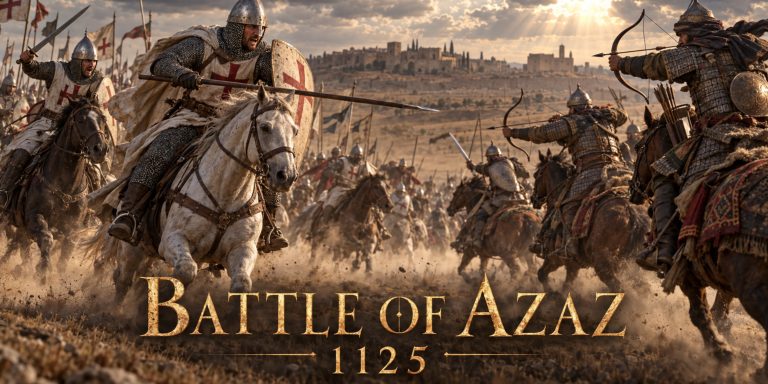
Kosovo, 1389

Mounted Ottoman forces played a central part in the confrontation with the army led by Prince Lazar. Later traditions have heavily mythologised the battle, making precise reconstruction difficult. It nevertheless belongs to the formative period in which Ottoman provincial cavalry institutions expanded through the Balkans.
Nicopolis, 1396
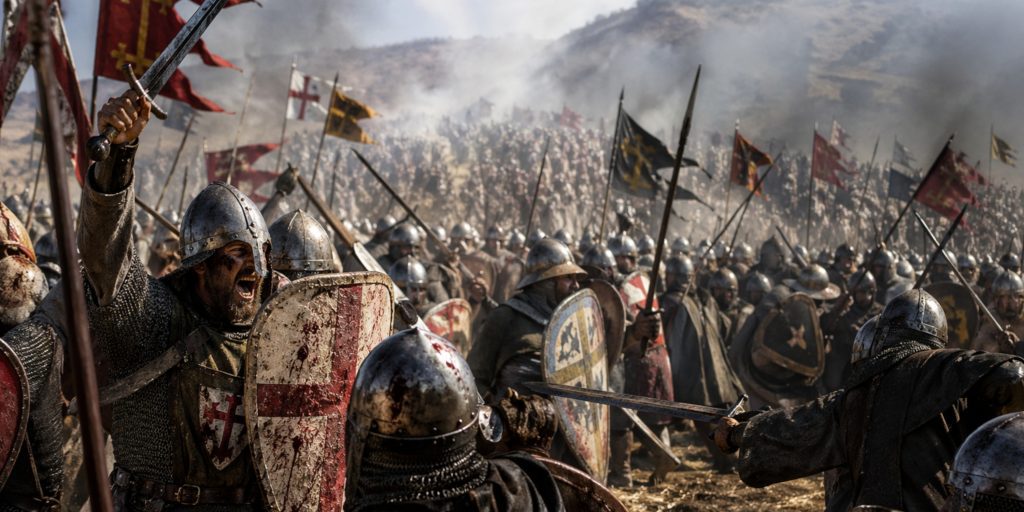
At Nicopolis, Ottoman forces defeated a crusading army whose mounted nobles launched an aggressive assault. Ottoman cavalry contributed to the wider containment and destruction of the crusader army after its initial attack lost momentum.
Varna, 1444
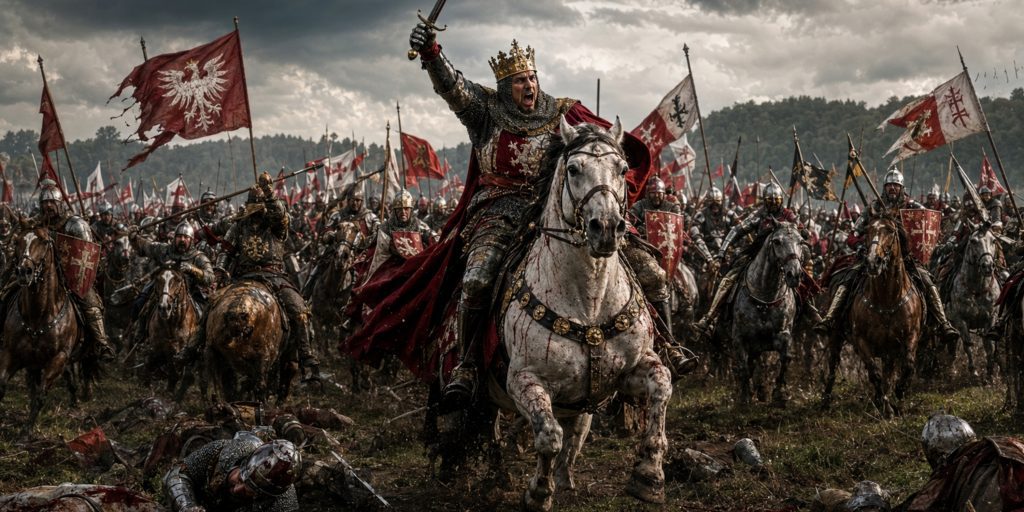
Sipahis served on the wings of Murad II’s army against the crusading coalition led by Władysław III and John Hunyadi. The battle ended in a decisive Ottoman victory after the king’s fatal attack towards the Ottoman centre.
Constantinople, 1453
The siege is remembered for artillery, infantry assaults and naval manoeuvres, but Mehmed II’s army also contained substantial cavalry forces. Mounted troops guarded approaches, maintained communications, gathered supplies and prevented outside interference.
Chaldiran, 1514
At Chaldiran, Selim I defeated Shah Ismail’s Safavid army. Ottoman cavalry operated alongside disciplined infantry and artillery. The battle demonstrated both the continuing importance of cavalry and the growing power of field fortifications and firearms.
Mohács, 1526
Sipahis formed part of Süleyman I’s army during the crushing defeat of the Hungarian kingdom. Ottoman tactical depth, disciplined central formations and mobile wings helped turn the Hungarian attack into a disaster.
Vienna, 1529
Provincial cavalry accompanied the campaign into Habsburg territory, but weather, supply difficulties and the limitations of siege logistics affected the Ottoman army. Horses suffered badly during difficult marches, reminding everyone that cavalry warfare ultimately depended upon grass, fodder and roads rather than dramatic paintings.
The Long Turkish War, 1593 to 1606
During prolonged warfare against Habsburg forces, sipahis faced increasingly fortified frontiers and firearm-heavy armies. They remained useful, but the fiscal and military pressures of sustained campaigning exposed weaknesses in the traditional mobilisation system.
Contemporary Voices
European descriptions of Ottoman armies must be read carefully. Diplomats, soldiers and travellers wrote for particular audiences and often used the Ottomans to criticise their own societies.
The Habsburg ambassador Ogier Ghiselin de Busbecq admired Ottoman military discipline. He wrote of the soldier’s:
“patience, self-denial, and thrift”
Busbecq contrasted Ottoman endurance with what he regarded as the indiscipline of Christian troops. His observations are valuable because he travelled through Ottoman territory during the reign of Süleyman I, though admiration and anxiety run together throughout his account.
Discussing Ottoman public service, he also claimed:
“It is by merit that men rise in the service.”
This was an idealised outsider’s judgement rather than a complete description of Ottoman society. Patronage, family connections and wealth certainly mattered. Even so, Busbecq recognised that imperial service could elevate capable men in ways that unsettled European assumptions about inherited rank.
Giacomo Tedaldi, writing about the siege of Constantinople in 1453, estimated that tens of thousands of Ottoman troops were mounted and that only a portion possessed mail or leather protection. His figures are uncertain, but the description usefully warns against imagining the entire cavalry arm as uniformly equipped heavy horse.
Ottoman sources offer different perspectives. Administrative registers describe obligations, revenues and service in formidable detail, while chronicles tend to concentrate on commanders, battles and imperial victory. Neither tells us everything about the ordinary sipahi. Bureaucrats recorded what should have happened; chroniclers recorded what deserved remembrance. The working cavalryman lived somewhere between the two.
Archaeology and Surviving Evidence
There is no single archaeological signature that identifies a man as a sipahi. A sword blade, horseshoe, arrowhead or fragment of mail does not preserve the owner’s payroll category. Historians therefore combine archaeological evidence with administrative records, inscriptions, probate inventories, illustrated manuscripts and surviving arms.
Weapons and Armour
Museums preserve Ottoman helmets, mail-and-plate defences, shields, sabres, bows and horse armour from the period in which sipahis flourished. Collections at the Metropolitan Museum of Art, the Topkapı Palace, the Military Museum in Istanbul, the Wallace Collection and the Royal Armouries provide particularly useful comparisons.
Surviving objects are weighted towards elite ownership. Decorated armour and presentation weapons entered imperial treasuries and aristocratic collections more readily than the plain equipment of provincial soldiers. What survives is therefore not an average kit list.
Forts and Battlefields
Archaeological work at Ottoman and Habsburg frontier sites has revealed:
- Horseshoes and harness fittings
- Arrowheads and firearm projectiles
- Weapon fragments
- Camp equipment
- Ceramics and cooking vessels
- Fortification phases
- Animal bones associated with military provisioning
- Coins and personal objects
These finds illuminate the environments in which sipahis served, although attributing individual objects to particular troop types remains difficult.
Administrative Archaeology
The richest evidence for the timar system is documentary. Ottoman cadastral registers, known as tahrir defterleri, recorded settlements, taxpayers, production and assigned revenues. Appointment documents and campaign registers help trace individual holders and obligations.
Recent scholarship has also used probate inventories to study the property of soldiers. These reveal that sipahis could possess farms, animals, weapons, household goods and commercial interests. The distinction between cavalryman, revenue holder and rural entrepreneur became increasingly porous over time.
Why Ottoman Archaeology Developed Slowly
For many years, archaeology in former Ottoman territories concentrated upon ancient, classical, Byzantine or medieval Christian remains. Ottoman layers were sometimes treated as too recent, politically awkward or simply less glamorous.
That has changed. Archaeologists now pay greater attention to Ottoman ceramics, fortifications, domestic spaces, military landscapes and rural settlement. The material record is gradually giving ordinary soldiers and villagers a presence that imperial chronicles rarely allowed them.
Sipahis and the Rural Population
The relationship between sipahis and peasants was central to the system. Cultivators produced the revenues that supported military service, while the state expected timar holders to protect production and prevent abandonment.
In theory, laws limited what a sipahi could demand. Peasants possessed recognised rights to cultivate their holdings and could seek judgement against unlawful exactions. The sipahi was not supposed to evict cultivators casually or invent new taxes.
In practice, relations ranged from cooperation to coercion. A responsible holder benefited from productive, stable villages. An abusive one could overreach, especially where provincial supervision was weak. Petitions and court records show rural communities challenging illegal demands, which indicates both that exploitation occurred and that legal resistance was possible.
The system was therefore neither benign stewardship nor simple serfdom. It was a negotiated and unequal relationship governed by imperial regulation, local custom and the practical distribution of power.
The Transformation of the Sipahis
The sipahis did not suddenly become obsolete because someone fired a musket. Their decline was gradual and connected to financial, administrative and military change.
From the late sixteenth century, the Ottoman Empire faced prolonged wars, inflation, population movement and rising military costs. Infantry armed with firearms became increasingly important. Fortified frontiers demanded soldiers who could remain in service for long periods rather than cavalry mobilised around provincial revenue cycles.
At the same time:
- More state revenue was redirected into tax farming
- Timars were divided, reassigned or absorbed into other arrangements
- Provincial governors expanded their personal retinues
- Household troops increased in political influence
- Some timar holders avoided service or provided inadequate equipment
- Firearm-armed mercenaries and provincial soldiers became more important
- Long wars strained the traditional campaign system
This was a transformation rather than an uncomplicated collapse. Timarlı sipahis remained militarily relevant through much of the seventeenth century, especially for reconnaissance, regional security and mobile warfare. The institution changed at different speeds across the empire.
Ottoman advice writers often blamed corruption and the appointment of supposedly unsuitable men for military decline. Their complaints are useful but cannot be accepted at face value. Authors describing a lost golden age are rarely neutral accountants. They were diagnosing their own present, promoting reforms and occasionally settling scores.
Sipahi Revolts and Political Power
Household sipahis became politically active in Istanbul, much as the Janissaries did. Disputes over pay, appointments and court factions could lead to demonstrations or rebellion.
The sipahis were involved in disturbances during the late sixteenth and seventeenth centuries, including the political crisis surrounding the deposition and death of Osman II in 1622. Relations with the Janissaries alternated between rivalry and cooperation.
Provincial timar holders also participated in unrest associated with the Celali rebellions in Anatolia. Economic disruption, military demobilisation and competition for revenue pushed many armed men towards provincial factions.
The sipahi was therefore never merely a battlefield figure. He belonged to a military class with economic interests and political leverage. Governments tend to discover that paying armed institutions is expensive, while not paying them can be considerably more so.
The End of the Sipahi System
By the eighteenth century, timar-supported cavalry no longer occupied the position it had held under Mehmed II or Süleyman I. Provincial armies increasingly depended upon governors’ households, local notables, mercenaries and other military formations.
Sultan Mahmud II’s destruction of the Janissary corps in 1826 formed part of a much wider reorganisation of Ottoman military power. Remaining household cavalry institutions were abolished or reorganised, while modern salaried forces replaced older service structures.
The word sipahi did not disappear from military language. French colonial armies later raised spahi cavalry regiments in North Africa, while related terms continued elsewhere. These formations shared a name and an association with mounted soldiers, not institutional continuity with the classical Ottoman timar system.
Sipahis Compared with European Knights
| Feature | Ottoman timarlı sipahi | Western European knight |
|---|---|---|
| Economic basis | Assigned rights to collect specified revenues | Landholding, fief, salary or household service |
| Ownership | Revenue assignment remained subject to state control | Varied, but could become strongly hereditary |
| Military role | Mounted archery, manoeuvre and close combat | Usually associated with armoured shock combat |
| Obligations | Personal service and provision of retainers | Service defined by lordship, contract or pay |
| Main sword | Kilij and later pala | Arming sword, longsword, falchion or sabre |
| Armour | Mail, mail-and-plate and partial protection | Mail followed by increasingly extensive plate |
| Administrative role | Revenue collection and provincial security | Local lordship, justice and estate management |
| Social status | Member of the Ottoman military class | Member of a varied martial and noble elite |
Both were mounted warriors whose income could be connected to land or revenue. Beyond that broad resemblance, the systems developed under different laws, political structures and tactical traditions.
The sipahi was generally more closely associated with mounted archery than the late medieval western knight. The Ottoman government also maintained a stronger formal claim over the revenues supporting provincial service.
Common Myths About Sipahis
Sipahis Were All Heavily Armoured
Some certainly were, especially wealthy holders and household cavalrymen. Others wore limited armour or none at all. Period, region, rank and personal means all mattered.
Every Sipahi Owned a Feudal Estate
Most provincial sipahis held rights to collect assigned revenues. This was not the same as possessing unrestricted private ownership of the villages concerned.
Sipahis Were the Ottoman Equivalent of Janissaries on Horseback
The household cavalry shared certain connections with central service, but timarlı sipahis belonged to the provincial system. The term covered more than one institution.
Firearms Immediately Made Them Obsolete
Ottoman cavalry adopted pistols and carbines while continuing to use traditional weapons. Their changing role resulted from fiscal and organisational pressures as much as technology.
Sipahis Only Charged with Swords
Mounted archery, screening, pursuit, flank attacks and reconnaissance were fundamental parts of their service. The sword charge makes a better painting, but the bow probably did more routine work.
Legacy
The sipahis connected Ottoman warfare to the empire’s provincial economy. Their service helped transform rural revenues into military power while binding thousands of local cavalrymen to the central government.
Their greatest strength was flexibility. A sipahi could patrol a district in peacetime, assemble under provincial command, march across the empire and fight with bow, lance or sabre. Their greatest weakness was the same structure that sustained them. Once warfare demanded longer service, more firearms, permanent garrisons and greater central expenditure, the timar system became increasingly difficult to maintain.
They should neither be romanticised as gallant eastern knights nor dismissed as cavalry left behind by gunpowder. Sipahis adapted, resisted, accumulated wealth, entered politics and survived far longer than a simple story of military obsolescence allows.
What interests me most is how thoroughly they complicate the familiar divide between soldier and administrator. A sipahi was expected to be a cavalryman, tax collector, local authority and manager of military resources. It was an impressive list of duties, especially for someone who also had to keep several horses alive on campaign.
Where to See Sipahi Arms and Armour
Visitors interested in the material world of Ottoman cavalry should examine collections at:
- Topkapı Palace Museum, Istanbul, for imperial weapons, armour and ceremonial objects
- Istanbul Military Museum, for Ottoman arms, armour, standards and military displays
- The Metropolitan Museum of Art, New York, for Ottoman and Persianate armour, helmets, shields and swords
- The Wallace Collection, London, for Ottoman arms and armour
- The Royal Armouries, Leeds, for comparative Islamic and European cavalry equipment
- The Kunsthistorisches Museum, Vienna, for weapons captured, collected or presented during Habsburg-Ottoman conflict
- The Hungarian National Museum, Budapest, for material connected with the Ottoman frontier in Hungary
- The Badisches Landesmuseum, Karlsruhe, which holds important Ottoman objects associated with conflict and diplomatic exchange
Displays change, and not every weapon will be labelled specifically as sipahi equipment. Date, provenance and social context are more reliable than a dramatic attribution made for the benefit of a display case.
Sources and Further Reading
Useful modern studies include Halil İnalcık’s work on Ottoman institutions, Caroline Finkel’s Osman’s Dream, Rhoads Murphey’s Ottoman Warfare 1500–1700 and Gábor Ágoston’s studies of Ottoman warfare and military technology.
Linda Darling’s research warns against treating the timar system as a fixed institution followed by simple decline. Her work uses fiscal registers to trace changes in the identities and careers of timar holders. University of Arizona research repository
For arms and armour, the Metropolitan Museum’s catalogue provides detailed discussion of surviving Islamic weapons and protective equipment from Anatolia and neighbouring regions. Islamic Arms and Armor in The Metropolitan Museum of Art
Ogier Ghiselin de Busbecq’s Turkish Letters remains a valuable European account of the Ottoman state under Süleyman I, provided its political purpose and outsider’s perspective are kept in view. Fordham University primary-source edition
Research into Ottoman-period archaeology is helping correct the older concentration on classical and medieval remains. Internet Archaeology overview of Ottoman-period material evidence
Watch the documentary: