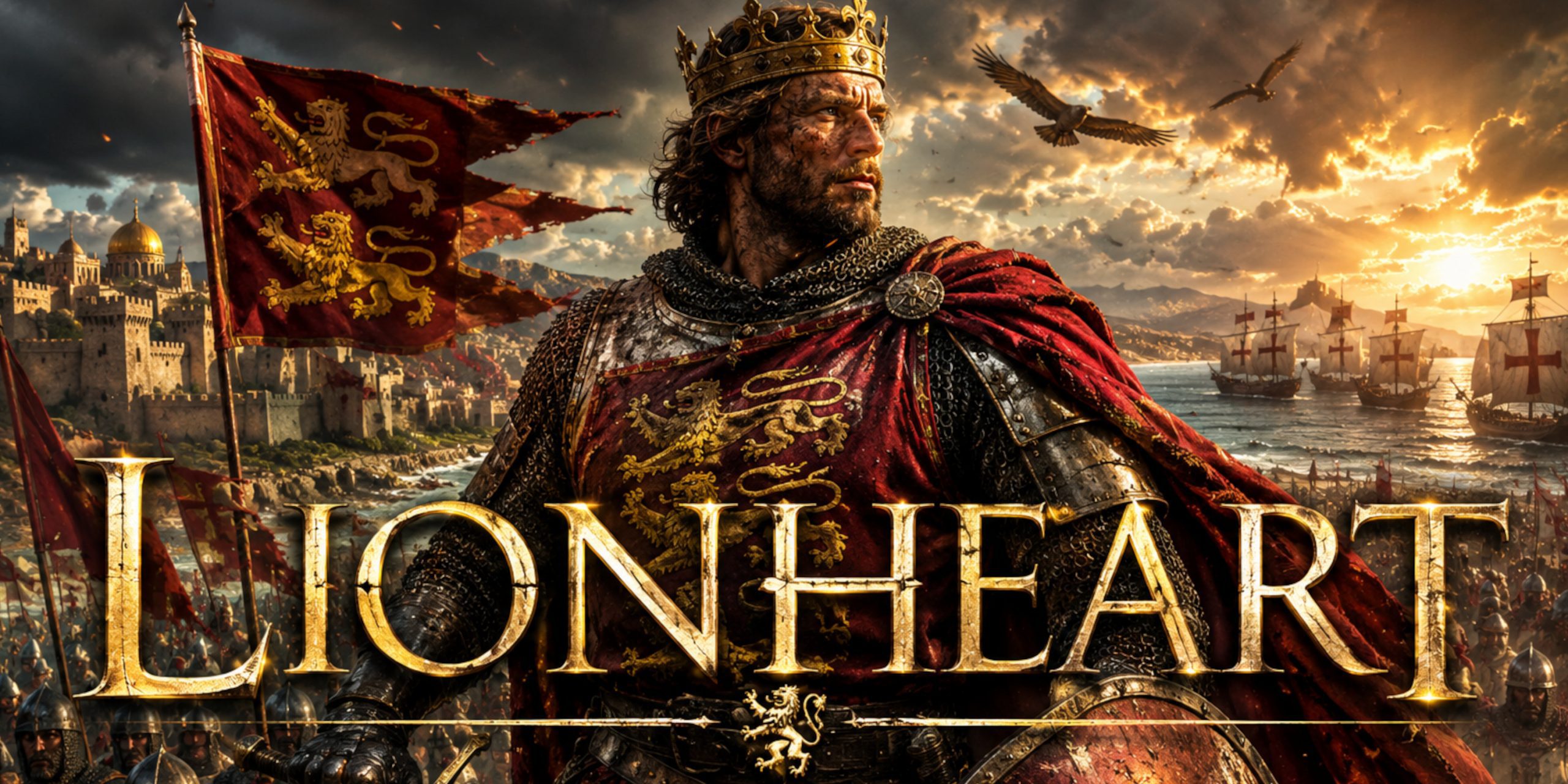
Few medieval kings have enjoyed a reputation quite like Richard I of England. To generations he has been the ultimate warrior king, the crusading hero who battled Saladin beneath the blazing skies of the Holy Land and whose name became inseparable from chivalry itself.
Yet the historical Richard is rather more complicated than the legend.
He spent remarkably little time in England, spoke French rather than English, taxed his kingdom heavily, and showed little interest in governing compared with fighting. Even so, it is difficult not to admire his courage. Medieval chroniclers, who could be remarkably cynical when they wished, repeatedly described him as fearless in battle and almost impossible to intimidate.
As a historian, I often find Richard fascinating because he represents both the best and worst qualities of medieval kingship. He was brilliant, brave, charismatic, impulsive, expensive, and frequently reckless. The result was one of the most celebrated reigns in European history.
Origins and Early Life
Richard was born on 8 September 1157 at Oxford.
He was the third legitimate son of King Henry II and Eleanor of Aquitaine, one of the most influential women of the Middle Ages. Few children could have inherited a more formidable family tree.
Richard grew up largely in Aquitaine, the vast French duchy ruled by his mother. Unlike England, Aquitaine was a land of castles, troubadours, feuding nobles, and near-constant warfare. It shaped him profoundly.
From an early age he showed talent as both a military leader and political operator. He also inherited his mother’s appreciation for literature and courtly culture. Contemporary sources suggest he composed poetry and enjoyed the sophisticated culture of southern France.
His relationship with his father was often turbulent. Like several of Henry II’s sons, Richard rebelled against the king during the Great Revolt of 1173-74.
The family was extraordinarily talented and almost impossibly dysfunctional.
Richard Becomes King
Richard became king in 1189 following Henry II’s death.
His accession came after years of political manoeuvring and conflict involving his father and his brothers. By this stage Richard was already one of the most experienced military commanders in western Europe.
One of his first priorities was financing the Third Crusade.
He famously remarked that he would have sold London itself if he could find a buyer.
The statement may have been exaggerated by chroniclers, but it reflected reality. Richard sold offices, privileges, lands, and rights across his realm to raise unprecedented sums for war.
The Third Crusade
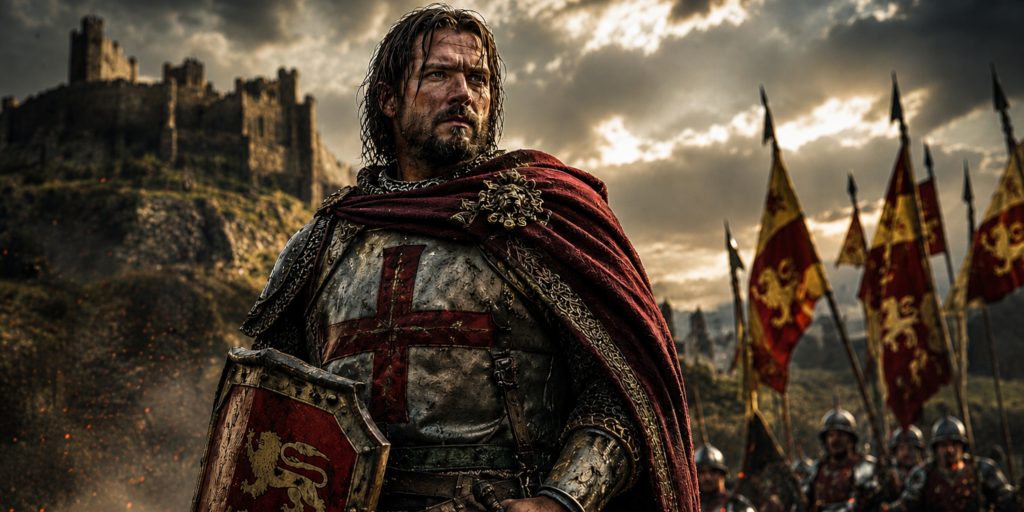
The event that defined Richard’s reputation was the Third Crusade.
The campaign began after Jerusalem fell to Saladin in 1187. The loss shocked Christian Europe and prompted one of the largest crusading expeditions ever assembled.
Richard travelled east alongside other powerful rulers, including the Holy Roman Emperor Frederick Barbarossa and King Philip II of France.
The crusade immediately demonstrated Richard’s military abilities.
The Conquest of Cyprus
In 1191 Richard seized Cyprus.
The campaign was swift, efficient, and highly profitable. The island became an important strategic base for crusader operations and remained under Latin control for centuries.
The Siege of Acre
Richard arrived at Acre while the city was already under siege.
His presence transformed the campaign.
Despite suffering from illness, he directed operations aggressively and inspired confidence among crusader forces. Acre eventually surrendered in July 1191 after one of the longest sieges of the Crusades.
Richard and Saladin
Richard’s encounters with Saladin became the stuff of legend.
Although the two rulers never met in person, medieval writers turned their rivalry into one of history’s great contests.
Both men respected each other’s abilities.
Richard won several tactical victories, while Saladin consistently prevented the crusaders from achieving their ultimate goal of retaking Jerusalem.
Battles and Military Acumen
Richard’s reputation rests largely on his military skill.
Many medieval kings commanded armies. Far fewer personally led charges, fought in sieges, and demonstrated genuine tactical innovation.
Battle of Arsuf (1191)
Arsuf remains Richard’s greatest battlefield achievement.
Saladin repeatedly harassed the crusader army as it marched south along the coast. Richard maintained strict discipline despite constant provocation.
When the Hospitallers finally launched an attack, Richard seized the moment and ordered a coordinated counteroffensive.
The result was a significant crusader victory.
His control over the battlefield demonstrated exceptional leadership and discipline.
Campaign Around Jaffa (1192)
Richard again showed his military brilliance during the fighting around Jaffa.
In one remarkable action he personally led a small force to recapture the city after a surprise attack.
Contemporary accounts describe him fighting with extraordinary determination.
As with many medieval chroniclers, one suspects some exaggeration. Medieval writers rarely let facts interfere with a good story. Even so, the underlying achievement was impressive.
Richard’s Military Strengths
Key strengths included:
- Exceptional personal courage
- Strong battlefield leadership
- Effective siege warfare techniques
- Ability to inspire loyalty
- Strategic flexibility
- Rapid decision-making under pressure
Weaknesses included:
- Impulsiveness
- Occasional overconfidence
- Limited patience for administration
- Reliance on expensive military campaigns
His reputation as one of medieval Europe’s finest commanders remains well deserved.
Arms and Armour
Richard lived during a period when knightly warfare was evolving rapidly.
Armour
Richard likely wore:
- A long mail hauberk reaching the knees
- Mail chausses protecting the legs
- A padded gambeson beneath armour
- Mail coif protecting head and neck
- Surcoat worn over armour
- Great helm during later campaigns
Mail remained the dominant form of protection throughout most of his military career.
Swords
Several sword types would have been associated with Richard and his knights:
| Sword Type | Description |
|---|---|
| Knightly Arming Sword | Standard one-handed cruciform sword |
| Oakeshott Type XII | Broad cutting blade common in the late twelfth century |
| Oakeshott Type Xa | Descendant of Viking Age designs |
| Ceremonial Sword | Used for royal and symbolic functions |
Richard’s personal weapons have not survived, but contemporary depictions suggest he carried high-status knightly swords of exceptional quality.
Other Weapons
- Lance
- Mace
- Dagger
- Spear
- Crossbow
- Composite bows employed by allied forces
The mounted lance remained the decisive weapon of the western knight.
Richard in England
One of the most surprising aspects of Richard’s reign is how little time he spent in England.
Of his ten-year reign, he spent only a few months there.
His priorities lay elsewhere:
- The Crusades
- France
- Defending Angevin territories
- Warfare against Philip II
This has led some historians to question whether Richard was truly an English king in any meaningful sense.
Yet medieval kingship was often international. Richard viewed England primarily as one component of a vast continental empire.
Capture and Ransom
On his journey home from the Crusade, Richard was captured in Austria in 1192.
He was handed over to Emperor Henry VI.
The ransom demanded for his release was enormous.
England was subjected to extraordinary taxation to secure his freedom. The amount raised remains one of the largest medieval ransom payments ever recorded.
Richard was finally released in 1194.
The episode only enhanced his legendary status.
Final Campaign and Death
Richard spent the last years of his life fighting in France against Philip II.
In March 1199 he besieged the small castle of Châlus-Chabrol.
During the siege he was struck by a crossbow bolt.
The wound became infected.
Richard died on 6 April 1199 at the age of forty-one.
According to tradition, he forgave the crossbowman responsible before his death, though the story remains difficult to verify.
His death deprived Europe of one of its most capable military leaders.
Artefacts and Places Associated with Richard
Although few personal possessions survive, visitors can still see important objects and locations connected to his life.
Fontevraud Abbey, France
Richard’s famous effigy remains one of the most important surviving royal monuments of the Middle Ages.
The painted tomb effigy provides valuable evidence regarding royal imagery and costume.
Rouen Cathedral
Richard’s heart was buried separately at Rouen.
Scientific analysis has revealed details about medieval embalming practices.
British Museum
Crusader-era artefacts, weapons, coins, and objects from Richard’s period provide context for his reign.
Tower of London
Collections relating to medieval kingship and warfare help illustrate the military world Richard inhabited.
Latest Archaeological Findings
Archaeology continues to shed light on Richard’s era.
Analysis of Richard’s Heart
Scientific examination of Richard’s preserved heart remains revealed traces of:
- Frankincense
- Mercury compounds
- Aromatic substances used in embalming
The findings demonstrated the sophisticated funerary practices used for high-status individuals.
Crusader Battlefield Archaeology
Excavations at sites connected with the Third Crusade continue to reveal:
- Fortification remains
- Siege works
- Weapons fragments
- Crossbow bolts
- Military camp evidence
These discoveries help historians reconstruct the campaigns Richard led.
Châlus-Chabrol
Archaeological work at the castle where Richard was mortally wounded has improved understanding of the siege and the fortress itself.
Contemporary Quotes
Several chroniclers left vivid descriptions of Richard.
Roger of Howden wrote:
“He was more valiant and more magnificent than any of his predecessors.”
Ambroise, who accompanied the Third Crusade, described Richard as:
“The lion-hearted king.”
The chronicler Ralph of Coggeshall observed:
“In war he was unrivalled.”
These writers admired Richard greatly, although modern historians approach such praise with appropriate caution.
Legacy
Richard’s reputation has endured for more than eight centuries.
To Victorian writers he became the ideal crusading monarch. To later generations he emerged as the heroic king of Robin Hood stories. Popular culture transformed him into a symbol of courage and chivalry.
The reality is more nuanced.
Richard was not a particularly effective administrator. He left England heavily taxed and often absent. Yet he was undoubtedly one of the finest battlefield commanders ever to wear the English crown.
When assessing medieval rulers, context matters. Kings were judged largely by military success, and by that standard Richard excelled.
His achievements at Arsuf, Jaffa, Acre, and countless lesser engagements secured his place among history’s great warrior kings.
Whether one sees him as a hero, a flawed adventurer, or something between the two, Richard the Lionheart remains impossible to ignore. Medieval Europe produced many kings. Very few became legends before they were even buried.