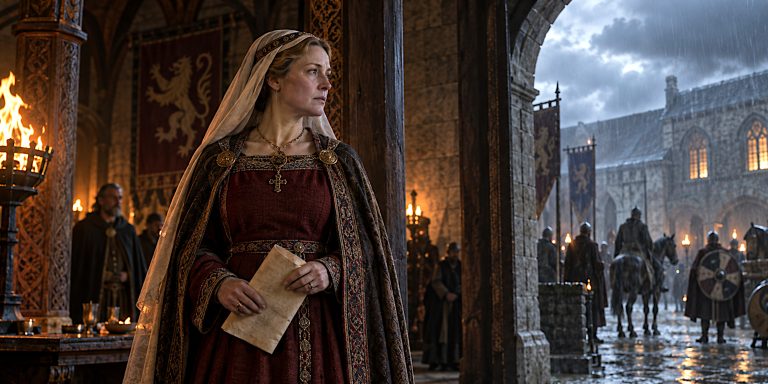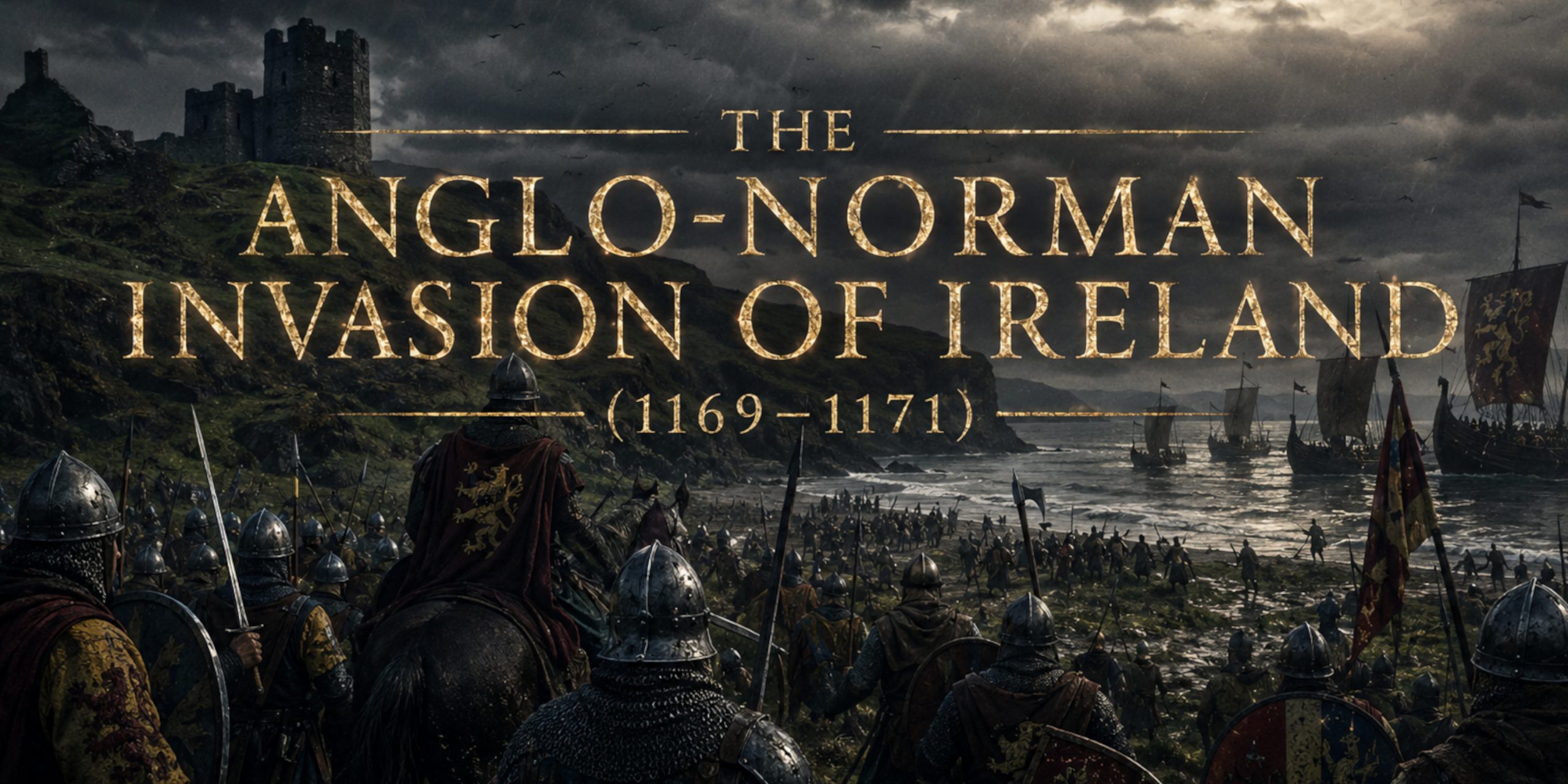
The Anglo-Norman invasion of Ireland began almost like a political favour and ended by changing the course of Irish history for centuries. What started as a regional dispute between Irish kings became an international power struggle involving Norman knights, Welsh Marcher lords, ambitious churchmen and eventually the King of England himself.
The story has often been simplified into neat categories, Irish versus English, conquest versus resistance, civilisation versus chaos. Medieval reality was far messier. Alliances shifted constantly. Irish kings fought alongside Norman adventurers. Norman lords adopted Irish customs faster than many English kings would have liked. Even contemporaries struggled to decide whether this was a crusade, a mercenary contract or outright opportunism wrapped in religious language.
As a historian, I have always found the invasion fascinating precisely because nobody involved seems entirely trustworthy. Diarmait Mac Murchada wanted revenge and restoration. Strongbow wanted land and status. Henry II wanted control over everyone before his own barons became too powerful. The Church wanted reform. Everyone claimed noble intentions while sharpening swords behind their backs. Medieval politics rarely disappoints in that regard.
Ireland Before the Invasion
Before 1169, Ireland was not a unified kingdom in the modern sense. It was a patchwork of regional kingdoms ruled by competing dynasties beneath the theoretical authority of a High King.
The most powerful figures included:
- Ruaidrí Ua Conchobair, High King of Ireland
- Diarmait Mac Murchada, King of Leinster
- Tigernán Ua Ruairc, ruler of Bréifne
- Muirchertach Mac Lochlainn, a dominant northern king before his death in 1166
Power in Ireland depended heavily on personal alliances, hostage exchanges, marriage ties and military reputation. Kings rose quickly and fell just as quickly. A disastrous defeat or political insult could destroy decades of authority almost overnight.
Diarmait Mac Murchada learned this the hard way.
In 1166, he was expelled from Leinster by a coalition led by Ruaidrí Ua Conchobair and Tigernán Ua Ruairc. Exiled and desperate, Diarmait crossed the Irish Sea seeking military assistance from Henry II of England.
Henry did not immediately invade Ireland himself. Instead, he granted Diarmait permission to recruit subjects from his domains.
That decision would echo for centuries.
The Norman World and Why Ireland Mattered
The Anglo-Normans of the twelfth century were among the most aggressive military elites in Europe. Descendants of Viking settlers in Normandy, they had already conquered England, expanded into Wales, southern Italy and Sicily, and fought in the Crusades.
They specialised in:
- Castle building
- Heavy cavalry warfare
- Feudal lordship
- Ruthless opportunism disguised as legal procedure
The Welsh Marches produced particularly hard and experienced warriors. Life on the frontier encouraged military innovation and brutal pragmatism. Men who survived there tended not to be sentimental.
Diarmait recruited several key figures:
- Robert FitzStephen
- Maurice FitzGerald
- Richard de Clare, better known as Strongbow
Strongbow became the most famous of the invaders, though in truth he arrived relatively late. His legend later grew so large that many assume he personally launched the invasion from the beginning.
Medieval public relations worked surprisingly well when castles and scribes were involved.
The First Landings, 1169
The first Norman force landed near Bannow Bay in County Wexford in May 1169.
The army was not enormous, probably around:
| Force | Estimated Numbers |
|---|---|
| Norman and Welsh troops | 500 to 1,000 |
| Irish allies of Diarmait | Several thousand |
The invaders included:
- Armoured Norman knights
- Welsh archers
- Infantry spearmen
- Mounted sergeants
Their arrival shocked many Irish rulers because the Norman style of warfare differed sharply from traditional Irish methods.
Irish armies often relied on:
- Light infantry
- Skirmishing tactics
- Javelins
- Raiding warfare
- Fast mobility
The Normans brought disciplined infantry formations, siege tactics and heavily armoured cavalry charges. Against fragmented Irish forces, this combination could be devastating.
The Capture of Wexford
One of the first major successes came with the capture of Wexford.
The town, a major Norse-Irish settlement, resisted initially but eventually surrendered after negotiation and pressure.
This mattered enormously because it gave the invaders:
- A secure coastal foothold
- Supplies and reinforcements
- Access to trade routes
- Political legitimacy for Diarmait
The campaign also revealed something important. Not all Irish rulers opposed the newcomers equally. Some saw them as useful allies against regional enemies.
That pattern would continue throughout the invasion.
Strongbow Arrives in Ireland
In 1170, Richard de Clare, Earl of Pembroke, known universally as Strongbow, landed in Ireland with a much larger force.
Contemporary estimates vary wildly, but he probably brought:
| Troop Type | Estimated Numbers |
|---|---|
| Knights | 200 |
| Mounted troops | 1,000 |
| Infantry and archers | Several thousand |
Strongbow had struck a bargain with Diarmait:
- Military aid in exchange for marriage to Diarmait’s daughter Aoife
- Succession rights to Leinster
It was an extraordinary agreement. If successful, Strongbow would effectively become ruler of a major Irish kingdom.
The marriage of Strongbow and Aoife became one of the defining political unions of medieval Ireland. Modern depictions often romanticise it heavily. Looking at the politics involved, it was about as romantic as a tax dispute conducted with swords.
The Siege and Capture of Dublin
The capture of Dublin in 1170 proved decisive.
Dublin was one of the wealthiest settlements in Ireland and remained heavily influenced by its Norse heritage. Control of the city meant access to trade, wealth and prestige.
The Norman forces launched a rapid assault after negotiations stalled.
According to some accounts, a strike force burst through a weak section of the defences while defenders were still discussing terms.
Medieval diplomacy occasionally resembled someone smiling politely while climbing through your kitchen window.
The city fell quickly.
Its capture alarmed both Irish rulers and Henry II himself.
Major Battles of the Invasion
Battle of Baginbun (1170)
One of the most important early engagements occurred at Baginbun in County Wexford.
A small Norman force under Raymond le Gros defended an entrenched position against a much larger Irish army.
Despite being heavily outnumbered, the Normans held firm through discipline, defensive positioning and cavalry counterattacks.
The victory strengthened Norman morale and reputation dramatically.
According to later tradition:
“At Baginbun, Ireland was lost and won.”
The phrase is probably apocryphal, but it captures the symbolic importance attached to the battle.
Siege of Dublin (1171)
After the fall of Dublin, High King Ruaidrí Ua Conchobair attempted to isolate the invaders.
Irish forces surrounded the city while Scandinavian fleets threatened from the sea.
The Normans launched aggressive sorties rather than remaining passive behind walls. One surprise cavalry attack reportedly shattered sections of the besieging force.
The siege demonstrated the growing difficulty Irish kings faced when confronting castle warfare and heavily armoured troops directly.
Battle of Thurles and Continuing Resistance
The invasion was not an immediate total conquest.
Irish resistance remained fierce across many regions. Norman expansion stalled repeatedly outside fortified zones.
Several Irish victories reminded the invaders that Ireland would not simply collapse overnight.
This was not Hastings repeated neatly across the Irish Sea. It became a long, grinding struggle.
Henry II Arrives in Ireland
By 1171, Henry II feared Strongbow and the Marcher lords might create an independent Norman state beyond royal control.
So Henry crossed into Ireland personally with a massive force.
It was the first visit to Ireland by an English king.
Henry’s arrival achieved several goals:
- He asserted royal authority over the Norman lords
- Many Irish kings submitted diplomatically
- Dublin, Waterford and Wexford became royal centres
- The Church aligned more closely with English-backed reform
Henry preferred political dominance over endless campaigning. He understood intimidation could achieve what sieges could not.
A gigantic royal army appearing offshore had a remarkable tendency to encourage negotiations.
Arms, Armour and Warfare
The invasion introduced new military technologies and structures into Ireland on a larger scale.
Anglo-Norman Equipment
Typical Anglo-Norman warriors used:
- Kite shields
- Mail hauberks
- Nasal helmets
- Long cavalry lances
- Arming swords
- Maces and axes
Common sword types included:
- Norman knightly swords of Oakeshott Type X and XI
- Broad cutting cavalry swords
- Double-edged arming swords
Mounted knights formed the elite core of Norman armies.
Irish Arms and Armour
Irish forces often fought more lightly equipped, though elite warriors could still possess impressive gear.
Weapons included:
- Spears
- Javelins
- Axes
- Irish ring-hilted swords
- Long knives and seaxes
Armour varied greatly depending on status.
Many warriors relied on:
- Quilted protection
- Leather equipment
- Small shields
Elite kings and retainers sometimes wore imported mail armour.
The contrast between Norman heavy cavalry and traditional Irish warfare has often been exaggerated, but there was certainly a tactical shock when the two systems collided.
Archaeology and Physical Evidence
Archaeology has transformed understanding of the invasion period.
Excavations in Dublin, Wexford and Waterford have uncovered:
- Norman fortifications
- Imported pottery
- Weapon fragments
- Arrowheads
- Evidence of urban expansion
Castle archaeology is especially important.
Early motte-and-bailey fortifications appeared rapidly after the invasion. These castles allowed relatively small Norman forces to dominate surrounding territory.
Sites linked to the invasion include:
- Trim Castle
- Kilkenny
- Carrickfergus
- Dublin’s medieval core
Archaeologists have also identified changing settlement patterns and evidence of increased trade connections with England and Wales.
Interestingly, some Norman settlements quickly became culturally hybrid. Within generations, many descendants of the invaders adopted Irish customs, language and dress.
English authorities later complained bitterly about this. Medieval administrators hated cultural ambiguity almost as much as unpaid taxes.
Contemporary Quotes
Giraldus Cambrensis, a Norman chronicler with a famously biased view of Ireland, wrote:
“The Irish are a barbarous people.”
Modern historians tend to read Giraldus with caution. He was intelligent, observant and deeply prejudiced, which is not always the safest historical combination.
The Irish annals recorded the invasion more grimly:
“A foreign people came into Ireland.”
The Annals of Ulster described the newcomers as heavily armed and destructive, reflecting the enormous shock caused by the invasion.
Meanwhile, Welsh and Norman writers often portrayed the campaign as a righteous intervention backed by divine approval.
Conveniently, medieval chroniclers rarely described invasions led by their own side as greed.
The Long-Term Consequences
The invasion reshaped Ireland permanently.
Key consequences included:
- Establishment of the Lordship of Ireland
- Expansion of Norman castles and towns
- Greater English political involvement
- Feudal landholding systems
- Transformation of urban centres
Yet the conquest remained incomplete.
Large parts of Ireland stayed under Gaelic control for centuries. In many regions, Norman settlers themselves became culturally Irish.
The famous phrase emerged later:
“More Irish than the Irish themselves.”
That tension between conquest and assimilation would define much of medieval Irish history.
Takeaway
The Anglo-Norman invasion of Ireland was not a single clean conquest. It was a collision of rival kingdoms, ambitious mercenaries, church reformers and opportunistic monarchs.
What fascinates me most is how uncertain everything felt at the time. Nobody in 1169 could have predicted the full consequences. A dispossessed king hiring foreign soldiers eventually altered the political future of Ireland, England and the wider British Isles.
History often turns on moments that seem temporary and practical in the moment. Diarmait Mac Murchada probably believed he was solving a local political crisis. Instead, he opened a door that never fully closed again.
And somewhere in the middle of it all, medieval nobles continued arguing about land claims while cities burned around them. Some things, sadly, never change.