The British Line Infantry was not glamorous. It did not charge with the theatrical swagger of hussars, nor did it carry the mystique of riflemen skulking through woodland with green jackets and expensive attitudes. Yet for more than two centuries, the line infantry formed the hard spine of Britain’s military power.
These were the men who stood shoulder to shoulder in mud, smoke, sleet and heat while officers shouted themselves hoarse and cannonballs removed entire sections of humanity with chilling efficiency. The British Empire expanded behind them. Napoleon feared them. Recruiting sergeants lied to them. Historians occasionally forget just how much rested on their ability to stand still under horrifying pressure.
That alone deserves respect.
What Was British Line Infantry?
British Line Infantry referred to the standard infantry regiments of the British Army between the seventeenth and nineteenth centuries. Their role was straightforward on paper and deeply unpleasant in practice.
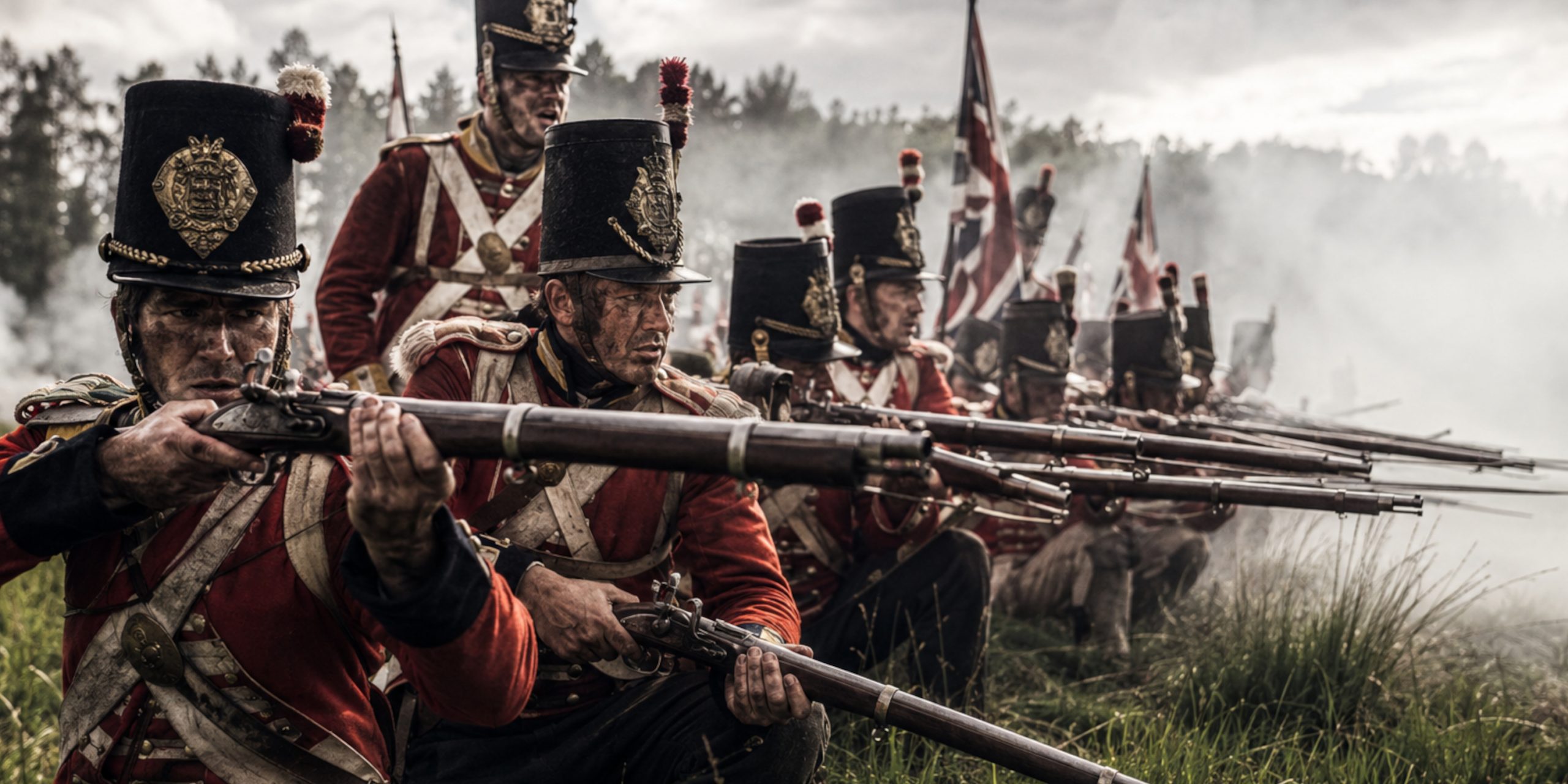
They marched in formation, delivered disciplined volleys of musket fire, and held the line against enemy attacks. The phrase “line infantry” came from their battlefield formation, usually arranged in long, thin ranks designed to maximise firepower.
By the Napoleonic Wars, particularly under the Duke of Wellington, British line infantry had become one of the most disciplined fighting forces in Europe.
The army relied heavily upon:
- Drill and discipline
- Coordinated volley fire
- Bayonet combat
- Formation manoeuvres
- Relentless training
Individual brilliance mattered far less than collective obedience. A soldier who improvised creatively was often more dangerous to his own regiment than to the enemy.
Origins and Development
The roots of British line infantry emerged after the English Civil Wars and solidified following the Restoration of Charles II in 1660. Early standing regiments evolved from militia traditions into professional formations loyal to the Crown.
The eighteenth century transformed these forces dramatically.
Britain fought almost continuously:
- The War of the Spanish Succession
- The Seven Years’ War
- The American War of Independence
- The French Revolutionary Wars
- The Napoleonic Wars
Each conflict refined British infantry doctrine.
The disastrous lessons of the American colonies exposed weaknesses in rigid battlefield tactics. The wars against Revolutionary and Napoleonic France forced Britain to improve discipline, logistics and command structures.
By 1815, British infantry was feared for its steadiness under fire rather than sheer numbers. Wellington himself understood this well. Britain could not usually outnumber France. It therefore relied upon professionalism.
Recruitment and Life in the Ranks
Joining the line infantry was rarely romantic.
Some enlisted willingly for pay and food. Others joined to escape debt, unemployment or criminal prosecution. Recruiting officers were known for flexible interpretations of truth. A farm labourer promised “travel and glory” often discovered that travel meant Spain and glory meant dysentery.
Life was harsh.
Soldiers endured:
- Poor food
- Heavy marching loads
- Floggings for discipline
- Inadequate medical care
- Brutal weather conditions
- High disease mortality
Alcohol became both comfort and curse within the ranks. Rum and ale softened misery but caused endless disciplinary problems. The British Army somehow managed to remain effective despite itself.
Yet strong regimental identity emerged. Soldiers often developed fierce loyalty to their regiment, colours and comrades.
Battlefield Tactics
British line infantry fought primarily in two-rank formations during the Napoleonic period. Earlier armies often used three ranks, but Wellington preferred two, allowing more muskets to fire simultaneously.
A standard engagement involved:
- Advancing in line formation
- Delivering coordinated volleys
- Holding ground under artillery fire
- Repelling cavalry with square formations
- Closing with bayonets if necessary
Volley fire was devastating when disciplined properly.
British infantry became famous for waiting until extremely close range before firing. French troops advancing under heavy volleys frequently broke apart before reaching melee range.
The battlefields of the Peninsula War demonstrated this repeatedly.
At Waterloo in 1815, British line infantry endured hours of artillery bombardment and repeated assaults. Their discipline proved decisive.
Arms and Armour
British line infantry equipment evolved steadily between the seventeenth and nineteenth centuries.
Muskets
The primary weapon was the famous “Brown Bess” musket.
Common variants included:
- Long Land Pattern Musket
- Short Land Pattern Musket
- India Pattern Musket
These smoothbore flintlock muskets fired large lead balls with frightening psychological effect, though actual accuracy remained mediocre beyond moderate distance.
The real killing power came from mass volleys rather than precision.
A soldier might fire three to four rounds per minute under ideal conditions. In battle, with smoke obscuring everything and nerves collapsing under pressure, “ideal” became theoretical rather quickly.
Bayonets
Socket bayonets transformed musketeers into spear infantry when ammunition or discipline failed.
British infantry relied heavily on aggressive bayonet charges. Contemporary observers frequently noted the psychological terror caused by determined British advances.
Swords Used by British Infantry Officers
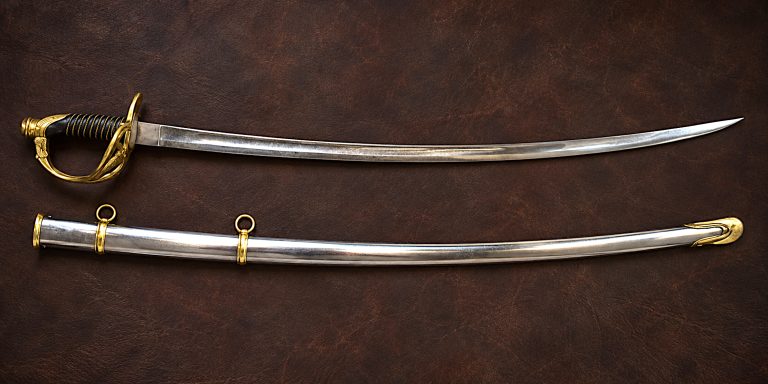
Infantry officers carried swords as symbols of authority and close combat weapons.
Common sword types included:
- 1796 Infantry Officer’s Spadroon
- 1803 Pattern Infantry Sabre
- 1822 Pattern Infantry Officer’s Sword
The 1796 spadroon was elegant but often criticised for weak cutting power. Some officers privately purchased sturdier blades better suited for campaigning.
The 1822 pattern became particularly influential, introducing the Gothic hilt style still echoed in ceremonial British swords today.
Sergeants carried polearms earlier in the eighteenth century but gradually shifted toward swords and muskets as battlefield tactics modernised.
Uniforms and Protection
British line infantry wore the iconic red coat, designed partly for visibility and partly because the British state already had contracts producing enormous amounts of red cloth.
Uniform components typically included:
- Red wool coat
- White crossbelts
- Shako headgear
- Breeches or trousers
- Black gaiters
- Leather cartridge box
Contrary to popular imagination, infantrymen wore little true armour by the Napoleonic era. Protection came from discipline and formation rather than steel breastplates.
That system worked surprisingly well until artillery became involved. Cannon cared little for drill manuals.
Famous British Line Regiments
Several regiments gained legendary reputations.
The Coldstream Guards
One of the oldest regiments in continuous service, famed for discipline and battlefield endurance.
The 33rd Regiment of Foot
Wellington once served as its colonel, and the regiment earned distinction during the Napoleonic Wars.
The Black Watch
Originally raised in the Highlands, the regiment became renowned for ferocious battlefield performance.
The 95th Rifles
Technically light infantry rather than line infantry, yet impossible to ignore in any discussion of British infantry warfare. Sharpshooters with Baker rifles, dark green uniforms and a reputation bordering on theatrical.
Archaeology and Physical Evidence
Archaeology has transformed understanding of British line infantry life.
Excavations from Napoleonic battlefields, military camps and colonial forts reveal the ordinary reality behind polished paintings.
Finds commonly include:
- Musket balls
- Flintlock components
- Uniform buttons
- Belt buckles
- Bayonets
- Clay pipes
- Bone fragments
- Mess utensils
At Waterloo, archaeologists uncovered evidence of mass casualties, amputations and chaotic field surgery.
Sites from the Peninsular War in Spain and Portugal have also produced significant artefacts tied directly to British infantry positions.
Analysis of musket balls demonstrates firing directions and engagement intensity. Uniform remnants reveal supply variations and repair practices within active campaigns.
Archaeology often strips away patriotic myth. It reminds us that warfare involved mud, blood, shattered teeth and desperate improvisation. Quite a lot of desperate improvisation, in fact.
Training and Discipline
British infantry discipline became infamous.
Flogging remained common throughout much of the army’s history. Punishments could involve hundreds of lashes.
Officers believed harsh discipline was necessary to maintain battlefield cohesion. Whether it produced obedience or suppressed mutiny through terror remains debated.
Training focused obsessively upon:
- Formation movement
- Musket drill
- Volley timing
- Bayonet exercises
- March discipline
The army’s effectiveness depended on collective precision. One broken line could collapse an entire position.
Wellington famously described his soldiers as:
“the scum of the earth”
The quote sounds cruel because it was cruel. Yet he also trusted those same men to defeat Napoleon’s veterans.
History is rarely tidy about human relationships.
British Line Infantry in the Napoleonic Wars
The Napoleonic Wars represented the peak of British line infantry effectiveness.
In Spain and Portugal, British troops repeatedly defeated larger French armies through superior positioning, discipline and defensive tactics.
Key battles included:
At Waterloo, infantry squares famously resisted repeated French cavalry assaults.
Witnesses described walls of red-coated soldiers standing firm while horses crashed against bayonet hedges. The psychological strain must have been unbearable.
Yet the line held.
Contemporary Quotes
Several contemporary voices captured the reputation of British infantry.
The Duke of Wellington stated:
“I don’t know what effect these men will have upon the enemy, but, by God, they terrify me.”
French Marshal Soult reportedly observed:
“There is no beating those troops in position.”
Private Joseph Plumb Martin, reflecting ordinary military hardship, wrote:
“We had nothing to eat, nothing to drink, and nothing to shelter us.”
Captain Kincaid of the 95th Rifles offered a more sardonic perspective:
“The wonder is not that so many men died, but that any survived.”
Quite.
Legacy of the British Line Infantry
The traditions of British line infantry shaped modern military doctrine across the world.
Its influence survives in:
- Regimental systems
- Drill traditions
- Ceremonial uniforms
- Officer sword patterns
- Tactical discipline
- Military professionalism
The red coat became one of the most recognisable military symbols in history.
Yet beyond the iconography lies something more important. British line infantry demonstrated how discipline, cohesion and training could overcome larger armies and brutal battlefield conditions.
They were not superhuman. Many were poor, frightened, exhausted and frequently drunk. They complained constantly, stole enthusiastically and marched anyway.
That may be the most human military legacy of all.
Takeaway
British line infantry helped build and defend an empire that reshaped global history. Its soldiers fought across Europe, North America, India, Africa and beyond.
The mythology surrounding them often focuses on victory and spectacle. The reality was harsher and more complicated.
These were ordinary men forced into extraordinary situations. Some became heroes. Some became corpses in anonymous fields. Most simply endured.
And endurance, in the smoke and thunder of eighteenth and nineteenth-century warfare, counted for rather a lot.