There are some Shakespeare performances that feel polished. There are others that feel expensive. Then there are the rare ones that make you forget you are watching Shakespeare at all.
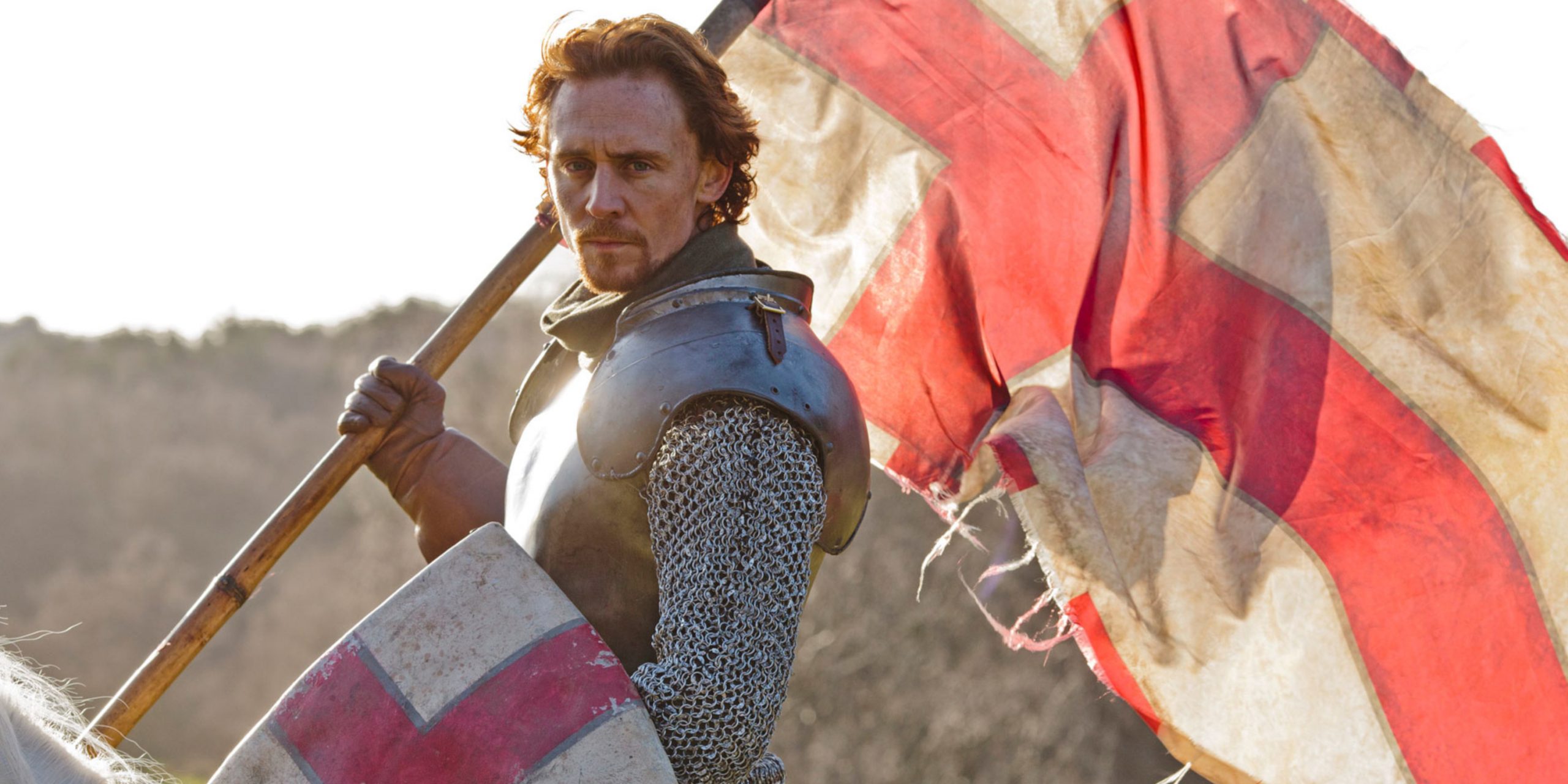
Tom Hiddleston’s Henry V landed in that final category.
Part of the reason it worked so well is surprisingly simple. He understood that Henry is not meant to be a marble statue in a museum. He is young, exhausted, clever, manipulative, funny, frightening, insecure, magnetic, and occasionally just a bit theatrical. In other words, he behaves like an actual human being under unbearable pressure.
That sounds obvious. Somehow, it is not always what audiences get.
His performance in The Hollow Crown managed to make one of Shakespeare’s most mythologised kings feel immediate without flattening the poetry or turning the role into modern cynicism. That balancing act is harder than it looks.
He Played Henry as a Man Performing Kingship
One of the smartest things Hiddleston did was lean into the idea that Henry is constantly acting.
This version of Henry knows how to control a room. He knows when to sound holy, when to sound terrifying, and when to sound like the charming old drinking companion from his youth. You can almost see the calculations happening behind his eyes.
That matters because Henry V is fundamentally about image.
The king who jokes with soldiers before Agincourt is the same man who threatens horrifying violence at Harfleur. Shakespeare wrote those contradictions deliberately. Hiddleston never tries to sand them away or make Henry purely heroic. Instead, he lets the charm and ruthlessness exist together, which makes the character much more believable.
There is a slightly unnerving quality to it at times. You find yourself liking Henry even when you suspect you probably should not.
Historically speaking, that is likely quite accurate for a successful medieval king.
The St Crispin’s Day Speech Actually Felt Earned
This is the mountain every actor has to climb.
The “we few, we happy few” speech is so famous that audiences arrive with centuries of expectations already lodged in their heads. It is football changing-room rhetoric before football changing-room rhetoric existed.
Hiddleston avoids the trap of shouting the speech like a motivational speaker trying to sell protein powder.
Instead, he plays it with intimacy first. The speech builds gradually. It feels less like a performance aimed at history and more like a desperate attempt to hold exhausted men together before a slaughter.
That restraint is what gives the final lines their weight.
A lot of actors attack Shakespeare as though volume equals emotion. Hiddleston understands rhythm. He lets the language breathe, which means the emotional peaks actually land instead of arriving at full intensity from the opening sentence.
It also helps that his voice work is absurdly precise. Every syllable feels clear without becoming stage-school artificial.
He Captured Henry’s Loneliness
This is the part many adaptations miss.
Kingship in Henry V is isolating. The crown creates distance between Henry and literally everyone around him. Hiddleston’s version constantly feels alone, even in crowded scenes.
The sequence where Henry walks among the soldiers before Agincourt works particularly well because of this. He looks like someone searching for reassurance he cannot ask for openly.
There is anxiety under the confidence.
That tension gives the character emotional depth beyond patriotic symbolism. Without it, Henry risks becoming little more than a collection of famous speeches and battle poses.
Instead, this version feels like a young man trying to convince both England and himself that he deserves the crown.
The Physical Performance Sold the Warfare
One underrated aspect of Hiddleston’s Henry is how physically convincing he feels during the campaign scenes.
Some Shakespeare adaptations treat combat like mildly inconvenient choreography before everyone returns to monologues. The Hollow Crown gave the mud, exhaustion, and brutality genuine weight.
Hiddleston looks worn down by command.
By the time Agincourt arrives, his Henry appears physically depleted rather than gloriously untouched. That detail matters because medieval warfare was hideous work. Kings did not emerge from battles looking like they had just stepped out of a fragrance advert.
Well, most of them did not.
The dirt and fatigue make the speeches feel more desperate and grounded. You believe this king has spent days marching through misery with frightened men hanging onto his every word.
He Balanced Intelligence With Emotion
Hiddleston has always been good at playing highly intelligent characters without making them emotionally cold. That quality fits Henry perfectly.
This king is politically sharp. He understands theatre, symbolism, religion, morale, and fear. Yet Hiddleston also lets flashes of vulnerability break through the armour.
The result is a version of Henry who feels psychologically layered rather than simply noble or tyrannical.
That complexity becomes especially important in scenes involving prisoners, threats against civilians, and moments where Henry’s morality becomes questionable. The performance never fully answers whether Henry is a great man or merely an effective ruler.
Honestly, that ambiguity is exactly what makes the play endure.
The Modern Audience Connection
Part of why the performance resonated with younger viewers is that Hiddleston never treats Shakespeare like homework.
There is energy in the performance. Wit. Momentum. A sense that the actor actually enjoys the language instead of carefully preserving it behind museum glass.
For audiences raised on fast television dialogue and emotionally open character work, that accessibility matters enormously.
You do not need an English literature degree to understand what this Henry is feeling.
You just need to watch his face.
The Supporting Cast Helped Elevate Him
Great Shakespeare rarely works in isolation.
The wider cast of The Hollow Crown created a world that felt politically tense and emotionally believable. That environment allowed Hiddleston to play Henry with more subtlety.
Performances from actors like Julie Walters, Simon Russell Beale, and John Hurt gave the adaptation real dramatic texture.
Nobody feels as though they wandered in from a completely different production style, which is surprisingly common in Shakespeare adaptations.
The tone stays grounded throughout.
Why the Performance Still Holds Up
More than a decade later, Hiddleston’s Henry V still works because it avoids extremes.
It is not aggressively revisionist, but it is not blindly patriotic either. It respects Shakespeare’s grandeur while still acknowledging the moral discomfort underneath England’s victory narrative.
Most importantly, it understands that charisma is central to Henry’s power.
You have to believe men would follow this king into catastrophe.
Hiddleston makes that believable from the moment he appears on screen.
That is why the performance lingers. Not because it is the loudest or most traditionally heroic interpretation, but because it feels psychologically real. Beneath the speeches, armour, and banners, you can still see the frightened, brilliant, calculating young man carrying the weight of a kingdom on his shoulders.
And frankly, that is a lot more interesting than another untouchable warrior king staring nobly into the middle distance while orchestral music explodes in the background.