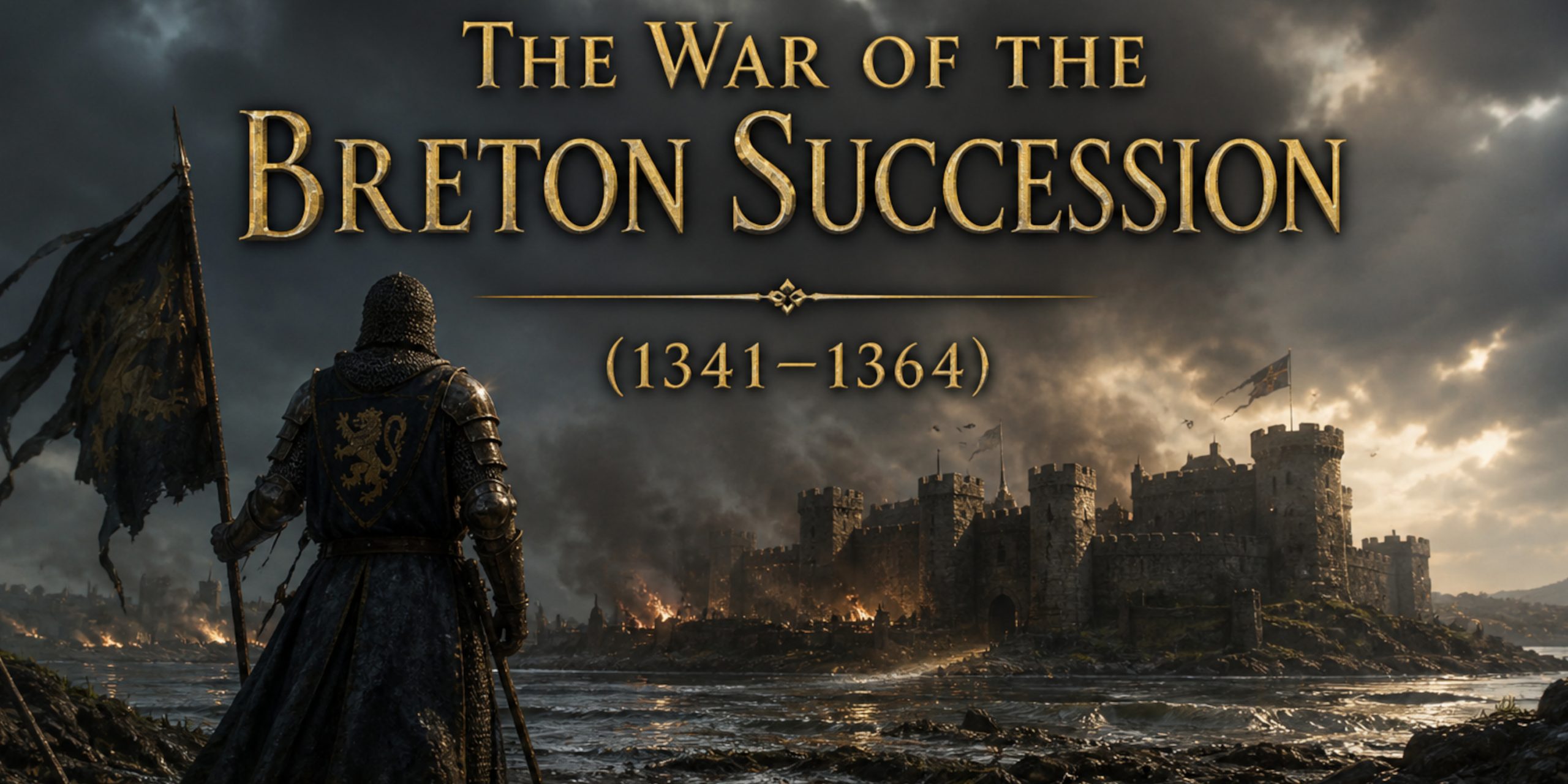
The War of the Breton Succession began as a family dispute and ended as something far more consequential. When Duke John III of Brittany died without an heir in 1341, two rival claimants stepped forward, each with a plausible case and a willingness to let foreign kings settle the matter by force. It was, in essence, a Breton civil war that quickly drew in the larger struggle between England and France.
From a historian’s point of view, this conflict has a certain grim familiarity. A succession crisis, competing legal arguments, and then the steady arrival of armies who claimed to be helping while quietly pursuing their own interests. Brittany became a battleground not because it wished to, but because it sat at a crossroads of power.
The Rival Claims
The dispute centred on two figures whose claims reflected different interpretations of inheritance law.
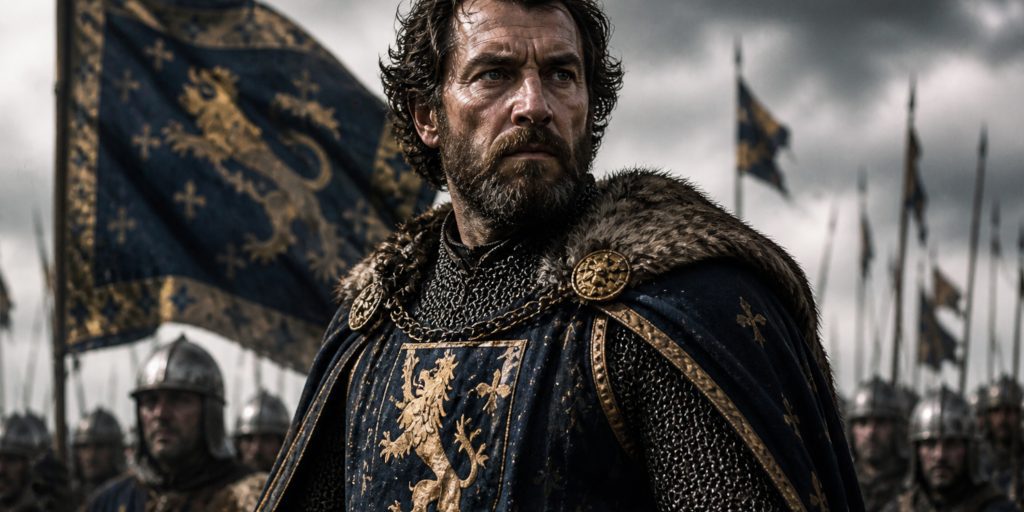
- John of Montfort
- Half-brother of the late duke
- Supported by the English crown
- Asserted a direct male-line claim
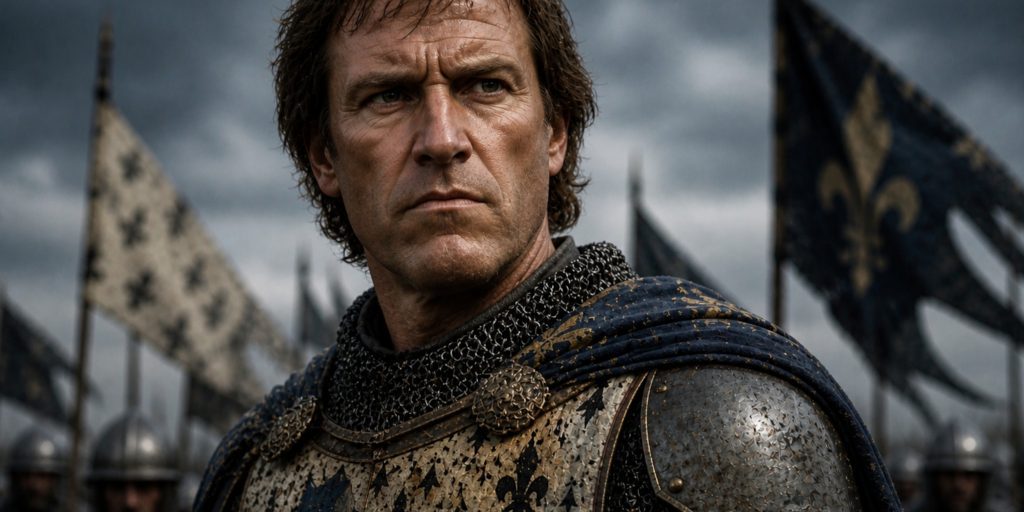
- Charles of Blois
- Nephew of John III through the female line
- Backed by the French king
- Married to Jeanne of Penthièvre, strengthening his position
The legal arguments were not especially neat. French custom tended to favour Charles, while Montfort pressed a more straightforward hereditary claim. In truth, the outcome depended less on legal nuance and more on who could hold towns, castles, and loyalty under pressure.
Brittany Drawn into the Hundred Years’ War
It did not take long for the conflict to widen. England supported Montfort, France backed Blois, and Brittany became a theatre within the broader Anglo-French rivalry.
Edward III saw an opportunity to weaken French influence along the western coast. Philip VI saw the same region as vital to maintaining royal authority. Neither king was inclined to let the Bretons settle the matter themselves.
The result was a war fought in phases. Long stretches of sieges and skirmishes were punctuated by sudden violence. Control shifted often, and neither side managed a clean victory for years.
Key Battles and Military Actions
Early Struggles and the Capture of John of Montfort
The opening phase moved quickly. Montfort seized several strongholds but was captured in 1341. One might assume that would end the matter. It did not.
His wife, Joanna of Flanders, took command with a level of resolve that startled contemporaries. She organised resistance, secured English aid, and held key positions long enough to keep the Montfort cause alive.
The Siege of Hennebont (1342)
A defining moment came at Hennebont, where Joanna defended the town against Charles of Blois.
- Joanna reportedly led sorties herself
- English reinforcements arrived just in time
- The siege lifted, preserving Montfort’s position
The image of Joanna riding out in armour became something close to legend. Whether embellished or not, it captured the tone of the war. This was not a quiet legal dispute. It was personal, urgent, and often desperate.
The Battle of La Roche-Derrien (1347)
This engagement demonstrated the unpredictable nature of Breton warfare.
- English and Montfortist forces launched a surprise night attack
- Charles of Blois was captured
- The Blois faction suffered a serious setback
Even so, the war continued. Capturing a claimant did not end the conflict. Ransoms, alliances, and shifting loyalties kept it alive.
The Combat of the Thirty (1351)
Perhaps the most unusual episode in the war, this was a formalised fight between selected knights from both sides.
- Thirty champions on each side
- Fought on foot with swords, axes, and daggers
- Intended to settle honour rather than strategy
It achieved neither resolution nor peace. It did, however, leave a lasting impression. Chroniclers treated it as a moment of chivalric theatre in an otherwise grinding conflict.
The Battle of Auray (1364)
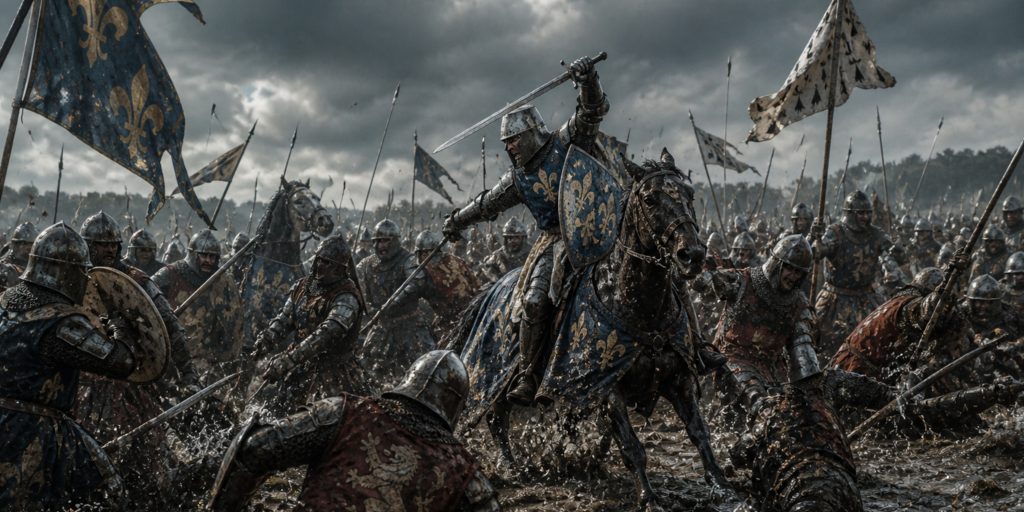
The war’s decisive moment came at Auray.
- Montfortist forces supported by English troops
- Charles of Blois led the opposing army
- Charles was killed in the fighting
With his death, resistance collapsed. The Treaty of Guérande followed, recognising John IV, son of Montfort, as Duke of Brittany.
Arms and Warfare
The war reflected the broader military practices of the mid fourteenth century.
- Knights and men-at-arms formed the core of both armies
- Longbowmen, particularly on the English side, provided a tactical edge
- Infantry militias from Breton towns played a significant role in sieges
Weapons included:
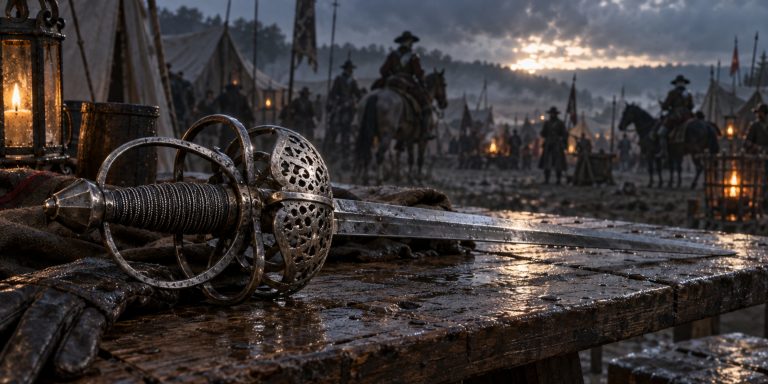
- Arming swords and early longswords
- Lances for mounted combat
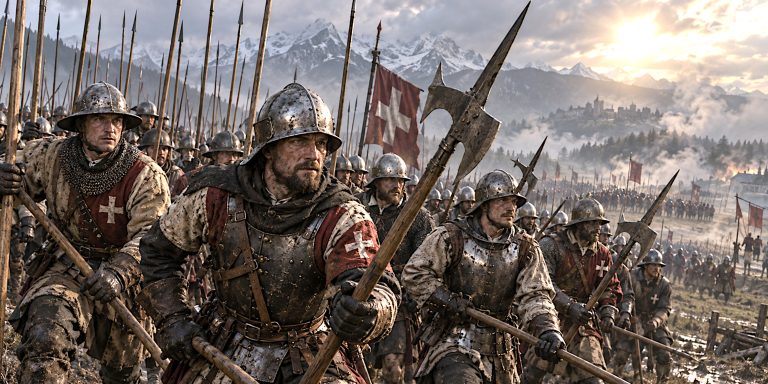
- Poleaxes and maces in close fighting
Siege warfare dominated much of the conflict. Castles and walled towns mattered more than open-field victories. Control of a fortress could decide months of campaigning.
Archaeology and Material Evidence
The archaeology of the war is quieter than its chronicles but still revealing.
- Excavations at castle sites such as Hennebont show signs of repeated siege damage
- Arrowheads and crossbow bolts have been recovered from battlefield areas
- Fortifications from the period display modifications, suggesting adaptation to sustained conflict
Material culture from the war is not abundant, yet enough survives to confirm the intensity of localised fighting. The land itself retains traces, if one knows where to look.
Contemporary Voices
Chroniclers, particularly Jean Froissart, provide vivid if sometimes embellished accounts.
Froissart wrote of Joanna of Flanders:
“She was of a high and noble courage, beyond what might be expected of a woman.”
On the Combat of the Thirty, he recorded:
“They fought with great valour, and many a noble deed was done.”
Such accounts should be read with care. They reflect admiration for chivalric ideals as much as they describe events. Still, they offer a sense of how the war was perceived by those who wrote about it.
Legacy and Consequences
The war ended with a Montfort victory, yet Brittany remained tied to both England and France in complex ways.
- John IV secured the duchy but relied on English support
- French influence did not disappear, it simply adapted
- The region retained a degree of autonomy for decades
In the wider context, the conflict reinforced the pattern of the Hundred Years’ War. Local disputes became international contests, and regional stability proved fragile.
From a historian’s perspective, the war is less about a single decisive moment and more about persistence. It dragged on because neither side could quite deliver the finishing blow. When it finally ended, it did so through attrition, exhaustion, and one last decisive battle.
Takeaway
There is something faintly wearying about the War of the Breton Succession. It lacks the clean drama of more famous battles, yet it reveals the mechanics of medieval power with unusual clarity.
A disputed inheritance became a drawn-out war. Foreign kings intervened under the banner of support while pursuing their own interests. Towns suffered, castles changed hands, and the people of Brittany endured years of uncertainty.
In short, it was a medieval conflict in its most recognisable form. Not glorious, rarely tidy, and shaped as much by stubbornness as by strategy.