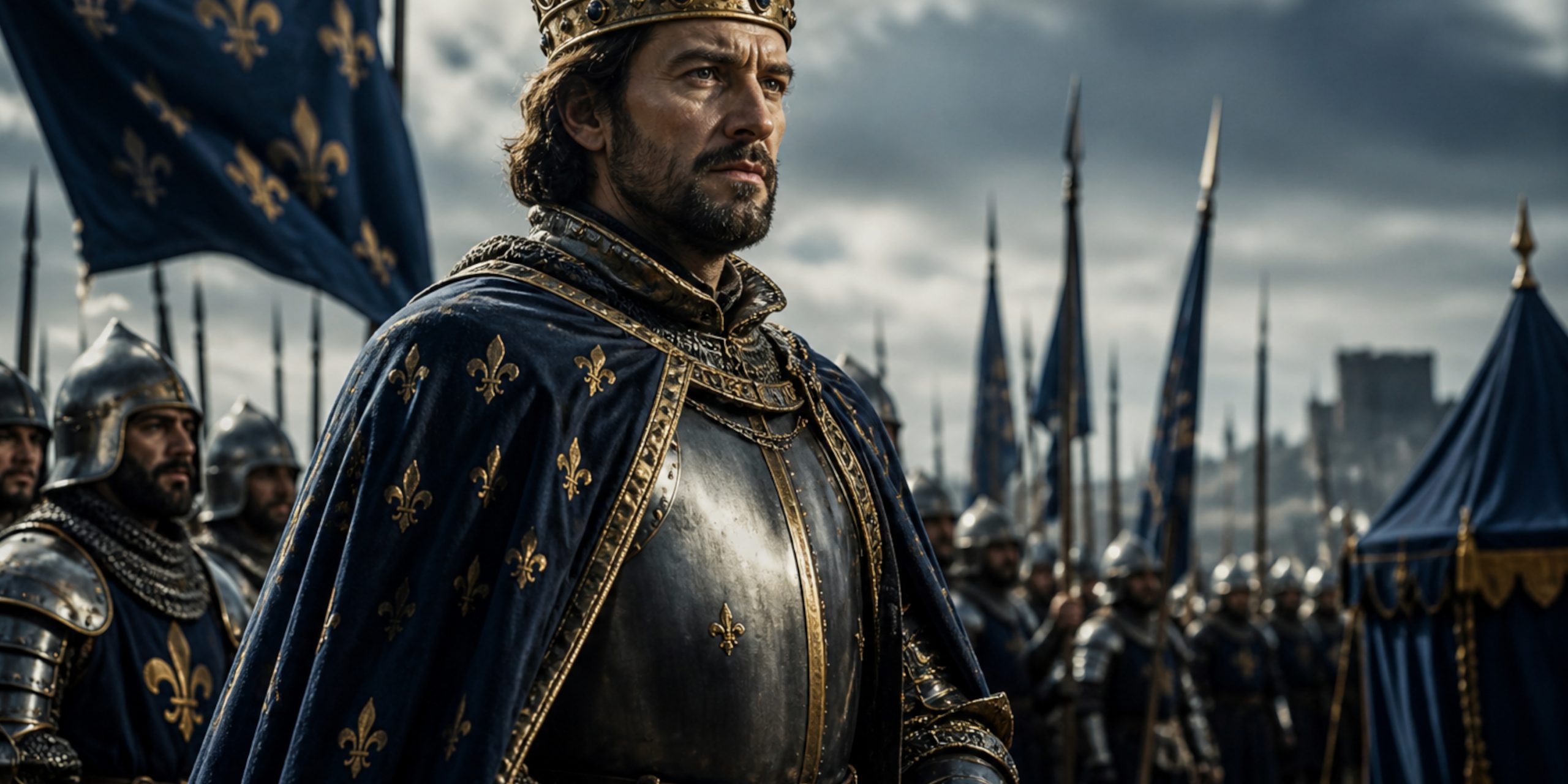
Charles V of France, known as Charles the Wise, did not win his reputation through spectacle. He inherited a kingdom battered by defeat, humiliation, and political fragmentation. By the time he died in 1380, France had regained much of what had been lost to England, and royal authority had been quietly restored.
He was not a battlefield hero in the traditional mould. In truth, he rarely risked himself in open combat. That restraint has often been mistaken for weakness. It was nothing of the sort. Charles understood something many medieval rulers did not, that survival and recovery required patience, calculation, and a willingness to let others fight the visible battles while he shaped the war behind the curtain.
Early Life and a Kingdom in Crisis
Charles was born in 1338, the son of King John II. His formative years unfolded under the shadow of the early phases of the Hundred Years’ War. The catastrophe at Poitiers in 1356, where his father was captured by the English, left the young dauphin effectively governing a fractured realm.
Paris was unstable. Noble factions were restless. The peasantry would soon erupt in the Jacquerie. It is difficult to overstate how precarious the situation was. Many would have gambled on a decisive confrontation to restore prestige. Charles chose something slower, and far more effective.
He stabilised administration, restored finances where he could, and learned early that war was not always decided by a single day of violence.
Arms and Armour of Charles V’s Era
Charles himself was not a warrior king in the mould of his father, but his reign sits at a fascinating moment in military development. Equipment was evolving rapidly, reflecting the brutal lessons of early English victories.
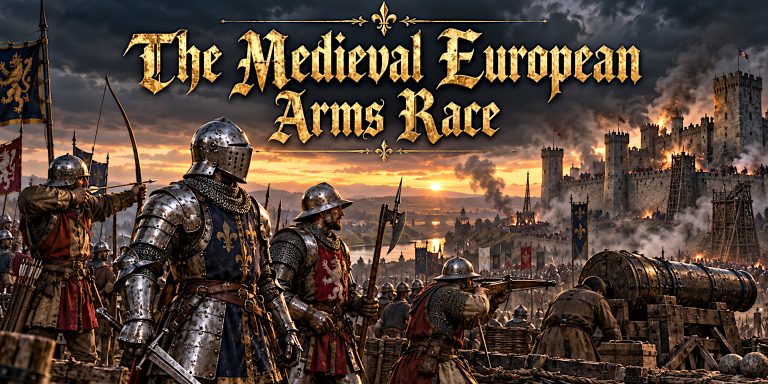
Typical equipment of French forces under Charles V
- Helmets
- Bascinet with visor, often with an aventail of mail
- Earlier great helms still used in some formations
- Body armour
- Transitional plate over mail, with increasing use of full plate elements
- Brigandines for lighter troops
- Weapons
- Arming sword remained standard
- Longswords becoming more common among elite fighters
- Polearms such as the poleaxe and spear
- Crossbows widely used, especially by urban militias
- Shields
- Smaller heater shields replacing larger earlier forms
One quiet shift worth noting is the move away from heavy reliance on chivalric cavalry charges. The disasters of Crécy and Poitiers had exposed their limits. Under Charles, adaptation began, even if it was not yet complete.
Battles and Military Acumen
Charles V’s military success rests on a simple idea that feels almost modern. Avoid the enemy’s strengths, exploit their weaknesses, and stretch them until they break.
He entrusted much of the fighting to capable commanders, most notably Bertrand du Guesclin. This partnership was decisive.
Key features of his strategy
- Avoidance of large pitched battles where English longbowmen excelled
- Emphasis on sieges and the steady recapture of fortified positions
- Use of Fabian tactics, delaying, harassing, and exhausting the enemy
- Strong logistical planning, often overlooked in romantic accounts
Notable campaigns and outcomes
- Gradual reconquest of territories lost after the Treaty of Brétigny
- Recovery of Normandy, Poitou, and large parts of Aquitaine
- Reduction of English control to a handful of coastal strongholds by the late 1370s
As a historian, I find Charles quietly impressive. He lacked the theatrical courage that chroniclers loved, yet he achieved what more flamboyant kings could not. His victories were measured in years, not moments. That tends to age better.
Governance, Culture, and the Royal Image
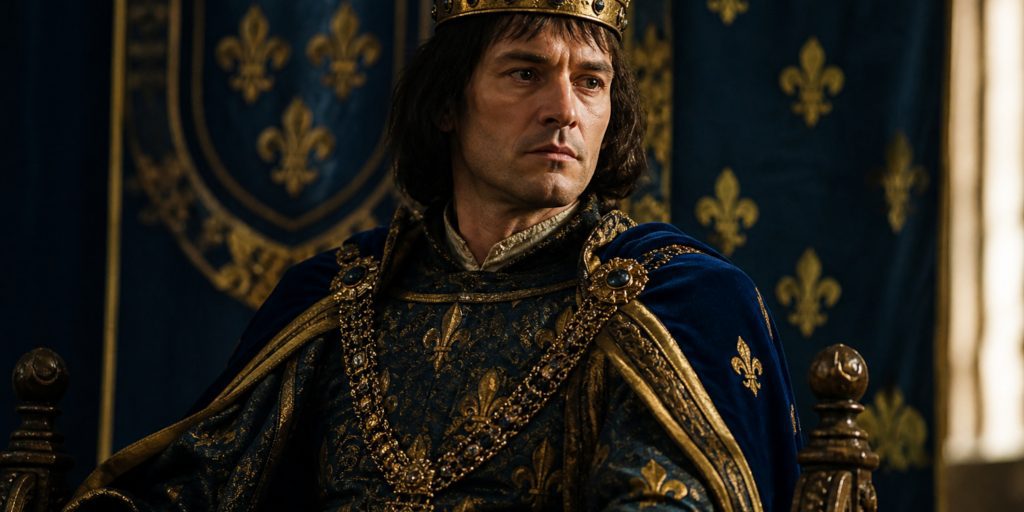
Charles understood that authority was not only enforced with armies. It had to be seen, read, and believed.
He invested heavily in learning and patronage. His royal library at the Louvre became one of the most important collections in Europe. He commissioned translations of classical works into French, making knowledge accessible beyond Latin scholars.
There is a subtle brilliance here. While English forces occupied parts of France, Charles was building a cultural identity that reinforced the legitimacy of the crown.
Where to See Artefacts from His Reign
Surviving artefacts from Charles V’s reign are scattered but significant.
Key locations
- The Louvre, Paris
Holds manuscripts linked to his royal library and objects tied to court life - Bibliothèque nationale de France
Houses many illuminated manuscripts commissioned under his patronage - Musée de Cluny
Offers material culture from medieval Paris, including arms, armour, and domestic artefacts - Regional French museums
Contain siege equipment fragments, coins, and ecclesiastical items from the period
Many of these objects are not dramatic in isolation. A manuscript page, a coin, a fragment of armour. Together they tell the story of a king who rebuilt quietly.
Latest Archaeology and Historical Insights
Recent archaeological work has added texture to Charles V’s reign.
Excavations in Paris have revealed more of the medieval Louvre complex, including defensive features that underline how seriously the crown took urban security. Work on castle sites across northern and western France has also highlighted the scale of reconstruction and fortification during his reign.
There is growing evidence that the French recovery was not just political but infrastructural. Fortresses were repaired, supply networks improved, and urban centres reinforced. These are not glamorous discoveries, yet they explain how Charles sustained long campaigns without collapsing under strain.
Legacy
Charles V died in 1380, leaving a stronger France than he had inherited. Much of the credit for later French recovery is often placed elsewhere, but it rests heavily on foundations he laid.
His legacy is complicated by what followed. His successors struggled to maintain the same discipline and foresight. Within decades, France would again face internal division and renewed English pressure.
Still, Charles stands apart. He represents a different kind of medieval ruler. Less knight, more strategist. Less spectacle, more substance.
If one were to walk through the manuscripts he commissioned or the fortifications he restored, there is a sense of quiet determination. Not the roar of victory, but the steady sound of something being rebuilt piece by piece.