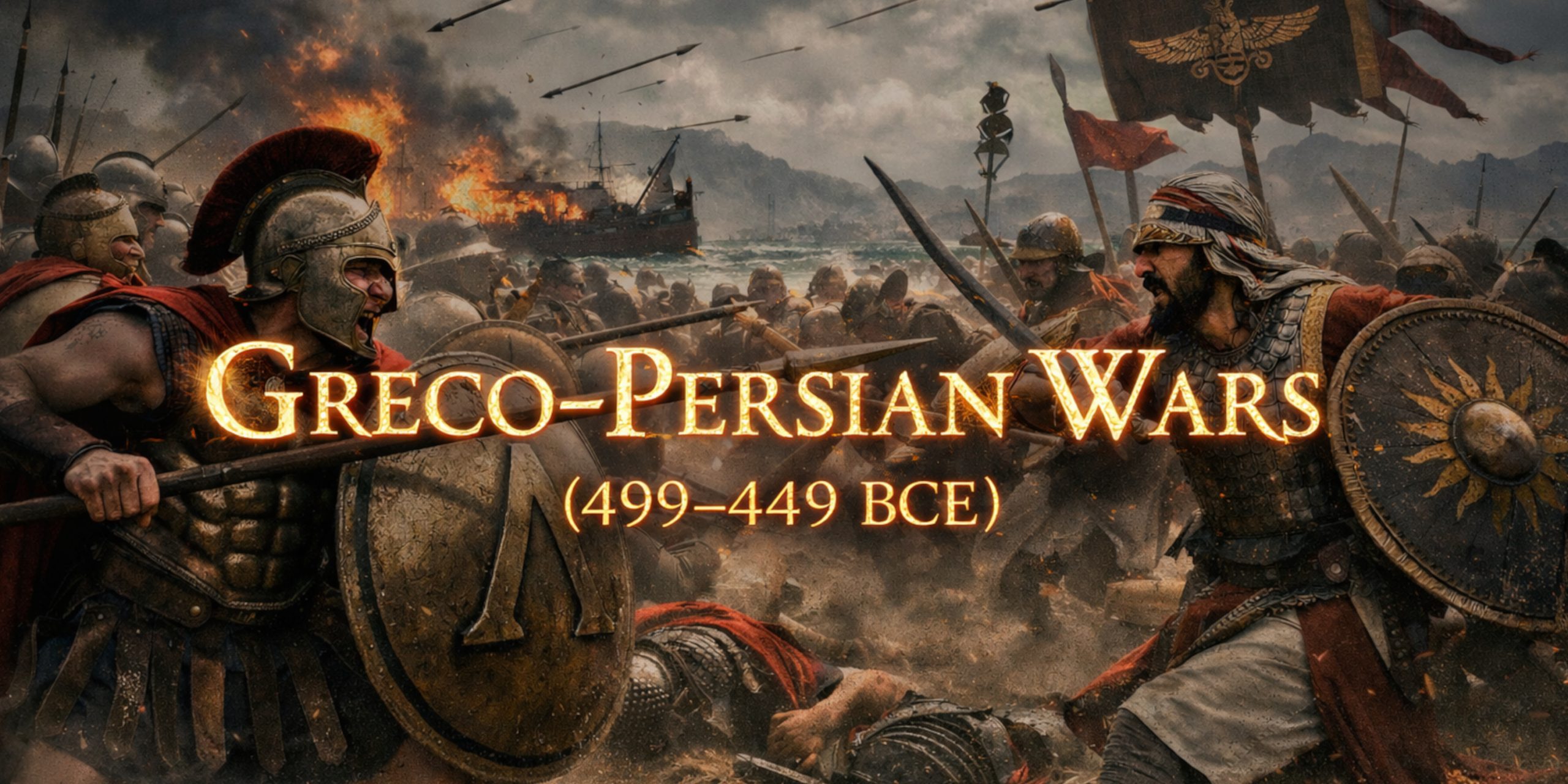
The Greco-Persian Wars were not a single war but a long and messy quarrel fought across half a century. Between 499 and 449 BC, the vast Achaemenid Persian Empire and the fractious Greek city-states collided in a series of invasions, rebellions and naval campaigns.
At first glance, the contest seems almost absurd. Persia controlled an empire stretching from Egypt to India. Greece, by contrast, consisted of dozens of argumentative city-states that spent nearly as much time quarrelling with one another as they did fighting outsiders. Expecting the Greeks to unite was rather like expecting a room full of rival football managers to agree on the same starting eleven.
Yet they did unite, at least when they absolutely had to. Out of that uneasy alliance came some of the most famous battles in history: Marathon, Thermopylae, Salamis and Plataea. The result shaped the future of Greece, the Persian Empire and, eventually, much of European history.
What Were the Greco-Persian Wars?
The wars began with the Ionian Revolt in 499 BC. Greek cities on the coast of Asia Minor, modern western Turkey, had been ruled by Persia for decades. Many resented Persian-appointed tyrants and heavy demands for tribute.
When Aristagoras of Miletus encouraged the Ionian cities to rebel, Athens and Eretria sent help. The rebels briefly captured and burned Sardis, one of Persia’s most important regional capitals. The Persians recovered quickly, crushed the revolt, and Darius I decided that Athens in particular deserved punishment.
From that moment, the conflict widened into a struggle between mainland Greece and Persia.
The wars are usually divided into four broad phases:
- The Ionian Revolt, 499-493 BC
- The First Persian Invasion of Greece, 492-490 BC
- The Second Persian Invasion under Xerxes, 480-479 BC
- The Greek counter-attacks led largely by Athens and the Delian League, 478-449 BC
Why Persia Wanted Greece
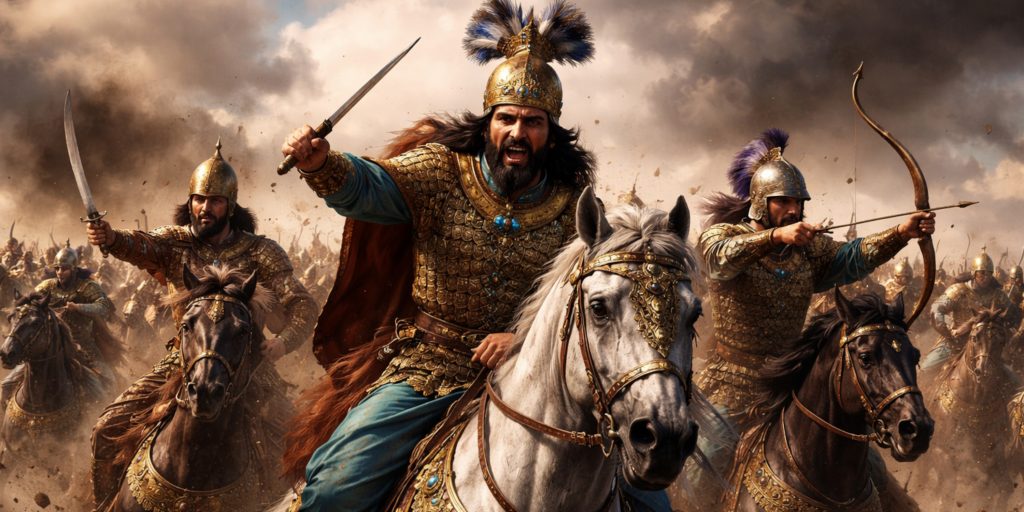
Persia had several reasons for invading.
- To punish Athens and Eretria for helping the Ionian Revolt
- To secure the western frontier of the empire
- To prevent Greek interference in Asia Minor
- To bring the Greek city-states into the Persian imperial system
Darius I probably expected that most Greek cities would surrender, as many had already done in northern Greece. Some did. Others offered the traditional tokens of submission, earth and water. Sparta and Athens refused.
According to later tradition, the Spartans threw the Persian envoys into a pit and told them to fetch their own earth and water. Diplomatic subtlety was not always Sparta’s greatest strength.
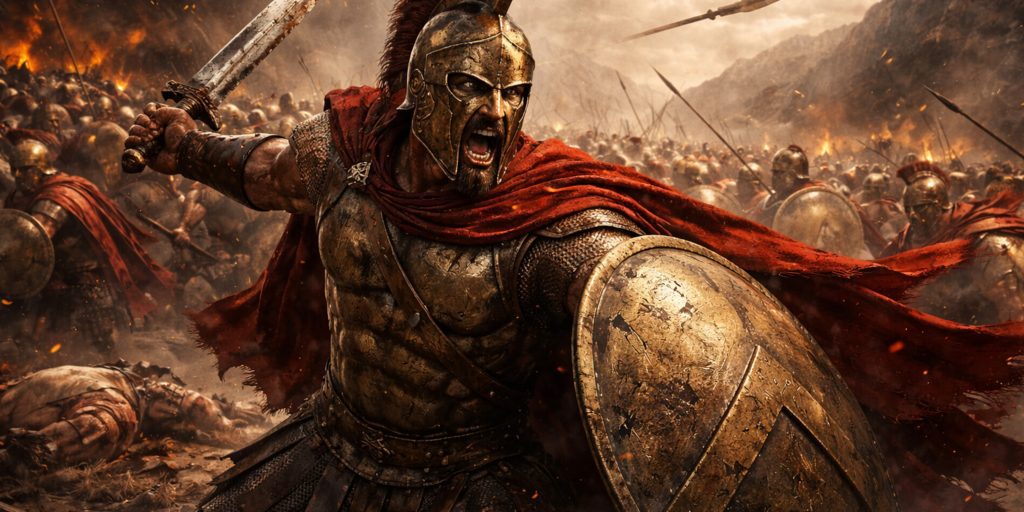
The Main Leaders
| Greek Side | Role |
|---|---|
| Miltiades | Athenian general at Marathon |
| Leonidas I | Spartan king at Thermopylae |
| Themistocles | Architect of the Greek naval strategy at Salamis |
| Pausanias | Spartan commander at Plataea |
| Cimon | Athenian commander during the later campaigns |
| Persian Side | Role |
| Darius I | Persian king during the early war |
| Xerxes I | Persian king who launched the great invasion of 480 BC |
| Mardonius | Persian general and adviser to Xerxes |
| Datis | Commander of the Persian expedition at Marathon |
| Artaphernes | Persian governor and commander in Asia Minor |
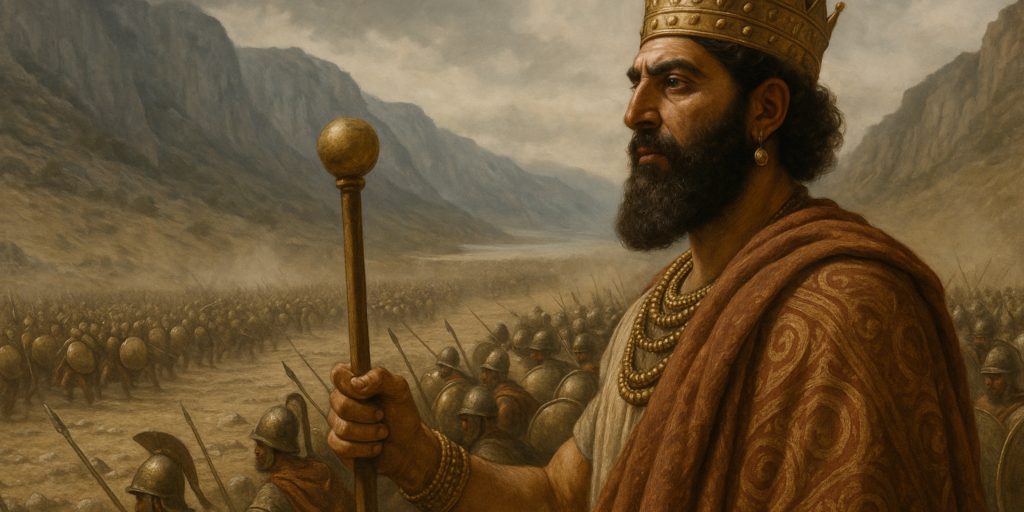
Timeline of the Greco-Persian Wars
| Year | Event |
| 499 BC | Ionian Revolt begins |
| 498 BC | Greeks burn Sardis |
| 494 BC | Persian victory at Lade, Miletus falls |
| 490 BC | Battle of Marathon |
| 486 BC | Death of Darius I |
| 480 BC | Xerxes invades Greece, Thermopylae and Salamis |
| 479 BC | Battles of Plataea and Mycale |
| 478 BC | Formation of the Delian League |
| c. 466 BC | Greek victory at the Eurymedon River |
| 449 BC | Peace of Callias traditionally ends the wars |
The Major Battles
The Ionian Revolt and the Battle of Lade, 494 BC
The Ionian Revolt began with enthusiasm and ended with disaster. The Greek cities failed to cooperate effectively, and Persia steadily regained control.
The decisive moment came at the Battle of Lade in 494 BC, fought off the coast near Miletus.
| Battle | Result | Importance |
| Lade | Persian victory | Crushed the Ionian Revolt and restored Persian rule |
The Persian fleet defeated the Ionian navy after several Greek contingents deserted. Miletus fell soon afterwards. The revolt was over, but the wider war had only just begun.
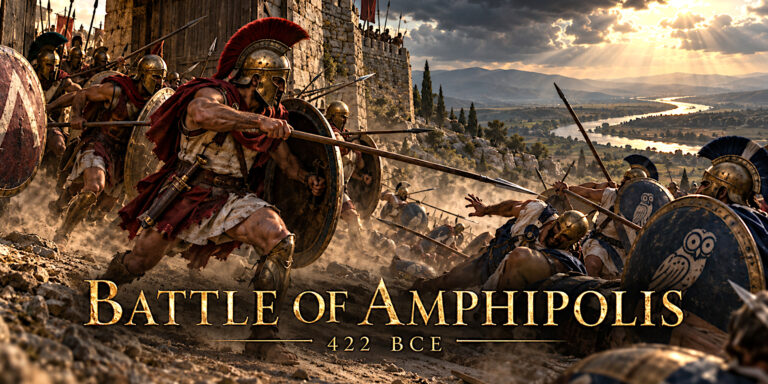
The Battle of Marathon, 490 BC
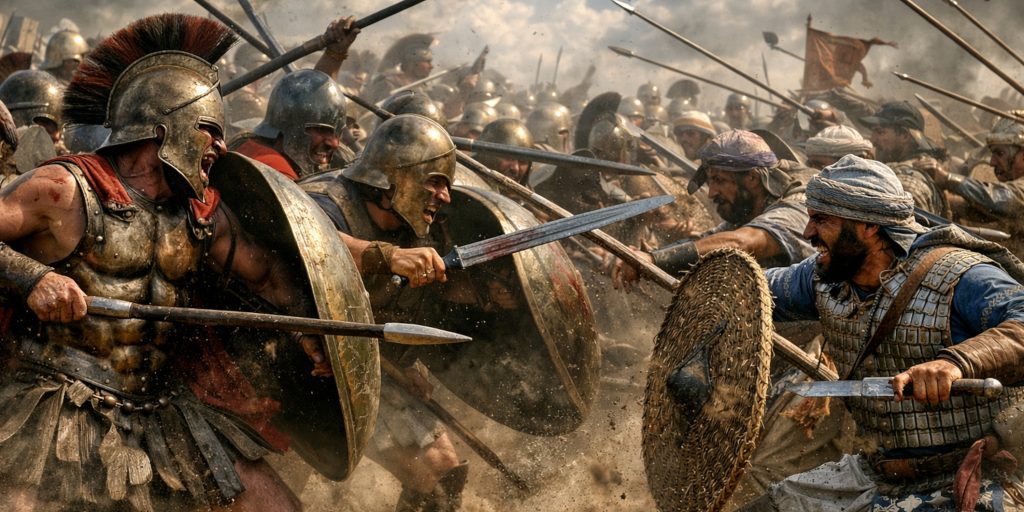
Marathon remains one of the most celebrated battles in ancient history.
A Persian force landed near Marathon, north-east of Athens. The Athenians, reinforced by a small contingent from Plataea, marched out to meet them.
Miltiades persuaded the Athenians to attack before the Persians could advance on the city. The Greek hoplites charged across the plain, smashed the Persian centre and surrounded both flanks.
| Greek Forces | Persian Forces |
| Around 10,000 Athenians and Plataeans | Perhaps 20,000-25,000 Persians |
The Greek victory was astonishing because the Persians had expected the heavily armoured hoplites to be slow and vulnerable. Instead, the Athenians attacked aggressively and turned the battle into a close-range struggle.
Herodotus claimed that the Persians lost around 6,400 men, while the Athenians lost only 192. Ancient casualty figures should always be treated with caution. Ancient historians had a habit of making enemy losses enormous and their own losses almost miraculously small. It was a tradition that survived rather nicely into modern politics.
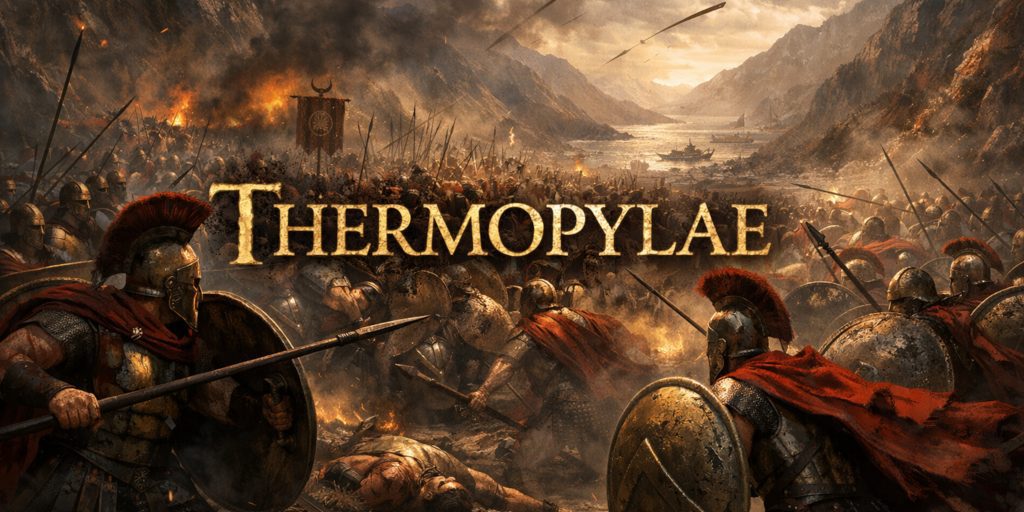
Thermopylae, 480 BC
Ten years later, Xerxes I launched a much larger invasion.
The Greeks decided to block the Persian advance at the narrow pass of Thermopylae while their fleet held the nearby straits at Artemisium.
Leonidas led a small Greek force, including his famous 300 Spartans.
| Greek Forces | Persian Forces |
| Perhaps 7,000 at the start | Likely over 100,000 |
For two days the Greeks held the pass. Then a local man named Ephialtes revealed a mountain path around the Greek position.
Leonidas dismissed most of the army and stayed behind with the Spartans, Thespians and a few others. They fought to the death.
Thermopylae was a defeat, but it became one of history’s great examples of resistance against impossible odds.
Contemporary Quote
“Go tell the Spartans, stranger passing by, that here, obedient to their laws, we lie.”
This epitaph, later associated with the fallen at Thermopylae, captured exactly the sort of grim Spartan pride one might expect from a society that considered understatement a personality trait.
The Battle of Salamis, 480 BC
After Thermopylae, the Persians occupied and burned Athens. Yet the war was not over.
Themistocles persuaded the Greeks to fight at sea in the narrow waters around Salamis. Xerxes believed his superior fleet would crush the Greeks.
Instead, the narrow straits worked against the Persians. Their larger fleet became crowded and disorganised.
| Greek Fleet | Persian Fleet |
| Around 370 triremes | Around 600-800 triremes |
The Greek ships rammed and sank Persian vessels in the confined waters. By the end of the battle, the Persian fleet had suffered a severe defeat.
Salamis was probably the turning point of the entire war. Without control of the sea, Xerxes could not safely supply his huge army.
Contemporary Quote
“Men of Athens, the contest now concerns all.”
Themistocles reportedly used words like these to urge the Greeks to stand and fight.
Plataea and Mycale, 479 BC
In 479 BC the remaining Persian forces under Mardonius were defeated at Plataea in central Greece.
The Greek army, led by the Spartan regent Pausanias, finally broke Persian power on the mainland.
| Greek Forces | Persian Forces |
| Around 80,000-100,000 | Around 70,000-120,000 |
On the same day, according to later tradition, the Greek fleet defeated the Persians again at Mycale in Asia Minor.
Together, Plataea and Mycale ended the Persian invasions of Greece.
The Later War and the Delian League
After 479 BC, Sparta gradually withdrew from the struggle. Athens took the lead and formed the Delian League, an alliance of Greek states centred on the island of Delos.
At first the league existed to continue the war against Persia. Under Athenian leadership, the Greeks liberated many Greek cities in Asia Minor and won further victories.
The greatest of these came at the Eurymedon River around 466 BC, where the Athenian commander Cimon defeated both the Persian fleet and army in the same campaign.
Yet the Delian League slowly became an Athenian empire in all but name. Member states paid tribute to Athens, and Athens used that wealth to build ships, monuments and, eventually, the Parthenon.
Persia had failed to conquer Greece, but in a rather awkward twist of history the Greek victory eventually helped Athens become a power that its own allies increasingly resented.
Greek and Persian Warfare
Greek Warfare
The Greeks relied on heavily armed hoplites fighting in the phalanx.
Typical Greek equipment included:
- Bronze helmet
- Large round shield, or hoplon
- Spear around 2-3 metres long
- Short sword such as the xiphos or kopis
- Bronze cuirass or linen armour
The phalanx worked best on open ground, where disciplined ranks of hoplites could push steadily forward.
Persian Warfare
The Persians used a more varied army.
Persian forces included:
- Archers
- Light infantry
- Cavalry
- Elite guards known as the Immortals
- Troops from many parts of the empire, including Egyptians, Medes and Phoenicians
Persian soldiers often fought with:
- Composite bows
- Spears
- Short swords and daggers
- Wicker shields
- Light armour
Persian warfare relied on mobility, missile fire and flexibility. Greek warfare relied on shock, discipline and close combat.
The contrast between the two styles became one of the defining features of the wars.
Archaeology of the Greco-Persian Wars
Archaeology has revealed much about the conflict, although not always enough to settle every argument.
Marathon
At Marathon, archaeologists have identified the burial mound of the Athenian dead. The mound still survives on the battlefield.
Finds from the area include:
- Arrowheads
- Spear points
- Pottery fragments
- Human remains from the burial tumulus
The site provides rare physical evidence for one of the most famous battles in Greek history.
Thermopylae
The landscape at Thermopylae has changed dramatically because of river deposits over the centuries. The pass is much wider today than it was in 480 BC.
Archaeologists have identified:
- The likely line of the ancient road
- Remains of the old defensive wall
- The hill where Leonidas and his men made their final stand
Modern visitors are often surprised by how open the area now looks. In antiquity, it was a narrow strip between mountain and sea. Today it has all the cramped grandeur of a dual carriageway lay-by.
Salamis
The naval battlefield at Salamis is harder to study, but underwater archaeology has identified ancient anchorages, ship sheds and harbour remains.
There is continuing debate about the precise location of the main fighting.
Persian Destruction Layers in Athens
Excavations on the Acropolis have uncovered burnt remains from the Persian sack of Athens in 480 BC.
These include:
- Broken statues
- Burnt temple foundations
- Fragments of weapons and armour
The Athenians later buried many of these damaged statues. Their remains still survive and provide a vivid reminder of the destruction.
Contemporary Quotes
Ancient writers left us several memorable remarks connected to the war.
“We are all of us Greeks, of one blood and one tongue.”
Herodotus attributed these words to the Athenians as they described the unity of the Greek cause.
“Come and take them.”
According to later tradition, Leonidas gave this reply when Xerxes demanded that the Greeks lay down their weapons.
“Forward, sons of the Greeks, free your fatherland.”
Aeschylus, who fought at Marathon, later used these words in his play The Persians.
Why the Greeks Won
Several factors explain the Greek victory.
- The Greeks fought on ground that suited their style of warfare
- The Persian fleet struggled in narrow waters such as Salamis
- Greek hoplites were more effective in close combat
- Persian logistics became increasingly difficult
- Themistocles and other Greek commanders used clever strategy
- Greek determination hardened after the destruction of Athens
Greek unity also mattered, although that unity was often reluctant and temporary.
The city-states could cooperate when they faced a common danger. Once the danger had passed, they resumed arguing with one another at almost professional levels.
Legacy of the Greco-Persian Wars
The Greco-Persian Wars shaped the ancient world.
The Greek victory:
- Preserved the independence of the Greek city-states
- Allowed Athens to become a major power
- Encouraged the growth of Greek culture, drama, philosophy and politics
- Created the conditions that later allowed Alexander the Great to invade Persia
- Became a lasting symbol of resistance against invasion
For later Greeks, the wars became almost mythical. Marathon and Thermopylae were remembered not simply as battles but as proof of what Greeks believed about themselves.
That memory mattered for centuries. Greek writers, Roman historians and modern politicians have all returned to these battles when speaking about courage, freedom and the defence of a homeland.
As historians, we should be careful not to romanticise the conflict too much. The Greeks were divided, often selfish and frequently brutal. The Persians were not crude villains, but rulers of one of the most sophisticated empires in the ancient world.
The truth is rather more interesting than the legend. The Greco-Persian Wars were a contest between two different political worlds, and the outcome changed history.
Further Reading
- Herodotus, Histories
- Aeschylus, The Persians
- Tom Holland, Persian Fire
- Peter Green, The Greco-Persian Wars
- Barry Strauss, The Battle of Salamis