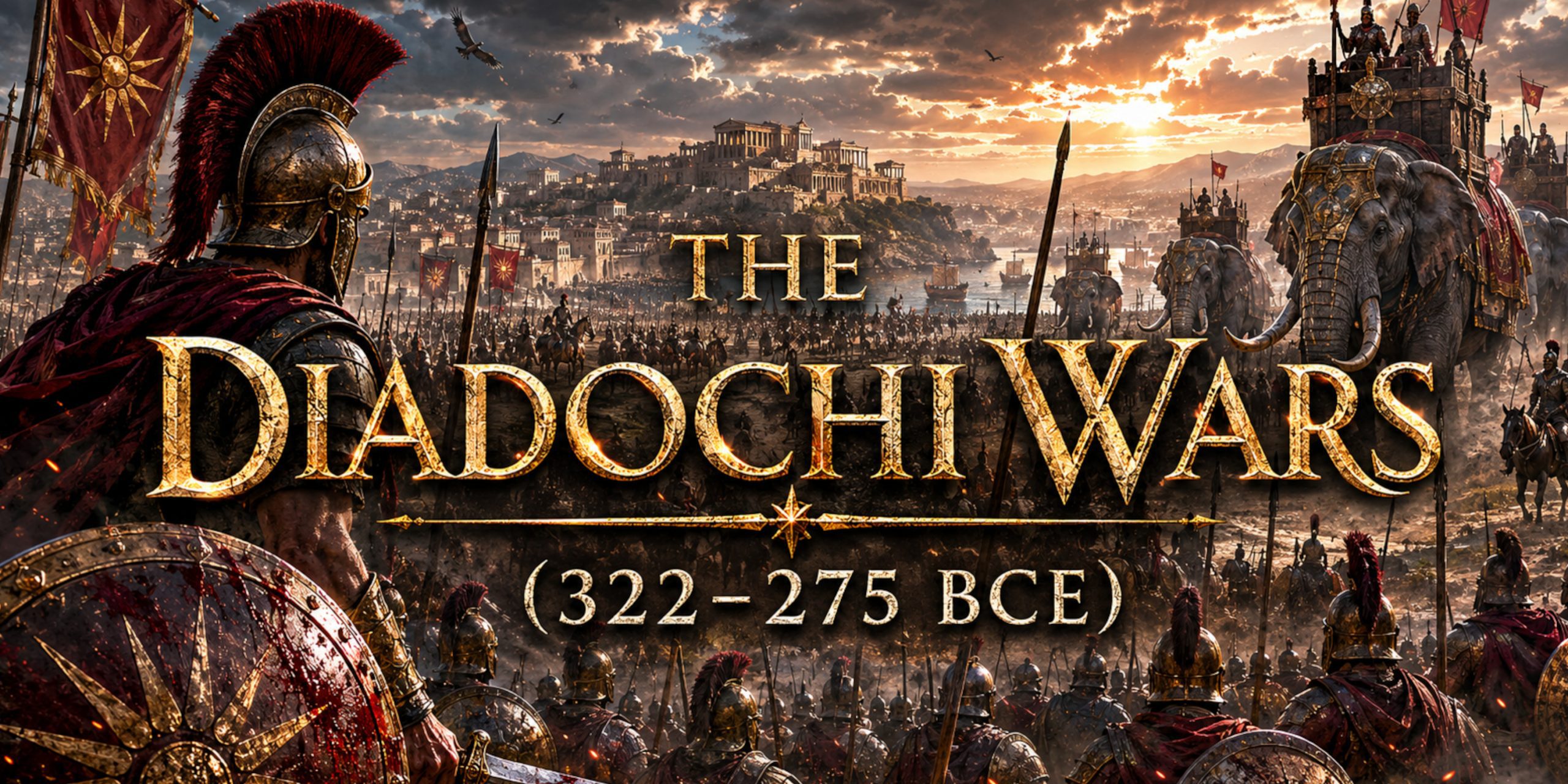
The Diadochi Wars were not a single clean conflict. They were a rolling disaster that consumed the eastern Mediterranean and Near East for nearly half a century after the death of Alexander the Great in 323 BC.
Alexander had conquered one of the largest empires the ancient world had ever seen. What he did not leave behind was a functioning system for succession. He died young, exhausted, and surrounded by ambitious men who had spent years learning that violence solved political problems remarkably quickly.
The result was predictable in the way avalanches are predictable. Everyone saw the danger. Nobody stepped aside.
The Diadochi, meaning “successors”, were Alexander’s surviving generals, companions, governors, and relatives. Men like Ptolemy I Soter, Seleucus I Nicator, Antigonus I Monophthalmus, and Lysimachus fought each other endlessly across Greece, Anatolia, Egypt, Syria, Mesopotamia, and Iran.
Cities burned. Dynasties rose and collapsed. Veteran Macedonian soldiers marched across continents for decades while trying not to get trampled by elephants.
For historians, the period is fascinating because it feels both grand and strangely personal. Entire kingdoms turned on family grudges, drunken arguments, betrayals, marriages, and the occasional assassination during a banquet. Ancient history often pretends to be dignified. The Diadochi Wars rarely bothered.
The Crisis After Alexander’s Death
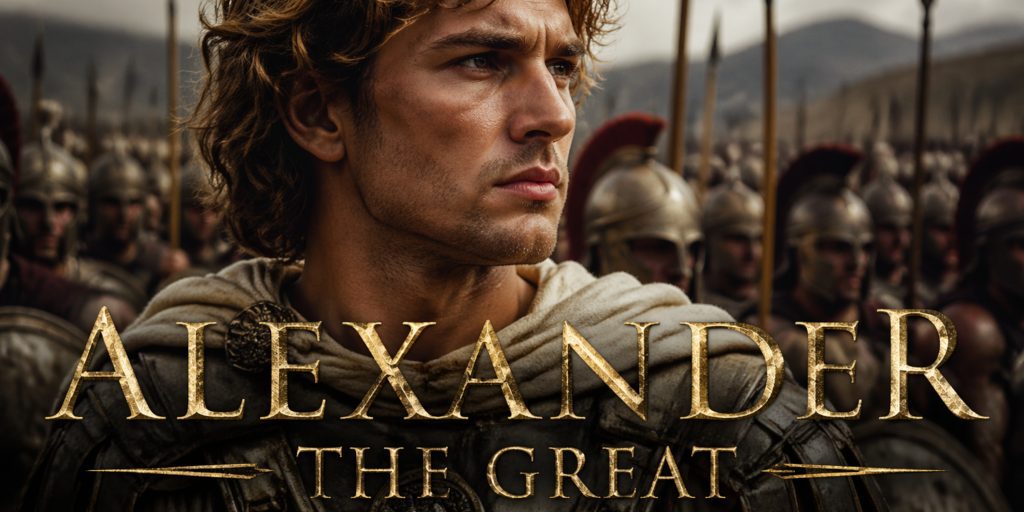
Alexander died in Babylon in June 323 BC, probably aged thirty-two. Ancient sources disagree on the exact cause. Fever, exhaustion, malaria, typhoid, old wounds, and poisoning have all been proposed. Poisoning remains dramatic but unlikely.
The immediate issue was succession.
Alexander’s half-brother, Philip III Arrhidaeus, had significant disabilities and was not considered capable of ruling independently. Alexander’s wife Roxana was pregnant, though the child had not yet been born. That unborn child would become Alexander IV.
The empire therefore had a king who could not rule and another who technically did not yet exist. This is rarely an ideal constitutional arrangement.
The generals initially attempted compromise. Perdiccas became regent, effectively controlling the empire in the kings’ names. Satrapies were distributed among senior commanders.
Nobody trusted anybody.
Within a few years, the empire began fragmenting into rival power blocs:
| Successor | Territory |
|---|---|
| Ptolemy | Egypt |
| Seleucus | Babylonia and later much of Asia |
| Antigonus | Anatolia and Syria |
| Lysimachus | Thrace |
| Cassander | Macedon and Greece |
The wars that followed would shape the Hellenistic world for centuries.
The Nature of Hellenistic Warfare
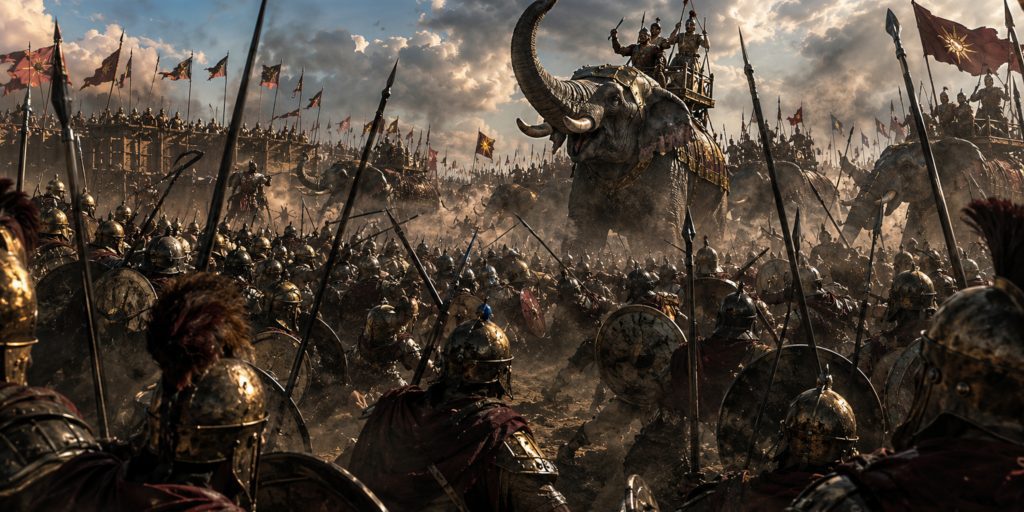
The Diadochi inherited Alexander’s military system, but they expanded it into something even larger and more extravagant.
The core remained the Macedonian phalanx, armed with the sarissa, a massive pike often over eighteen feet long. These formations were terrifying from the front but vulnerable on rough ground and from the flanks.
Cavalry remained essential. Companion-style heavy cavalry charges still decided battles, though commanders increasingly relied on mercenaries and regional troops.
War elephants became a defining feature of the age, especially after contact with Indian kingdoms. Seleucus famously acquired hundreds of elephants after negotiations with Chandragupta Maurya. Ancient generals became obsessed with them. This occasionally worked.
The armies also employed:
- Cretan archers
- Agrianian javelin troops
- Galatian mercenaries
- Persian cavalry
- Siege engineers
- Naval fleets of enormous scale
Siege warfare became especially important. The Successors fought over fortified cities constantly, and engineers developed extraordinary machines.
The siege of Rhodes demonstrated this perfectly. Demetrius Poliorcetes, son of Antigonus, deployed gigantic siege towers so enormous they seemed almost absurd even by ancient standards. Ancient warfare occasionally resembles a contest between brilliant tacticians and overexcited architects.
Major Battles of the Diadochi Wars
Battle of the Hellespont (321 BCE)
This early clash occurred during the First War of the Diadochi.
Eumenes of Cardia, loyal to Perdiccas, defeated Craterus and Neoptolemus near the Hellespont. Craterus had been one of Alexander’s most respected commanders, and his death shocked the Macedonian world.
Eumenes himself was an unusual figure. He was Greek rather than Macedonian and often distrusted by the officer elite despite his talent.
His victories temporarily preserved Perdiccas’ faction, though not for long.
Battle of Gaza (312 BCE)
The Battle of Gaza became one of the defining moments of the wars.
Demetrius I Poliorcetes faced Ptolemy and Seleucus in southern Palestine. Demetrius suffered defeat, and Seleucus regained Babylon soon afterward.
This triggered the rise of the Seleucid Empire.
The battle also demonstrated the increasing importance of elephants and flexible cavalry tactics. Hellenistic warfare was evolving rapidly away from the cleaner battlefield systems of Philip II and Alexander.
Battle of Ipsus (301 BCE)
Ipsus was the great turning point.
Antigonus I Monophthalmus attempted to reunify Alexander’s empire under his own rule. Other Successors united against him.
The opposing coalition included:
- Seleucus
- Lysimachus
- Cassander
- Ptolemy, indirectly
The battle likely took place in Phrygia in Anatolia.
Seleucus deployed a massive elephant corps that blocked Demetrius from returning to support his father. Antigonus, already elderly, was killed during the fighting.
Ancient writers describe him refusing to flee.
After Ipsus, Alexander’s empire was effectively beyond reunification.
The Hellenistic kingdoms became permanent political realities.
Battle of Corupedium (281 BCE)
This battle marked the final showdown between the surviving original Successors.
Seleucus defeated and killed Lysimachus in western Anatolia.
By this stage, the old guard of Alexander’s companions had nearly vanished. Most had died violently. A historian cannot help noticing the pattern.
Seleucus himself survived the battle only briefly before being assassinated by Ptolemy Keraunos.
The generation that had marched with Alexander had finally destroyed itself.
Naval Warfare and Control of the Mediterranean
The Diadochi Wars were fought not only on land but at sea.
Massive fleets operated across the Aegean and eastern Mediterranean. Naval supremacy determined control of trade, troop movement, and coastal cities.
Demetrius won a major naval victory at Salamis in Cyprus in 306 BCE. The triumph allowed Antigonus and Demetrius to proclaim themselves kings.
This was politically important. Before this point, the Successors had often pretended to rule on behalf of Alexander’s heirs. Afterward, they increasingly admitted the obvious and declared themselves monarchs openly.
The Hellenistic age had begun.
Archaeology and Physical Evidence
Archaeological evidence for the Diadochi Wars is scattered across a vast geographical area.
Important discoveries include:
- Hellenistic fortifications in Anatolia and Syria
- Coinage bearing royal portraits of the Successors
- Military equipment linked to Macedonian armies
- Siege remains from Rhodes and other contested cities
- Inscriptions recording alliances and military decrees
Coins are especially valuable.
The Successors used coinage aggressively as propaganda. Portraits became more individualistic and royal imagery more overtly divine. Alexander himself increasingly appeared with godlike symbolism, particularly ram’s horns associated with Zeus-Ammon.
Archaeologists have also uncovered evidence of large Hellenistic military settlements stretching from Egypt to Central Asia.
Ai-Khanoum in Afghanistan remains one of the most extraordinary examples of Greek cultural expansion after Alexander. Even now, the site feels faintly surreal. One does not naturally expect Greek gymnasiums and theatres in Afghanistan, yet there they are.
Recent archaeological work has also improved understanding of Hellenistic siegecraft, urban planning, and military logistics.
Contemporary and Ancient Quotes
Ancient historians preserved several memorable remarks connected to the period.
From Plutarch on the division of Alexander’s empire:
“This was not a division of kingdoms, but of spoils.”
From Appian regarding the ambitions of the Successors:
“They all desired power for themselves.”
Antigonus reportedly declared during battle:
“The enemy’s missiles will find me dead or victorious.”
A statement which sounds admirable until one remembers how many generals in this era died making similarly confident speeches.
The Human Cost of the Wars
The Diadochi Wars devastated huge regions.
Cities changed hands repeatedly. Armies looted farmland. Mercenary recruitment expanded enormously. Refugees fled war zones across Greece and Asia.
Yet the wars also accelerated cultural exchange.
Greek settlers spread throughout the east. Trade networks expanded. New cities emerged. Hellenistic science, philosophy, and art flourished in places like Alexandria, Antioch, and Pergamon.
The irony is difficult to ignore. Extraordinary intellectual and artistic achievements emerged from decades of relentless warfare.
Human beings remain remarkably consistent in this regard.
The Legacy of the Diadochi Wars
The wars created the major Hellenistic kingdoms that dominated the eastern Mediterranean until the rise of Rome.
These states included:
- The Ptolemaic Kingdom in Egypt
- The Seleucid Empire
- Antigonid Macedon
The cultural consequences were immense.
Greek language and culture spread across enormous territories. Local traditions blended with Hellenistic influence. Trade and scholarship expanded dramatically.
The Roman Republic would later absorb these kingdoms one by one, but Rome inherited a world already transformed by Alexander’s successors.
Without the Diadochi, there is no Hellenistic Alexandria, no Greek Bactria, no fusion of Greek and eastern artistic traditions, and arguably no intellectual environment that later shaped Roman and Byzantine civilisation.
The Successors failed to preserve Alexander’s empire.
They succeeded in creating something else entirely.
And perhaps that was inevitable from the start.
Alexander conquered the known world through speed, charisma, and military brilliance. The men who followed him inherited the territory but not the myth. They spent decades trying to force unity through war, only to carve the empire into rival kingdoms anyway.
Ancient historians often treated the period as tragic decline after Alexander’s glory. I think that is slightly unfair. Messy though it was, the age of the Diadochi produced one of the most dynamic eras in ancient history.
It was violent, unstable, ambitious, cultured, and frequently absurd.
Which, in fairness, describes quite a lot of history once the marble statues are removed.