Darius I ruled the Achaemenid Persian Empire from 522 to 486 BCE. He inherited neither a quiet throne nor an undisputed right to occupy it. His reign began with a killing, spread into civil war and ended with an empire whose institutions proved more durable than its founder’s explanations.
He is remembered for Persepolis, imperial administration and the failed Persian expedition to Marathon. Yet the most interesting Darius sits somewhere between the triumphant figure on his monuments and the threatening eastern monarch of Greek storytelling.
What draws me to him is that tension. Here was a ruler who devoted considerable effort to explaining that he was legitimate, just and supported by the gods. Historians tend to become attentive when someone insists quite so often.
Darius I at a Glance
| Detail | What we know |
|---|---|
| Name | Darius I, conventionally called Darius the Great |
| Old Persian name | Dārayavauš |
| Born | Around 550 BCE |
| Reign | 522–486 BCE |
| Father | Hystaspes, a Persian nobleman |
| Dynasty | Achaemenid, although his precise relationship to Cyrus’s line remains debated |
| Principal royal centres | Susa, Persepolis, Babylon and Ecbatana |
| Successor | His son Xerxes I |
| Burial | Rock-cut tomb at Naqsh-e Rostam, near Persepolis |
Darius I should not be confused with Darius III, the Persian king defeated by Alexander the Great almost two centuries later.
Early Life and the Persian World He Inherited
Darius was born into the Persian aristocracy. Greek tradition places him in the service of Cambyses II, the son of Cyrus the Great, during the conquest of Egypt.
Cyrus had assembled an enormous empire through the conquest of Media, Lydia and Babylonia. Cambyses added Egypt in 525 BCE. Darius therefore entered a political world already rich in administrative experience, royal traditions and regional institutions.
That matters. He did not arrive in an organisational wilderness carrying the ancient equivalent of a filing cabinet. His achievement was to consolidate and reshape an existing empire.
How Did Darius Become King?
In 522 BCE, Cambyses died and Darius joined a conspiracy that killed the man occupying the throne.
According to Darius’s own account, Cambyses had secretly murdered his brother Bardiya. An impostor named Gaumata then assumed Bardiya’s identity and seized the kingdom. Darius presented his intervention as the rescue of legitimate kingship.
There is another possibility: the man Darius killed was Bardiya himself, and the impostor story justified a successful coup. Scholars disagree, and the surviving evidence cannot conclusively settle the victim’s identity.
The secure conclusion is that Darius took power through a violent conspiracy. His claim to have removed an impostor needs to remain an attributed claim.
His marriages also strengthened his position within the royal family. Atossa, daughter of Cyrus, became his wife and the mother of Xerxes. In this court, marriage carried rather more constitutional weight than a romantic gesture.
Civil War and the Behistun Inscription
Darius’s accession was followed by rebellions across several regions, including Babylonia, Media and Persia itself.
The Behistun inscription, also called Bisotun, records his version of their suppression. Its relief shows the king standing above a defeated enemy while bound captives face him. The accompanying texts appear in Old Persian, Elamite and Babylonian.
Darius claimed nineteen battles and nine defeated kings within a year. These are royal claims, rather than independently audited totals.
The monument is invaluable because it preserves names, places and the language of royal authority. It is also openly partisan. Darius repeatedly associates rebellion with falsehood and his own victories with divine support.
Its violence should not disappear behind the impressive stonework. The text describes mutilation and execution among the punishments imposed on opponents. Restoring order could be a very bloody business.
How Darius Governed His Empire
Darius’s lasting importance lies partly in making a vast, diverse monarchy work across extraordinary distances.
Satraps and provincial government
Satraps governed major provinces on the king’s behalf. Provincial government predated Darius, but his reign strengthened its organisation and the relationship between regional authority and the court.
A satrap’s responsibilities could include revenue collection, security and dealings with local elites. Arrangements varied across the empire. The neat administrative map often reproduced in modern summaries conceals a more flexible reality.
Tribute and taxation
Darius is associated with a more systematic assessment of tribute. Herodotus describes twenty tribute districts, but these should not simply be treated as twenty identical satrapies.
Payments included precious metal and goods. Obligations differed between regions, and the costs of supporting imperial government fell unevenly.
Predictability helped the monarchy plan. Whether taxpayers found it equally admirable is another question.
Languages and local institutions
Aramaic served widely in imperial communication, while Elamite, Babylonian, Egyptian and other languages retained important roles.
Persian rule often worked through existing institutions and local specialists. Administrative consistency did not require everyone to speak the same language or abandon established practices.
Roads, Coinage and the Egyptian Canal
Darius supported the communications and infrastructure needed to move officials, information and resources.
| Development | Significance |
|---|---|
| Royal road network | Linked royal centres and provinces, including the celebrated route between Susa and Sardis |
| Relay communications | Helped royal messages travel through a system of stations and fresh mounts |
| Gold darics and silver sigloi | Extended royal coinage, particularly in the western empire |
| Egyptian canal works | Connected the Nile system with the Red Sea through the Wadi Tumilat route |
These developments need qualification. Darius improved routes with older histories, rather than inventing roads across western Asia. Royal coins also circulated alongside other forms of payment, including weighed silver and payments in kind.
His Egyptian inscriptions celebrated a navigable connection between the Nile and the Red Sea. This was an ancient canal project, not the modern Suez Canal running directly between the Mediterranean and Red Sea.
Persepolis, Susa and the Architecture of Kingship

Darius began the monumental complex at Persepolis around 518 BCE. His successors expanded it, so the surviving site represents several reigns.
At Susa, building inscriptions describe materials and skilled labour drawn from different parts of the empire. Architecture made imperial reach visible through stone, timber, decoration and craftsmanship.
Persepolis was more than an expensive backdrop for a monarch with ambitious tastes. Its imagery presented a carefully ordered world centred on the king.
I find the contrast revealing. Behistun announces victory over rebellion; the palace reliefs present hierarchy, ceremony and controlled cooperation. Both tell us how the monarchy wanted power to look.
Darius’s Wars and the Limits of Expansion

Darius’s military record combined successful consolidation with campaigns that exposed the limits of Persian power.
The eastern empire
Persian authority extended into parts of the Indus region under Darius. The precise sequence of conquest and incorporation is imperfectly documented, and confident reconstructions of his personal movements go beyond the evidence.
The Scythian expedition
Around 513 BCE, Darius campaigned against the Scythians beyond the Danube. The expedition did not produce a decisive conquest.
Herodotus describes opponents who avoided the battle Darius wanted and made supply increasingly difficult. His narrative needs critical handling, but the strategic problem is clear: occupying territory and defeating a mobile enemy were different tasks.
The Ionian Revolt
The Ionian Revolt began in 499 BCE. Persian forces eventually restored control, with the naval victory at Lade and the capture of Miletus in 494 BCE marking decisive moments.
Marathon

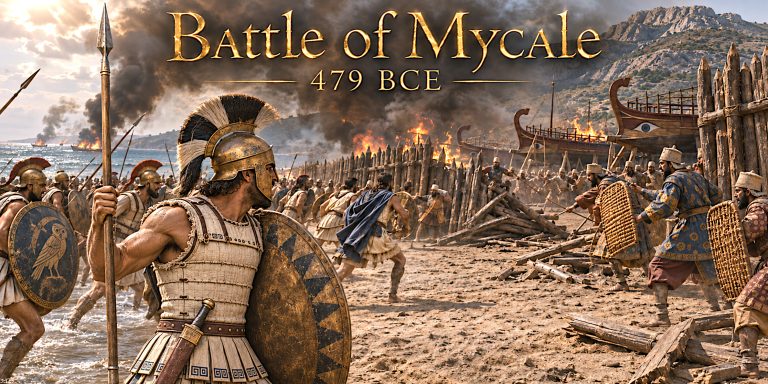
In 490 BCE, an expedition commanded by Datis and Artaphernes captured Eretria before suffering defeat at Marathon against the Athenians and their Plataean allies.
Darius was not personally present at Marathon. The defeat frustrated Persian ambitions in mainland Greece, but it did not destroy the empire or end Persian influence in the Aegean.
Arms, Armour and the Persian Army
The Achaemenid army drew on numerous peoples with different equipment and military traditions. A single uniform “Persian soldier” is a misleading shortcut.
| Equipment | Use and limitations of the evidence |
|---|---|
| Bows | Important missile weapons; royal imagery also associated archery with kingship |
| Spears | Used by infantry, guards and mounted troops |
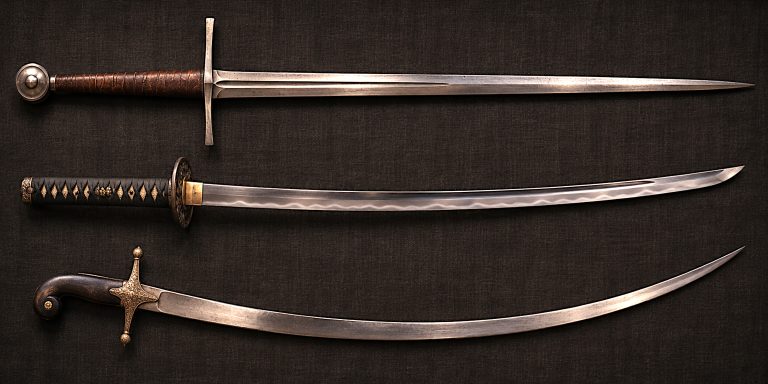
| Short swords and daggers | Included weapons commonly discussed under the term akinakes |
| Shields | Designs and materials varied, including wicker constructions |
| Scale armour | Supported by archaeological evidence, although protection was not universal |
Religion, Justice and Royal Ideology
Darius repeatedly credited Ahuramazda with his kingship and victories. His inscriptions oppose truth and rightful order to the lie.
Calling him simply “Zoroastrian” can conceal unresolved questions about how closely Achaemenid royal religion matched particular forms of Zoroastrian belief and practice.
His government also accommodated local religious institutions. Such accommodation could support imperial stability without implying modern religious equality.
Darius’s tomb inscription presents him as controlled, discerning and concerned with justice. In one translation he declares:
“What a man says against a man, that does not convince me, until I hear the sworn statements of both.”
That is a striking statement of royal fairness. It remains a statement chosen by the king about himself. I would read it alongside Behistun’s punishments, rather than allowing either text to stand alone.
Family, Death and the Succession of Xerxes
Darius’s household connected him to powerful Persian families and the descendants of Cyrus.
Atossa’s son Xerxes succeeded him, although Darius also had older sons from an earlier marriage. The succession therefore involved dynastic standing as well as age.
Darius died in 486 BCE, while renewed military preparations and unrest in Egypt complicated the final phase of his reign. He was buried at Naqsh-e Rostam.
Xerxes inherited both an exceptionally powerful empire and unfinished business in the west.
Archaeology: What Survives Beyond the Royal Story?
The Persepolis Fortification Archive offers a different perspective from royal monuments. Its records, principally dating to around 509–493 BCE, concern the movement and distribution of food and other resources.
They document workers, travellers, administrators and members of the royal household. These routine transactions reveal aspects of imperial life that victory inscriptions scarcely notice.
Seals, buildings, coins and Egyptian monuments broaden the evidence further. Each source answers different questions. A coin can reveal an official image without explaining how an ordinary household experienced taxation.
Where to See Darius’s Monuments and Artefacts

| Site or collection | Connection with Darius |
|---|---|
| Behistun, Iran | His monumental accession narrative and victory relief |
| Persepolis, Iran | Palace buildings and inscriptions begun during his reign |
| Naqsh-e Rostam, Iran | His rock-cut tomb and royal inscriptions |
| Susa, Iran | Remains of an important royal building programme |
| National Museum of Iran, Tehran | The Egyptian-made statue of Darius discovered at Susa |
| British Museum, London | A cylinder seal bearing his name and showing a royal lion hunt |
The seal is conventionally known as the Seal of Darius, but its inscription does not establish that he personally used it.
Darius the Great: Timeline
| Date | Event |
|---|---|
| Around 550 BCE | Birth of Darius |
| 522 BCE | Seizes the throne following the killing of the ruler he calls Gaumata |
| 522–520 BCE | Principal early campaigns against rebellions |
| Around 518 BCE | Work begins on the Persepolis terrace |
| Around 513 BCE | Scythian expedition |
| 499 BCE | Ionian Revolt begins |
| 494 BCE | Persian victory at Lade and capture of Miletus |
| 490 BCE | Persian expedition defeated at Marathon |
| 486 BCE | Darius dies; Xerxes succeeds him |
Why Was Darius Called “the Great”?
Darius deserves serious consideration as an imperial organiser, builder and political survivor. He strengthened institutions that helped sustain Achaemenid rule long after his death.
His failures matter too. He did not conquer the Scythians, his commanders lost at Marathon, and his accession remains inseparable from disputed claims and political violence.
For me, the most revealing judgement is that he made imperial power repeatable. Roads, provincial government, revenue and administrative routines allowed the monarchy to function beyond the immediate presence of its ruler.
That was an extraordinary achievement. It also made conquest and coercion more effective. Admiring the administration should never require us to forget what it administered.
Sources and Further Reading
- A. Shapur Shahbazi, “Darius iii. Darius I the Great”, Encyclopaedia Iranica.
- Encyclopaedia Iranica, entries on Achaemenid satrapies, taxation and religion.
- Herodotus, Histories, especially Books III–VI.
- Darius’s Behistun and Naqsh-e Rostam inscriptions, available in translation through Livius.
- UNESCO World Heritage Centre, Bisotun and Persepolis.
- University of Southern California, Persepolis Fortification Archive.
- Metropolitan Museum of Art, Achaemenid empire overview and armour collections.
- Associated Press, correction concerning the Lachish inscription, March 2023.