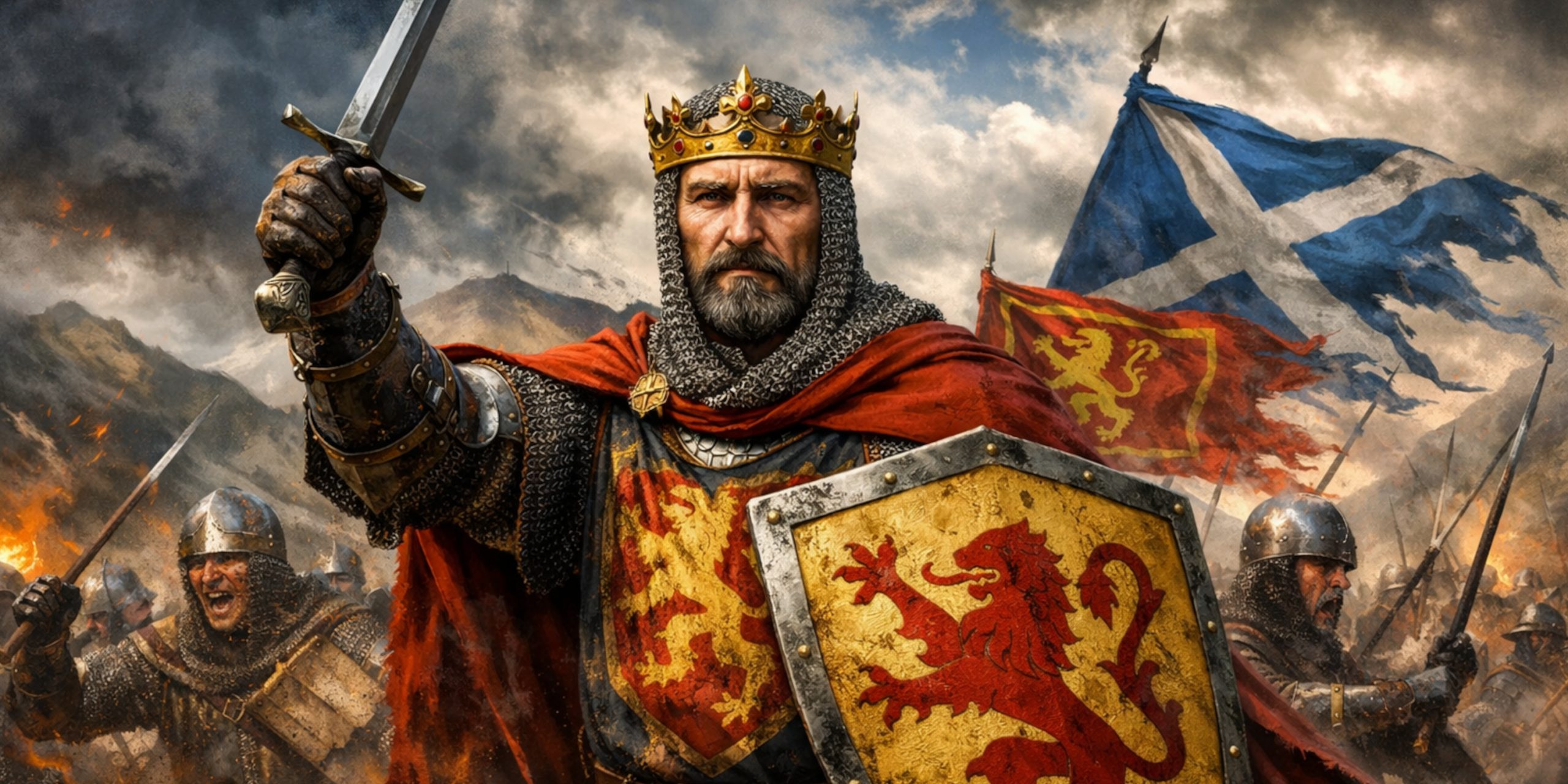
David I of Scotland ruled from 1124 to 1153, and few kings left such a large footprint on their kingdom. He inherited a Scotland that was still, in many respects, a loose patchwork of regional lordships, Gaelic traditions and local loyalties. By the time he died, Scotland looked rather more like a recognisable medieval kingdom.
He founded burghs, encouraged monasteries, built castles, introduced coinage and imported Norman methods of government and warfare. Historians often call this transformation the “Davidian Revolution”, which sounds rather dramatic, though in truth it was less a revolution than a determined and rather relentless programme of tidying up the kingdom. David had the habits of a man who looked at Scotland and decided it required considerably more paperwork, more castles and a larger number of heavily armed knights.
He was also a capable and often ruthless ruler. He fought rebellions, expanded Scottish influence into northern England and survived one of the most disastrous battles in Scottish history.
Early Life
David was born around 1084, the youngest son of King Malcolm III and Queen Margaret. His childhood was shaped by upheaval. Malcolm III was killed in 1093, along with David’s elder brother Edward, leaving the Scottish throne bitterly contested.
Unlike many Scottish kings before him, David spent much of his early life in England. At the court of King Henry I of England he absorbed Anglo-Norman ideas about kingship, government and warfare. He also married Matilda de Senlis, a wealthy English heiress, which gave him control of lands in Northamptonshire and Huntingdon.
By the time he became king in 1124, David was already one of the richest and most experienced noblemen in Britain. He had learned how Norman kings ruled, how castles controlled territory and how loyal knights could be more reliable than argumentative local nobles with strong opinions and very sharp axes.
Becoming King of Scots
David became king after the death of his brother, Alexander I. Yet his accession was not entirely smooth. Parts of northern Scotland did not immediately accept him, particularly Moray, where rival claimants still posed a threat.
For much of his early reign, David’s authority was strongest in the south and east. The Highlands and Moray remained difficult regions to control. He had to spend years suppressing rivals, particularly Máel Coluim mac Alaxandair and the rebellious rulers of Moray.
David eventually defeated these challenges through a combination of force, diplomacy and strategic settlement. He granted lands to loyal followers, especially Norman and Flemish knights, who helped secure the kingdom.
David I and the Transformation of Scotland
David’s greatest achievement was not one battle or conquest. It was the transformation of Scotland itself.
He introduced:
- Royal burghs such as Edinburgh, Roxburgh, Stirling and Perth
- The first Scottish coinage
- Norman-style castles
- Sheriffs and royal officials
- New monasteries and church reforms
- Feudal lordships held by loyal nobles
These changes strengthened royal power and tied Scotland more closely to the rest of medieval Europe.
The burghs were especially important. Before David, Scotland had very few true towns. David founded and encouraged urban centres where trade, crafts and royal taxation could flourish. Roxburgh and Berwick became major commercial centres, while Edinburgh began to emerge as an important royal town.
There is something faintly amusing in the fact that David is remembered as a great king partly because he introduced taxes, administration and bureaucracy. Medieval kings are usually celebrated for charging into battle with a sword. David deserves equal credit for discovering the usefulness of officials with ink, seals and an alarming enthusiasm for lists.
Battles and Military Acumen
David I was far more than a reformer. He was an experienced military commander who spent much of his reign fighting.
Campaigns in Scotland
David fought repeated campaigns against rebellious rulers in Moray and the north.
His most important victories included:
- The suppression of Óengus of Moray in 1130
- The defeat of Máel Coluim mac Alaxandair
- The extension of royal authority into Moray and the north-east
The Battle of Stracathro in 1130 was especially important. David’s forces defeated the men of Moray, and Óengus was killed. This effectively ended one of the greatest threats to royal authority in northern Scotland.
David understood that victory alone was not enough. After defeating rebellious regions, he settled loyal nobles there and built castles to secure the area. It was a practical approach. Medieval rulers often won battles only to discover the same people rebelling again a few years later. David preferred to leave behind a garrison, a sheriff and a rather intimidating stone tower.
The Anarchy and Northern England
David became heavily involved in the English civil war known as The Anarchy after the death of King Henry I in 1135.
David supported Henry’s daughter, the Empress Matilda, against King Stephen. He invaded northern England several times and captured large parts of Northumberland and Cumberland.
His campaigns were partly political and partly opportunistic. David believed he was supporting the rightful heir, but he also had no objection whatsoever to gaining more territory while he was at it.
The Battle of the Standard, 1138
David’s most famous battle was the Battle of the Standard, fought near Northallerton in Yorkshire in 1138.
David led a large Scottish army into England, hoping to force King Stephen to accept Scottish control over northern territories. His army included:
- Scottish spearmen
- Highland warriors
- Galwegians
- Norman knights
- Anglo-Norman retainers
The English army, commanded by northern barons and churchmen, stood behind a defensive line centred on a wagon carrying holy banners, hence the battle’s name.
The Scots attacked repeatedly but suffered heavy losses. The Galwegians insisted on leading the assault and charged into a hail of arrows. Their bravery was undeniable. Their tactical judgement was somewhat less impressive.
David was defeated, but not destroyed. Remarkably, within a year he negotiated favourable terms and retained much of the territory he had gained in northern England.
In this sense, David’s military skill lay not only in battle but in politics. He knew when to fight, when to negotiate and when to settle for a useful compromise. Losing a battle did not necessarily mean losing the war.
Arms and Armour
David I ruled during a period when Scottish warfare was changing rapidly. Earlier Gaelic styles of fighting still existed, but David increasingly relied on Norman methods.
David’s Personal Arms and Equipment
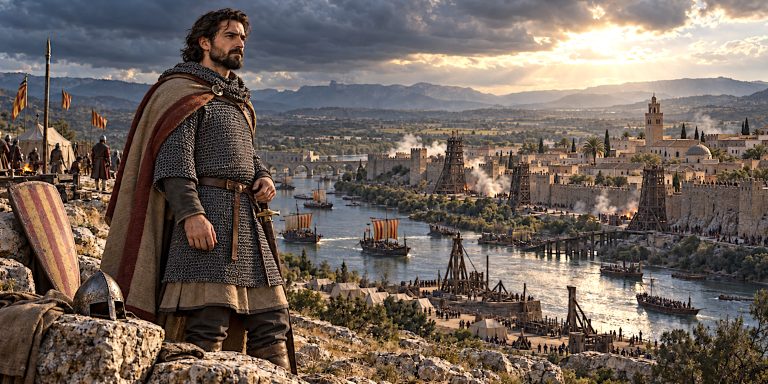
David himself likely fought as a mounted nobleman in the Anglo-Norman style.
His equipment probably included:
- A conical iron helmet with a nasal guard
- A long mail hauberk reaching to the knees
- Mail chausses protecting the legs
- A kite-shaped shield
- A sword suitable for cavalry use
- A lance for mounted combat
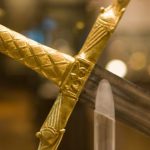
The sword most associated with this period is the classic knightly arming sword, often of a type later classified as an early Oakeshott Type X or XI. These swords had broad blades designed for cutting, though they could also thrust.
Weapons Used During His Reign
| Weapon | Description | Typical Users |
|---|---|---|
| Arming sword | Straight, double-edged knightly sword | Nobles and knights |
| Spear | Main battlefield weapon | Infantry and mounted troops |
| Lance | Heavy cavalry weapon | Norman knights |
| Axe | Traditional Scottish and Gaelic weapon | Highland and northern warriors |
| Bow | Used by archers and light troops | English and Scottish troops |
| Dagger | Sidearm for close combat | Most soldiers |
David encouraged the use of mounted knights, which was relatively new in Scotland. These heavily armoured horsemen could break infantry formations and gave the Scottish crown a more professional military force.
At the same time, many of David’s soldiers still fought in older styles. Highland warriors often carried spears and axes and wore little armour beyond thick wool, leather or perhaps a padded tunic. The contrast between a mailed Norman knight and a barefoot Galwegian warrior was considerable. One looked like a walking iron workshop. The other looked like he had come straight from a very angry farming dispute.
Military Reforms
David introduced military feudalism to Scotland.
In practice this meant:
- Land was granted to knights in return for military service
- Castles were built to secure territory
- Mounted cavalry became more important
- Royal armies became more organised
David established important castles at places such as:
- Roxburgh
- Edinburgh
- Stirling
- Carlisle
These were not the grand fairy-tale castles of later centuries. Most early castles in David’s reign were timber motte-and-bailey fortifications. They were practical, ugly and highly effective. Medieval warfare was rarely elegant.
Religion and Monastic Foundations
David was one of the greatest monastic patrons in Scottish history.
He founded or supported:
- Melrose Abbey
- Kelso Abbey
- Holyrood Abbey
- Jedburgh Abbey
- Newbattle Abbey
These monasteries were centres of religion, learning and administration. They also helped bring Scotland closer to European religious life.
David’s support for monasteries earned him a reputation for piety. Later generations sometimes referred to him as a saintly king, though one suspects the northern English, whose lands he invaded with admirable frequency, may have had a slightly different view.
Personality and Reputation
Contemporary writers described David as energetic, pious and intelligent. He could also be ambitious, stubborn and occasionally severe.
The chronicler Ailred of Rievaulx praised him as a ruler of justice and generosity. Later historians often saw him as the king who created medieval Scotland.
There is some truth in that. David did not invent Scotland, of course. Yet he reshaped it so thoroughly that the kingdom after his reign was very different from the one he inherited.
He was both a traditional Scottish king and a European prince. He spoke Gaelic, but he also spoke French and English. He moved comfortably between Scottish customs and Norman politics.
That ability to live in two worlds may explain his success.
Latest Archaeology Findings
Recent archaeology has shed new light on David I’s reign.
The most remarkable discovery came in 2025, when a silver penny of David I was confirmed as the earliest coin ever minted in Scotland itself. The coin was found near Penicuik and bears David’s image along with an inscription showing it was struck in Edinburgh during the 1130s. Previously, historians believed David’s earliest coins had all been minted at Carlisle.
This discovery is important because it pushes the origins of Scottish royal coinage firmly into Edinburgh and shows that David was establishing royal authority and economic control there earlier than once believed.
It is a small object, scarcely larger than a modern coin, yet it says a great deal about David’s ambitions. Kings often like to place their face on currency. It is one of history’s more reliable signs that they expect everyone to take them seriously.
Archaeologists have also continued to investigate early twelfth-century castles and monasteries founded by David. Excavations at sites such as Roxburgh, Kelso and Holyrood have revealed more evidence of the rapid spread of Norman-style building techniques during his reign.
At several sites in Moray and the north-east, archaeologists have found traces of the fortifications built after David’s campaigns against local rulers. These discoveries support the idea that David secured his kingdom not simply through victory in battle, but by reshaping the landscape itself.
Death and Legacy
David I died on 24 May 1153 at Carlisle. He was around sixty-eight years old, which was a respectable age for a twelfth-century king who had spent much of his life riding across battlefields and quarrelling with northern England.
He was buried at Dunfermline Abbey.
His grandson Malcolm IV succeeded him, followed later by William the Lion. Both inherited a kingdom transformed by David’s reforms.
David I remains one of the most important rulers in Scottish history because he changed not only who ruled Scotland, but how Scotland was ruled. He left behind castles, monasteries, towns, coinage and a stronger monarchy.
Many kings win battles and are then quietly forgotten. David’s greater achievement was to build institutions that survived long after he was gone. Medieval Scotland after David I was still turbulent, argumentative and occasionally violent. It was, however, unmistakably a kingdom.