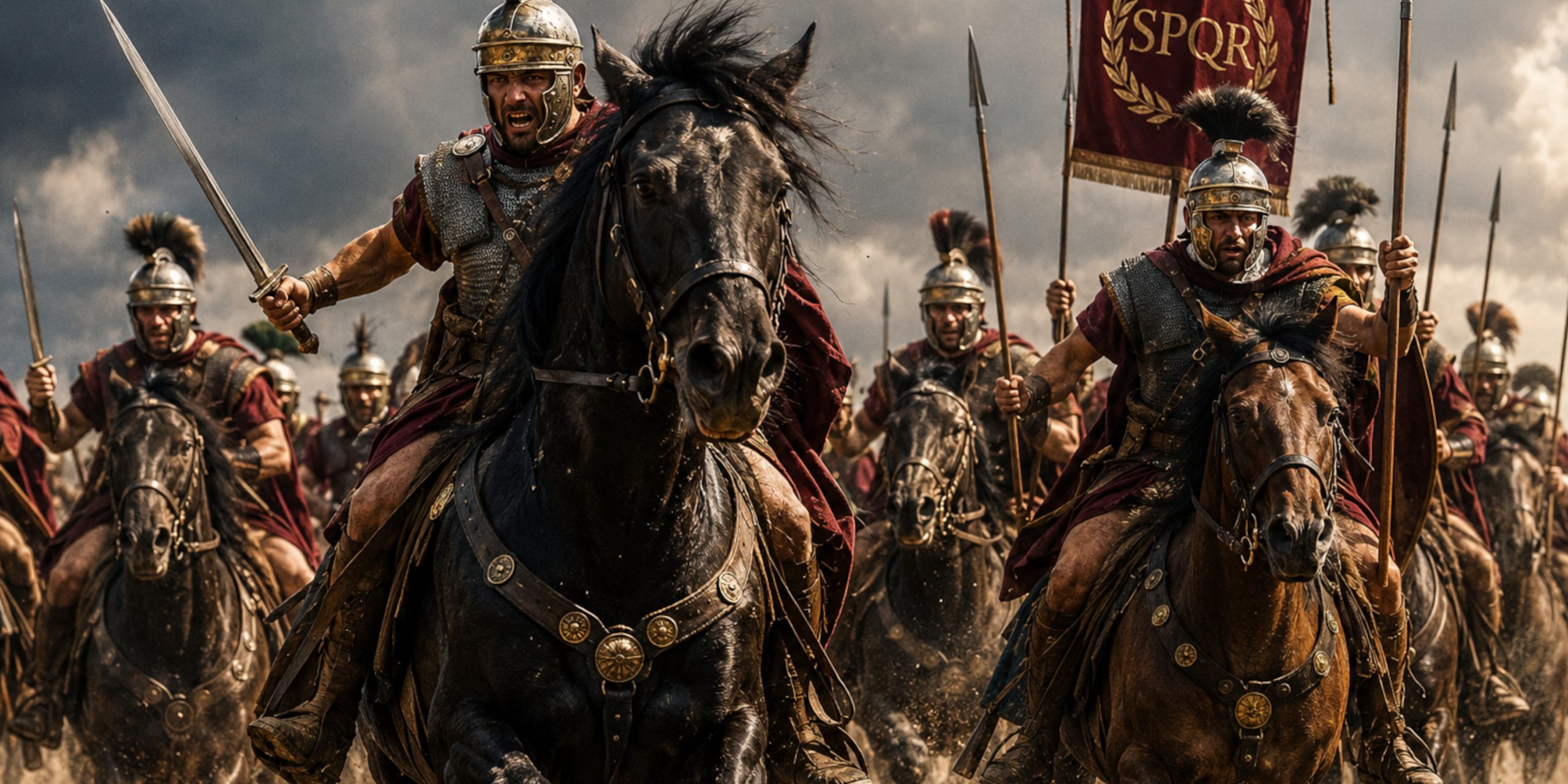
The empire did not conquer Britain, survive Parthian arrows, patrol the Danube, or chase raiders across North Africa with infantry alone. Rome needed speed, scouting, pursuit, intimidation and flexibility. That is where the auxiliary cavalry came in. They were the eyes of the army, the quick fist at the edge of battle, and occasionally the men tasked with fixing disasters created by overconfident governors.
By the 1st century AD, auxiliary cavalry had become essential to Roman warfare. Many were recruited from peoples already famous for horsemanship long before Rome arrived with tax collectors and eagles. Gauls, Thracians, Batavians, Numidians, Iberians, Syrians and Germans all served in mounted units that blended local traditions with Roman discipline. The result was one of the most adaptable cavalry systems of the ancient world.
And unlike some Roman commanders, the horses usually had the sense to retreat before things became truly catastrophic.
What Were the Roman Auxiliary Cavalry?
Roman auxiliary cavalry were non-citizen mounted troops attached to the Roman army. Unlike legionaries, who were originally recruited from Roman citizens, auxiliaries came from across the provinces and allied territories of the empire.
Their role expanded dramatically during the late Republic and early Empire.
Auxiliary cavalry units included:
- Alae, large cavalry regiments
- Cohors equitata, mixed infantry and cavalry formations
- Elite scouting and messenger detachments
- Specialist horse archers and light cavalry units
The term ala literally means “wing,” reflecting how cavalry traditionally operated on the flanks of Roman battle lines.
A standard ala quingenaria usually contained around 500 men, while larger ala milliaria formations could exceed 1,000 cavalrymen.
These troops performed tasks that legionaries struggled with:
- Reconnaissance
- Skirmishing
- Pursuit of fleeing enemies
- Screening marches
- Rapid communication
- Raiding
- Countering enemy cavalry
Without them, Roman armies were slower, blinder and dangerously vulnerable.
Recruitment and Origins
Rome recruited cavalry from regions with strong equestrian traditions. This was partly practical and partly Roman realism. If a people had spent centuries riding horses and throwing spears at one another, Rome preferred employing them rather than pretending a clerk from Latium could do it better after six weeks of training.
Some of the most famous auxiliary cavalry recruits came from:
| Region | Reputation |
|---|---|
| Numidia | Exceptional light cavalry |
| Thrace | Aggressive shock cavalry |
| Gaul | Heavy cavalry traditions |
| Hispania | Skilled riders and javelin fighters |
| Syria | Horse archery |
| Batavia | Elite frontier troops |
| Pannonia | Durable frontier cavalry |
Auxiliaries generally served for around 25 years. Upon discharge they received:
- Roman citizenship
- Financial rewards
- Legal marriage recognition
- Land grants in some cases
This system helped Rome bind conquered peoples into imperial structures. It was clever, effective and slightly unsettling in its efficiency.
Organisation of the Cavalry
Roman auxiliary cavalry followed strict organisational structures.
Basic Unit Structure
| Unit Type | Approximate Size | Description |
|---|---|---|
| Turma | 30 cavalrymen | Basic tactical unit |
| Ala Quingenaria | 480 to 512 men | Standard cavalry regiment |
| Ala Milliaria | 720 to 1,000 men | Large elite regiment |
| Cohors Equitata | Mixed force | Infantry with cavalry support |
Each turma was commanded by a decurion. Despite the name, he did not command ten men. Roman military terminology occasionally feels designed to irritate modern historians.
Senior officers were often Roman citizens, though experienced provincial cavalrymen could rise through the ranks.
Training and Discipline
Auxiliary cavalry trained relentlessly.
Riders practised:
- Mounted spear attacks
- Sword combat on horseback
- Formation manoeuvres
- Rapid mounting and dismounting
- Scouting procedures
- River crossings
- Pursuit drills
Roman cavalry manuals emphasised control and cohesion rather than reckless heroics. A cavalry charge looked impressive, but maintaining formation mattered far more than individual bravery.
Training grounds discovered near forts in Britain and Germany show evidence of repeated mounted exercises. Archaeologists have identified parade arenas and cavalry drill spaces large enough for complex manoeuvres.
Some cavalry exercises became elaborate displays known as hippika gymnasia. These events mixed military training with theatre, featuring decorated armour, masks and mock combat.
One suspects some officers enjoyed the spectacle slightly too much.
Arms and Armour
Roman auxiliary cavalry equipment evolved over time and varied across the empire. Local traditions remained important, especially during the 1st and 2nd centuries AD.
Swords Used by Roman Auxiliary Cavalry
Auxiliary cavalry carried a range of swords depending on era, region and tactical role.
Common Sword Types
| Sword Type | Description | Common Users |
|---|---|---|
| Spatha | Long straight cavalry sword | Standard auxiliary cavalry |
| Gladius | Short Roman sword | Early auxiliary units |
| Celtic longswords | Longer slashing blades | Gallic cavalry |
| Ring-pommel swords | Germanic influenced weapons | Rhine frontier cavalry |
| Parthian-style blades | Long cutting swords | Eastern cavalry |
The spatha became the defining cavalry sword of the Roman Empire. Longer than the gladius, it allowed mounted troops greater reach during combat.
Early examples measured around 75 to 90 cm in blade length.
Many surviving blades show pattern welding, imported steel and local craftsmanship. Cavalry swords were practical weapons, but some were also status symbols with decorated hilts and scabbards.
Other Weapons
Auxiliary cavalry commonly used:
- Spears (hastae)
- Throwing javelins
- Daggers (pugiones)
- Composite bows in eastern units
- Oval cavalry shields
Some units specialised heavily.
Numidian cavalry relied on speed and javelins with minimal armour.
Eastern cavalry, especially Syrian and Palmyrene troops, incorporated horse archery traditions that deeply influenced later Roman warfare.
Armour and Equipment
Cavalry armour varied considerably.
Common Armour Types
| Armour | Description |
|---|---|
| Mail armour (lorica hamata) | Flexible and widespread |
| Scale armour (lorica squamata) | Popular among cavalry |
| Muscle cuirasses | Officers and elite troops |
| Lamellar armour | Eastern influenced units |
Helmets often featured reinforced cheek guards and neck protection.
Some cavalry helmets included decorative crests or face masks used during ceremonial displays.
Horse equipment included:
- Saddles with four projecting horns
- Decorative harness fittings
- Bronze bridle ornaments
- Saddle cloths
- Protective horse armour in some elite units
Roman saddles lacked stirrups, which still surprises many people. Cavalrymen remained effective through balance, training and sheer leg strength. Frankly, it sounds exhausting.
Cavalry Tactics
Roman auxiliary cavalry fought in multiple ways depending on terrain and enemy.
Common Tactical Roles
- Flanking attacks
- Pursuit of broken enemy formations
- Reconnaissance
- Screening Roman advances
- Harassing enemy supply lines
- Ambush operations
- Supporting infantry assaults
Against slower tribal armies, cavalry could devastate retreating forces.
Against enemies such as Parthians or Sarmatians, Roman cavalry often struggled. The eastern wars exposed weaknesses in Roman mounted warfare, especially against heavily armoured cataphracts and massed horse archers.
Over time Rome adapted by incorporating more eastern cavalry styles.
This was one of Rome’s greatest military strengths. The empire stole good ideas with remarkable enthusiasm.
Auxiliary Cavalry in Britain
Britain became one of the great testing grounds for Roman cavalry.
Units stationed there included:
- Batavian cavalry
- Thracian cavalry
- Asturian horsemen
- Sarmatian detachments
These troops patrolled roads, frontier zones and rebellious regions.
At Hadrian’s Wall, cavalry forts such as Chesters (Cilurnum) housed mounted units specifically designed for rapid frontier response.
The rugged terrain limited large cavalry charges, but mounted patrols remained vital.
Archaeological finds from Britain include:
- Cavalry helmets
- Horse harness fittings
- Saddle mounts
- Cavalry swords
- Parade masks
The famous Ribchester Helmet remains one of the finest Roman cavalry artefacts ever discovered.
Archaeology and Discoveries
Archaeology has transformed our understanding of Roman auxiliary cavalry.
Major Archaeological Finds
Ribchester Helmet, England
Discovered in Lancashire, this ornate cavalry parade helmet dates to the 1st or 2nd century AD. It includes a highly decorative face mask and elaborate embossed detailing.
It was likely used during ceremonial cavalry games rather than battlefield combat.
Newstead Cavalry Finds, Scotland
Excavations at Newstead revealed:
- Cavalry swords
- Spears
- Horse fittings
- Armour fragments
- Roman saddles
The site provides rare insight into frontier cavalry logistics.
Dura-Europos, Syria
This eastern frontier city preserved remarkable cavalry equipment, including painted shields and evidence of mounted archers.
The finds show how eastern cavalry traditions influenced Roman military development.
Nijmegen Horse Gear
Dutch excavations uncovered highly decorated cavalry harnesses and military diplomas granted to discharged auxiliaries.
These artefacts help track recruitment patterns across the empire.
Life on Campaign
Cavalry life was harsh.
Mounted troops needed:
- Constant horse care
- Stable supplies
- Fodder
- Veterinary treatment
- Extra equipment maintenance
Horses consumed enormous resources. Feeding cavalry units during long campaigns was a logistical headache large enough to make quartermasters quietly despair into their wax tablets.
Troopers slept in forts, temporary camps and frontier outposts. Many formed relationships with local communities despite official restrictions on marriage before discharge.
Writing tablets from Vindolanda hint at supply requests, equipment concerns and everyday frustrations that feel surprisingly modern.
Soldiers everywhere, across every century, seem united by complaints about equipment and food.
Contemporary Quotes
Ancient writers frequently commented on cavalry.
Arrian on Cavalry Discipline
“The horseman must preserve formation and attack in order.”
Arrian’s military writings remain among the most important surviving Roman cavalry sources.
Tacitus on Batavian Riders
“Excellent horsemen and equally skilled swimmers.”
Tacitus admired Batavian auxiliary troops, particularly their unusual river crossing abilities.
Josephus on Roman Mobility
“The cavalry scoured the country ahead of the army.”
This simple observation captures how essential mounted troops were to Roman campaigning.
Decline and Transformation
By the 3rd century AD, Roman warfare changed dramatically.
The empire faced:
- Larger frontier invasions
- Sarmatian heavy cavalry
- Persian cataphracts
- Internal civil wars
Rome increasingly expanded its mounted forces.
Auxiliary cavalry evolved into more heavily armoured formations, while eastern influences became dominant. By late antiquity, cavalry occupied a far greater role in Roman warfare than during the Republic.
The old distinction between legionary and auxiliary also faded as citizenship became more widespread.
The Roman army adapted once again. It always did, until eventually it could not.
Legacy of the Roman Auxiliary Cavalry
Roman auxiliary cavalry shaped the military evolution of Europe and the Mediterranean.
Their legacy includes:
- Development of the spatha
- Frontier cavalry traditions
- Hybrid Roman-provincial warfare
- Early heavy cavalry systems
- Integration of horse archery into imperial armies
They were not glamorous in the way popular culture prefers. No polished centurion speeches. No dramatic eagle close-ups. Mostly mud, horse sweat, patrol duty and the occasional terrifying charge into tribal spearmen.
Yet they were indispensable.
Without auxiliary cavalry, Rome’s empire would have been smaller, slower and far less secure. The legions may have built the myth, but mounted auxiliaries helped keep the whole vast machine alive.