The story of the samurai has long dominated popular imagination. Gleaming armour, legendary swords and heroic duels make for compelling tales. Yet Japanese warfare was rarely decided by individual champions. More often, victory belonged to disciplined formations of ordinary soldiers armed with long spears. Those soldiers were the Yari Ashigaru.
The Ashigaru transformed Japanese warfare between the fifteenth and seventeenth centuries. Originally recruited from peasant communities, they evolved into highly organised infantry capable of standing against cavalry charges, storming castles and holding battle lines with remarkable discipline.
The yari, a simple spear in appearance but devastating in trained hands, became one of the defining weapons of the Sengoku period. Combined with massed formations and increasingly sophisticated tactics, it helped shape the rise of powerful daimyō such as Oda Nobunaga and Tokugawa Ieyasu.
If the katana symbolised status, the yari won kingdoms.
Who Were the Yari Ashigaru?
The word ashigaru literally means “light feet,” a fitting description for troops expected to march enormous distances across mountainous Japan.
Initially, Ashigaru were temporary levies drawn from farming communities. Early records suggest they possessed widely varying equipment, with some carrying little more than a spear and padded clothing. During the chaos of the Sengoku period, professional armies gradually replaced seasonal levies.
By the sixteenth century many Ashigaru had become full-time soldiers serving powerful clans.
Their duties included:
- Holding battle formations
- Guarding castles
- Escorting commanders
- Building fortifications
- Conducting sieges
- Patrolling roads
- Supporting arquebusiers and archers
Although they occupied the lower end of the military hierarchy, experienced Ashigaru could enjoy stable employment, receive stipends and occasionally earn promotion.
Origins and Evolution
The rise of the Ashigaru mirrored Japan’s political fragmentation.
During the Kamakura and Muromachi periods warfare centred largely upon mounted samurai. As regional conflicts intensified throughout the fifteenth century, daimyō required far larger armies than noble retainers alone could provide.
Ashigaru filled that gap.
Several developments accelerated their importance:
| Period | Development |
|---|---|
| Fourteenth century | Small numbers of irregular infantry appear |
| Fifteenth century | Large peasant levies become common |
| Sengoku period | Permanent infantry units emerge |
| Late sixteenth century | Standardised training and equipment |
| Edo period | Many Ashigaru become hereditary retainers |
The greatest commanders increasingly relied upon disciplined infantry rather than aristocratic cavalry alone.
As Oda Nobunaga reportedly observed:
“Victory belongs to those who make proper use of their men.”
Whether those exact words are preserved perfectly is debated, but they reflect his practical military philosophy.
The Yari
The defining weapon of these soldiers was the yari.
Unlike the shorter spears common elsewhere, Japanese yari varied enormously in length depending upon tactical role.
| Type | Typical Length | Purpose |
|---|---|---|
| Short yari | 2 to 3 metres | General infantry combat |
| Standard yari | 3 to 4.5 metres | Battlefield formations |
| Long yari (Nagae Yari) | Up to 6.5 metres | Anti-cavalry defence |
| Jumonji yari | Cross-shaped blade | Hooking and thrusting |
| Kuda yari | Tube-guided spear | Improved control |
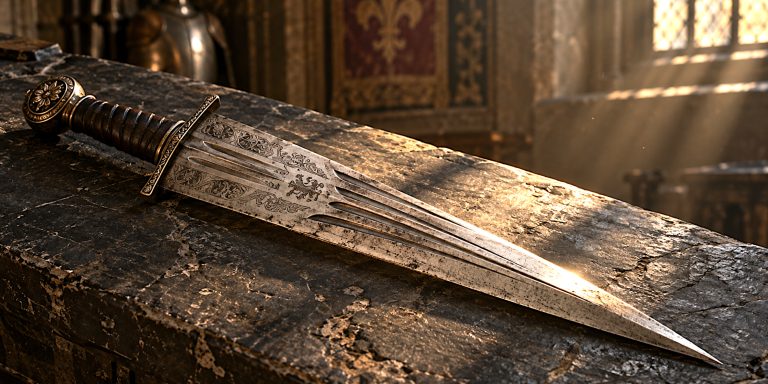
The blade itself resembled a straight double-edged dagger mounted on a long shaft.
Unlike many European spears, the tang often extended deeply into the shaft, making the weapon surprisingly robust.
Training focused upon:
- Maintaining formation
- Coordinated thrusting
- Recovering quickly after each strike
- Protecting neighbouring soldiers
- Rotating ranks during prolonged engagements
An isolated spearman could be vulnerable.
Hundreds acting together became extraordinarily dangerous.
Battlefield Tactics
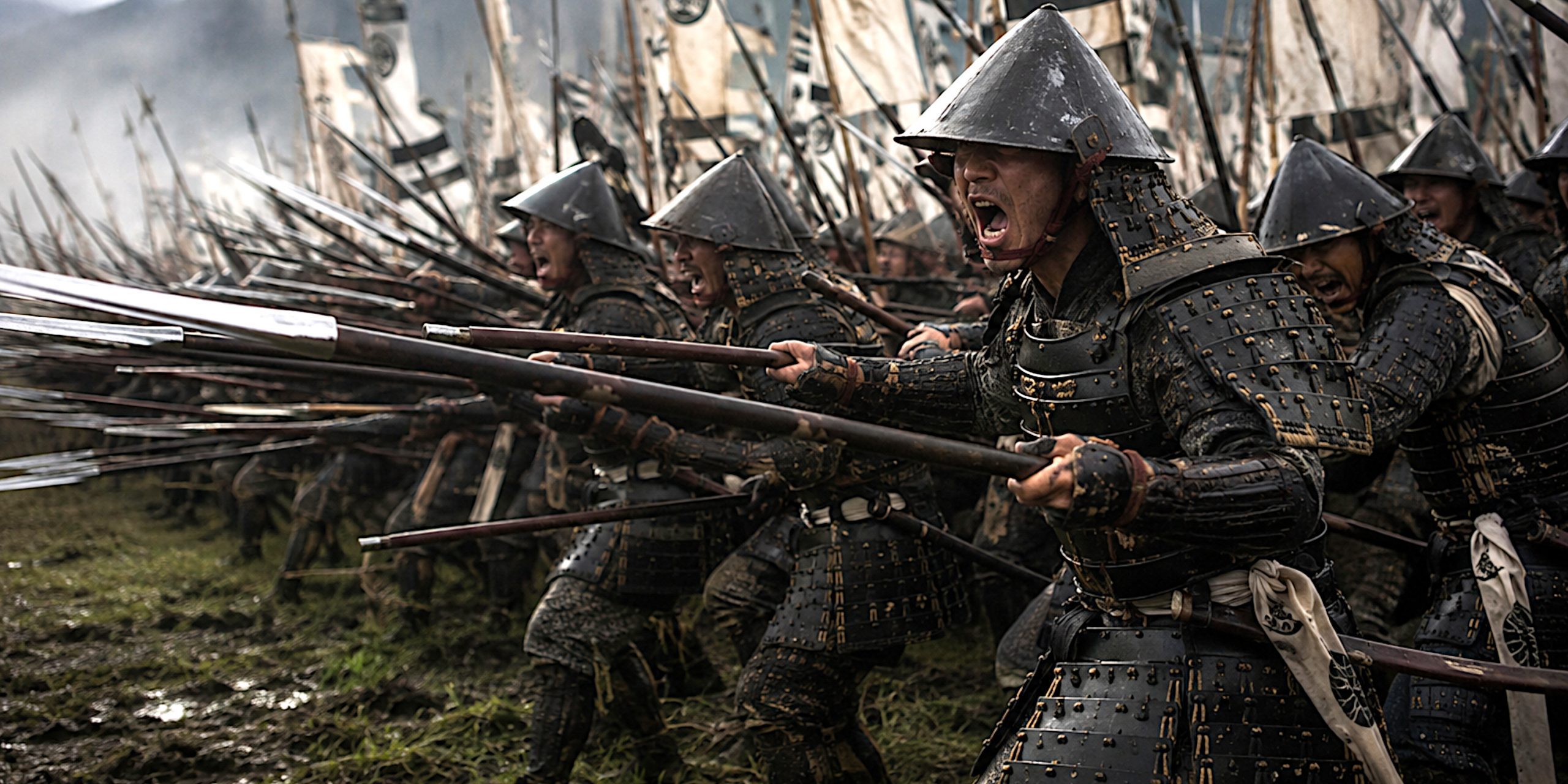
The Yari Ashigaru excelled because they fought as units rather than individuals.
Their formations resembled a living hedge of steel points.
Common battlefield roles included:
Defensive Formations
Long yari created dense walls of spearheads that discouraged cavalry attacks.
Unlike the romantic image of mounted samurai charging dramatically across open fields, many commanders preferred careful manoeuvre once disciplined spear formations became widespread.
Offensive Assaults
Massed Ashigaru advanced steadily while maintaining close order.
The front ranks thrust continuously while rear ranks pushed the formation forward.
Supporting Firearms
Following the introduction of Portuguese arquebuses in 1543, spear units protected gunners during reloading.
This combination became one of the defining tactical innovations of the late Sengoku period.
Castle Warfare
Ashigaru frequently carried ladders, earthworks and siege equipment.
Many battles were won through engineering rather than glorious charges.
History has always had a stubborn habit of favouring logistics over cinematic heroics.
Arms and Armour
Equipment varied according to wealth, date and clan, but by the late sixteenth century standardisation had improved considerably.
Primary Weapons
- Yari
- Yumi longbow
- Tanegashima matchlock arquebus
- Naginata in some formations
Swords
Although not the primary battlefield weapon, Ashigaru often carried swords as sidearms.
Common sword types included:
| Sword | Use |
|---|---|
| Uchigatana | Everyday sidearm and close combat weapon |
| Katana | Issued to wealthier or veteran soldiers |
| Wakizashi | Secondary weapon |
| Tantō | Utility knife and last-resort weapon |
The image of every Ashigaru carrying an expensive katana is misleading.
Many relied almost entirely upon their spear, with swords reserved for emergencies or finishing wounded opponents.
Armour
Typical equipment included:
- Jingasa iron or lacquered helmet
- Tatami folding armour
- Okegawa dō cuirass
- Kote arm guards
- Suneate shin guards
- Kusazuri thigh protection
By the campaigns of Toyotomi Hideyoshi, armies often displayed remarkable uniformity.
Contemporary European visitors commented upon the impressive appearance of Japanese armies.
Organisation and Training
Ashigaru units became increasingly professional.
Training emphasised repetition rather than individual heroics.
Soldiers learned:
- Formation marching
- Unit manoeuvres
- Spear drills
- Discipline under missile fire
- Camp organisation
- Castle assault techniques
Officers maintained strict control using flags, drums, conch shells and signal standards.
Japanese armies could coordinate thousands of infantry with surprising efficiency for the period.
Famous Battles
Several famous battles demonstrated the effectiveness of Yari Ashigaru.
Battle of Nagashino (1575)
Although remembered for arquebuses, disciplined spear formations protected the firearms and prevented Takeda cavalry from breaking the line.
Battle of Sekigahara (1600)
One of Japan’s largest battles featured enormous formations of Ashigaru supporting rival daimyō across a vast battlefield.
Siege of Osaka (1614 to 1615)
Ashigaru conducted trench warfare, siege assaults and defensive operations throughout the campaign that ended the Sengoku era.
Archaeology
Archaeological discoveries have greatly improved our understanding of Ashigaru warfare.
Excavations at Sengoku battlefields have uncovered:
- Iron spearheads
- Matchlock components
- Arrowheads
- Armour fragments
- Horse equipment
- Camp remains
- Defensive earthworks
Castle excavations at sites such as Odawara, Azuchi and Osaka have revealed extensive military infrastructure, including barracks, workshops and weapon stores.
Many surviving yari display repeated repairs, suggesting they remained valuable military tools rather than disposable equipment.
Mass graves discovered near several battlefields also reveal the grim reality behind Japan’s civil wars.
Beneath every famous victory lay hundreds, sometimes thousands, of anonymous soldiers whose names never entered official chronicles.
Contemporary Accounts
The Portuguese missionary Luís Fróis described Japanese armies with admiration, observing:
“They march in excellent order.”
The English sailor William Adams noted the discipline of Japanese military organisation after arriving in Japan in 1600.
The military chronicle Shinchō Kōki repeatedly praises the coordination of Oda Nobunaga’s infantry formations rather than individual feats of swordsmanship.
These accounts reinforce the growing importance of organised infantry over aristocratic combat traditions.
Strengths and Weaknesses
| Strengths | Weaknesses |
|---|---|
| Excellent formation fighting | Vulnerable if formations broke |
| Relatively inexpensive to equip | Required disciplined training |
| Effective against cavalry | Less effective in confined terrain |
| Flexible alongside firearms | Individual skill varied greatly |
| Simple but reliable weapons | Heavy casualties in frontal assaults |
Legacy
The Yari Ashigaru helped reshape Japanese warfare.
Their success demonstrated that discipline, organisation and tactical innovation could overcome older traditions centred upon mounted elites.
Following the establishment of Tokugawa rule, warfare largely disappeared from Japan for more than two centuries. Many Ashigaru became hereditary retainers serving castles, administrations and local government.
Today they remain central figures in historical re-enactments, museum collections, films and strategy games.
Ironically, while popular culture often focuses on lone swordsmen cutting through endless enemies, historians increasingly recognise that the true architects of victory were ordinary infantry standing shoulder to shoulder with little more than determination, discipline and a very long spear.
Perhaps history has always been slightly unfair to the people doing most of the actual work.
Where to See Yari Ashigaru Artefacts
Several museums contain important collections relating to Ashigaru warfare.
- Tokyo National Museum
- Kyoto National Museum
- Nagoya City Museum
- Osaka Museum of History
- Tokugawa Art Museum
- The Samurai Museum collections
- Regional castle museums at Himeji, Matsumoto and Kumamoto
Many preserve original yari, armour, banners and matchlock firearms dating from the Sengoku period.
Takeaway
The Yari Ashigaru were far more than expendable foot soldiers. They represented the professionalisation of Japanese warfare and formed the backbone of the armies that unified the country.
Their disciplined spear formations, practical equipment and evolving battlefield tactics allowed ambitious daimyō to wage war on an unprecedented scale. While samurai remain the enduring icon of Japan’s military past, it was often the steady advance of thousands of Ashigaru that determined the outcome of campaigns.
The history of the Yari Ashigaru reminds us that great victories are rarely achieved by heroes alone. More often, they belong to organised men whose names have been forgotten, but whose contribution changed the course of history.