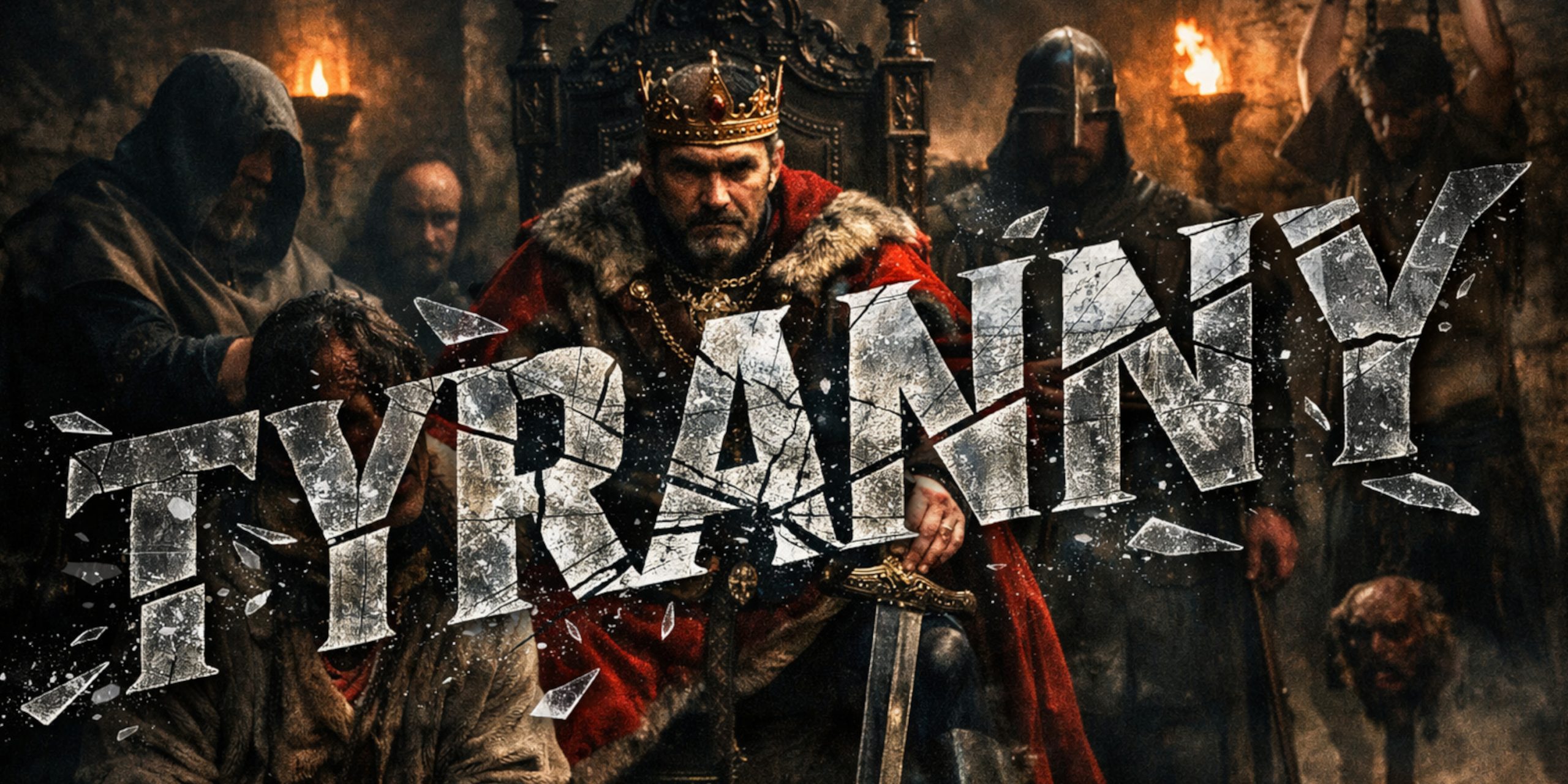
There is a particular kind of joy in Crusader Kings 3 that comes from looking at your council, your family and half your vassals and realising they would all happily push you down a flight of castle stairs if given the chance.
Being a tyrant in CK3 is not simply about collecting tyranny penalties like they are rare trading cards. Anyone can imprison a duke for no reason and watch their realm explode. Proper tyrants are more interesting than that. They build systems of fear. They make cruelty feel inevitable. They turn every feast into a tense political thriller where everyone smiles politely while quietly wondering if they are next.
If you want to roleplay as a ruler who is feared, hated and strangely effective, here is how to do it properly.
Choose the Right Kind of Tyrant
Not all tyrants are the same. Crusader Kings 3 gives you enough freedom to create several flavours of terrible.
You could play:
- The paranoid despot who trusts nobody and fills the dungeon with cousins, bishops and anyone who once looked vaguely confident.
- The cruel conqueror who believes every problem can be solved with executions, torture and one more war.
- The manipulative spider in the web who blackmails, fabricates hooks and quietly destroys people without ever lifting a sword.
- The decadent emperor who spends fortunes on palaces while peasants starve and vassals mutter darkly into their wine.
- The religious fanatic who burns heretics, rewrites doctrine and somehow convinces themselves they are the hero.
The best tyrants usually combine a few of these. You want your ruler to feel like a proper character, not just a walking list of negative personality traits.
Pick Traits That Make Sense
A believable tyrant needs the right personality. Some traits naturally fit a ruler who is halfway between a medieval king and the world’s worst office manager.
The strongest choices are:
- Cruel
- Arbitrary
- Wrathful
- Sadistic
- Paranoid
- Ambitious
- Callous
- Vengeful
A ruler with Sadistic and Paranoid is especially entertaining. You can torture prisoners for stress relief, spy on your own children and generally behave like someone who absolutely should not have access to an army.
At the same time, avoid making your character too cartoonish. A tyrant with one softer trait such as Gregarious, Zealous or Temperate can feel more believable. History is full of rulers who built cathedrals, loved their pets and then had six rivals quietly strangled before breakfast.
Use Dread as Your Main Weapon
Dread is the closest thing CK3 has to a “fear meter”, and if you are roleplaying a tyrant, it should practically glow in the dark.
High dread makes your vassals less likely to rebel, less likely to join factions and more likely to smile nervously while pretending your latest execution was perfectly reasonable.
The easiest ways to build dread are:
- Executing prisoners
- Torturing prisoners
- Taking the Torturer lifestyle perks
- Using the Intimidation focus
- Keeping a prison full of rebels and traitors
The sweet spot is maintaining permanent high dread without letting your realm collapse into endless rebellion. Think less “madman waving a sword in the throne room” and more “everyone is terrified to speak above a whisper when you enter”.
If you take the Torturer tree in the Intrigue lifestyle, you can become hilariously frightening. Before long, you will have the sort of reputation where a duke hears you are travelling through his lands and immediately starts writing his will.
Keep a Dungeon. A Good Tyrant Always Has a Dungeon
A proper tyrant does not merely imprison enemies. They collect them.
Your dungeon should include:
- Rival nobles
- Claimants to your throne
- Family members with suspiciously high intrigue
- Disloyal vassals
- Random peasants who happened to be in the wrong place at the wrong time
Not because it is efficient, although sometimes it is, but because it creates atmosphere. There is something wonderfully grim about clicking through your prison menu and finding three uncles, two rebellious counts and one bishop who has been there for twenty years because he insulted you at a feast.
Execution is useful, but long-term imprisonment can be even better for roleplay. Let rivals rot in the dungeon while their children grow up fearing your name. Medieval tyranny thrives on memory.
Rule Through Fear, Not Love
Trying to be liked defeats the point. You are not playing the friendly king who hands out titles and hosts charming garden parties. You are playing the ruler everyone applauds because not applauding seems unhealthy.
Deliberately make choices that create resentment:
- Revoke titles
- Raise taxes
- Demand conversions
- Refuse council positions
- Blackmail powerful vassals
- Publicly humiliate rivals
The trick is to do this carefully enough that your realm survives. A tyrant without subjects is just a very angry person sitting alone in a castle.
One of the most entertaining ways to roleplay this is by keeping a few loyal favourites. Every tyrant has that one bafflingly incompetent cousin or childhood friend who keeps getting titles despite being absolutely useless. Your entire realm will hate them. Which, honestly, is part of the fun.
Become Obsessed With Succession
A tyrant rarely trusts their own family, and frankly they usually have a point.
You should constantly worry about succession. Disinherit siblings. Imprison ambitious children. Marry heirs to weak or controllable spouses. If someone in your dynasty has a strong claim and a suspiciously confident expression, perhaps it is time for an unfortunate hunting accident.
The dynasty screen in CK3 can quickly start to resemble the cast list of a very expensive historical drama where nobody survives beyond season three.
For extra flavour, create a ruler who becomes increasingly unstable with age. Start as a merely harsh king, then slowly descend into paranoia as every son, daughter and nephew begins to look like a potential usurper.
Lean Into Intrigue
If you are roleplaying a tyrant, Intrigue should probably become your favourite lifestyle. A terrifying ruler who also happens to be a genius schemer is the CK3 equivalent of putting a dragon in charge of tax policy.
The best schemes for a tyrant include:
- Murder
- Abduction
- Fabricating hooks
- Blackmail
- Forced imprisonment
You do not need to solve every problem with war. Sometimes it is much more satisfying to quietly remove a rival through a suspicious accident involving poisoned wine, a balcony and some remarkably slippery stonework.
The real beauty of intrigue is that your subjects may suspect you, but they can rarely prove anything. Which is perfect. A tyrant thrives on uncertainty.
Create a Court That Feels Oppressive
The Royal Court expansion is brilliant for tyrant roleplay because it lets you turn your court into the sort of place where everyone looks exhausted and deeply uncomfortable.
Decorate your court with intimidating artefacts. Hold court and choose the harshest possible options. Punish peasants, fine nobles and make everyone aware that mercy is currently out of stock.
You want your court to feel less like Camelot and more like the waiting room outside the world’s most stressful job interview.
Some roleplay ideas:
- Name your court physician something dramatic and vaguely sinister.
- Keep a bodyguard made entirely of terrifying giants.
- Fill your court with sycophants and cowards.
- Publicly reward informants and punish honesty.
If every character in your court seems one bad conversation away from a nervous breakdown, you are doing it right.
Embrace the Consequences
The best part of roleplaying a tyrant is that eventually it all comes back to haunt you.
Your children may hate you. Your spouse may plot against you. Entire kingdoms may rise in rebellion the moment you die. That is not failure. That is excellent storytelling.
A truly memorable CK3 tyrant often has a spectacular downfall. Perhaps they are assassinated by their own heir. Perhaps the realm collapses into civil war. Perhaps the ruler who spent forty years terrifying everyone dies alone in a dungeon built for someone else.
Honestly, that is very Crusader Kings.
The point is not to “win” in the cleanest or most efficient way possible. The point is to create a ruler people will remember. Preferably with a nickname like “the Cruel”, “the Black” or “the One Everyone Was Relieved To See Dead”.
The Best Cultures and Starts for a Tyrant Playthrough
Some starts are especially good if you want to become the medieval equivalent of a nightmare with a crown.
Good choices include:
- A Norse ruler in 867, where raiding, executions and conquest already feel fairly on-brand.
- A Byzantine emperor surrounded by suspicious relatives and political backstabbing.
- A custom ruler in a fragile kingdom, where fear becomes your only reliable tool.
- A tribal warlord with high prowess and terrible impulse control.
- A decadent late-game emperor ruling over dozens of angry vassals.
Crusader Kings III also works beautifully with a custom dynasty built around cruelty and ambition. Give your family a ridiculous motto such as “Mercy Is For Other People” and commit fully to the bit.
Takeaway
Roleplaying as a tyrant in Crusader Kings 3 is one of those experiences that starts with “I will just execute one rebellious duke” and ends with you accidentally becoming a legendary monster whose own grandchildren whisper your name like it is a curse.
It is chaotic, theatrical and strangely addictive. The game shines when you stop worrying about perfect strategy and start creating stories. Tyrants are fun because they are messy. They make enemies. They overreact. They ruin family dinners for entire generations.
And if, after forty years of fear and cruelty, your ruler is finally overthrown by a mob of furious nobles and one extremely determined nephew, then congratulations.
You probably played the role perfectly.