There is something quietly tragic about the Qajar dynasty. It begins with blood and iron, a hard-won crown taken in a fractured land, and ends with paperwork, concessions, and a monarch who feels almost incidental. Yet between those points sits a period that shaped modern Iran in ways that are often overlooked. This is not a simple story of decline. It is one of adaptation, hesitation, and a state caught between old instincts and a rapidly changing world.
Origins and Rise to Power
The dynasty begins with Agha Mohammad Khan Qajar, a figure who does not invite easy admiration. He was ruthless, pragmatic, and singularly focused on restoring unity to Persia after decades of fragmentation following the fall of the Safavids.
He came from the Qajar tribe, one of several Turkmen groups competing for dominance. By 1789, he had eliminated rivals and crowned himself shah, choosing Tehran as his capital, which at the time was little more than a strategic outpost. That decision alone shaped the future of Iran.
His rule was efficient and brutal. Cities that resisted, such as Kerman, paid heavily. Yet he achieved what many before him could not: a reassembled Persian state.
After his assassination in 1797, power passed to his nephew Fath-Ali Shah, whose reign marked a shift from conquest to courtly splendour, and, as t turned out, to costly diplomatic entanglements.
The Qajar State and Court Cultur
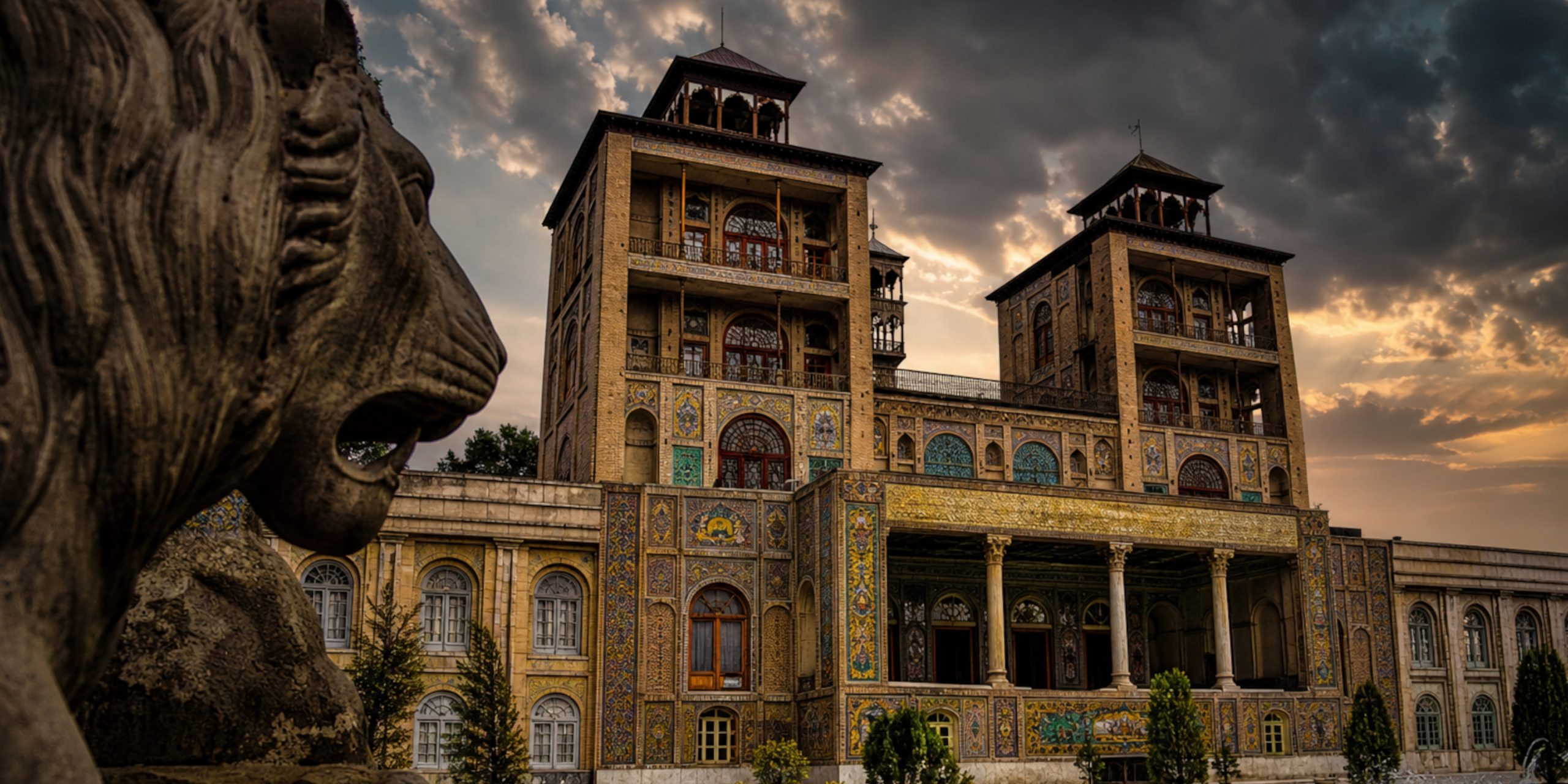
If Agha Mohammad Khan built the state, Fath-Ali Shah dressed it in silk and jewels. The Qajar court became famous for its elaborate aesthetics, with exaggerated beards, elongated forms in art, and an almost theatrical sense of kingship.
This was not merely vanity. It was political theatre. Authority in Persia had always relied on visibility, ritual, and symbolism.
Key features of Qajar court life included:
- Lavish portraiture emphasising royal legitimacy
- A strong patronage of poets, painters, and craftsmen
- Ceremonial displays designed to reinforce hierarchy
The court, however, could not insulate itself from external pressure. While it cultivated refinement, Russia and Britain were circling, each with their own interests in Persia’s territory and resources.
Wars, Losses, and Foreign Pressure
The early nineteenth century was unkind to Qajar ambitions. Persia fought two major wars with the Russian Empire, both ending in defeat.
The consequences were severe:
- The Treaty of Gulistan (1813) stripped Persia of territories in the Caucasus
- The Treaty of Turkmenchay (1828) confirmed further losses and imposed heavy indemnities
These defeats were not simply military setbacks. They exposed the limitations of the Qajar state. Its army was outdated, its administration uneven, and its ability to mobilise resources far behind European powers.
At the same time, Britain exerted influence from the south, concerned with protecting routes to India. Persia became a buffer, a space negotiated by others.
It is tempting to judge the Qajars harshly here, but one should pause. They were facing industrial powers with global reach, while governing a largely agrarian society with limited central control. The imbalance was stark.
Governance and Internal Structure
The Qajar system of governance relied on a delicate balance between central authority and local autonomy.
The shah ruled, but not absolutely in practice. Power was shared, or perhaps contested, among:
- Provincial governors, often drawn from elite families
- Tribal leaders who controlled manpower and territory
- Religious authorities who held moral and social influence
Taxation was inconsistent, often farmed out to local intermediaries. This created inefficiencies and, occasionally, corruption that would make even a patient observer sigh.
Reform attempts did occur. Notably under Abbas Mirza, a crown prince who recognised the need for military modernisation. He introduced European-style training and sought to update the army, but his efforts were partial and ultimately insufficient.
The Constitutional Revolution
By the early twentieth century, frustration with Qajar rule had reached a boiling point. Economic hardship, foreign concessions, and administrative weakness all contributed to growing unrest.
The result was the Constitutional Revolution (1905 to 1911), a remarkable moment in Persian history.
Key outcomes included:
- The establishment of a parliament, the Majles
- The introduction of a constitution limiting royal power
- A broader political awakening among merchants, clerics, and intellectuals
This was not a clean transition. Conflict continued, and foreign powers intervened more than once. Still, it marked a decisive shift. The idea that the shah should be constrained was no longer radical. It was necessary.
From a historian’s perspective, this is where the Qajar story becomes unexpectedly modern. One can almost see the outline of the twentieth century taking shape.
Culture, Society, and Daily Life
Outside the court and political turmoil, everyday life continued with its own rhythms.
Urban centres like Tehran, Isfahan, and Tabriz were hubs of trade and culture. Bazaars remained central to economic life, while religious institutions shaped education and social norms.
Cultural highlights of the period include:
- Distinctive Qajar art, blending Persian tradition with European influence
- Growth in photography, which the Qajars embraced enthusiastically
- Continued importance of poetry and storytelling
Women’s roles were largely confined by tradition, though the late Qajar period saw early signs of change, particularly in education and public discourse.
It is a society in transition, though not always aware of it.
Decline and the End of the Dynasty
The final Qajar ruler, Ahmad Shah, inherited a weakened state and a difficult position. By this stage, authority had slipped from the monarchy’s grasp.
Enter Reza Khan, a military officer who would later become Reza Shah Pahlavi. In 1925, he formally deposed the Qajar dynasty and established a new ruling house.
The transition was less dramatic than one might expect. There was no grand last stand, no heroic defence. The Qajars simply faded, overtaken by a figure who promised order and modernisation.
It feels almost anticlimactic, which in its own way is fitting.
Legacy of the Qajar Dynasty
The Qajar period is often remembered for its failures, territorial losses, foreign interference, and internal weakness. Yet that view is incomplete.
Its legacy includes:
- The establishment of Tehran as the enduring capital
- Early attempts at modernisation and reform
- The introduction of constitutional governance
- A cultural output that remains distinctive and influential
It was a dynasty that struggled to reconcile tradition with change. That struggle, unresolved, shaped the Iran that followed.
If I may be slightly candid, the Qajars remind me of someone trying to hold a door closed while the entire century pushes from the other side. They were not entirely ineffective, nor entirely capable. They were simply outpaced.
And history, as ever, is not particularly forgiving of that.