The Battle of Salzbach in July 1675 was not a grand set piece like Blenheim or Rocroi, yet its consequences were immediate and severe. One artillery shot killed one of Europe’s finest commanders, Marshal Turenne, and with him went French momentum on the Rhine.
As a historian, I find Salzbach quietly unsettling. There is no sweeping cavalry charge to romanticise, no neat resolution. Just a campaign paused mid sentence by a cannonball.
Background
The engagement formed part of the Franco Dutch War. France, under Louis XIV, sought to dominate the Rhine frontier. Opposing them were Imperial forces under Raimondo Montecuccoli, a commander who preferred manoeuvre over spectacle.
By summer 1675, both armies shadowed each other near the Rhine, probing for advantage. Turenne attempted to outflank Montecuccoli near the village of Salzbach, close to modern Philippsburg. It was a campaign of positioning, not reckless attack.
Foces
Estimated Strength
| Side | Commander | Troop Strength | Composition |
|---|---|---|---|
| France | Marshal Turenne | 20,000 to 25,000 | Infantry, cavalry, artillery |
| Holy Roman Empire | Montecuccoli | 20,000 to 30,000 | Infantry, cavalry, artillery |
Observations
- Both forces were relatively balanced in numbers
- The terrain, wooded and broken, reduced the chance of a decisive mass engagement
- Artillery positioning became unusually important for what was expected to be a manoeuvre phase
Leaders and Command Structure
France
- Marshal Turenne, overall command
- Experienced sub commanders drawn from earlier Rhine campaigns
Holy Roman Empire
- Raimondo Montecuccoli, cautious and methodical
- Officers trained in defensive positioning and counter manoeuvre
There is a quiet irony here. Two of the most thoughtful commanders of the age faced each other, and the outcome hinged not on brilliance, but chance.
Arms and Armour
Infantry Equipment
- Muskets with matchlock firing mechanisms
- Pike formations still present, though declining
- Bayonets beginning to appear, though not yet universal
Cavalry Equipment
- Pistols and sabres
- Breastplates for heavy cavalry units
- Increasing emphasis on shock charges rather than caracole tactics
Artillery
- Field guns deployed in mobile batteries
- Used for harassment and disruption rather than full bombardment
Sword Types in Use
- Rapier
- Common among officers
- Light, thrust focused, more suited to duelling than battlefield chaos
- Broadsword
- Favoured by cavalry
- Heavier cutting weapon, effective in close combat
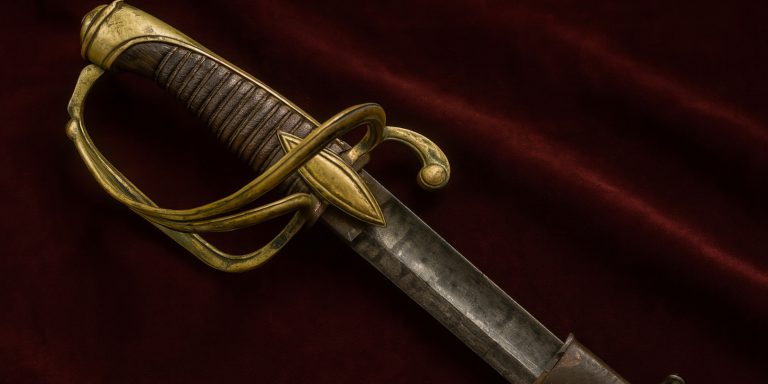
- Sabre
- Increasingly popular with mounted troops
- Curved blade, ideal for slashing attacks during charges
The Death of Turenne
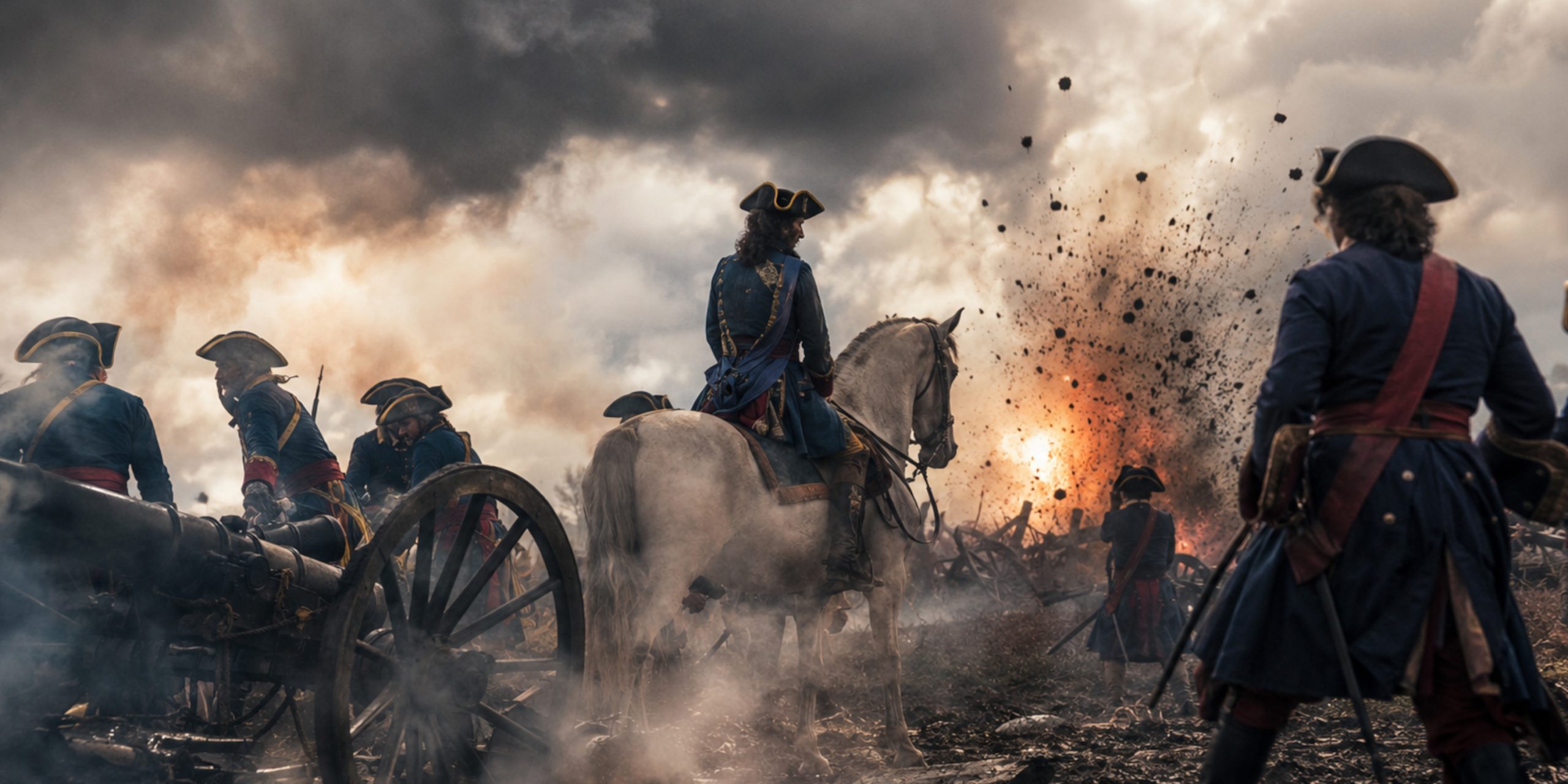
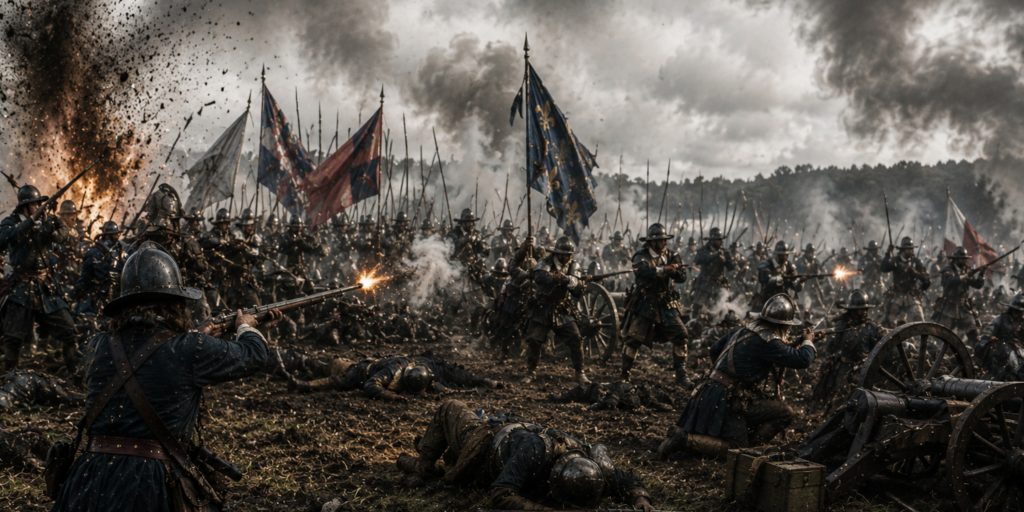
On 27 July 1675, Turenne was conducting a reconnaissance of artillery positions. He dismounted to observe the Imperial lines. A cannonball struck nearby, killing him instantly.
No dramatic last stand. No final speech. Just a sudden end.
Contemporary accounts describe confusion spreading almost immediately through the French ranks. Command cohesion fractured, and what had been a controlled campaign slipped into hesitation.
Battle Timeline
Early July 1675
- French and Imperial forces manoeuvre along the Rhine
- Both sides seek advantageous terrain
Mid July
- Skirmishes and artillery exchanges increase
- Turenne attempts to outflank Montecuccoli
27 July
- Turenne inspects forward positions
- Struck and killed by cannon fire
Immediate Aftermath
- French army loses strategic direction
- Montecuccoli consolidates position without committing to risky engagement
Archaeology and Battlefield Evidence
The Salzbach site has not yielded the kind of dramatic finds seen at earlier battlefields, which is not surprising given the nature of the engagement.
Findings include:
- Musket balls and shot fragments
- Artillery debris consistent with field gun deployment
- Limited personal equipment such as buckles and uniform fittings
The absence of mass graves or large scale weapon deposits reflects the fact that this was not a full pitched battle. In truth, Salzbach is better understood as a campaign interruption rather than a battlefield in the traditional sense.
Contemporary Quotes
From French accounts:
“France has lost her greatest captain in a moment, struck down before the battle could begin.”
From Imperial observers:
“Fortune has decided what neither army could yet achieve.”
Montecuccoli himself reportedly remarked that the war had shifted in an instant, which feels less like triumph and more like relief.
Analysis and Historical Perspective
Turenne’s death changed the campaign more than any manoeuvre could have done. His ability to read terrain and anticipate opponents had kept the French army fluid and confident. Without him, that confidence drained quickly.
Montecuccoli, to his credit, did not overreach. He maintained pressure without risking unnecessary losses, which in many ways reflects the tone of the entire encounter.
If one looks for a lesson, it is not about tactics or formations. It is about fragility. Even the most capable army can unravel when leadership disappears at the wrong moment.
Legacy
- Marked the end of Turenne’s military career and life
- Shifted strategic initiative away from France on the Rhine
- Reinforced the importance of command continuity in early modern warfare
Salzbach rarely headlines history books, yet it quietly reminds us how often wars turn not on grand battles, but on small, brutal accidents.
Takeaway
There is something almost uncomfortable about studying Salzbach. Historians like patterns, causes, and neat explanations. This event offers none of those comforts.
A single cannonball decided more than weeks of careful manoeuvre. It feels arbitrary, and perhaps that is the point. History is not always shaped by the plans we admire, but by the moments nobody could have predicted.