The Battle of Avaris marks the violent end of the Hyksos presence in Egypt and the point where the country stopped tolerating foreign kings on the throne. Fought in the eastern Nile Delta at the Hyksos capital of Avaris, the struggle was less a single clean clash than a grinding siege followed by brutal street fighting. For a historian, this is one of those moments where Egypt’s tidy dynastic lists conceal something far messier. Cities burned. Dynasties fell. And a teenage king learned how power really works.
Avaris had been the Hyksos stronghold for generations. It controlled Delta trade routes, had deep Levantine connections, and sat behind formidable defences. By the time Ahmose I arrived with an army from Thebes, this was no border skirmish. It was a war of reunification, vengeance, and propaganda in equal measure.
Historical Background
The Hyksos, remembered in Egyptian texts as foreign rulers from the north, had governed Lower Egypt during the Second Intermediate Period. Their capital at Avaris was wealthy, well connected, and unapologetically un-Egyptian in culture. Chariots, composite bows, and Near Eastern weapons were common here long before they appeared in Upper Egypt.
The Theban resistance began under Kamose, whose campaigns destabilised Hyksos control but stopped short of total victory. His death passed the war to his younger brother Ahmose, who inherited both the throne and an unfinished job. What followed was the final reckoning.
Forces
Egyptian Kingdom of Thebes
- Ruler: Ahmose I
- Dynasty: Early Eighteenth Dynasty
- Strategic aim: Destruction of Hyksos power and reunification of Egypt
Hyksos Kingdom
- Ruler: Apepi I or a late Hyksos successor
- Dynasty: Fifteenth Dynasty
- Strategic aim: Survival, retreat, or negotiated withdrawal
Leaders
| Side | Leader | Role |
|---|---|---|
| Egypt | Ahmose I | Supreme commander and king |
| Hyksos | Apepi I | Hyksos king, likely absent during final assault |
| Egypt | Officers of Ahmose | Recorded in autobiographical tomb texts |
Troop Composition
Egyptian Forces
- Core infantry with shields and spears
- Archers trained in mass volleys
- Chariot units adopted from Hyksos models
- Naval contingents operating on Delta waterways
Hyksos Forces
- Heavily armed infantry with Near Eastern kit
- Skilled chariot crews
- Mercenaries from the Levant
- Urban defenders familiar with Avaris terrain
Arms and Armour
Egyptian Equipment
- Khopesh sickle swords for close combat
- Straight copper and early bronze swords
- Spear and javelin combinations
- Wooden shields with leather coverings
- Linen corselets for officers
Hyksos Equipment
- Near Eastern straight swords with bronze blades
- Daggers of Levantine type
- Composite bows with superior range
- Scale armour and heavier helmets than typical Egyptian kit
The irony is hard to miss. Many of the weapons used to crush the Hyksos were learned from them. History has a habit of borrowing before it condemns.
The Battle and Siege of Avaris
Ahmose advanced steadily into the Delta, cutting off Hyksos-held towns and isolating Avaris. Naval operations along canals and river branches played a crucial role, allowing Egyptian forces to supply the siege and choke the city from multiple directions.
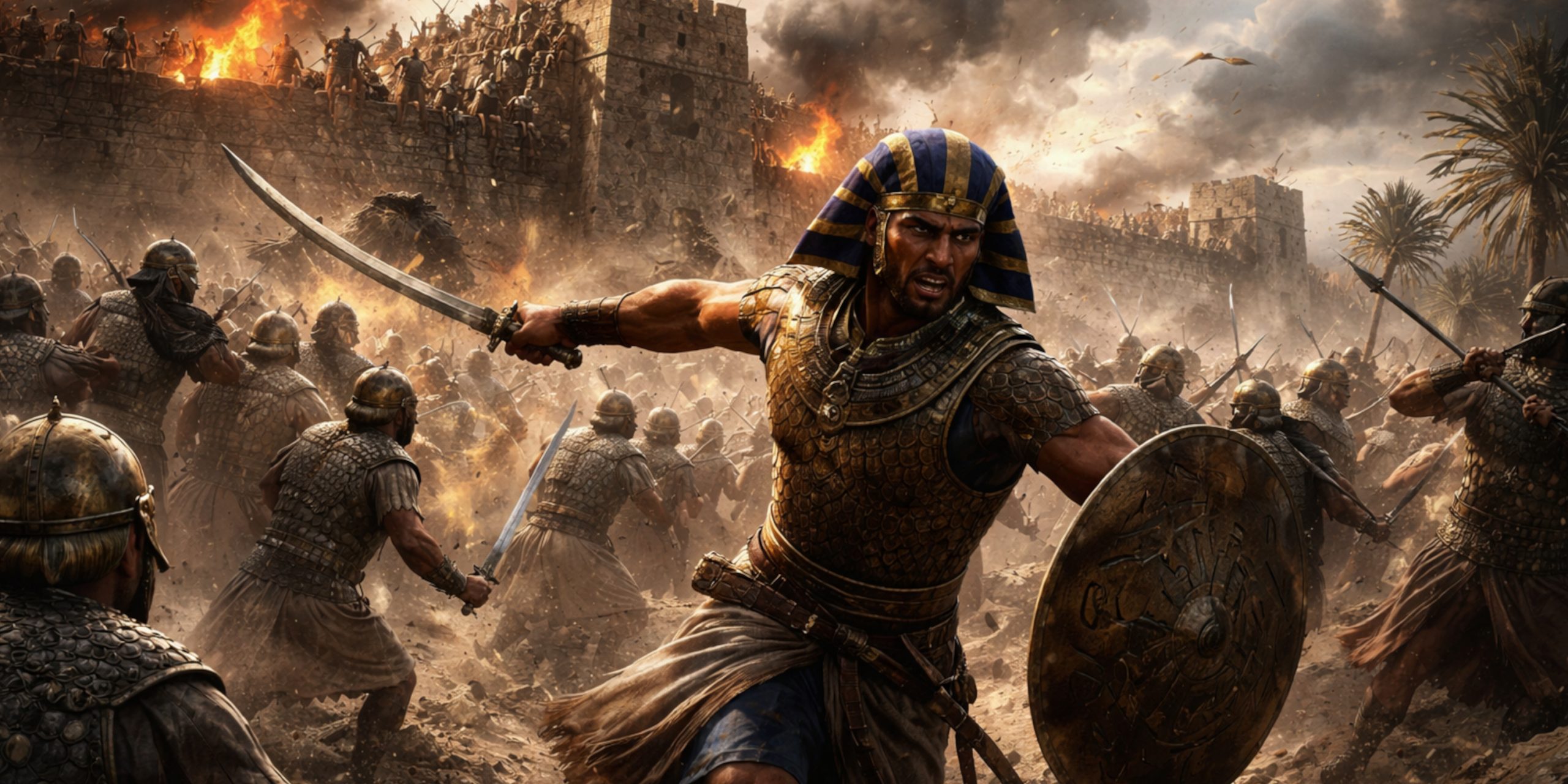
Once the walls were breached, fighting became chaotic and personal. This was urban warfare before anyone had invented the term. Houses were stormed. Storehouses looted. Hyksos defenders were pushed back street by street until resistance collapsed. Survivors fled toward Sharuhen in southern Canaan, only to be pursued and defeated again.
Battle Timeline
| Phase | Event |
|---|---|
| Early campaign | Egyptian forces secure Delta approaches |
| Siege begins | Avaris surrounded by land and water |
| Breach | Egyptian troops enter the city |
| Collapse | Hyksos resistance breaks |
| Aftermath | Survivors flee to the Levant |
Archaeology
Excavations at Tell el-Dab’a, the site of Avaris, reveal layers of destruction consistent with violent conquest. Burned structures, abandoned houses, and weapon finds align closely with the historical narrative. Material culture shows a sharp shift after the battle, with Levantine styles disappearing and Egyptian forms reasserting dominance.
Perhaps most telling is what stops appearing. Hyksos religious items, seals, and administrative tools vanish almost overnight. Avaris did not gently change hands. It was erased and repurposed.
Contemporary Sources and Quotes
Ahmose’s victory is celebrated in autobiographical inscriptions, most famously the tomb of Ahmose son of Ebana, who served in the campaigns:
“I fought until I captured a living prisoner. I was rewarded with gold.”
Another inscription records the king’s determination:
“His Majesty captured Avaris by might.”
Short lines, sharp edges, and no interest in nuance. Egyptian royal writing rarely bothers with subtlety when victory is involved.
Legacy and Historical Significance
The fall of Avaris ended the Second Intermediate Period and launched Egypt’s New Kingdom. More than that, it reshaped Egyptian identity. Foreign rule became a cautionary tale. Military expansion became policy. The army professionalised, the state centralised, and Egypt began looking outward with confidence rather than anxiety.
For Ahmose, this was the making of a dynasty. For the Hyksos, it was the end of the road. And for historians, it is a reminder that behind every neat dynastic chart sits a city that had a very bad day.