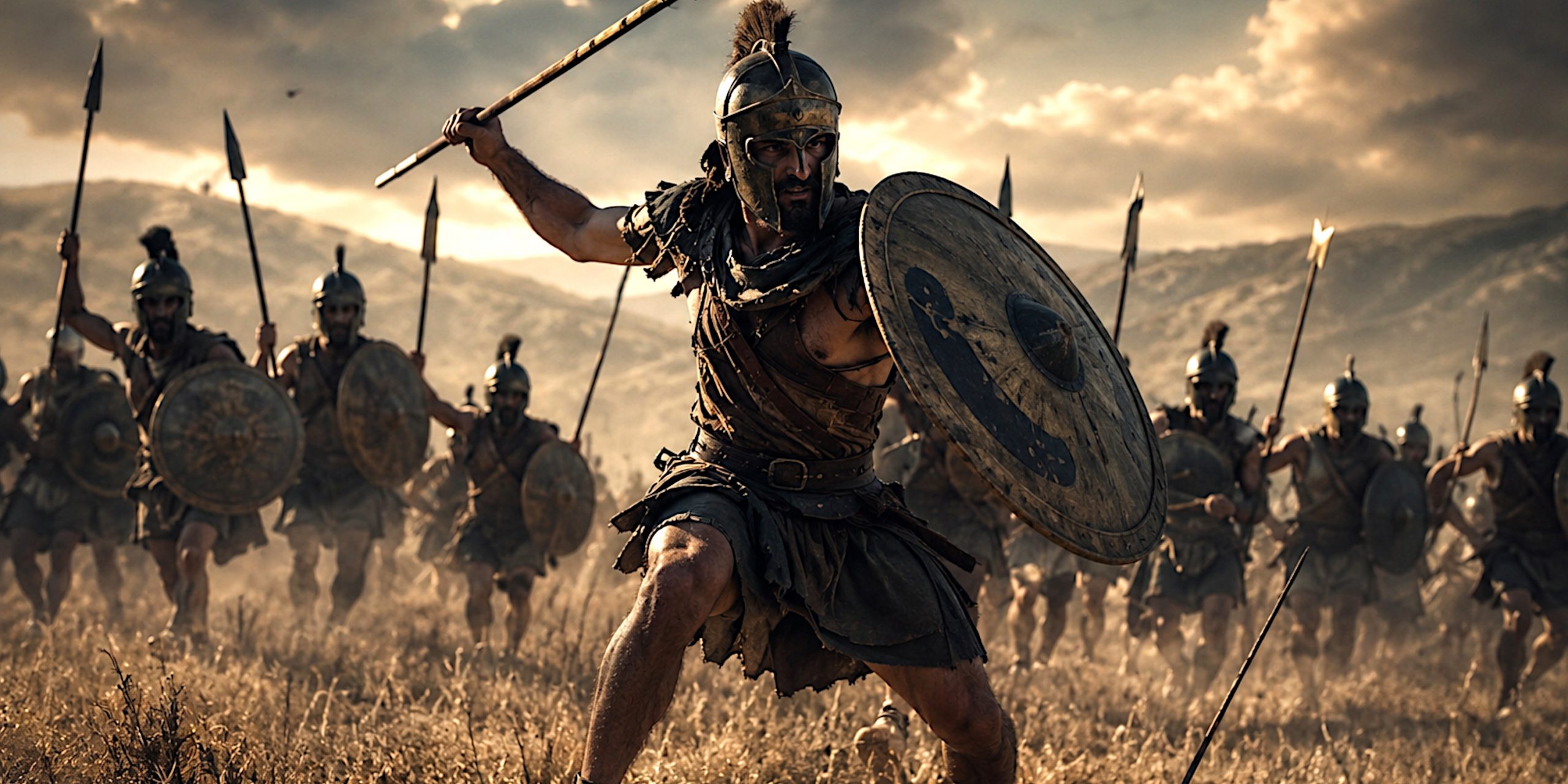
There is a tendency to imagine ancient warfare as neat lines of heavily armoured hoplites pushing against one another until somebody lost their nerve. Reality was considerably messier. Before the great shield walls collided, armies were already fighting. Men darted forwards, hurled volleys of javelins, taunted their opponents and disappeared before retaliation arrived.
These were the peltasts.
Neither fully light infantry nor heavy infantry, peltasts occupied the space between the two. Their speed allowed them to harass stronger enemies, protect vulnerable troops and exploit broken formations. By the fourth century BCE they had become some of the most valuable soldiers in the Greek world, forcing generals to rethink battlefield tactics that had remained largely unchanged for generations.
As a military historian, I find peltasts particularly fascinating because they remind us that intelligence often beats brute force. The biggest shield on the battlefield is not especially useful if the enemy refuses to stand still long enough for you to hit them.
Who Were the Peltasts?
Originally, the term peltast referred to warriors carrying the pelte, a light crescent shaped shield usually associated with Thracian warriors.
Over time the name came to describe a class of lightly equipped infantry found across much of the Greek world.
Unlike hoplites, peltasts relied upon:
- Mobility
- Missile weapons
- Rapid manoeuvre
- Ambush tactics
- Flexibility
Many early peltasts came from Thrace, where local methods of warfare emphasised speed over armour. Greek city states quickly recognised their effectiveness and began recruiting Thracian mercenaries before eventually training their own peltast units.
By the age of Philip II of Macedon, peltasts were a permanent feature of most professional armies.
Origins and Development
Thracian Beginnings
The earliest peltasts emerged in Thrace during the Archaic Period.
Mountainous terrain and tribal warfare rewarded speed instead of heavy armour.
Thracian warriors became famous throughout Greece for:
- Aggressive skirmishing
- Fearless charges
- Excellent javelin throwing
- Sudden ambushes
Their distinctive equipment became so recognisable that Greek writers often referred to peltasts simply as “Thracians.”
Adoption by Greece
During the Peloponnesian War, Athens increasingly relied upon lighter troops.
The disastrous Sicilian Expedition demonstrated that hoplites alone could not fight effectively across rough landscapes.
Professional peltasts became increasingly valuable for:
- Scouting
- Screening armies
- Defending flanks
- Pursuing fleeing enemies
- Fighting in broken ground
The Fourth Century Revolution
The greatest transformation came through commanders such as Iphicrates.
He expanded the role of peltasts from simple skirmishers into disciplined professional infantry capable of defeating traditional hoplites.
His reforms influenced military development across Greece and later Macedonia.
Arms and Armour
| Equipment | Description |
|---|---|
| Pelte shield | Small wicker shield covered in leather |
| Javelins | Usually two to five carried, often with throwing straps |
| Spear | Sometimes carried for close combat |
| Sword | Backup weapon |
| Helmet | Often bronze Thracian, Phrygian or simple Greek types |
| Armour | Usually little or none, although wealthier troops wore linen armour |
| Boots | Light leather footwear suited to rapid movement |
The Pelte Shield
The pelte was far lighter than the heavy hoplon.
Usually constructed from:
- Wicker
- Wood
- Leather covering
Its crescent shape made it easier to carry while running and throwing.
It was never intended to stop sustained spear thrusts.
Instead, it offered enough protection while allowing exceptional mobility.
Javelins
The principal weapon was the throwing spear.
Many employed the ankyle, a leather throwing loop that dramatically improved:
- Range
- Rotation
- Accuracy
Well trained peltasts could throw repeated volleys before withdrawing.
Swords Used by Peltasts
Although missile weapons defined their role, peltasts frequently carried swords once combat became unavoidable.
Common examples included:
| Sword | Purpose |
|---|---|
| Xiphos | Straight double edged Greek sword for general combat |
| Kopis | Heavy forward curved chopping sword favoured by cavalry and Thracians |
| Machaira | Curved slashing weapon effective against lightly armoured opponents |
The curved kopis and machaira suited the aggressive fighting style seen among Thracian warriors, while many Greek peltasts preferred the more conventional xiphos.
Armour
Protection remained deliberately light.
Typical equipment included:
- Leather tunic
- Linen clothing
- Felt cap
- Bronze helmet for wealthier soldiers
Heavy bronze cuirasses were uncommon because they reduced the very quality that made peltasts dangerous.
Running away quickly is not usually celebrated in military history. Doing it deliberately while persuading the enemy to chase you into an ambush is another matter entirely.
Battlefield Tactics
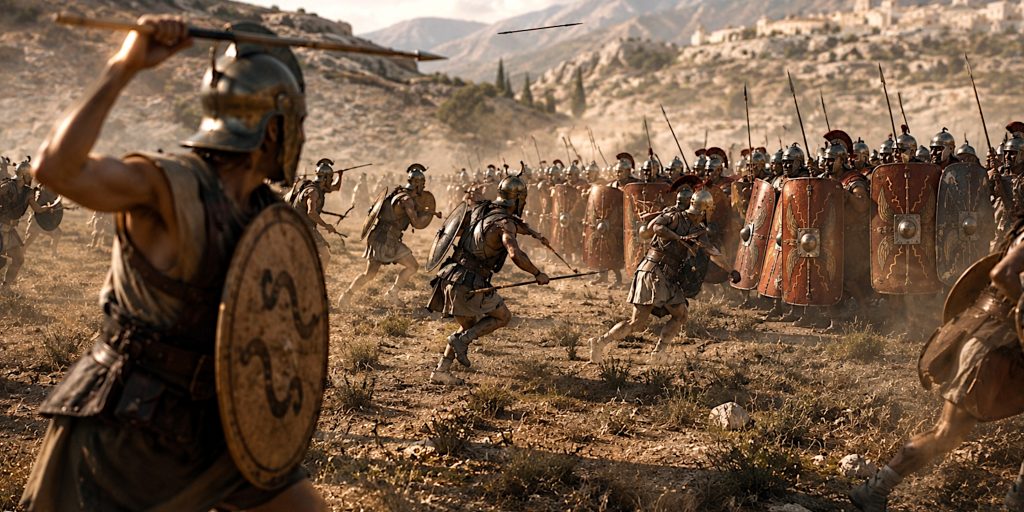
Peltasts excelled through movement rather than direct confrontation.
Typical battlefield roles included:
- Harassing heavy infantry
- Breaking enemy formations
- Screening advances
- Guarding flanks
- Ambushing columns
- Pursuing retreating troops
- Fighting in mountains and forests
Rather than standing in rigid formations, they worked in dispersed groups that constantly shifted position.
The Battle of Lechaeum
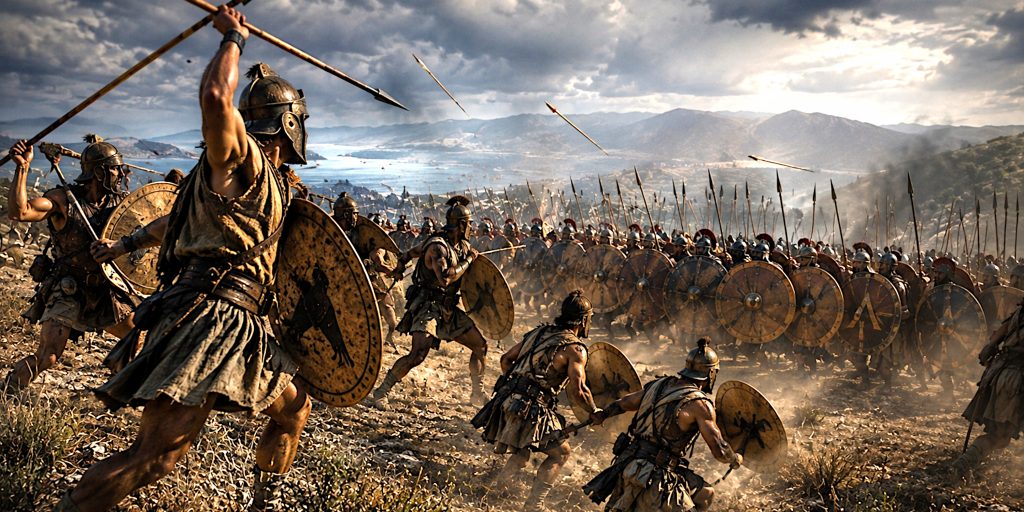
Perhaps the greatest demonstration of peltast warfare occurred around 390 BCE.
The Athenian commander Iphicrates repeatedly attacked a Spartan mora using disciplined peltasts.
His troops:
- Threw javelins
- Retreated before counter attacks
- Returned once Spartans halted
- Slowly exhausted the enemy
Unable to catch their opponents, Spartan casualties mounted until the formation collapsed.
The victory shocked the Greek world.
For centuries Spartan hoplites had appeared almost unbeatable.
Now lightly armed troops had destroyed them through discipline rather than brute force.
Organisation
Peltasts rarely fought alone.
They operated alongside:
- Hoplites
- Cavalry
- Archers
- Slingers
- Light cavalry
Combined arms warfare increasingly became the norm during the fourth century BCE.
Philip II and Alexander the Great would later perfect this approach.
Famous Commanders
| Commander | Contribution |
|---|---|
| Iphicrates | Reformed professional peltast warfare |
| Brasidas | Used mobile troops effectively during the Peloponnesian War |
| Philip II | Integrated peltasts into Macedonian combined arms tactics |
| Alexander the Great | Used peltasts extensively during campaigns across Asia |
Archaeology
Archaeological evidence helps reconstruct peltast equipment, although organic materials rarely survive.
Important discoveries include:
Thracian Tombs
Burials across Bulgaria have revealed:
- Pelte shield fittings
- Iron spearheads
- Curved swords
- Bronze helmets
These finds closely match descriptions in Greek literature.
Vergina
Excavations connected with the Macedonian royal family have uncovered military equipment showing the increasingly professional nature of Macedonian armies that incorporated peltast formations.
Greek Sanctuaries
Weapons dedicated at sanctuaries such as Olympia include numerous javelin heads and light infantry equipment, illustrating the growing prestige of missile troops.
Artistic evidence also contributes significantly.
Attic pottery regularly depicts Thracian warriors carrying crescent shaped shields, fox skin caps and bundles of javelins.
Contemporary Accounts
Several ancient writers admired the effectiveness of peltasts.
Thucydides observed the value of light troops during the Peloponnesian War:
“The light armed troops caused great distress to the enemy.”
Xenophon, writing from direct military experience, repeatedly praised disciplined peltasts for their mobility and usefulness during campaigning.
Describing Thracian fighting methods, he emphasised their speed and willingness to engage at favourable moments before withdrawing.
Diodorus Siculus later described the reforms of Iphicrates as transforming Greek warfare through improved light infantry.
Strengths and Weaknesses
| Strengths | Weaknesses |
|---|---|
| Exceptional mobility | Vulnerable in prolonged melee |
| Effective harassment | Limited protection |
| Flexible tactics | Dependent upon open space to manoeuvre |
| Excellent in rough terrain | Less effective against fast cavalry |
| Lower equipment costs | Reduced staying power against heavy infantry |
Comparison with Hoplites
| Peltasts | Hoplites |
|---|---|
| Light infantry | Heavy infantry |
| Fast movement | Slow advance |
| Javelins | Spears |
| Small shield | Large hoplon |
| Minimal armour | Heavy bronze protection |
| Flexible tactics | Close formation warfare |
Neither system proved universally superior.
The greatest generals learned to combine both.
Legacy
The influence of peltasts extended far beyond classical Greece.
They inspired:
- Macedonian light infantry
- Hellenistic skirmish troops
- Roman velites
- Later professional missile infantry
Modern military doctrine still values many of the same principles.
Mobility.
Harassment.
Combined arms.
Avoiding unnecessary close combat.
These concepts remain surprisingly familiar over two thousand years later.
Where to See Peltast Artefacts
Visitors interested in peltasts should consider:
| Museum | Highlights |
|---|---|
| Archaeological Museum of Thessaloniki | Macedonian military equipment |
| National Archaeological Museum, Athens | Greek weapons and armour |
| National History Museum, Sofia | Extensive Thracian weapon collections |
| Museum of the Royal Tombs at Vergina | Macedonian military artefacts |
Frequently Asked Questions
What does “peltast” mean?
A soldier carrying a pelte, the light crescent shaped shield associated with Thracian warriors.
Were peltasts Greek?
Originally many were Thracian, although Greek cities later raised their own units.
What weapons did they carry?
Primarily javelins, supported by swords such as the xiphos, kopis or machaira.
Could peltasts defeat hoplites?
Yes. Under skilled leadership they could wear down heavy infantry through repeated missile attacks, as demonstrated by Iphicrates at Lechaeum.
Did Alexander the Great use peltasts?
Yes. Macedonian armies regularly employed peltasts alongside cavalry, archers and the famous phalanx.
Takeaway
Peltasts transformed Greek warfare by proving that speed, discipline and adaptability could overcome even the most heavily armoured opponents. They forced commanders to abandon simplistic ideas about battlefield strength and embrace a far more flexible style of war.
It is tempting to think of them as supporting troops, but that understates their importance. Without peltasts, the military innovations of Philip II and Alexander the Great become much harder to imagine. They were not merely the men who threw the first javelins. They helped usher in a new age of warfare where movement became as decisive as courage, and where the quickest soldier on the field could sometimes prove the deadliest.