From Northern Raiders To Mediterranean Lords
The Norman invasion of Southern Italy is one of the stranger success stories of the Middle Ages. A small number of warriors descended from Viking settlers in northern France arrived as pilgrims, mercenaries and fortune hunters. Within a few generations, they had carved out one of the richest kingdoms in Europe.
The transformation was extraordinary. The Normans entered a region divided between Lombard princes, Byzantine governors, Muslim rulers in Sicily and ambitious popes. They had no ancient claim, no vast population behind them and no great treasure chest. What they did have was military skill, political opportunism and a remarkable ability to adapt.
As a historian, this period feels almost like someone accidentally left the door open to Southern Italy and a few hundred determined Normans decided to redecorate the entire house.
By the end of the 11th century, families such as the Hautevilles had reshaped the balance of power in the Mediterranean.
Southern Italy Before The Normans
Before Norman domination, Southern Italy was politically fragmented.
The main powers included:
The Byzantine Empire
The Byzantines controlled parts of southern mainland Italy, particularly Apulia and Calabria. These territories were governed through the Catepanate of Italy, centred at Bari.
The Lombard Principalities
Several Lombard states controlled inland areas, including:
- Benevento
- Salerno
- Capua
They frequently competed with each other, creating opportunities for outside warriors.
Muslim Sicily
Sicily had been conquered by Muslim forces during the 9th century. The island became wealthy, multicultural and strategically important, but political divisions weakened its rulers.
The Papacy
The popes initially viewed Norman expansion as a threat. After several failed attempts to stop them, Rome eventually recognised that having the Normans as allies was far better than having them as enemies.
A very medieval solution. If you cannot defeat the heavily armed neighbour, invite him over and call him family.
Why Did The Normans Come To Italy?
The first Normans appeared in Southern Italy around the early 11th century. Medieval chroniclers provide different accounts, but several factors explain their arrival.
They came as:
- Pilgrims travelling to holy sites
- Mercenaries hired by Lombard rulers
- Younger sons seeking land and fortune
- Professional warriors looking for employment
Norman inheritance traditions meant younger sons often received little. Italy offered something far more attractive than a quiet life in Normandy: land, wealth and status.
The most famous family was the Hauteville dynasty. Tancred of Hauteville, a minor Norman lord, sent several sons south. They would become some of the most successful military adventurers of the medieval world.
Key Norman Leaders
William Iron Arm
William Iron Arm was one of the earliest Hauteville brothers to gain fame. He fought as a mercenary against Byzantine forces and became Count of Apulia.
His nickname tells you everything medieval people valued. Nobody was being called William Excellent Administrator, even if paperwork probably mattered too.
Robert Guiscard
Robert Guiscard was the greatest Norman commander of the conquest.
His nickname meant “the cunning” or “the resourceful”, and contemporary writers recognised his intelligence as much as his strength. He became Duke of Apulia and Calabria and eventually challenged the Byzantine Empire itself.
The Byzantine princess and historian Anna Komnene later described him:
“This Robert was Norman by birth, of obscure origin, with an overbearing character and a thoroughly villainous mind.”
Coming from an enemy, it was almost a compliment. Medieval historians rarely wasted insults on people who did not matter.
Roger I Of Sicily
Roger, Robert Guiscard’s younger brother, led the Norman conquest of Sicily.
Unlike some conquerors, Roger maintained many existing Greek, Arab and Latin traditions. This approach helped create the distinctive multicultural society later associated with Norman Sicily.
Norman Arms And Armour
The Normans succeeded because they combined mobility, discipline and shock tactics.
Their equipment reflected wider 11th-century European warfare.
Weapons
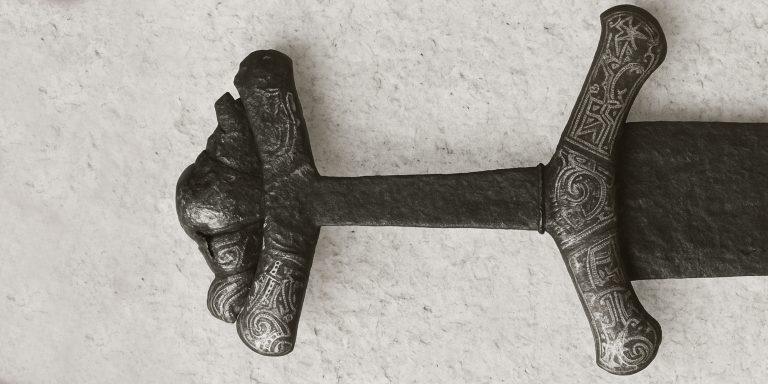
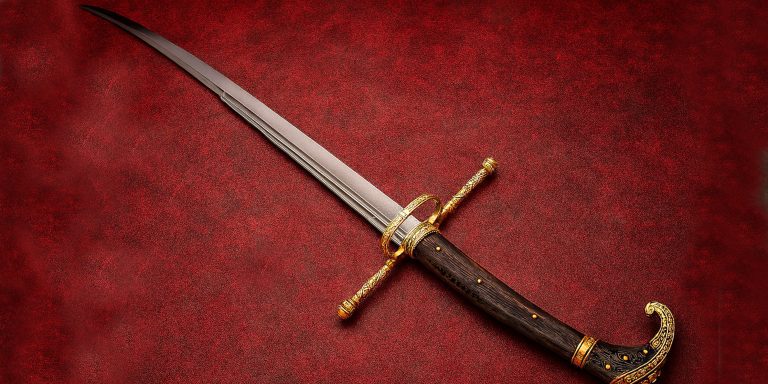
The Norman sword was usually a straight, double-edged weapon designed for cutting and thrusting.
Typical features:
- Blade length around 70 to 90 cm
- Broad fuller to reduce weight
- Simple crossguard
- One-handed use alongside a shield
Lance
The mounted lance became the defining weapon of Norman cavalry. Increasing use of the couched lance technique allowed knights to deliver devastating charges.
Spears And Javelins
Infantry troops used spears extensively. Missile troops, including archers, played supporting roles.
Axes And Maces
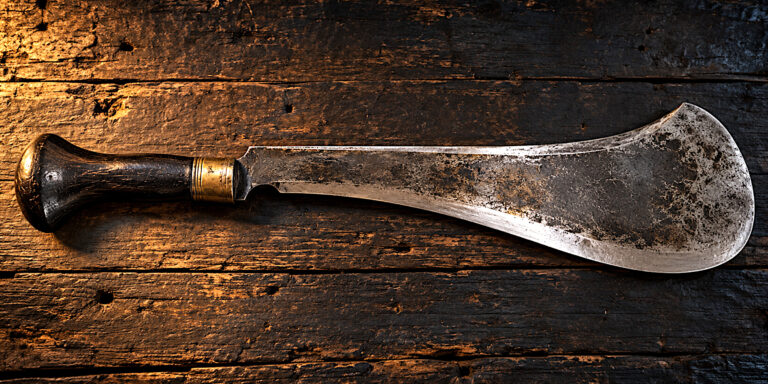
Although swords dominate modern imagination, axes and blunt weapons remained practical battlefield tools.
Armour
Norman warriors typically wore:
- Mail hauberks reaching the knees
- Conical helmets with nasal guards
- Padded garments beneath armour
- Kite shields protecting cavalrymen from shoulder to leg
Their equipment was not revolutionary by itself. Their organisation and battlefield coordination made it deadly.
Battles Of The Norman Invasion Of Southern Italy
Battle Of Olivento (1041)
Normans vs Byzantine Empire
The Battle of Olivento was one of the first major Norman victories against Byzantine forces.
The Normans demonstrated that a relatively small force of disciplined cavalry could defeat larger imperial armies. It encouraged further rebellion against Byzantine control.
Outcome: Norman victory
Importance: Established Norman military credibility in Italy
Battle Of Montemaggiore (1041)
Normans vs Byzantine Empire
Another major defeat for Byzantine authority. Norman cavalry overwhelmed Byzantine troops despite being outnumbered.
The battle accelerated the decline of Byzantine power in mainland Italy.
Outcome: Norman victory
Importance: Expanded Norman control in Apulia
Battle Of Civitate (1053)
Normans vs Papal Coalition
This was the turning point.
Pope Leo IX gathered an army including German and Italian forces to remove the Norman threat.
The Normans, led by Humphrey of Hauteville, Richard of Aversa and Robert Guiscard, defeated the coalition and captured the pope.
Rather than destroying relations with Rome, the Normans treated Leo respectfully. Their former enemy eventually became their political partner.
Outcome: Decisive Norman victory
Importance: Secured Norman legitimacy
Siege Of Bari (1068 To 1071)
Normans vs Byzantine Empire
Bari was the last major Byzantine stronghold in Italy.
Robert Guiscard besieged the city for nearly three years before its surrender in 1071.
Outcome: Norman victory
Importance: Ended centuries of Byzantine rule in southern mainland Italy
Conquest Of Sicily (1061 To 1091)
Normans vs Muslim Sicilian Emirates
Roger I slowly conquered Sicily through a long series of campaigns.
Major moments included:
- Capture of Messina in 1061
- Battle of Cerami in 1063
- Capture of Palermo in 1072
- Fall of Noto in 1091
The campaign took three decades, showing that conquest was far more complex than a few dramatic cavalry charges.
Military Strategy And Success
The Norman conquest succeeded because of several advantages.
Heavy Cavalry
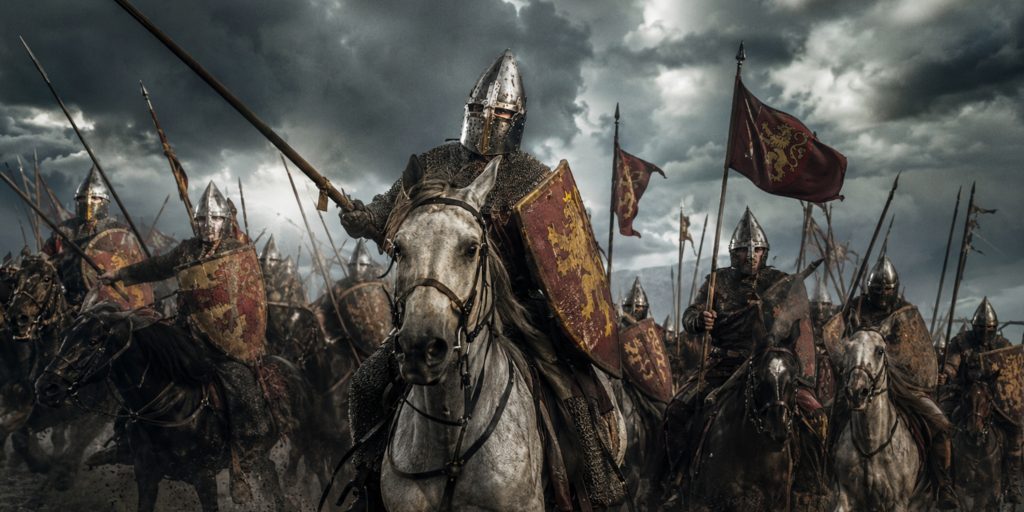
Norman knights were among the finest cavalry forces of the period. Their charges could break poorly organised infantry formations.
Adaptability
The Normans quickly learned from their enemies.
They adopted:
- Byzantine administration
- Mediterranean naval techniques
- Islamic architectural and scientific influences
- Local political traditions
They were conquerors, but also surprisingly practical ones.
Diplomacy
Norman leaders frequently switched alliances. They fought for Lombards, against Lombards, against Byzantines, with the Papacy and against the Papacy.
Consistency was not their greatest virtue. Winning was.
Archaeology Of Norman Southern Italy
Archaeology has greatly expanded our understanding of the Norman period.
Castles And Fortifications
The Normans transformed the landscape with castles and fortified settlements.
Important surviving examples include:
Melfi Castle
One of the most important Norman centres in Italy. It became a political base for the Hauteville rulers.
Castle Of Venosa
Associated with the Hauteville family and Norman aristocracy.
Aci Castle In Sicily
Built on earlier foundations, it reflects Norman attempts to secure coastal territories.
Churches And Architecture
Norman Sicily produced some of Europe’s most remarkable medieval architecture.
Sites connected to the later Norman kingdom include:
Palermo Cathedral
A mixture of Norman, Arab and Byzantine influences.
Monreale Cathedral
Famous for its extraordinary mosaics and royal connections.
Cefalù Cathedral
Built under Roger II, showing the artistic fusion created by Norman rule.
These buildings reveal something important. The Normans did not simply erase existing cultures. They often absorbed them.
Artefacts From The Norman Period
Important collections connected to Norman Southern Italy can be found at:
Regional Archaeological Museums In Southern Italy
Museums in Apulia, Calabria and Sicily preserve:
- Weapons
- Coins
- Ceramics
- Architectural fragments
- Religious objects
Palermo Collections
Palermo remains one of the best locations for studying Norman Sicily, especially the fusion of Latin Christian, Greek Byzantine and Islamic craftsmanship.
Contemporary Accounts
Several medieval writers recorded the Norman rise.
William Of Apulia
The Norman poet William of Apulia praised Robert Guiscard:
“The Norman race is one accustomed to war.”
His writings celebrate Norman courage, though like many medieval sources they were not exactly neutral reporting.
Geoffrey Malaterra
The monk Geoffrey Malaterra wrote about Roger I and the conquest of Sicily:
“They were men most skilled in warfare.”
Malaterra admired the Hautevilles and presented their victories as evidence of divine favour.
Anna Komnene
Writing from the Byzantine perspective, Anna Komnene viewed Robert Guiscard as a dangerous enemy:
“He was always planning something new.”
Her frustration is understandable. From Constantinople’s viewpoint, the Normans were a persistent and extremely well-armoured headache.
Legacy Of The Norman Conquest
The Norman invasion of Southern Italy created one of medieval Europe’s most fascinating states.
The Kingdom of Sicily, formally established in 1130 under Roger II, became:
- A Mediterranean naval power
- A centre of scholarship and translation
- A bridge between Latin, Greek and Islamic cultures
- One of Europe’s wealthiest kingdoms
The Normans arrived as outsiders with swords and ambition. They left behind cathedrals, castles and a political system that shaped southern Italy for centuries.
Few medieval conquests show such a dramatic transformation. A handful of restless knights from northern France entered a divided region and somehow created one of the most sophisticated kingdoms of the age.