History has no shortage of battles that look ridiculous from a safe distance. An army may mistake its own men for the enemy, a commander may send cavalry towards massed guns, or a government may deploy machine-gunners against birds. The punchline is tempting. It is also usually incomplete.
Calling a battle “foolish” can hide the decisions made under pressure, the political aims behind them and the people who paid the price. A commander’s error may be real, but it rarely explains an entire battle. Some famous stories are exaggerated; others are not even battles in the conventional sense.
This guide looks at the evidence behind the label. It covers genuine military disasters, tactical failures and a few memorable episodes that history has promoted into something grander than they were.
Forces
Numbers in historical accounts are often estimates, especially where sources disagree or where one side left few written records. The figures below are broad guides, not precise headcounts.
| Engagement | Forces involved | What made the situation difficult |
|---|---|---|
| Karánsebeș, 1788 | Habsburg forces on campaign near an Ottoman army | The often repeated story of a drunken army destroying itself rests on uncertain evidence |
| Cajamarca, 1532 | Pizarro’s Spanish expedition, around 168 men, against Atahualpa’s much larger following | A diplomatic meeting became a surprise attack amid the Inca civil war |
| Balaclava, 1854 | British Light Brigade, roughly 670 cavalrymen, against Russian guns and cavalry | A poorly transmitted order sent the brigade down a defended valley |
| Adwa, 1896 | Italian and Eritrean colonial troops against a much larger Ethiopian army | Italian leaders underestimated the scale, organisation and armament of the Ethiopian forces |
| Little Bighorn, 1876 | The US 7th Cavalry against Lakota, Northern Cheyenne and Arapaho fighters | Custer divided his force while facing a large, mobile coalition defending its homeland |
| Fishguard, 1797 | A French landing force against British militia and local defenders | The French expedition was isolated and poorly supported |
| The Alamo, 1836 | Texian defenders against the Mexican army | The garrison held a vulnerable position during a wider struggle over Texas |
| Thermopylae, 480 BCE | A Greek coalition against the Persian invasion force | The Greeks defended a narrow pass, then faced encirclement after a route through the mountains was revealed |
1. Karánsebeș, 1788: the battle that may not have happened as advertised
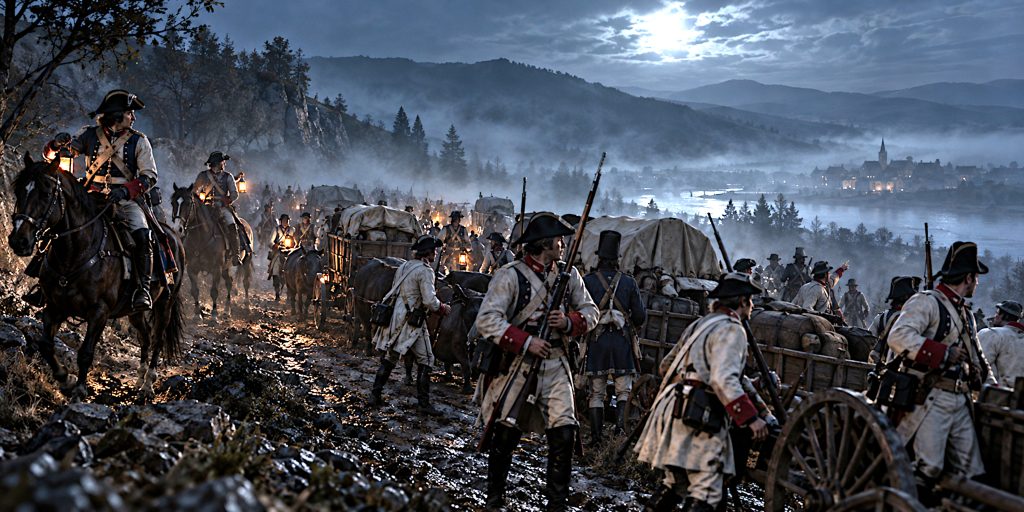
The popular version is almost too neat: Austrian troops, drunk on brandy, heard someone shout that the Ottomans were coming, then opened fire on one another in the dark. Confusion spread through the camp, the army fled and the emperor was thrown from his horse. It is an excellent story. The evidence is less obliging.
A Habsburg force did suffer confusion and disruption near Karánsebeș during the Austro-Turkish War. But the dramatic tale of thousands of soldiers killing one another, complete with a brandy-fuelled panic, is not securely established by contemporary accounts. Detailed versions appeared decades later, and the scale of the reported disaster has been questioned.
The sensible conclusion is not that nothing happened. It is that the familiar story has accumulated more certainty and comic detail than its sources can bear. If there was a serious breakdown, it was a failure of communication, control and marching discipline in a large, multilingual army. That is embarrassing enough without inventing a battlefield massacre to improve the anecdote.
Verdict: A plausible military confusion wrapped in a doubtful legend. It belongs in a list of notorious stories, but with a prominent question mark.
2. Cajamarca, 1532: a meeting turned into an ambush
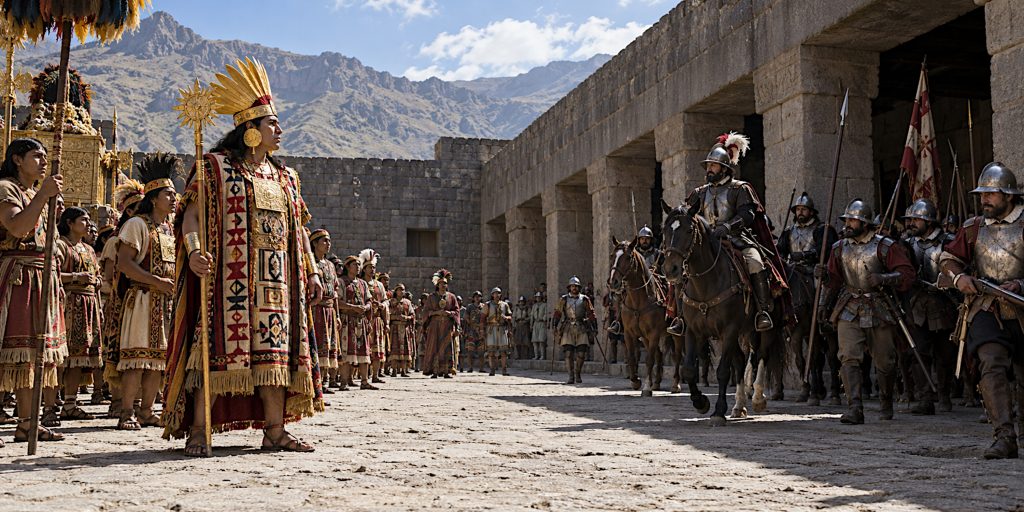
At Cajamarca, Francisco Pizarro’s small Spanish expedition captured the Inca ruler Atahualpa during a meeting on 16 November 1532. The Spanish had horses, steel weapons, firearms and a plan to take the ruler alive. Atahualpa’s party was vastly larger, but the numbers often quoted for it are uncertain and may include attendants and followers rather than combatants.
The usual summary says Atahualpa foolishly underestimated the Spanish and walked into a trap. That compresses a complicated situation into a convenient morality tale. The meeting took place during the Inca civil war between Atahualpa and Huáscar. Atahualpa had recently won that struggle, but the empire was politically fractured. The Spanish arrived as an unexpected force in a setting where negotiation, status and ceremony mattered.
Pizarro’s men attacked from concealment after a Spanish cleric presented a religious text and Atahualpa refused to accept it. Spanish chroniclers later framed the violence as a response to an insult. That account deserves caution: the conquerors had a clear interest in presenting the capture as justified.
Atahualpa was taken prisoner and later executed. His capture helped the Spanish gain leverage, but it did not bring about the instant collapse of the Inca state. Resistance continued for years.
Verdict: A devastating Spanish ambush enabled by surprise, political division and a meeting Atahualpa had reason to treat as diplomatic. Calling his side simply foolish ignores the power imbalance created by treachery and unfamiliar weapons.
3. The Charge of the Light Brigade, 1854: a bad order and a worse valley
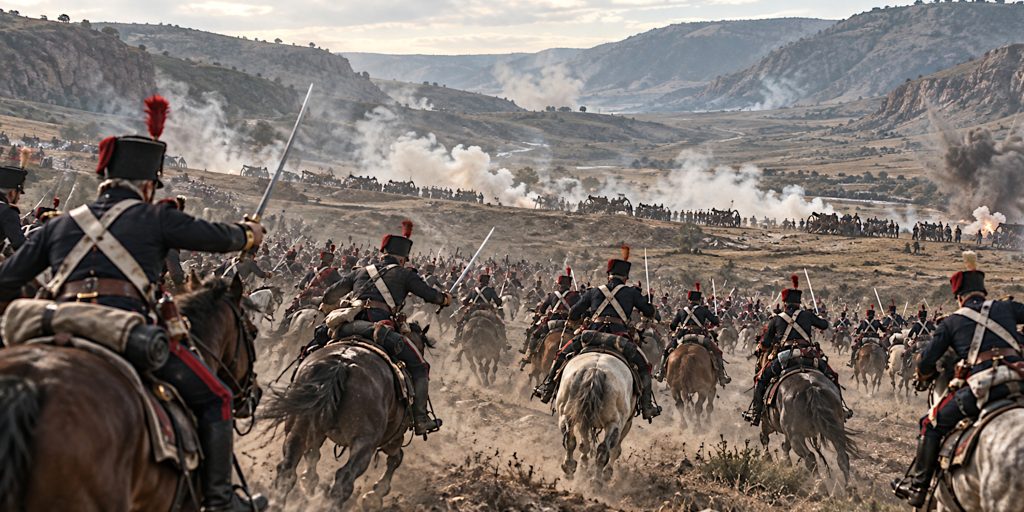
On 25 October 1854, during the Battle of Balaclava in the Crimean War, the British Light Brigade charged towards Russian artillery at the far end of a valley. Lord Raglan’s order was unclear in transmission. Lord Lucan passed it to Lord Cardigan, who led the brigade forward. Captain Louis Nolan, who had carried the order, was killed early in the charge, leaving no chance to clarify what Raglan had intended.
The cavalry rode under fire from Russian guns positioned along the valley and on the surrounding heights. The charge reached the Russian battery, but it could not hold the position. The brigade withdrew with heavy losses.
The familiar version makes the episode a simple tale of incompetence. The order was indeed badly handled, and the terrain made the attack ruinously exposed. But the brigade did not ride forward because every man believed the plan was sensible. Officers understood the danger and obeyed an order they interpreted as binding. The failure was institutional as well as personal: command, communication and battlefield visibility all broke down at once.
The contemporary response became part of the event’s legacy. Alfred, Lord Tennyson’s poem, published soon after the charge, includes the terse line, “Someone had blunder’d.” It is memorable, though it does not identify who.
Verdict: A genuine command failure, made more deadly by the brigade’s discipline and the conditions of the battlefield. Bravery did not make the decision sound.
4. Adwa, 1896: Italy’s colonial assumptions meet an Ethiopian army
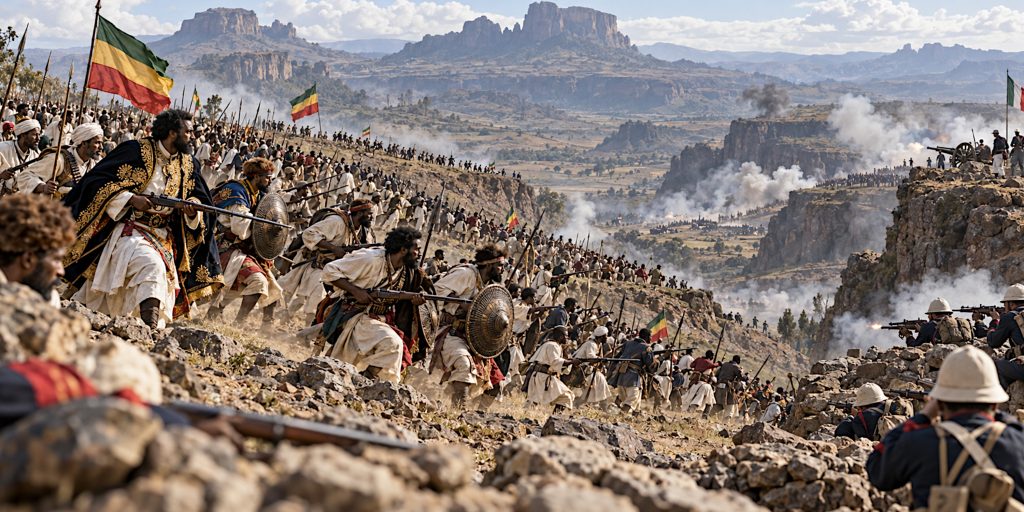
Italy entered the Battle of Adwa expecting to impose its will on Ethiopia. On 1 March 1896, Ethiopian forces under Emperor Menelik II defeated the invading Italian army. The battle prevented Italy from establishing colonial control over Ethiopia at that time and became a landmark victory against European imperial expansion.
Italian commanders underestimated how many troops Menelik could bring together, and they misjudged the quality of the opposition. Ethiopian forces were not an undisciplined mass. They had experienced leaders, modern rifles and artillery, and a strong incentive to fight. Italian troops also faced difficult terrain and a fragmented plan that left units vulnerable to defeat in detail.
It is easy to call the Italian campaign foolish, but the story is more than a European army being surprised by African resistance. Adwa was an Ethiopian achievement, built on diplomacy, mobilisation and military planning. The colonial assumption that Ethiopia would be easy to conquer was itself a strategic error.
Verdict: A major failure of intelligence and planning, but also a powerful example of Ethiopian military strength and political coordination.
5. Little Bighorn, 1876: Custer’s divided command
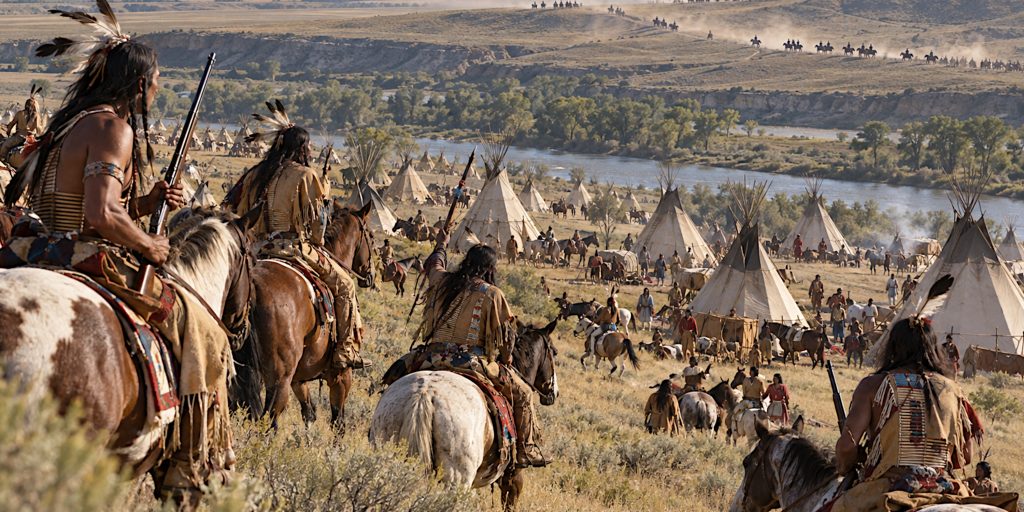
The Battle of the Little Bighorn was fought on 25 and 26 June 1876 between the US 7th Cavalry and a large camp of Lakota, Northern Cheyenne and Arapaho people. Lieutenant Colonel George Armstrong Custer’s command was divided as it approached the camp. His battalion was overwhelmed and destroyed.
Popular retellings often reduce the battle to Custer’s arrogance. His decisions mattered, especially the separation of his force and his failure to understand the scale of the community gathered along the river. But the battle was not simply an isolated blunder by one officer. The US campaign was part of a wider effort to force Native nations onto reservations and secure control of the Black Hills, despite treaty commitments. The people at Little Bighorn were defending their homes and independence.
The exact sequence of the final fighting remains debated. The National Park Service describes a battlefield of ridges, bluffs and ravines, where different parts of the 7th Cavalry fought in separate locations. Archaeological work and surviving battlefield objects have helped researchers test written accounts against the physical evidence.
Verdict: Custer made serious tactical errors, but a fair account must also recognise the strategic context and the agency of the Lakota, Cheyenne and Arapaho fighters who defeated him.
6. Fishguard, 1797: an invasion, not a battle of red shawls
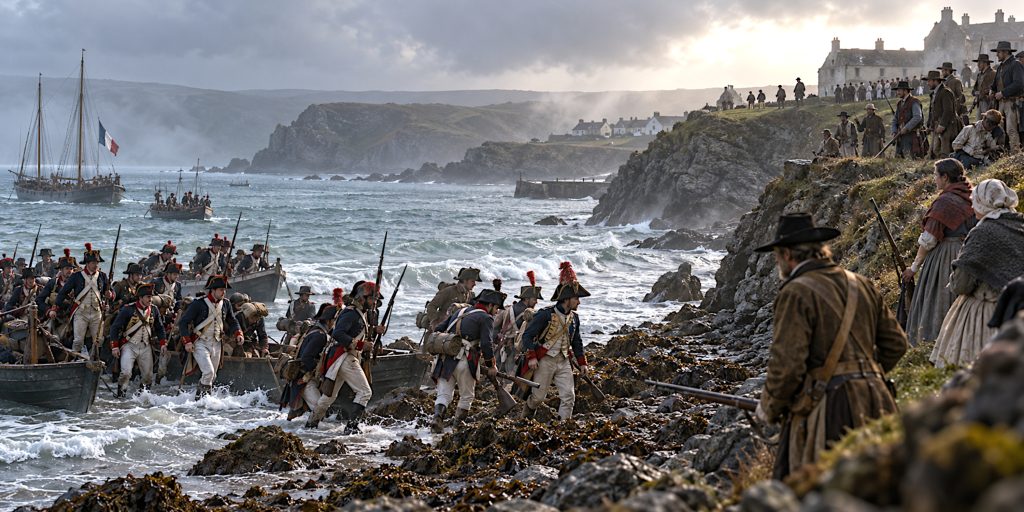
A French force landed near Fishguard in Pembrokeshire on 22 February 1797. The expedition was intended to support a wider effort against Britain, but it was short of supplies, poorly coordinated and increasingly isolated. The French commander, William Tate, surrendered two days later.
The story that Welsh women in red shawls were mistaken for British soldiers has become the episode’s most famous detail. It is a good local legend, but it should not be treated as the sole reason for the surrender. The French force faced a growing local response, uncertain prospects and a worsening military position. The surrender at Fishguard was not a conventional set-piece battle, and the women’s clothing did not defeat an army by itself.
Verdict: A failed invasion and surrender, remembered through a vivid story that likely overshadows the more practical reasons the French position collapsed.
7. The Alamo, 1836: a costly defence with a political afterlife
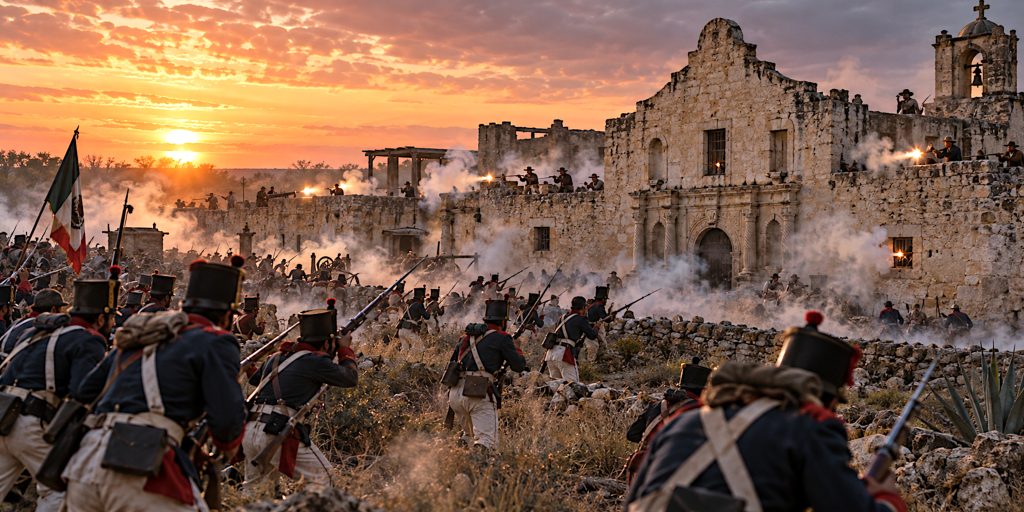
In February and March 1836, Texian forces held the former mission at the Alamo against the Mexican army under Antonio López de Santa Anna. The siege ended in an assault on 6 March, with most of the defenders killed. The precise number of defenders and attackers remains disputed.
The old article calls the defence strategically pointless. That is too confident. The Alamo was a vulnerable position, and the garrison could not defeat the larger Mexican force. Yet the defenders’ resistance delayed Santa Anna’s advance and gave the Texian government time to organise. The battle also became a rallying symbol. The Texas State Library preserves William Barret Travis’s letter from the siege, which ends with the words “Victory or Death”.
Those consequences do not erase the cost or prove that every decision made by the Texian leadership was wise. They do show why “pointless” is a poor final verdict. The battle had military, political and symbolic effects, though later memory has often polished it into a simpler story than the evidence supports.
Verdict: A desperate defence with uncertain military value at the time and substantial political consequences afterwards.
8. Thermopylae, 480 BCE: doomed does not mean foolish
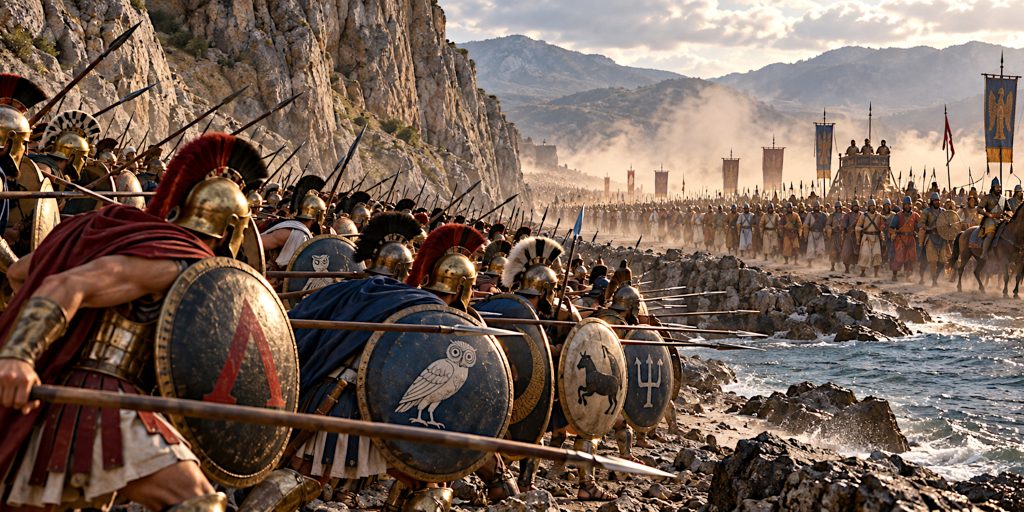
The Greek defence of Thermopylae is often presented as a glorious but pointless last stand. King Leonidas and a Greek coalition held the narrow pass against the Persian invasion. After the Persians found a route around the Greek position, most of the defenders withdrew. A smaller force remained, including Spartans, Thespians and Thebans.
The popular image of “300 Spartans” leaves out the other Greek forces and turns a coalition operation into a Spartan legend. It also treats the eventual defeat as proof that the decision was useless. The stand did not stop the Persian army, but it bought time and formed part of a larger Greek strategy. Whether that delay changed the campaign’s outcome is harder to measure than legend suggests.
Herodotus records a story in which a Spartan named Dieneces responds to the news that Persian arrows would darken the sun: “Then we shall fight in the shade.” It is a striking line, but it comes through an ancient historian, not a transcript from the battlefield.
Verdict: A costly rearguard action, not an absurd attempt to win an impossible battle. The myth is cleaner than the military history.
9. The “Emu War”, 1932: a cull remembered as a war
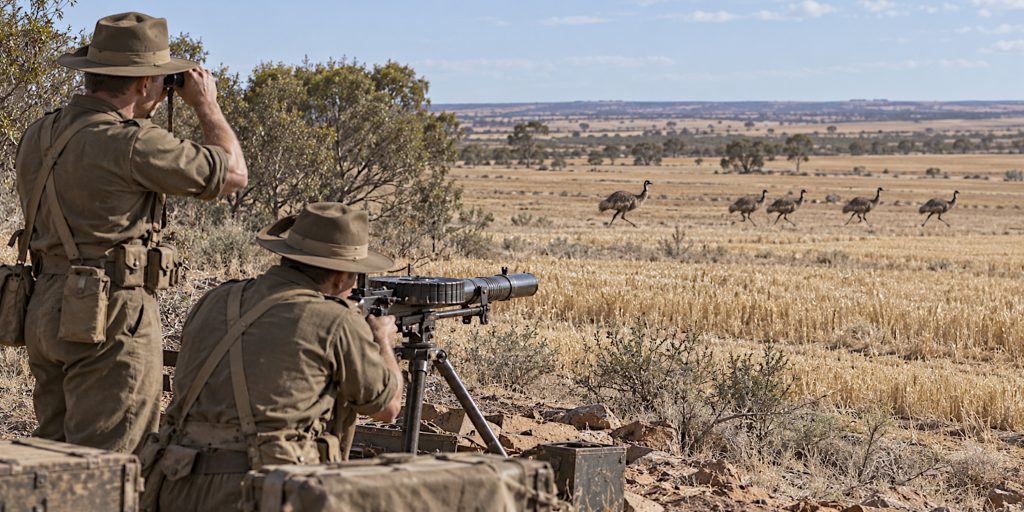
The Australian government sent soldiers with machine-guns to help control emus damaging crops in Western Australia. The operation became known as the Emu War, a label that has done very well for itself.
The birds were not an army, and this was not a battle. The operation was a wildlife-control effort shaped by post-war settlement, agricultural pressure and a poor match between the tactics used and the problem at hand. Emus were mobile, scattered across a large area and difficult to shoot efficiently. The operation attracted public ridicule and did not solve the farmers’ problems.
The humour is understandable, but the “humans lose to birds” framing leaves out the real issue: an unsuccessful government response to conflict between farming and wildlife.
Verdict: A memorable policy failure, not a battle. The emus did not win a war; they remained difficult to cull.
Leaders and troop composition
| Engagement | Leaders | Troop composition and command problem |
|---|---|---|
| Cajamarca | Francisco Pizarro; Atahualpa | Spanish infantry, cavalry and firearms attacked a much larger Inca gathering. The encounter was planned as a seizure of the ruler, not a conventional open battle. |
| Balaclava | Lord Raglan; Lord Lucan; Lord Cardigan; Captain Nolan | The Light Brigade consisted of British light cavalry. An unclear order passed through a strained command structure into a valley exposed to Russian artillery. |
| Adwa | Menelik II; Empress Taytu Betul; Ras Makonnen; General Oreste Baratieri | Ethiopian forces included regional contingents, cavalry, infantry and artillery. Italian and Eritrean troops advanced in separate columns and became vulnerable to coordinated attack. |
| Little Bighorn | George A. Custer; Marcus Reno; Frederick Benteen; Lakota and Cheyenne leaders including Crazy Horse | The 7th Cavalry operated in separated battalions. Lakota, Cheyenne and Arapaho fighters defended a large camp and brought superior local numbers to the fighting. |
| The Alamo | Antonio López de Santa Anna; William B. Travis; James Bowie; David Crockett | Mexican regulars besieged a Texian garrison of uncertain size. The defenders held a fortified mission complex, not a purpose-built modern fortress. |
| Thermopylae | Xerxes I; Leonidas | A Greek coalition defended the pass. The Persian force was much larger, though ancient estimates of its size are unreliable. |
Arms and armour: what the combatants actually carried
Swords were part of several of these armies, but rarely the decisive weapon. That is worth saying plainly on a sword-history site. At Cajamarca, the Spanish capture depended on surprise, cavalry and firearms. At Little Bighorn and Adwa, rifles and artillery shaped the fighting far more than blades.
| Engagement | Arms and armour, including relevant sword types |
|---|---|
| Karánsebeș | If the reported confusion occurred, Habsburg cavalry sabres and infantry bayonets would have been part of the army’s equipment. There is no reliable evidence for a distinct sword fight in the alleged incident. |
| Cajamarca | Spanish troops carried swords, including broad-bladed European sidearms, alongside lances, firearms and crossbows. Inca forces used slings, clubs, spears and other weapons. They did not field European-style swords. |
| Balaclava | British cavalry sabres, including the contemporary Pattern 1853 cavalry sword, were carried alongside carbines and pistols. Russian artillery fire, not swordsmanship, caused the brigade’s losses. |
| Adwa | Ethiopian forces used rifles, spears, shields and swords, including locally made straight blades and curved shotel forms. Italian troops carried service rifles, bayonets and artillery; cavalry sabres were present but secondary to firearms. |
| Little Bighorn | US cavalrymen carried Model 1860 light cavalry sabres, revolvers and carbines. Lakota and Cheyenne fighters used a mixture of firearms, bows, lances and clubs. Firearms were widespread, though access and ammunition varied. |
| Fishguard | French troops landed with muskets and bayonets. Local defenders included militia and volunteers with firearms. No famous sword action decided the surrender. |
| The Alamo | Texian defenders had muskets, rifles, pistols, knives and blades. Mexican infantry used muskets and bayonets, with artillery employed during the siege and assault. |
| Thermopylae | Greek hoplites fought chiefly with spears, shields and short swords, often called xiphoi; some carried the curved kopis. Persian troops used bows, spears and short swords such as the akinakes. The spear and shield mattered most in the narrow pass. |
| Emu operation | The soldiers used Lewis guns. There were no swords and, crucially, no opposing army. |
Contemporary voices
“Someone had blunder’d.”
Alfred, Lord Tennyson published “The Charge of the Light Brigade” in 1854, responding to news reports of the charge. The line captured public anger at the command failure, although Tennyson’s poem was a literary response rather than a battlefield report.
“Victory or Death.”
William Barret Travis used this phrase to close his 24 February 1836 letter from the Alamo. It communicates the garrison’s predicament, but it also became part of the way later generations remembered the battle.
“Then we shall fight in the shade.”
Herodotus attributes this reply to the Spartan Dieneces at Thermopylae. It is a reported saying preserved in a later historical account, not a verified verbatim exchange.
Archaeology and the limits of the record
Archaeology is strongest for some of these battles and thin for others. Little Bighorn is a particularly useful case because battlefield archaeology has helped historians compare the locations of recovered objects with military reports and later testimony. The National Park Service maintains extensive historic and archaeological collections related to the battlefield.
That material evidence helps reconstruct where fighting took place, but it cannot answer every question. A cartridge case can show where a weapon was fired; it cannot, by itself, identify the person holding it or explain what they believed was happening.
At Cajamarca, much of the narrative comes from Spanish accounts written by participants or later chroniclers. Those sources are valuable, but they were produced by the people who benefited from the capture of Atahualpa. At Thermopylae, the ancient literary tradition is much richer than the physical evidence for individual moments. At Karánsebeș, the gap between the dramatic legend and the uncertain contemporary record is itself the key historical problem.
For Fishguard and the Alamo, buildings, landscapes, documents and artefacts contribute to the story, but later commemoration has also shaped how the events are understood. An archaeological find can test a story. It cannot make a tidy legend true simply because the legend is popular.
Battle timeline
| Date | Event |
|---|---|
| 480 BCE | Greek forces defend the pass at Thermopylae during the Persian invasion. |
| 16 November 1532 | Pizarro’s forces attack Atahualpa’s party at Cajamarca and capture the Inca ruler. |
| September 1788 | The Habsburg army’s movements near Karánsebeș become the setting for a later, disputed friendly-fire story. |
| 22–24 February 1797 | French troops land near Fishguard and surrender two days later. |
| 6 March 1836 | Mexican forces capture the Alamo after a siege and assault. |
| 25 October 1854 | The British Light Brigade charges towards Russian artillery at Balaclava. |
| 1 March 1896 | Ethiopian forces defeat the Italian army at Adwa. |
| June 1932 | Australian soldiers take part in an unsuccessful operation to control emus in Western Australia. |
| 25–26 June 1876 | The US 7th Cavalry fights Lakota, Northern Cheyenne and Arapaho forces at Little Bighorn. |
So, which battles were truly foolish?
The Charge of the Light Brigade is the clearest example of a needless military disaster driven by confused orders. Adwa exposes the danger of colonial assumptions and poor intelligence. Little Bighorn shows what can happen when a commander divides his force against a larger and better-positioned opponent.
Other cases resist the label. Cajamarca was a calculated ambush, not a simple contest in which one side forgot how to count. Thermopylae was a difficult rearguard action within a wider campaign. The Alamo’s strategic value remains debatable, while its later political impact is undeniable. Fishguard and the Emu operation are memorable partly because calling them battles makes the story funnier.
History’s worst decisions are rarely as simple as hindsight makes them. The useful question is not only “Who made the foolish choice?” It is also “What did they know, what did they want, and who paid when the plan failed?” The answers are usually less neat, and much more interesting.