Few magical weapons have earned the same legendary reputation as the Holy Avenger. In a game filled with dragons, demon princes, reality-bending wizards and swords that occasionally decide they know better than their owners, the Holy Avenger still manages to stand at the top of the pile.
It is more than just a powerful magic weapon. It is a symbol of divine purpose. The Holy Avenger represents justice, sacrifice and unwavering conviction. When a paladin draws one, everyone at the table immediately understands that something important is about to happen. Usually for the villain.
Across every edition of Dungeons & Dragons, the Holy Avenger has remained one of the game’s most iconic artefacts. Its abilities have evolved alongside the rules, but its identity has stayed remarkably consistent. This is the sword that stands against fiends, undead and creatures of darkness when all else has failed.
What Is the Holy Avenger?
The Holy Avenger is a legendary magical sword designed specifically for paladins. While other adventurers can technically pick it up, most versions of the weapon only reveal their full power in the hands of a righteous paladin.
The sword combines devastating martial ability with divine magic. It enhances attacks, protects allies from hostile spells and becomes particularly deadly against evil creatures.
Unlike many magical weapons that focus purely on damage, the Holy Avenger serves as both an offensive weapon and a defensive beacon. It embodies the ideals of its wielder rather than acting as an independent magical personality.
For many players, obtaining a Holy Avenger represents the culmination of an entire campaign.
The Origins of the Holy Avenger
The Holy Avenger first appeared in the earliest editions of Dungeons & Dragons and quickly established itself as the ultimate paladin weapon.
From the beginning, it was intentionally difficult to obtain. Dungeon Masters were never expected to hand one out casually. Instead, the sword became a reward worthy of heroes who had demonstrated courage, honour and selflessness over many adventures.
Its mythology draws heavily from legendary swords throughout history and literature.
These influences include:
- Excalibur and Arthurian legend
- Durandal of Roland
- Joyeuse, the sword of Charlemagne
- Biblical imagery of divine weapons
- Medieval concepts of holy relics blessed by saints
Rather than copying one specific legend, the Holy Avenger blends all of these traditions into something uniquely Dungeons & Dragons.
Why Only Paladins?
This question has frustrated many fighters over the years.
Mechanically, the restriction keeps the Holy Avenger closely tied to the paladin class. Thematically, it reflects something deeper.
The weapon is not simply enchanted steel. It responds to unwavering faith and commitment to justice.
In most editions:
- Any character can wield it.
- Only paladins unlock its full magical abilities.
- The sword strengthens divine magic rather than replacing it.
It reinforces the idea that true power comes from the wielder’s character rather than their statistics.
That is quite refreshing in a fantasy genre where many heroes solve problems by finding increasingly shinier swords.
Holy Avenger Powers in Fifth Edition
The Fifth Edition Holy Avenger is classified as a Legendary magic weapon requiring attunement by a paladin.
Its core abilities include:
| Ability | Effect |
|---|---|
| Weapon Bonus | +3 to attack and damage rolls |
| Extra Damage | 2d10 radiant damage against fiends and undead |
| Magic Resistance Aura | Allies within 10 feet gain advantage on saving throws against spells and magical effects |
| Improved Aura | Radius increases to 30 feet at higher paladin levels |
These abilities make the Holy Avenger exceptionally valuable during encounters involving powerful spellcasters.
Many legendary monsters rely heavily on magic. The Holy Avenger turns the entire party into a much harder target.
Earlier Editions and Their Differences
Every edition has interpreted the Holy Avenger slightly differently.
AD&D
The weapon dramatically increased a paladin’s combat effectiveness against evil creatures while providing exceptional protection against hostile magic.
It was often considered one of the strongest magical swords in the entire game.
Third Edition
The Holy Avenger became a +5 holy cold iron longsword.
Spell resistance became one of its defining defensive abilities, allowing nearby allies to resist enemy magic more effectively.
Fourth Edition
As with much of Fourth Edition’s equipment design, the Holy Avenger was integrated into the game’s tiered item system while retaining its divine flavour.
Fifth Edition
The modern version simplifies the mechanics while preserving its iconic identity.
Rather than overwhelming players with modifiers, it focuses on a handful of powerful abilities that remain useful throughout an entire campaign.
Famous Holy Avengers in D&D Lore
Unlike artefacts such as Blackrazor or the Sword of Kas, the Holy Avenger is not a single unique weapon.
Many Holy Avengers exist across the various Dungeons & Dragons worlds.
That flexibility allows Dungeon Masters to create their own legendary swords with individual histories.
Examples might include:
- A blade forged by celestial smiths during the Dawn War.
- A sword carried by a forgotten saint.
- A relic recovered from the ruins of an ancient temple.
- The final weapon of a legendary dragon-slaying order.
- A divine gift granted after completing an impossible quest.
Each Holy Avenger becomes part of its world’s mythology.
That makes every campaign’s version feel personal rather than borrowed.
Holy Avenger in Forgotten Realms
Within the Forgotten Realms, Holy Avengers frequently appear among the greatest relics dedicated to lawful good deities.
Paladins serving gods such as Torm, Tyr and Bahamut are the most likely candidates to wield one.
Many temples regard these swords as sacred relics.
Some remain hidden for centuries until a worthy champion appears.
Others are lost during ancient wars and become the focus of entire adventures.
Finding one is often less about treasure and more about proving oneself worthy.
Could a Holy Avenger Become Evil?
It is an entertaining question.
Imagine a villain stealing one after defeating a legendary paladin.
In most campaigns, the answer is effectively no.
While an evil character might physically swing the weapon, its defining powers would remain dormant.
Many Dungeon Masters go further.
The sword may reject an unworthy wielder entirely, refuse attunement or even seek a new champion through divine intervention.
A Holy Avenger corrupted by darkness could make an excellent campaign storyline, but it would represent an extraordinary event rather than normal lore.
Holy Avenger Compared to Other Legendary Swords
| Weapon | Primary Theme | Greatest Strength |
|---|---|---|
| Holy Avenger | Divine justice | Anti evil magic and party protection |
| Blackrazor | Soul stealing | Personal power and healing |
| Sword of Kas | Dark ambition | Raw offensive capability |
| Moonblade | Elven heritage | Family legacy and versatility |
| Vorpal Sword | Decapitation | Instant lethality |
Each sword tells a different type of story.
The Holy Avenger is arguably the most heroic of them all.
It rewards courage instead of ambition.
Why the Holy Avenger Endures
Rules change.
Classes evolve.
Entire editions come and go.
Yet the Holy Avenger never disappears.
Part of its appeal lies in its simplicity.
The sword represents an ideal rather than just a collection of bonuses.
Players do not remember finally finding a Holy Avenger because it increased their damage output by a certain percentage.
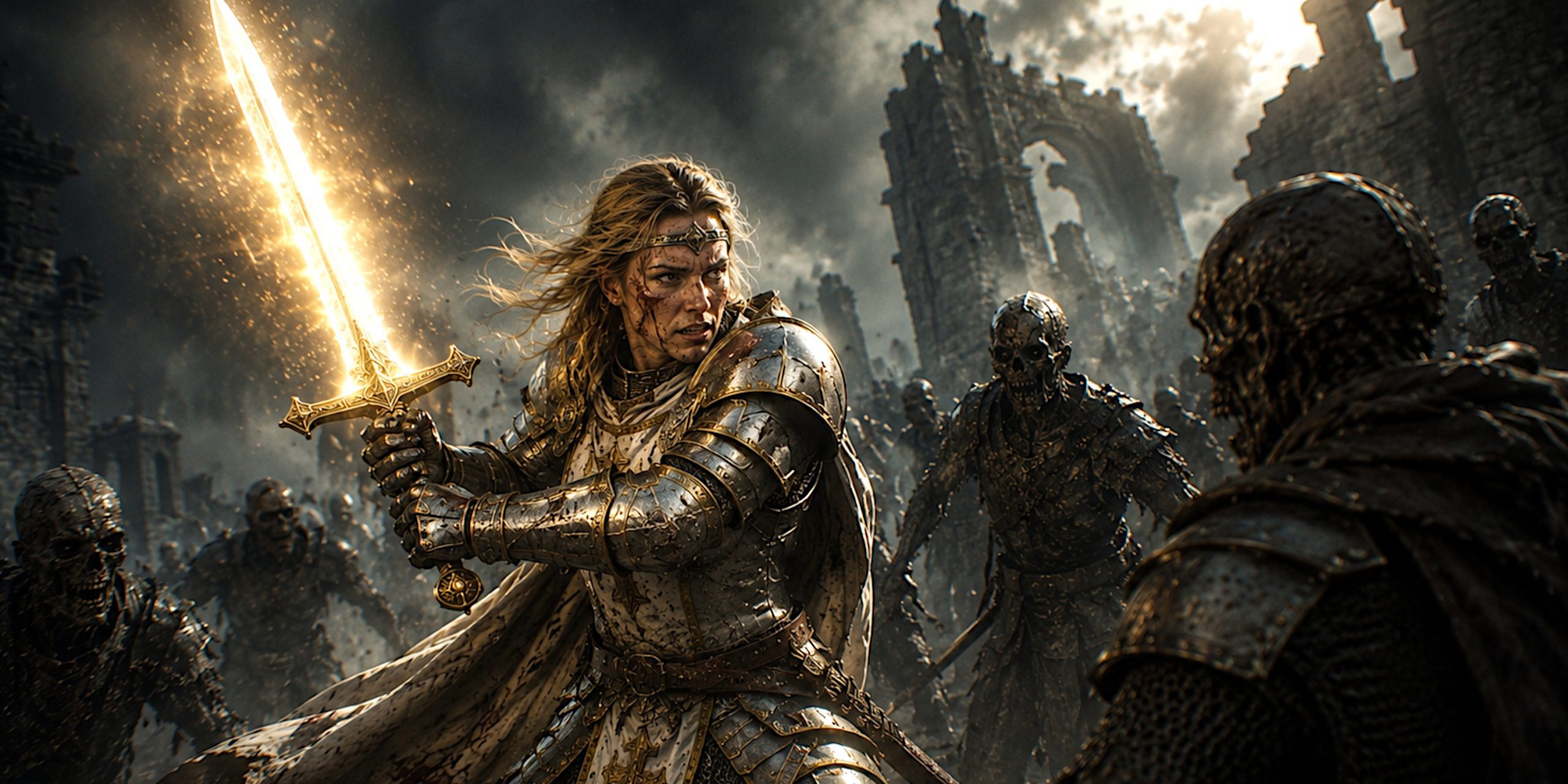
They remember the impossible battle where their battered paladin stood between a demon lord and the rest of the party, sword blazing with radiant light while everyone else wondered if they were about to witness the greatest heroic sacrifice in the campaign.
That emotional weight is why the Holy Avenger continues to define the fantasy of playing a paladin.
Some legendary weapons are famous because they are powerful.
The Holy Avenger is legendary because it reminds players that the greatest heroes are measured not only by the enemies they defeat, but by the ideals they refuse to abandon.