Medieval warfare is often reduced to images of knights charging across open fields. In reality, the most important victories usually came from preparation, deception, supply, engineering and disciplined formations.
Commanders who understood those factors could defeat larger armies, neutralise expensive cavalry and alter the political future of entire kingdoms. Some relied on clever manoeuvres. Others used new weapons or adapted ordinary equipment into something unexpectedly effective.
Here are the tactics and technical innovations that most clearly changed the medieval world.
William the Conqueror’s Feigned Retreats at Hastings, 1066
Tactic: Draw an enemy out of a strong defensive position, then turn on the pursuing troops.
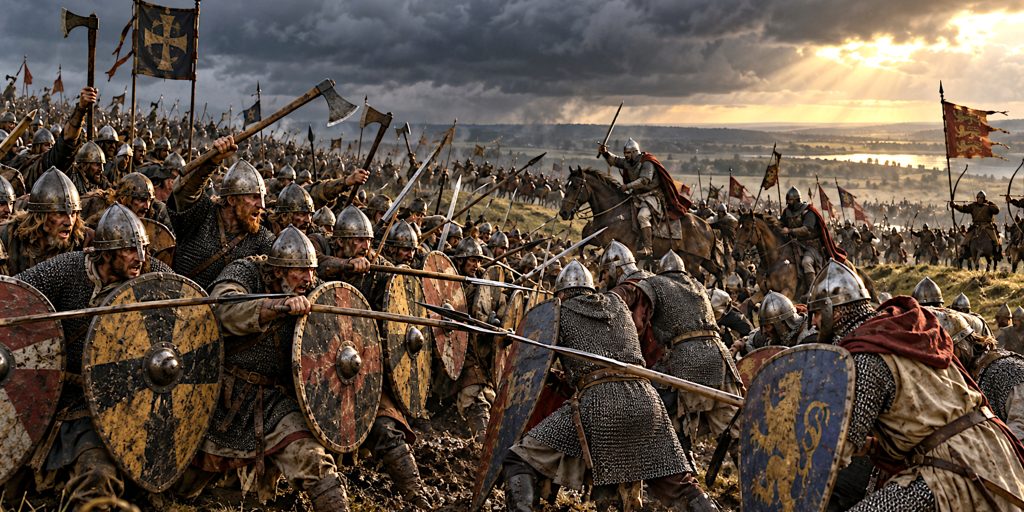
Harold Godwinson’s army held high ground at Hastings in a dense infantry formation. The Normans struggled to break it through direct attacks, particularly when English soldiers maintained their shield wall.
Norman cavalry then appeared to retreat. Some English troops pursued them downhill and lost contact with the main formation. Once the pursuers were separated, the cavalry turned and attacked.
Norman sources describe this happening more than once. The precise details remain debated, since the surviving accounts were written to celebrate William’s victory, but the basic tactical idea was entirely plausible.
Why it worked
A feigned retreat turned discipline into a psychological test. Soldiers had to decide whether they were witnessing a genuine collapse or an intentional trap. Once they left the main formation, their protection became far weaker.
The tactic was dangerous for the Normans as well. A controlled withdrawal could easily become a real flight if the troops lost confidence.
Historical impact
William’s victory led to the Norman Conquest and transformed England’s ruling class, landholding system, language and relationship with continental Europe.
Norman Combined Arms
Tactic: Use infantry, archers and cavalry as parts of one coordinated system.
Norman armies were not simply collections of knights. Their strength came from combining different troop types.
Archers could harass enemy formations. Infantry could maintain pressure and protect the cavalry. Mounted troops then exploited gaps or attacked units that had become disordered.
At Hastings, William repeatedly used arrows, infantry attacks and cavalry charges against the English position. This forced Harold’s army to react to several threats at once.
Why it mattered
An enemy could remain in place and absorb missile fire, or move forward and risk cavalry attack. The choice was uncomfortable either way.
Combined arms required trained officers and reliable communication. It was not enough to possess archers and horsemen. They had to be used at the right moment.
This approach influenced European warfare for centuries, especially as crossbowmen, cavalry and infantry became increasingly integrated.
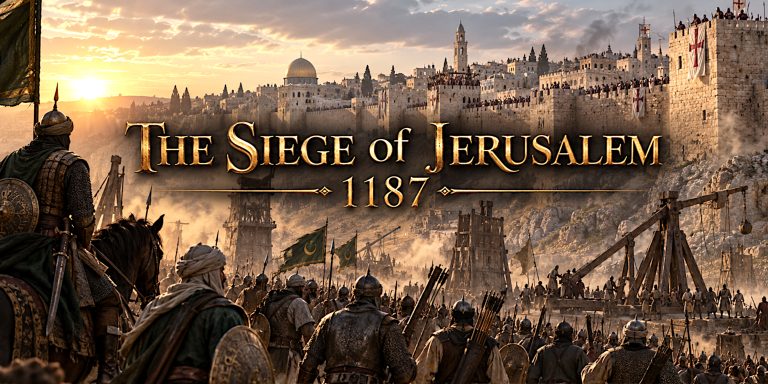
Saladin’s War of Movement at Hattin, 1187
Tactic: Exhaust an enemy by controlling water, roads and movement before forcing a decisive battle.
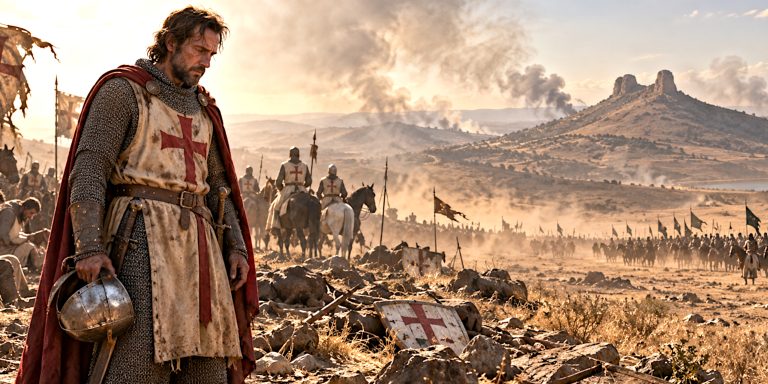
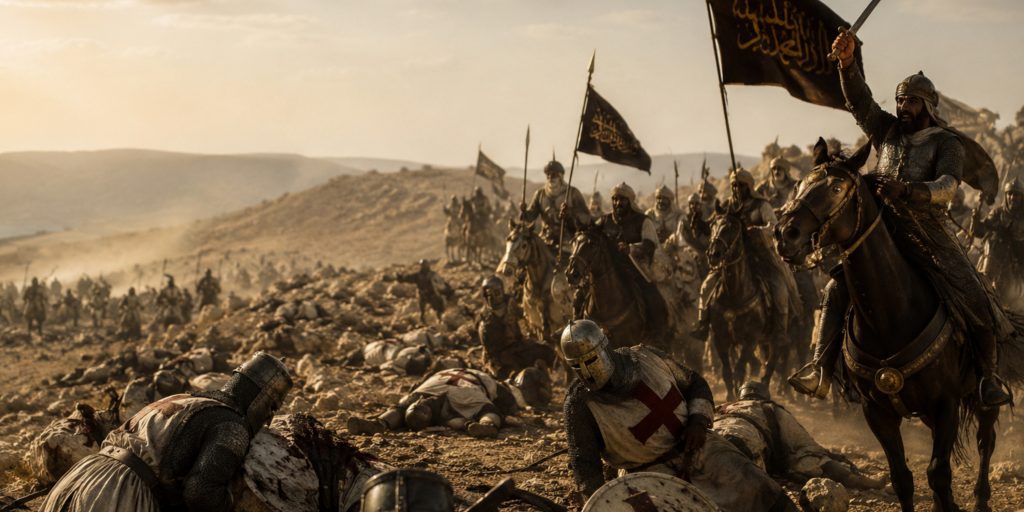
The Crusader army left the well-watered position at Saffuriya and marched towards Tiberias during the summer heat. Saladin’s forces harassed the column, obstructed its route and denied access to reliable water.
The Franks eventually camped in a dry and exposed position. Their soldiers were tired, thirsty and increasingly demoralised before the main fighting began.
Contemporary accounts describe Saladin bringing water forward by camel caravan while the Crusader army struggled to supply itself. sourcebooks.web.fordham.edu
Why it worked
Mounted archers could attack without becoming trapped in close combat. Saladin’s troops also controlled the routes towards water, turning the landscape into a weapon.
The Crusaders were not defeated by thirst alone. Their decision to continue the march, despite the danger, allowed Saladin to combine harassment, missile fire and positional control.
Historical impact
The destruction of the main Crusader field army at Hattin opened the way for Saladin to capture Jerusalem. The event triggered the Third Crusade and altered the balance of power in the eastern Mediterranean.
Robert the Bruce’s Schiltrons at Bannockburn, 1314
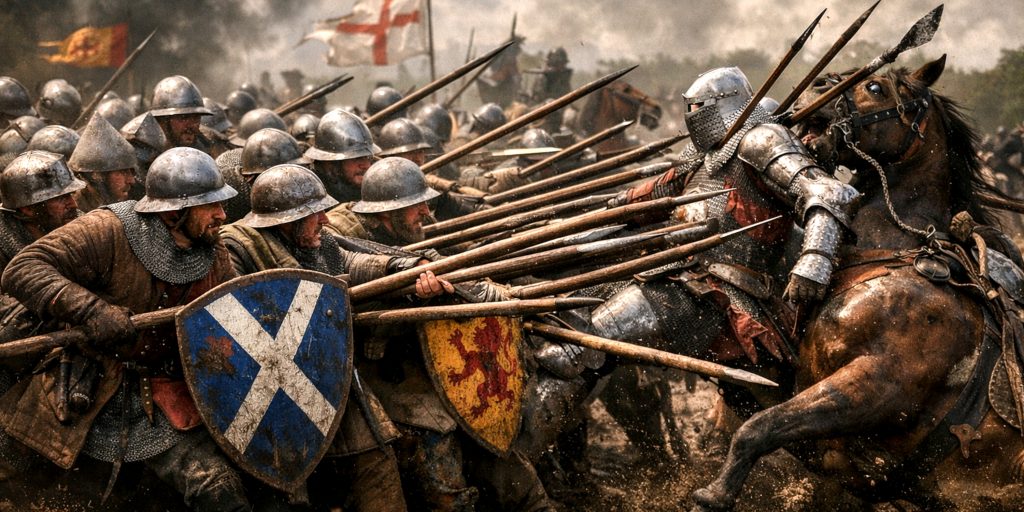
Tactic: Use disciplined spear formations that could advance against cavalry.
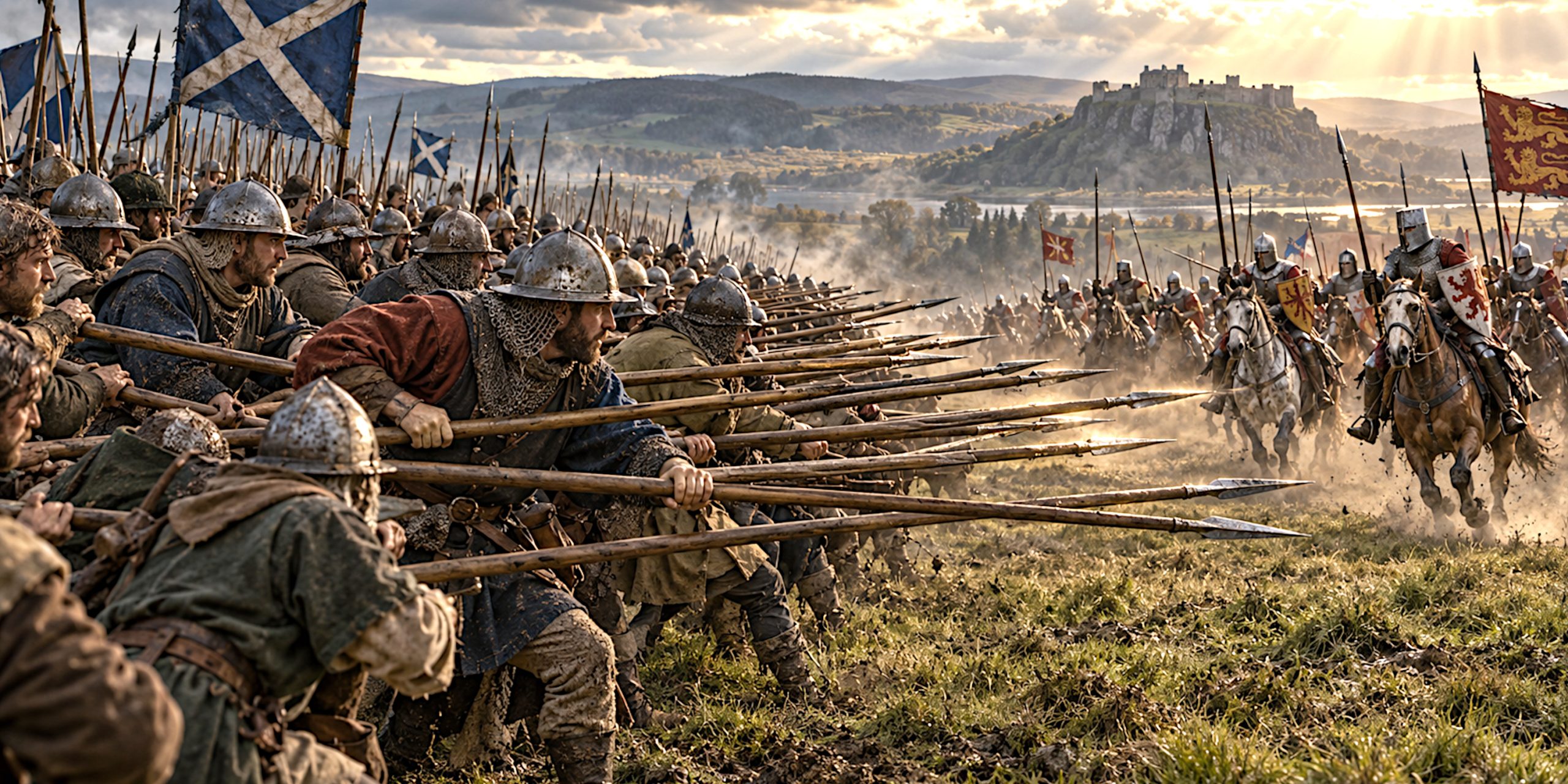
Scottish schiltrons were close formations of spear-armed infantry. Their strength depended on keeping ranks together and presenting a dense wall of spear points.
At Bannockburn, Robert the Bruce prepared his men carefully and used the landscape to restrict the movement of the English army. The Scottish formations did not simply stand and endure cavalry attacks. They advanced in organised groups.
Historic Environment Scotland notes the importance of Bruce’s drilling and preparation of the schiltrons before the battle. blog.historicenvironment.scot
Why it worked
Heavy cavalry needed room to manoeuvre. Narrow or crowded ground reduced its ability to build momentum and attack from several directions.
The Scottish spearmen also benefited from collective discipline. A single soldier with a spear was vulnerable. Hundreds of men advancing together presented a much more serious obstacle.
Historical impact
Bannockburn strengthened Scottish resistance and helped secure Robert Bruce’s position as king. It also demonstrated that organised infantry could defeat a larger force containing substantial numbers of mounted warriors.
The Mongol Operational System
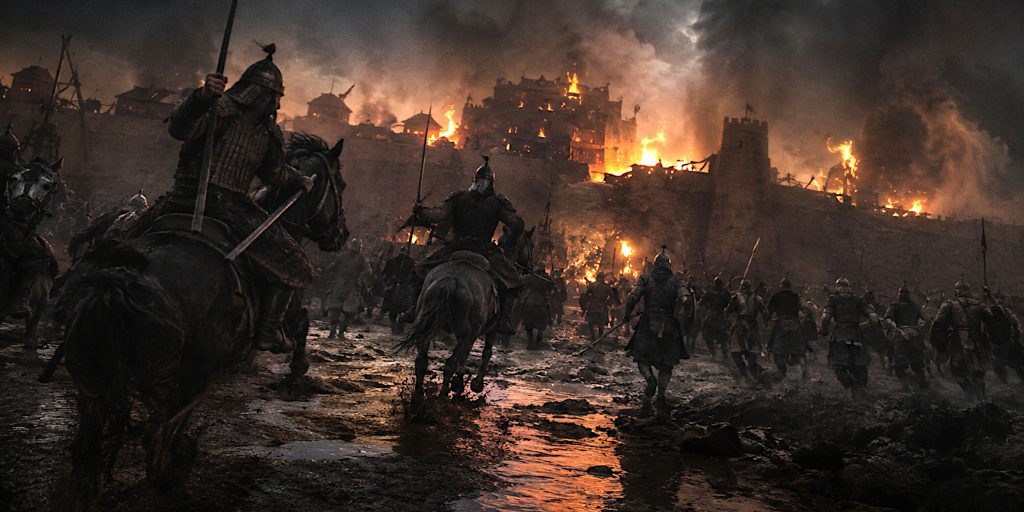
Tactic: Divide an army into mobile forces that could scout, raid, encircle and reunite at the decisive moment.
Mongol armies relied on excellent reconnaissance, remounts, strict discipline and an ability to manoeuvre over great distances. Their forces could split into separate columns while maintaining a common plan.
At the Battle of Mohi in 1241, Mongol forces attacked the Hungarian army from several directions. Subutai’s troops created a secondary crossing over the Sajó River while Batu Khan’s force engaged the main Hungarian position.
Why it worked
The Mongols did not treat the battlefield as a single flat space. They looked for multiple routes, weak points and opportunities to isolate part of the enemy force.
Their mobility allowed them to choose when to fight. Their opponents were often forced to defend several areas at once.
Historical impact
Mongol campaigns reshaped China, Central Asia, Persia, the Middle East and eastern Europe. Their military system also encouraged the movement of goods, technologies and ideas across Eurasia.
The Mongols were not invincible, but their combination of mobility, intelligence and operational planning was far ahead of many opponents.
The English Longbow System
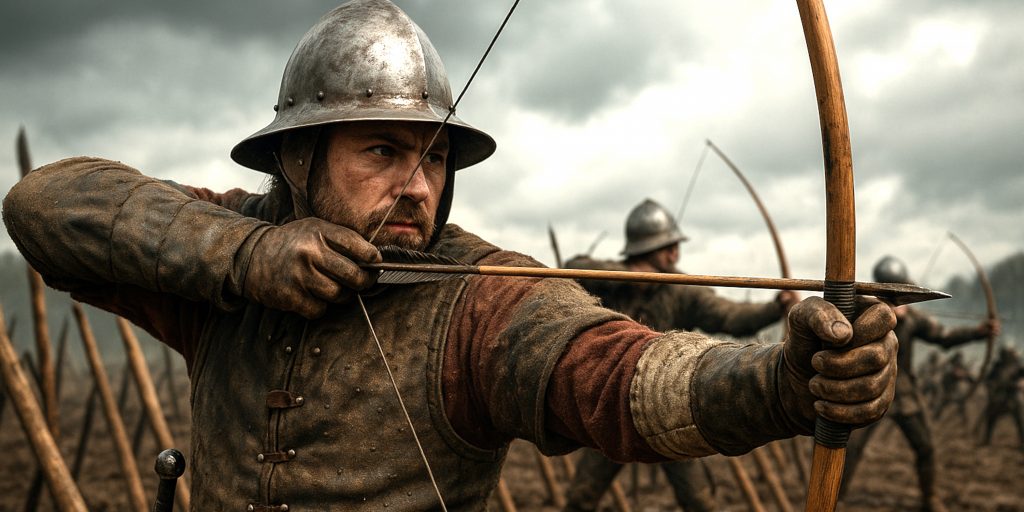
Military system: Combine mass archery, battlefield obstacles and favourable terrain.
The longbow’s importance did not come from the weapon alone. Its effectiveness depended on training, supply and tactical protection.
At Crécy in 1346 and Agincourt in 1415, English and Welsh archers fired against advancing French forces. Stakes and defensive positions made cavalry attacks more difficult, while muddy or restricted ground slowed heavily armoured men-at-arms.
Why it worked
The longbow could disrupt an attack before close combat began. Horses could panic, shields could be damaged and formations could lose cohesion.
The weapon was not equally effective in all conditions. Rain, poor visibility, inadequate training and close terrain could reduce its value. Its success depended on an entire military system.
Historical impact
The longbow forced European commanders to think more carefully about exposed approaches, cavalry charges and the cost of attacking a prepared position.
It did not destroy the importance of armour or cavalry, but it made both more vulnerable when used without adequate support.
Jan Žižka’s Wagon Forts

Innovation: Turn ordinary wagons into mobile defensive positions.
During the Hussite Wars, Jan Žižka arranged reinforced wagons into defensive enclosures. Crossbowmen and early handgunners fired from behind cover while infantry protected the gaps and resisted assaults.
The wagons could be deployed on rising ground, near a ditch or along a narrow approach. They gave infantry protection against cavalry and helped smaller forces resist larger armies.
Why it worked
The system adapted warfare to the resources available. Soldiers did not need to be wealthy cavalrymen to contribute effectively. A wagon crew, missile troop or infantryman could each perform a defined role.
The wagon fort was not invulnerable. It required preparation, suitable ground and disciplined crews. If attacked before it was properly arranged, its advantages were reduced.
Historical impact
Žižka’s armies defeated several crusading forces and preserved the Hussite movement in Bohemia. The system also showed how mobility, fortification and gunpowder could be combined.
Byzantine Greek Fire
Innovation: A liquid incendiary weapon projected through siphons.
Greek fire helped Byzantine forces defend Constantinople during major Arab sieges. Its formula was kept secret, although petroleum, resin and other combustible materials may have been involved.
The weapon was especially valuable at sea. It could set enemy vessels ablaze and made close approaches extremely dangerous.
Why it mattered
Greek fire created fear as well as physical destruction. Enemy crews had to account for a weapon they could not easily extinguish and whose production methods they did not understand.
Its success depended on trained crews, specialised equipment and calm handling aboard ship. The weapon was a system rather than a magical substance.
Historical impact
Greek fire helped preserve the Byzantine Empire during some of its most dangerous centuries. The survival of Constantinople allowed Byzantine political, religious and intellectual influence to continue across the medieval world.
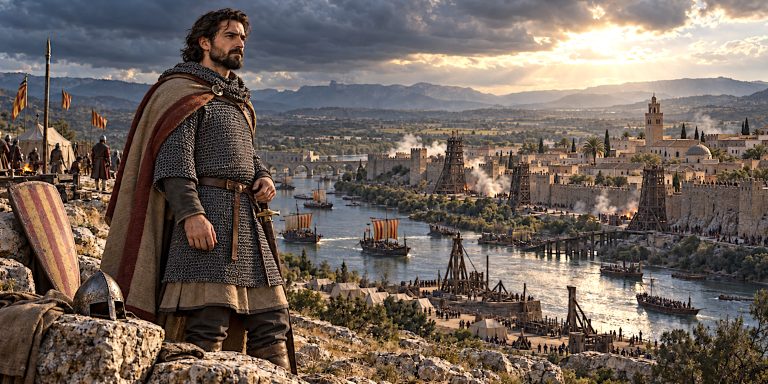
The Trebuchet and the Professional Siege
Innovation: Use mechanical artillery to attack walls, towers and fortified buildings.
The counterweight trebuchet allowed armies to throw heavy stones over considerable distances. It could damage masonry, destroy roofs and create panic inside a besieged settlement.
Siege engines also required large support systems. Engineers, carpenters, labourers, animals, timber and food all had to be brought together.
Why it mattered
A siege was not simply a matter of hitting a wall until it fell. Commanders had to combine artillery with mining, blockade, assault and negotiation.
The rise of powerful siege engines encouraged the development of stronger walls, improved towers and more sophisticated defensive layouts.
Historical impact
Siege warfare shaped the location of towns, the design of castles and the political power of rulers capable of maintaining large armies for extended campaigns.
The Stirrup and the Mounted Warrior
Innovation: Provide a more secure platform for mounted combat.
The stirrup spread through Eurasia over many centuries. It gave riders greater control and helped them brace themselves while using lances, spears and swords.
The stirrup did not create medieval cavalry by itself. Horse breeding, training, armour, social status and landholding were equally important.
Why it mattered
A more secure riding position improved the effectiveness of mounted shock action and allowed cavalry to remain stable while striking or turning.
It also helped riders control horses in close fighting, although its importance has sometimes been exaggerated by older histories that treated it as the single cause of feudal cavalry dominance.
Historical impact
The stirrup contributed to the development of powerful mounted elites across Europe, Byzantium and the Islamic world.
Gunpowder Artillery and the End of the High Medieval Castle
Innovation: Use cannon and bombards to attack fortifications with horizontal impact.
Early cannon were heavy, inaccurate and difficult to move. They did not immediately make castles obsolete.
Over time, however, gunpowder artillery changed defensive architecture. Tall walls designed mainly to resist trebuchet stones were increasingly vulnerable to cannon fire. Builders responded with thicker, lower walls, angled surfaces and defensive positions designed for firearms.
Why it mattered
The change was gradual, but it altered the balance between besiegers and defenders. A fortress could no longer rely solely on height and massive masonry.
Artillery also required rulers to invest in foundries, powder production, engineers, transport and trained crews.
Historical impact
By the fifteenth century, cannon were helping to move European warfare towards the early modern period. The medieval castle did not vanish overnight, but its military role changed permanently.
What Made These Innovations So Powerful?
| Example | Main advantage | Enemy weakness exploited | Historical consequence |
|---|---|---|---|
| Hastings | Feigned retreat | Loss of formation during pursuit | Norman Conquest |
| Hattin | Control of water and movement | Thirst, exhaustion and poor morale | Loss of Jerusalem |
| Bannockburn | Advancing spear formations | Cavalry’s need for manoeuvring room | Stronger Scottish independence |
| Mongol warfare | Mobility and encirclement | Slow communication and scattered forces | Reshaped Eurasia |
| Longbow system | Mass missile fire | Exposed cavalry and crowded formations | Changed battlefield planning |
| Wagon forts | Mobile protection | Difficulty reaching defended infantry | Hussite survival |
| Greek fire | Incendiary naval warfare | Vulnerability of wooden ships | Byzantine survival |
| Trebuchets | Mechanical siege artillery | Fixed fortifications | More complex castle design |
| Stirrup | Greater mounted control | Vulnerability of infantry to shock action | Growth of cavalry elites |
| Gunpowder artillery | Direct attack on masonry | High medieval wall design | Decline of the traditional castle |
The strongest medieval commanders understood that victory rarely came from a weapon in isolation. A longbow needed trained archers. A schiltron needed discipline. A wagon fort needed preparation. Greek fire needed ships and experienced crews. Cannon needed engineers, powder and supply.
The real genius lay in connecting people, equipment and terrain into a system that the enemy could not easily break.
Medieval warfare was therefore less primitive than it is often portrayed. Its armies experimented constantly with deception, logistics, fortification, engineering and combined arms. Some ideas failed. Others changed the political map of the world.
Sources
- Historic Environment Scotland on Bannockburn
- Cambridge University Press on medieval deception and feigned retreats
- Fordham Medieval Sourcebook, Ernoul’s account of Hattin
- The College of Arms on Agincourt