Some films entertain you for a couple of hours. Others quietly rewrite what audiences expect from cinema. Crouching Tiger, Hidden Dragon belongs firmly in the second category.
Released in 2000 and directed by Ang Lee, this breathtaking wuxia epic introduced millions of Western viewers to a genre that had been flourishing across Asia for decades. It combined elegant martial arts, heartfelt romance, philosophical themes and some of the finest sword choreography ever committed to film.
Even after more than two decades, it remains one of the greatest martial arts films ever made. It is visually stunning, emotionally rich and packed with fight scenes that somehow feel both graceful and genuinely dangerous. It is also proof that people absolutely will read subtitles if the film is good enough.
At a Glance
| Category | Details |
|---|---|
| Release | 2000 |
| Director | Ang Lee |
| Genre | Wuxia, Martial Arts, Drama, Romance |
| Running Time | 120 minutes |
| Country | Taiwan, Hong Kong, China, United States |
| Language | Mandarin Chinese |
| Based On | Wang Dulu’s Crane Iron novel series |
| Famous Weapon | Green Destiny Sword |
| Awards | 4 Academy Awards, over 40 international awards |
Story
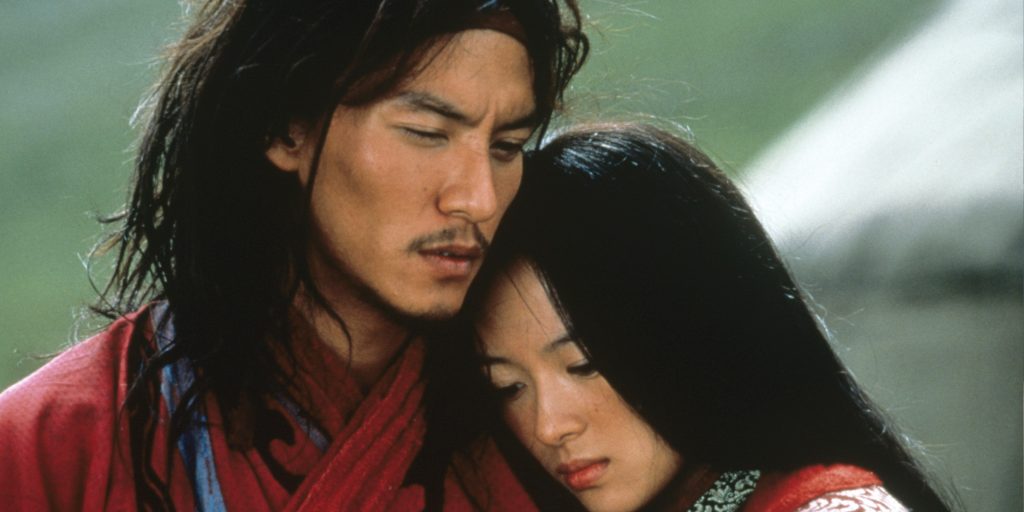
Set during China’s Qing Dynasty, the story follows legendary warrior Li Mu Bai, who has decided to retire from the martial world. He entrusts his treasured Green Destiny sword to fellow warrior Yu Shu Lien, intending for it to be given away.
Naturally, things do not stay peaceful for long.
The sword is stolen by a mysterious masked thief who turns out to be Jen Yu, the rebellious daughter of an aristocratic family. Jen secretly possesses extraordinary martial arts talent, having been trained by the ruthless Jade Fox.
As Li Mu Bai and Shu Lien pursue both the sword and Jen herself, the story unfolds into a complex tale of forbidden love, personal freedom, revenge and the difficult balance between duty and desire.
Rather than following a straightforward good versus evil formula, every major character carries regrets, ambitions and emotional scars that shape their choices.
Main Characters
| Character | Actor | Role |
|---|---|---|
| Li Mu Bai | Chow Yun-fat | Legendary swordsman seeking inner peace |
| Yu Shu Lien | Michelle Yeoh | Skilled warrior and respected leader |
| Jen Yu | Zhang Ziyi | Noblewoman hiding extraordinary martial arts ability |
| Jade Fox | Cheng Pei-pei | Ruthless martial arts master and main antagonist |
| Lo | Chang Chen | Desert bandit and Jen’s lover |
Each character represents different ideas about honour, freedom and responsibility, giving the film emotional depth alongside its action.
The Green Destiny Sword
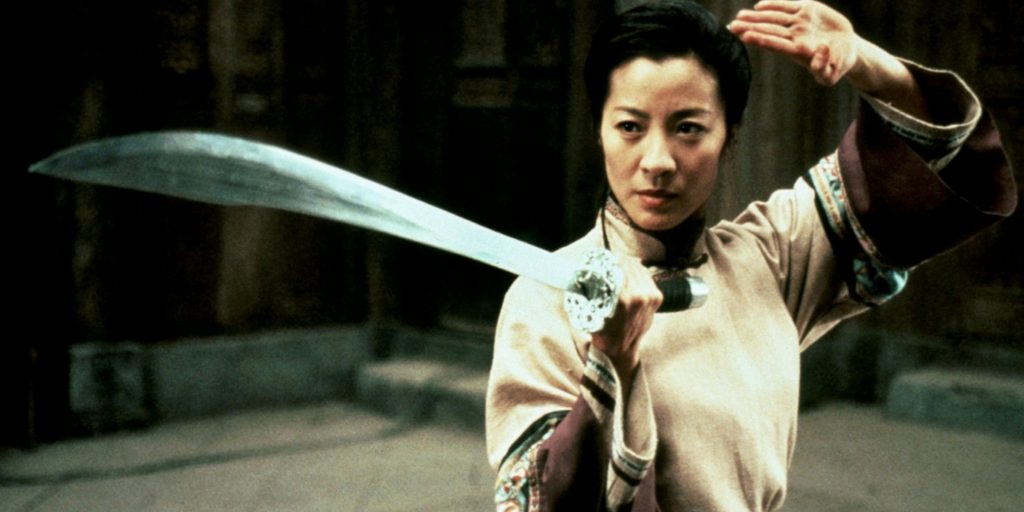
Few cinematic weapons have achieved the legendary status of the Green Destiny.
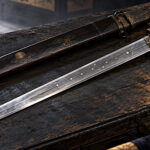
Beautifully crafted with a jade-coloured hilt and an elegant blade, the sword symbolises mastery, discipline and responsibility. Its importance goes far beyond being a powerful weapon. Whoever possesses it inherits both prestige and expectation.
Throughout the film, ownership of the sword shifts repeatedly, reflecting changing power, ambition and personal identity.
Unlike many fantasy weapons, Green Destiny possesses no magical powers. Its reputation comes entirely from the skill of those who wield it, which somehow makes it even cooler.
Sword Fighting That Redefined the Genre
If someone asks why Crouching Tiger, Hidden Dragon became such a phenomenon, the fight scenes are usually the first answer.
Every duel feels like a conversation.
Instead of relying on rapid editing or endless visual effects, the choreography tells a story through movement. Each combatant reveals their personality through how they fight.
Highlights include:
- The rooftop chase across Beijing
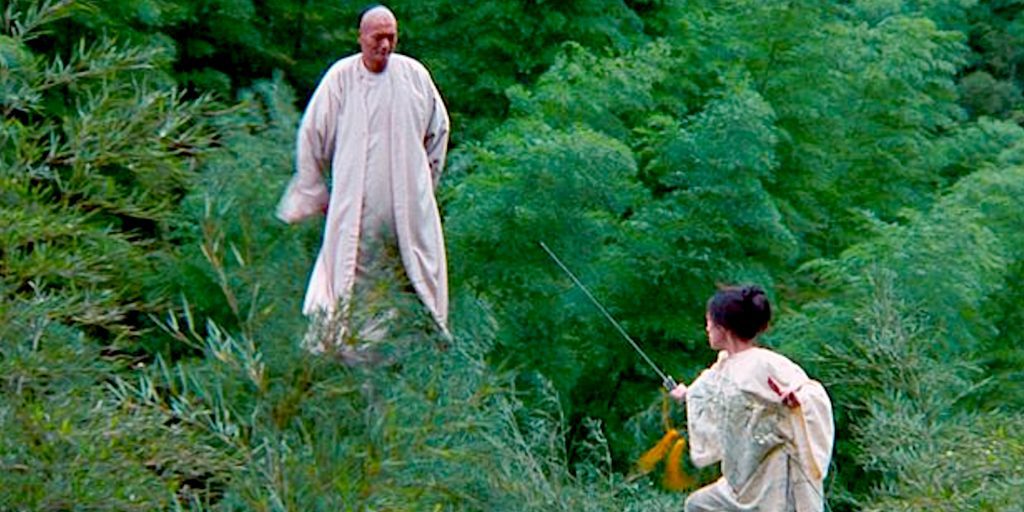
- The bamboo forest duel
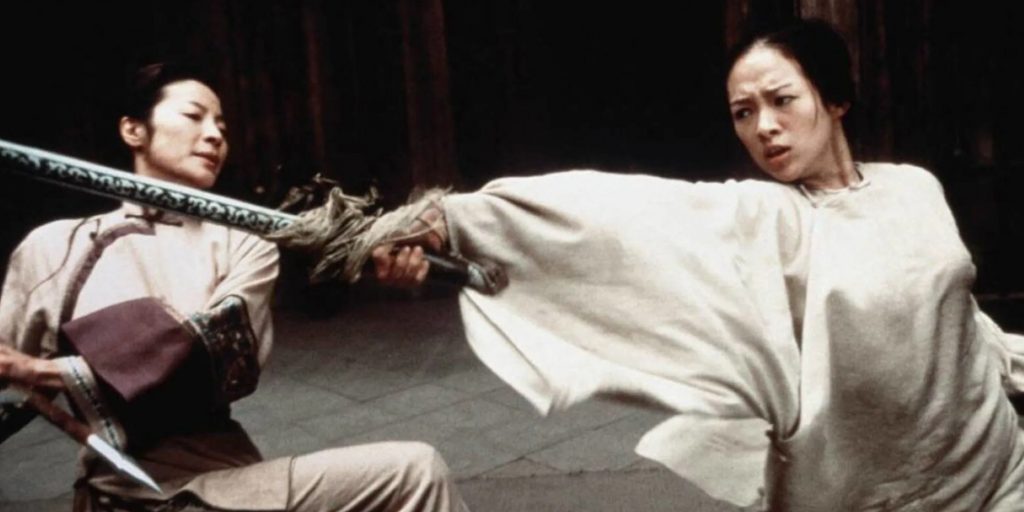
- Shu Lien versus Jen with an entire room full of different weapons
- Li Mu Bai’s final confrontation with Jade Fox
Action director Yuen Woo-ping crafted sequences that remain astonishing today. The wire work creates an almost dreamlike quality, allowing warriors to glide across rooftops and dance among bamboo trees without sacrificing emotional weight.
Modern audiences are used to gravity taking frequent holidays in action films, but few have ever made it look this elegant.
Weapons Featured in the Film
Although the Green Destiny receives most of the attention, the film showcases an impressive range of traditional Chinese weapons.
| Weapon | Description |
|---|---|
| Jian | Straight double-edged sword used throughout the film |
| Dao | Curved sabre appearing during several encounters |
| Spear | Used in training and combat sequences |
| Staff | Demonstrates balance, control and defensive skill |
| Twin Hooks | Seen among the many weapons in Shu Lien’s armoury |
| Chain Weapons | Briefly featured during complex combat scenes |
Each weapon has a distinctive fighting style, adding variety and authenticity to the choreography.
Themes That Still Feel Relevant
Freedom versus Duty
Nearly every character struggles between personal happiness and social obligation.
Li Mu Bai sacrifices love for honour.
Shu Lien hides her feelings out of loyalty.
Jen desperately seeks freedom but cannot escape the consequences of her choices.
These conflicts remain surprisingly relatable, even if most of us are not balancing ancient martial arts traditions alongside our daily schedules.
Love and Regret
Romance sits quietly beneath almost every scene.
Rather than grand declarations, the film relies on subtle expressions and missed opportunities. Much of its emotional impact comes from what characters never say.
Power Without Wisdom
Jen possesses extraordinary natural talent but lacks discipline.
Li Mu Bai understands that true mastery comes through humility rather than raw ability.
This contrast forms one of the film’s central lessons.
Cinematography
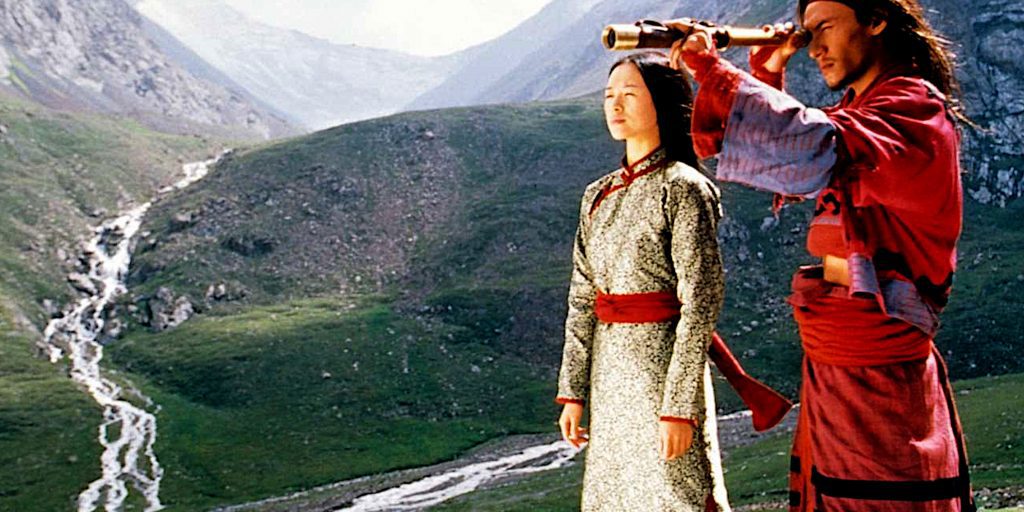
Few films are as visually memorable.
Cinematographer Peter Pau captures sweeping deserts, mist-covered mountains, elegant courtyards and vibrant forests with remarkable precision.
The famous bamboo forest sequence remains one of cinema’s greatest visual achievements, blending practical effects, wire work and careful camera movement into something that feels almost mythical.
Every location supports the emotional tone of the story rather than existing simply as attractive scenery.
Music
Tan Dun’s Academy Award-winning score is inseparable from the film’s identity.
Yo-Yo Ma’s cello performances add warmth and melancholy, perfectly complementing the restrained performances of the cast.
Rather than overwhelming scenes, the music gently guides emotion, allowing moments of silence to remain just as powerful.
Historical and Cultural Context
Although fictional, the film embraces many traditions of classical wuxia literature.
Wuxia stories focus on wandering martial artists who follow personal codes of honour while existing outside conventional society.
These tales often combine:
- Honour
- Loyalty
- Justice
- Spiritual growth
- Exceptional martial arts
- Tragic romance
Rather than aiming for historical realism, Crouching Tiger, Hidden Dragon captures the spirit of these traditions through its characters and themes.
Awards and Critical Success
The film became an international phenomenon.
It earned more than $210 million worldwide, making it one of the highest-grossing foreign-language films in history.
Its achievements included:
- Academy Award for Best Foreign Language Film
- Academy Award for Best Cinematography
- Academy Award for Best Original Score
- Academy Award for Best Art Direction
- Ten Academy Award nominations overall
- BAFTA Awards
- Golden Globe Awards
- Widespread critical acclaim across the world
Its commercial success opened doors for international cinema, proving that subtitled films could achieve mainstream popularity.
Influence on Modern Cinema
Few martial arts films have left such a lasting legacy.
Its success encouraged global audiences to embrace wuxia storytelling and helped pave the way for films such as Hero, House of Flying Daggers and Curse of the Golden Flower.
Hollywood also adopted elements of its visual style, particularly elegant wire work, poetic action sequences and emotionally driven combat.
Many action directors continue to cite it as one of the defining films of the modern era.
Interesting Facts
| Fact | Details |
|---|---|
| Filming Locations | China including Anhui, Xinjiang and Beijing |
| Choreographer | Yuen Woo-ping |
| Budget | Around $17 million |
| Worldwide Box Office | Over $210 million |
| Academy Award Nominations | 10 |
| Academy Award Wins | 4 |
| Famous Scene | Bamboo forest duel |
Is It Still Worth Watching?
Absolutely.
Some films age because technology moves on. Others remain timeless because they understand people.
Crouching Tiger, Hidden Dragon succeeds because every spectacular sword fight is rooted in genuine emotion. Characters fight not simply to win, but because they love, regret, fear or hope.
That emotional honesty gives every duel meaning.
Whether you arrive for the martial arts, the romance, the stunning cinematography or simple curiosity, it rewards repeat viewings. You notice new details each time, from subtle performances to symbolic visual choices hidden beneath the graceful choreography.
More than twenty years later, it still stands comfortably among the greatest martial arts films ever made, and arguably the finest gateway into the world of wuxia cinema.
Takeaway
Crouching Tiger, Hidden Dragon is a rare film that satisfies almost everyone. Martial arts fans get world-class choreography. Drama lovers find richly layered characters. Film enthusiasts enjoy exceptional cinematography, music and direction.
It is graceful without becoming slow, thoughtful without becoming pretentious and exciting without relying on spectacle alone.
If you’ve somehow never seen it, now is the perfect time. Just be prepared to spend the next few days wondering why every action film cannot make sword fighting look this effortlessly beautiful.