Ask a hundred fantasy fans this question and you’ll probably get a hundred passionate answers, followed by an argument that lasts longer than some medieval wars.
The world of fiction is packed with legendary blades. Some can slay dragons. Some can cut through steel. Some glow when danger is nearby, which honestly sounds useful if you’re terrible at making decisions.
But when all the contenders are weighed against each other, one sword stands above the rest.
Excalibur is the most famous fictional sword ever created.
It has appeared in countless books, films, television series, games, comics, and retellings for over a thousand years. Long before fantasy became a global entertainment industry, Excalibur had already become a symbol of kingship, heroism, destiny, and power.
That said, it has some very strong competition.
Why Excalibur Claims the Crown
When discussing fame rather than power, popularity, or personal preference, Excalibur is difficult to beat.
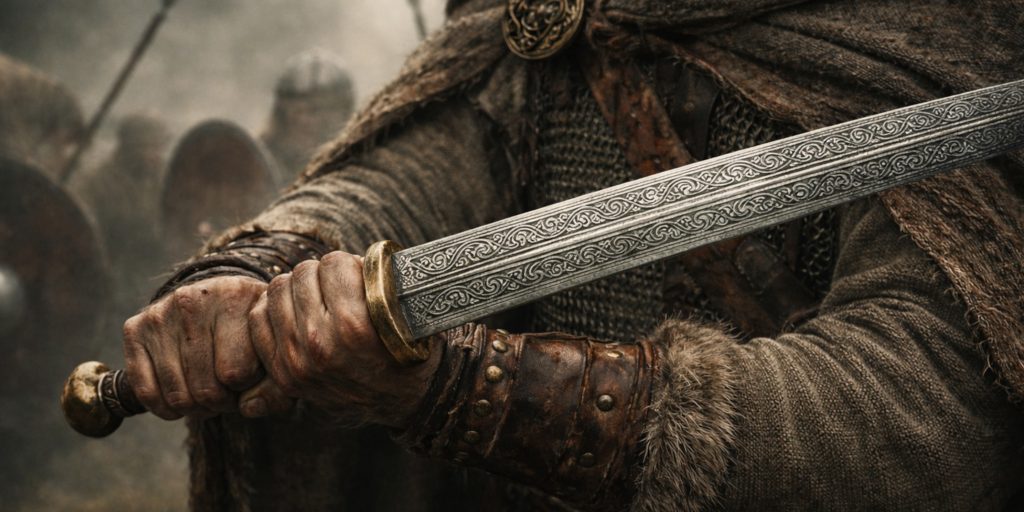
Associated with King Arthur, Excalibur emerged from medieval legends and became one of the foundational symbols of Western storytelling. The sword’s exact origins vary depending on the source. In some versions it is the Sword in the Stone. In others, it is gifted to Arthur by the Lady of the Lake.
What never changes is its significance.
Excalibur represents legitimate authority. Arthur is not merely a warrior carrying a weapon. He is the rightful king, and the sword serves as proof of that destiny.
The blade’s influence extends far beyond Arthurian legend. Modern fantasy repeatedly borrows its themes:
- The chosen hero
- The magical weapon
- The destined ruler
- The sacred quest
Many famous fantasy swords are, in one way or another, descendants of Excalibur.
The Other Great Contenders
Andúril

Among fantasy readers, Andúril from Tolkien’s The Lord of the Rings is perhaps the strongest challenger.
Forged from the fragments of Narsil, the sword carries immense symbolic weight. It represents the return of Aragorn and the restoration of the kingdom of Gondor.
Unlike many magical weapons, Andúril’s importance comes less from supernatural powers and more from what it represents.
Its appearance in both the novels and Peter Jackson’s films cemented its place in fantasy history.
The Master Sword
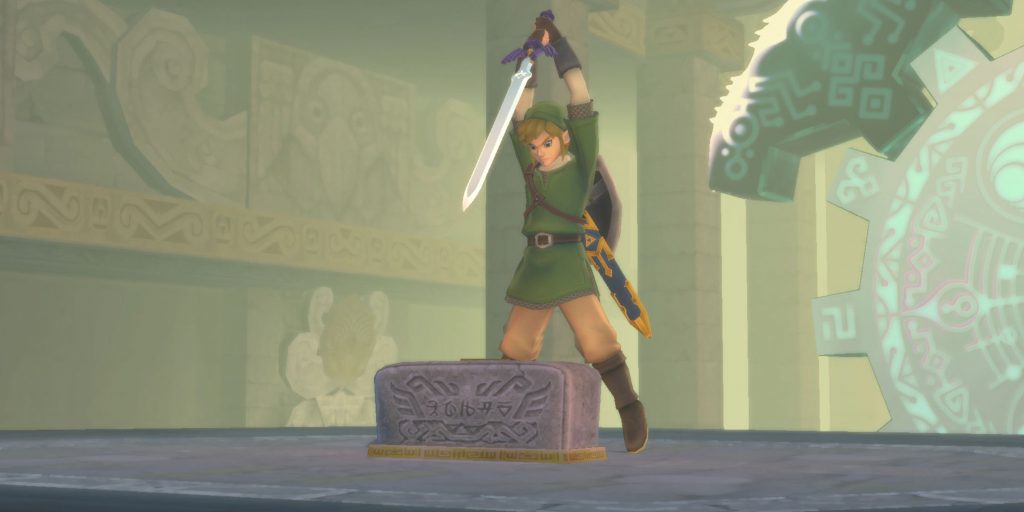
For gamers, the answer is often obvious.
The Master Sword from the Legend of Zelda series has been defeating evil for nearly four decades. Entire generations grew up pulling it from sacred pedestals and immediately feeling ten times more heroic.
The sword’s elegant design and recurring role throughout the franchise have made it one of gaming’s most recognisable weapons.
Few fictional swords have enjoyed such consistent cultural relevance.
Sting

Small sword. Massive reputation.
Bilbo and Frodo’s blade from The Hobbit and The Lord of the Rings became iconic thanks to its glowing blue warning system.
Sting is memorable because it feels practical. Most fantasy weapons belong to kings and legendary warriors. Sting belongs to a reluctant adventurer who would rather be home having lunch.
That relatability has helped make it one of fantasy’s most beloved swords.
The Lightsaber

This choice will cause arguments, but it deserves a place in the conversation.
Technically, a lightsaber is not a sword in the traditional sense. It is an energy weapon.
Practically speaking, most people think of it as a sword.
The weapon of the Jedi has become one of the most recognisable fictional creations in entertainment history. Even people who have never watched Star Wars can identify the sound instantly.
If “sword-like weapons” are included, lightsabers become serious contenders for the top spot.
Frostmourne
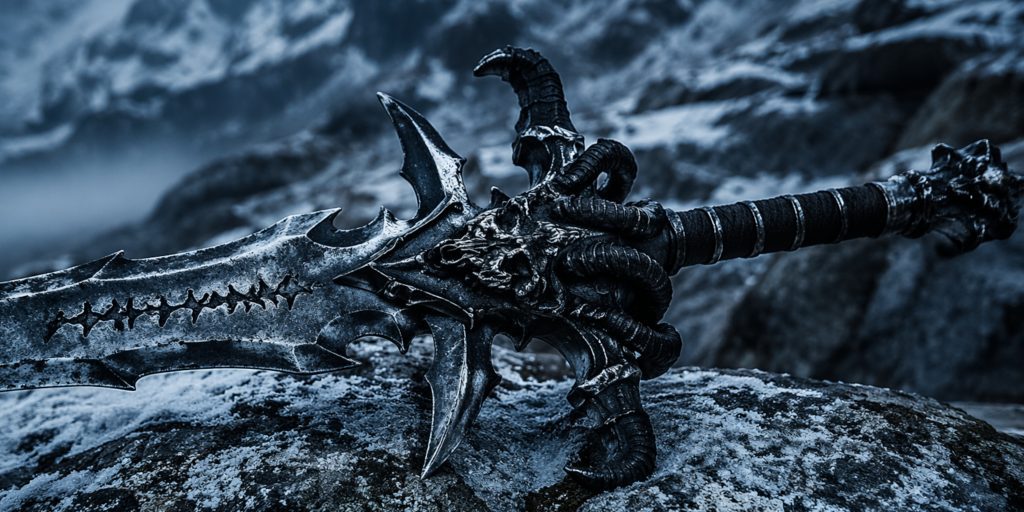
Video game fans know exactly why this blade matters.
Frostmourne from Warcraft transformed Arthas from noble prince into one of gaming’s greatest villains.
The sword’s tragic story, striking design, and central role in the franchise made it legendary among fantasy gamers.
Its influence remains enormous within gaming culture.
What Makes a Fictional Sword Truly Great?
The most memorable swords are rarely famous because they are powerful.
What matters is symbolism.
Think about the greatest examples:
| Sword | Represents |
|---|---|
| Excalibur | Kingship and destiny |
| Andúril | Restoration and hope |
| Master Sword | Courage and heroism |
| Sting | Adventure and resilience |
| Frostmourne | Corruption and tragedy |
The weapon becomes memorable because it reflects the character carrying it.
A sword that merely cuts things well is forgettable.
A sword that tells a story becomes immortal.
Why Excalibur Still Dominates Popular Culture
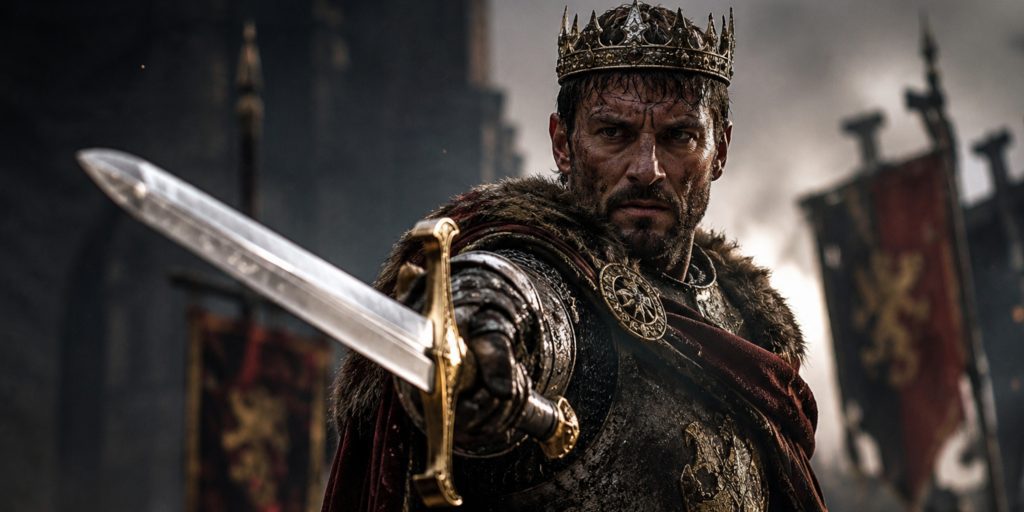
What fascinates me about Excalibur is how adaptable it has remained.
Every generation reinvents Arthurian legend. Some portray Arthur as a noble king. Others turn him into a flawed ruler struggling against impossible odds.
Yet Excalibur always survives.
The sword appears in fantasy novels, blockbuster films, anime, comics, television dramas, tabletop games, and video games. It has become larger than any single version of the legend.
Very few fictional objects have achieved that level of cultural permanence.
Not bad for a sword first mentioned centuries before electricity was invented.
Takeaway
If the question is simply, “What is the most famous fictional sword ever created?”, the answer remains Excalibur.
Its influence stretches across literature, film, gaming, and fantasy as a whole. It helped establish many of the storytelling traditions that still shape modern fantasy today.
Personal favourites will always differ. Some readers will choose Andúril. Gamers may argue for the Master Sword. Star Wars fans will never stop waving lightsabers around.
But when fame, cultural impact, longevity, and recognition are considered together, Excalibur still sits on the throne.
After all, if a sword can remain famous for more than a thousand years, it is probably doing something right.