If you have spent more than five minutes in either Chivalry 2 or Mordhau, you already know one thing. Medieval combat games attract two types of people. Players who want cinematic chaos, and players who want to turn longsword duels into a doctoral thesis on hand positioning.
Both games scratch the same itch on paper. Massive battles, steel-clashing combat, flying limbs, and enough shouting to make a castle siege sound like a football away day. Yet the experience of actually playing them feels wildly different.
One is built around spectacle and accessibility. The other feels like a competitive sword-fighting sandbox where every duel becomes personal. Sometimes aggressively personal.
Here’s how they compare in 2026.
The Core Difference
At the heart of it, Chivalry 2 wants you to feel like you are inside a medieval movie.
Mordhau wants you to feel like you accidentally joined a sword-fighting cult.
That sounds harsh, but it is also why both games have loyal fanbases.
Chivalry 2 prioritises large-scale cinematic battles, objective gameplay, accessibility, and pure chaos. It wants moments where a knight screams while throwing a chicken at somebody before getting flattened by a catapult.
Mordhau is more focused on player expression, technical melee combat, advanced mechanics, and mastery. The ceiling is absurdly high. Some players move like caffeinated fencing ghosts.
Neither approach is wrong. It depends what you want from medieval combat.
Combat Mechanics
Chivalry 2
Combat in Chivalry 2 feels heavy, dramatic, and readable. Weapons have weight. Hits land with satisfying crunches. The game encourages flowing combat between multiple opponents rather than hyper-technical duels.
The control scheme is easier to learn, especially for newcomers. Timing still matters, but you are not expected to memorise fifty different feint combinations before surviving longer than a loaf of bread in a trebuchet test.
The directional attacks, counters, kicks, and blocks create enough depth without overwhelming casual players.
Most importantly, the game understands spectacle. Decapitations happen constantly. Shields splinter. Bodies launch across the map. Somehow it all remains funny instead of grim.
Mordhau
Mordhau takes the gloves off immediately.
The combat system is deeper, faster, and far more technical. Feints, drags, accels, morphs, chambering, footwork manipulation, stamina management, and advanced spacing all matter heavily.
At high level play, fights can look genuinely bizarre to outsiders. Veterans twist, pivot, and manipulate animations in ways that resemble medieval breakdancing with lethal intent.
For some players, this complexity is the entire appeal. Winning a duel in Mordhau feels earned because the mechanics demand genuine mastery.
For others, it feels like being bullied by a spinning man wielding a frying pan.
That learning curve is real.
Which Game Feels Better to Play?
This depends entirely on your tolerance for pain.
Chivalry 2 is easier to jump into after work for a few chaotic matches. You can have fun immediately, even if you are terrible. In fact, being terrible is part of the entertainment.
Mordhau can feel brutal at first. New players often get dismantled by veterans with thousands of hours. The payoff comes later, once mechanics begin clicking into place.
If you enjoy competitive mastery and mechanical improvement, Mordhau has more long-term combat depth.
If you want instant fun and cinematic madness, Chivalry 2 wins comfortably.
Maps and Battlefield Design
Chivalry 2’s Objective Battles
This is where Chivalry 2 really shines.
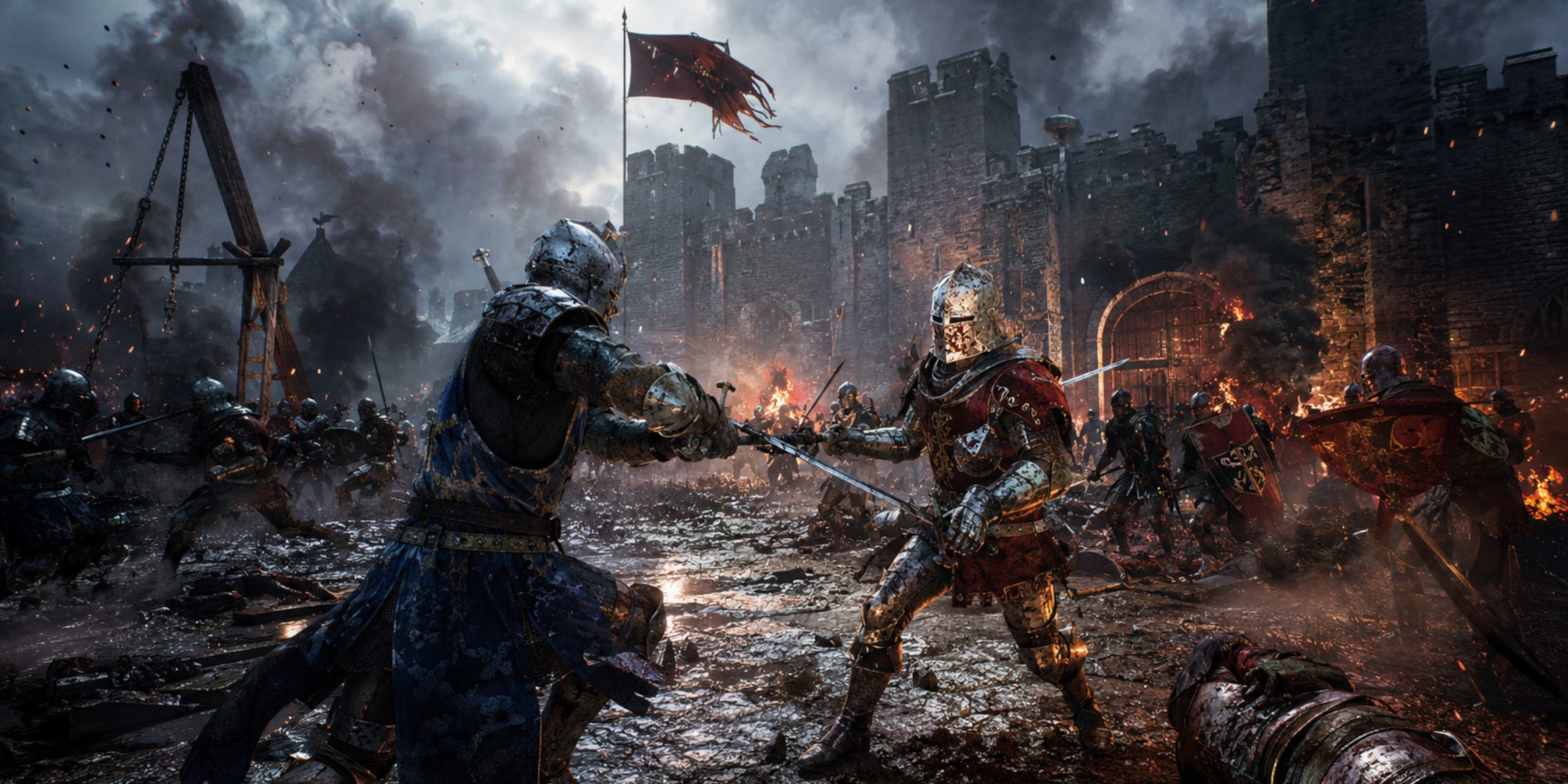
The maps feel like giant medieval action set-pieces. Sieges escalate dramatically. Objectives evolve throughout matches. One moment you are pushing siege towers, the next you are defending a throne room while covered in fire.
The game constantly creates memorable moments.
Some maps practically feel scripted despite being multiplayer. Storming castles, burning villages, escorting nobles, or desperately holding chokepoints gives battles a strong sense of momentum.
There is a reason clips from Chivalry 2 spread so easily online. Something ridiculous happens every thirty seconds.
Mordhau’s Sandbox Style
Mordhau maps are generally more open-ended and mechanically focused.
The gameplay emphasises player freedom and duelling opportunities rather than cinematic progression. Frontline and Invasion modes still provide objectives, but the experience often feels more player-driven.
The sandbox approach allows for more experimentation, though sometimes matches can descend into complete nonsense.
Not necessarily bad nonsense, mind you.
At any given moment you might encounter:
- A naked bard playing lute music
- Three players fist-fighting in a corner
- A knight roleplaying as a peasant revolutionary
- Somebody crouching behind a cart with a frying pan
Oddly enough, this unpredictability became part of Mordhau’s identity.
Graphics and Presentation
Chivalry 2
Chivalry 2 looks cleaner, brighter, and more cinematic overall.
The lighting, environmental detail, armour design, and battlefield effects all create a strong visual identity. It leans heavily into exaggerated medieval chaos without becoming cartoonish.
Animations are dramatic and readable, which helps combat clarity during massive battles.
The sound design is also excellent. The screaming voice lines alone deserve an award.
Few games capture the feeling of a medieval battlefield this well without becoming oppressively realistic.
Mordhau
Mordhau still looks good, especially in combat animations and armour customisation, but visually it feels rougher around the edges in comparison.
Where it excels is player creativity.
The armour customisation system is genuinely fantastic. You can create historically inspired knights, horrifying meme warriors, or absolute disasters dressed like escaped theatre actors.
Half the fun is seeing what monstrosity somebody has created before they cave your skull in with a maul.
Community and Player Culture
This is probably the biggest tonal difference between the two games.
Chivalry 2 Community
The Chivalry 2 playerbase is generally more casual and welcoming to newcomers. Matches are chaotic enough that individual skill matters slightly less in large modes, which lowers the pressure.
The game feels social in a dumb, entertaining way. Players spam battle cries, throw random objects, and embrace the silliness.
Even losing can be hilarious.
Mordhau Community
Mordhau’s community has a reputation. Some deserved, some exaggerated.
At its best, the community is deeply passionate, skilled, creative, and genuinely funny. Duel servers can become bizarre little social spaces full of in-jokes and roleplay.
At its worst, the game can feel intimidating and aggressively competitive.
There is also a stronger divide between casual players and elite veterans. The skill gap is massive, and newcomers definitely notice it.
Progression and Customisation
Chivalry 2
Progression in Chivalry 2 is straightforward and accessible.
You unlock weapons, subclasses, armour sets, and cosmetics steadily through gameplay. The class system keeps things organised and approachable.
The downside is that customisation is more limited overall.
Mordhau
Mordhau offers far deeper character customisation.
You build loadouts using a point system, choosing armour weight, weapons, perks, and visual pieces individually. It allows for extremely creative builds.
Want a lightly armoured rapier duellist? Go ahead.
Want a heavily armoured lunatic carrying three frying pans? The game respects your terrible decisions.
The freedom here is impressive.
Accessibility for New Players
This category is not even close.
Chivalry 2 is far easier for beginners to enjoy.
The combat readability, matchmaking flow, progression, and large-scale objective modes all help ease players into the experience.
Mordhau demands patience. Lots of it.
You will die repeatedly. Sometimes instantly. Sometimes to people crouching backwards while dragging a zweihander across your forehead at impossible angles.
Eventually it makes sense. Allegedly.
Replayability
Both games are highly replayable, but for different reasons.
Chivalry 2 thrives on chaotic unpredictability and cinematic moments. Matches remain entertaining because the battlefield constantly creates absurd stories.
Mordhau thrives on mastery. The deeper you get into the combat system, the more rewarding improvement becomes.
One gives you spectacle.
The other gives you obsession.
Which Game Should You Play?
Play Chivalry 2 if:
- You want cinematic medieval warfare
- You prefer casual fun over hardcore mastery
- You enjoy objective-based multiplayer
- You want easier onboarding
- You love chaotic social gameplay
Play Mordhau if:
- You enjoy high-skill competitive combat
- You want deeper melee mechanics
- You like mastering complex systems
- You enjoy sandbox freedom
- You appreciate advanced duelling gameplay
Final Verdict
Chivalry 2 feels like the best medieval battle fantasy currently available. It is loud, chaotic, cinematic, and immediately entertaining. Few multiplayer games create this many genuinely funny moments without trying too hard.
Mordhau remains the more mechanically sophisticated combat game. Beneath the chaos sits an incredibly deep melee system with almost endless room for improvement.
Honestly, the funniest part is that both communities think the other game is ridiculous for completely opposite reasons.
And they are both kind of right.
If you want massive cinematic warfare with accessible combat and unforgettable battlefield chaos, Chivalry 2 is probably the better choice for most players.
If you want to spend hundreds of hours mastering medieval combat mechanics while being psychologically destroyed by duel servers, Mordhau still offers something unique.