Few weapons in J.R.R. Tolkien’s legendarium carry as much mystery, tragedy, and outright bad luck as Anglachel. Plenty of famous fantasy swords are magical. Plenty are ancient. Some even have names that sound intimidating.
Anglachel somehow manages all three while also becoming one of the most unsettling weapons ever forged in Middle-earth.
This is a sword that may have possessed a will of its own. A blade made from metal that literally fell from the sky. A weapon that passed through the hands of heroes and kings before becoming forever tied to one of Tolkien’s most tragic characters.
If there were an award for “Most Likely Sword to Ruin Everyone’s Day,” Anglachel would be a serious contender.
What Is Anglachel?

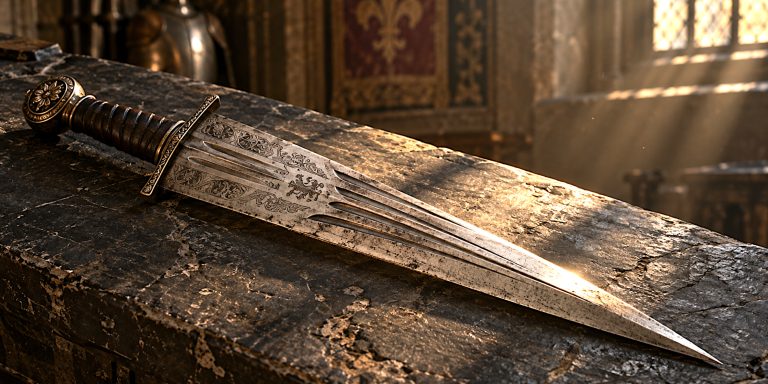
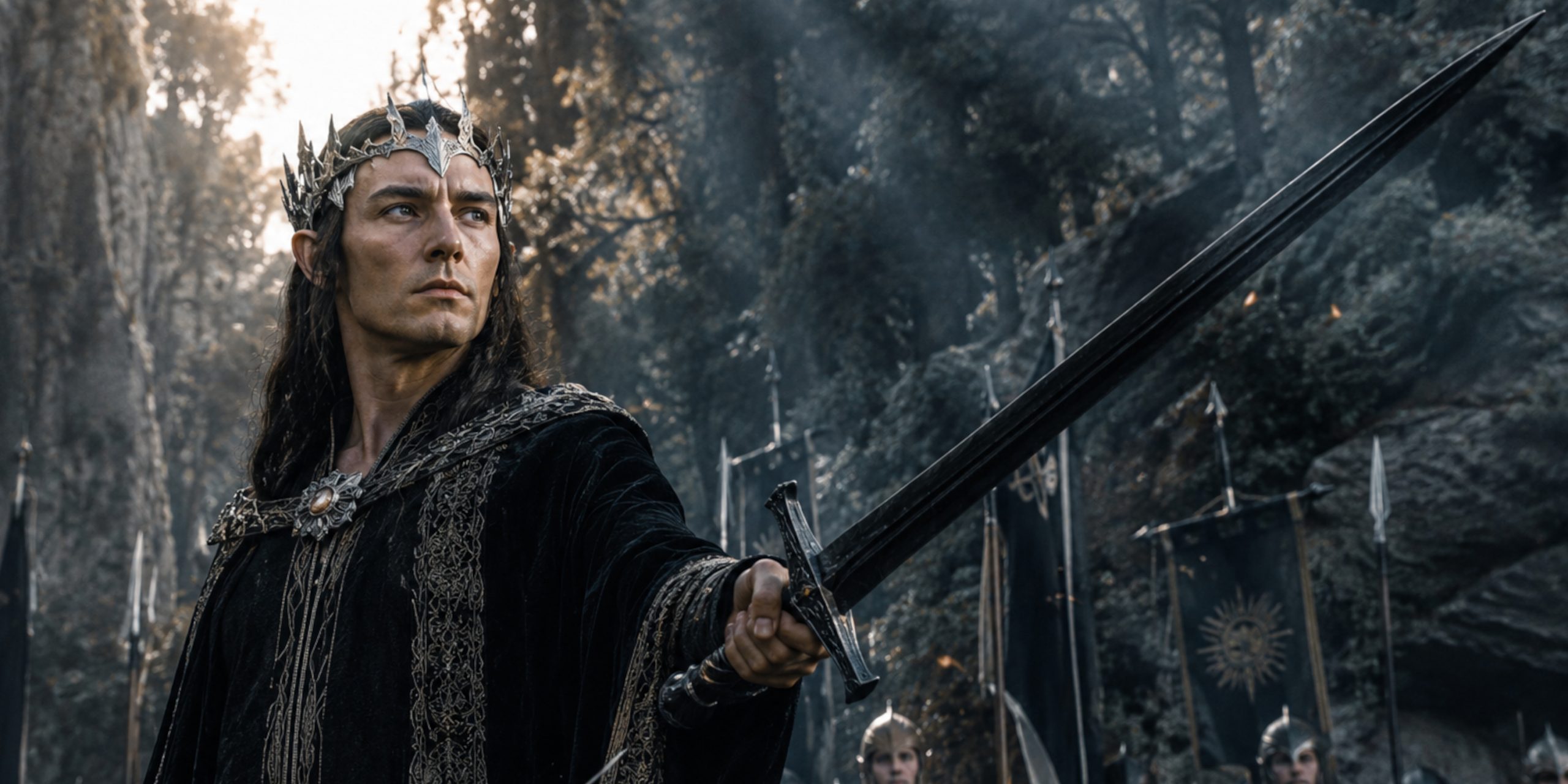
Anglachel was a black sword forged during the First Age by Eöl, the Dark Elf of Nan Elmoth.
The name roughly translates as “Iron of the Flaming Star,” referring to the extraordinary metal from which it was created. According to Tolkien’s writings, Eöl forged the blade from iron that had fallen from heaven as a meteorite.
In a world already full of remarkable craftsmanship, that immediately made Anglachel something special.
The sword’s dark appearance was striking even among the legendary weapons of the Elder Days. It could cut through virtually any substance and was renowned for its incredible sharpness and durability.
Yet what made Anglachel truly memorable was the growing suggestion that something strange lived within the blade itself.
The Origins of Anglachel
Eöl was one of the most gifted smiths among the Elves.
Unlike the Noldorin craftsmen of cities such as Gondolin, Eöl preferred isolation. He lived deep within the dark forest of Nan Elmoth and devoted himself to forging weapons of unusual quality.
Among his greatest creations were two sister swords:
- Anglachel
- Anguirel
Both were forged from meteoric iron.
Even in Tolkien’s mythology, where dragons, Balrogs, and divine beings exist, metal from a fallen star carries a certain mythical weight. The swords were considered unique, possessing qualities beyond ordinary Elven craftsmanship.
Eöl eventually gave Anglachel to Thingol, King of Doriath, as payment and tribute.
That decision would have enormous consequences.
Anglachel and King Thingol
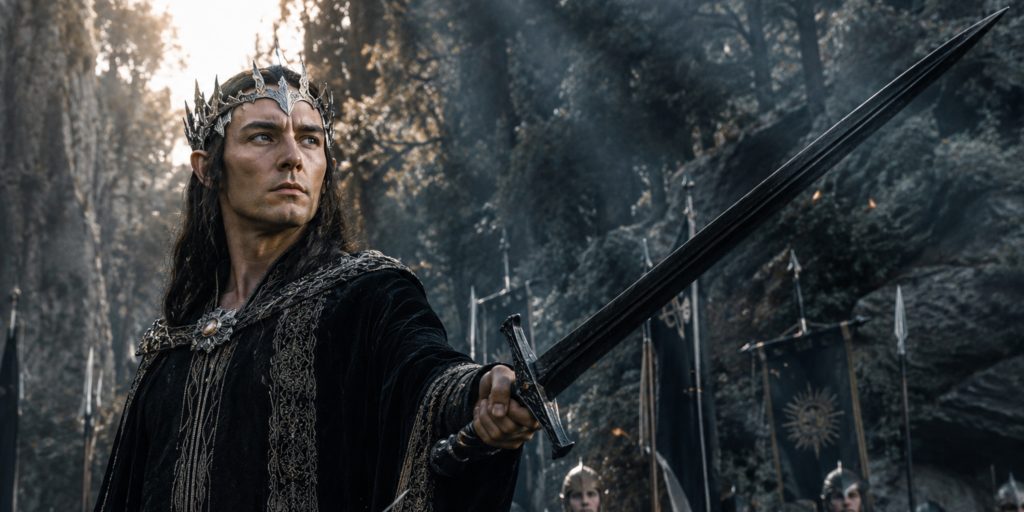
Thingol kept Anglachel among the treasures of Doriath.
Unlike many famous swords in fantasy literature, Anglachel was not constantly wielded by its first owner. Instead, it remained a prized possession until events in Beleriand demanded stronger champions.
Eventually Thingol gifted the blade to Beleg Cúthalion.
That transfer changed the sword’s story forever.
Beleg Cúthalion and the Sword’s Greatest Deeds
Beleg was one of the greatest warriors of the First Age.
Known as the Strongbow, he served as one of Doriath’s most respected captains and defenders. His courage, loyalty, and skill made him a legendary figure even among the Elves.
Armed with Anglachel, Beleg undertook one of the most important missions in The Silmarillion.
His friend Túrin Turambar had become an outlaw and wandered into increasingly dangerous circumstances. Determined to help him, Beleg tracked Túrin across Beleriand.
Throughout these journeys, Anglachel proved itself an extraordinary weapon.
The sword could cleave armour, shields, and enemies with remarkable ease. Tolkien repeatedly emphasises its exceptional cutting power.
Unfortunately, this is where the story begins sliding towards disaster.
And when Túrin is involved, disaster tends to arrive early.
The Death of Beleg
One of the most heartbreaking moments in Tolkien’s entire mythology centres on Anglachel.
After Túrin was captured by Orcs, Beleg launched a daring rescue operation. He successfully freed his friend and attempted to carry him to safety.
While cutting Túrin’s bonds, Anglachel accidentally pricked him.
Túrin awoke suddenly in confusion.
Believing himself under attack by Orcs, he seized Anglachel and struck at the figure standing over him.
That figure was Beleg.
The loyal friend who had crossed half of Beleriand to save him was killed instantly by the very sword he carried.
It is one of Tolkien’s cruellest twists of fate.
The scene perfectly captures the recurring theme that follows Túrin throughout his life. Heroism, friendship, and good intentions repeatedly collapse into tragedy.
Anglachel becomes an instrument of that fate.
Did Anglachel Have a Mind of Its Own?
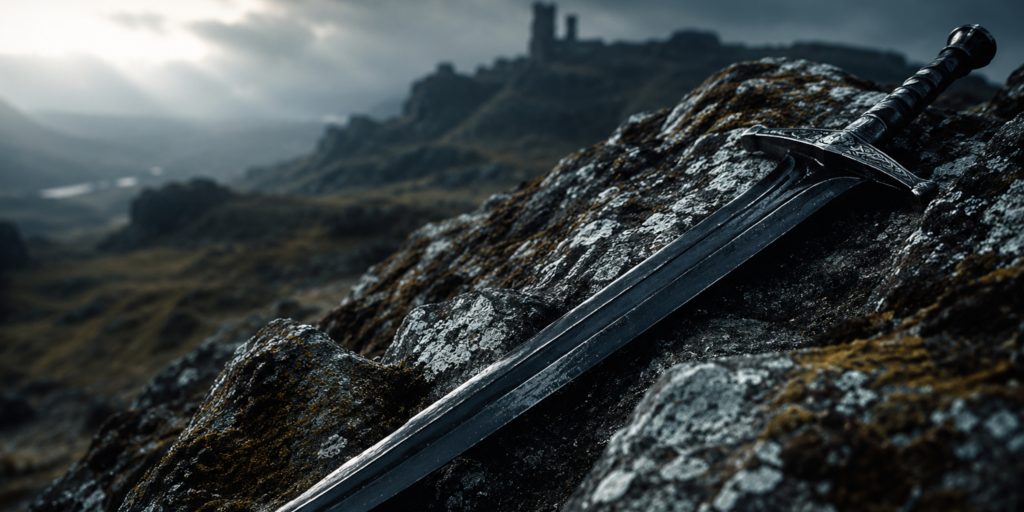
This is one of the most fascinating questions surrounding the sword.
After Beleg’s death, Túrin eventually took Anglachel as his own weapon. During one famous passage, the blade appears to speak.
When Túrin questioned the sword, Anglachel responded:
“Yea, I will drink thy blood gladly.”
For many readers, this raises an obvious question.
Was the sword actually alive?
Tolkien never provides a definitive answer. Some interpretations suggest the blade possessed a dark spirit or consciousness. Others argue the moment reflects Túrin’s deteriorating mental state and overwhelming guilt.
Either way, the scene is deeply unsettling.
Very few weapons in Middle-earth demonstrate anything approaching self-awareness. Anglachel stands apart because Tolkien deliberately leaves the mystery unresolved.
Reforging Anglachel into Gurthang
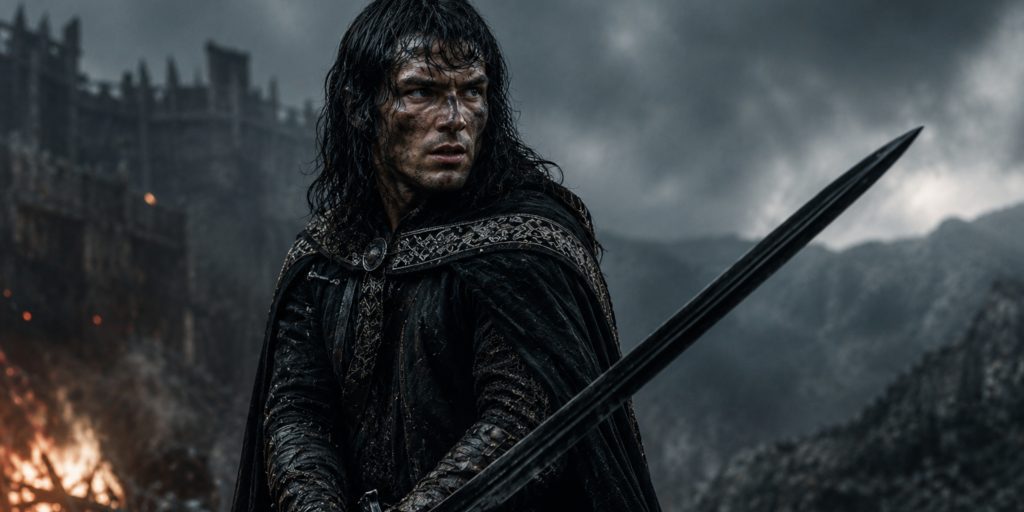
Eventually Anglachel was damaged during battle.
The sword was taken to the smiths of Nargothrond, where it was reforged and strengthened.
After its reforging, it received a new name:
Gurthang, meaning “Iron of Death.”
If Anglachel already sounded ominous, Gurthang somehow managed to sound even worse.
Under its new name, the sword became inseparable from the legend of Túrin Turambar.
It would accompany him through his greatest victories and darkest failures.
Anglachel’s Powers and Characteristics
Several qualities made Anglachel exceptional.
| Trait | Description |
|---|---|
| Meteoric Iron | Forged from metal fallen from the heavens |
| Extraordinary Sharpness | Could cut through armour and flesh with ease |
| Dark Appearance | Notable black blade unlike most Elven weapons |
| Near Unbreakable Construction | Endured tremendous punishment |
| Possible Sentience | Appears to speak directly to Túrin |
| Legendary Reputation | Feared and respected throughout Beleriand |
Unlike many fantasy swords, Anglachel does not shoot fire, glow with magical energy, or grant supernatural powers.
Its menace comes from something subtler.
The sword feels ancient, intelligent, and vaguely hostile.
That uncertainty is what makes it memorable.
Anglachel and Tolkien’s Themes
Anglachel embodies several themes that appear throughout The Silmarillion.
Fate and Doom
The sword becomes closely linked with Túrin’s cursed destiny. Again and again it appears at moments where fate seems impossible to escape.
The Cost of Heroism
Many characters who wield Anglachel are brave, honourable figures.
That does not protect them from tragedy.
The Ambiguity of Power
Tolkien rarely presents power as entirely good or evil. Anglachel is a powerful weapon, but possession of it never guarantees success.
Instead it amplifies the burden carried by its owners.
How Anglachel Compares to Other Famous Tolkien Swords
| Sword | Owner | Notable Feature |
|---|---|---|
| Anglachel | Beleg, Túrin | Forged from meteoric iron, possible sentience |
| Gurthang | Túrin | Reforged form of Anglachel |
| Narsil | Elendil | Broken fighting Sauron |
| Andúril | Aragorn | Reforged Narsil |
| Glamdring | Gandalf | Ancient sword of Gondolin |
| Sting | Bilbo, Frodo | Glows near Orcs |
Among these weapons, Anglachel is arguably the most sinister.
Narsil symbolises kingship. Glamdring represents heroism. Sting offers protection.
Anglachel feels more like a warning.
Anglachel’s Legacy
Although Anglachel appears primarily within the tale of Túrin Turambar, its influence extends far beyond a single story.
It remains one of Tolkien’s most distinctive weapons because it combines craftsmanship, mystery, and tragedy in equal measure.
Readers often remember it not because of spectacular battles but because of the emotional devastation associated with it. The death of Beleg, the curse of Túrin, and the sword’s eerie voice create an atmosphere unlike anything else in Middle-earth.
That is why Anglachel continues to fascinate fans decades after The Silmarillion was published.
Many fantasy swords are symbols of hope.
Anglachel is something rarer.
It is a reminder that even the greatest weapons cannot save people from their own fate, and sometimes the sharpest blade in the room is not the most dangerous thing present.