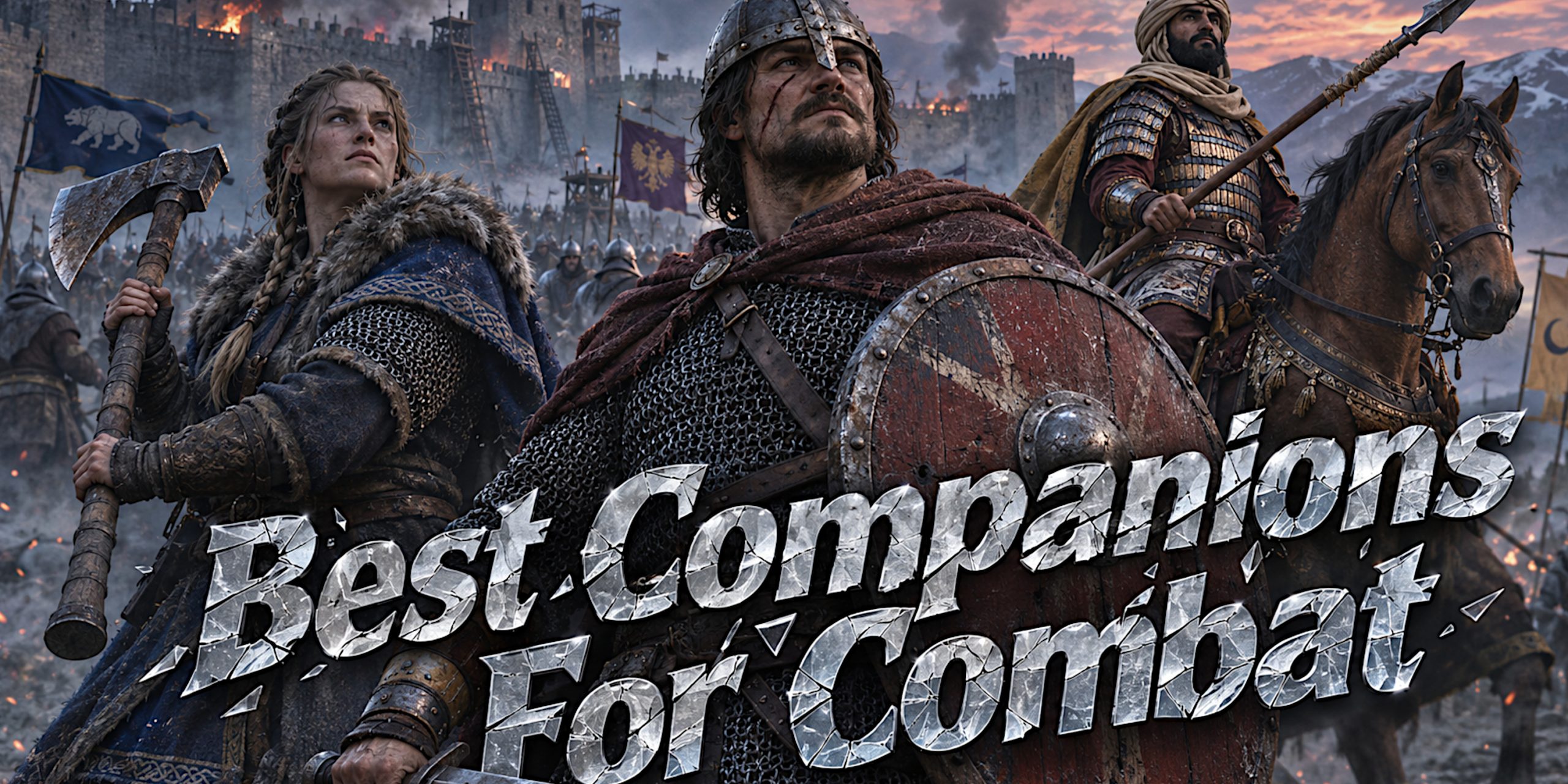
A companion with an alarming nickname and a large axe is a promising start in Mount & Blade II: Bannerlord. Whether they survive their first cavalry charge is a separate question.
The best combat companions have skills that suit a specific job, equipment they can actually use, and perks that support the way you fight. Bloodaxe, Coalbiter, the Swordsman and the Golden are useful names to watch for, but their titles should begin your search rather than end it.
My advice is to recruit for a role. A reliable infantry fighter you can afford to equip is more useful than a supposedly perfect warrior stranded three kingdoms away.
Best Combat Companions at a Glance
Bannerlord generates its wanderers, so first names and the available recruitment pool differ between campaigns. Epithets identify familiar companion templates, but balance changes, game versions and mods can alter their skills. Treat these as candidates to inspect, rather than a guaranteed ranking for every save.
| Companion title | Role to consider | Skills to check |
|---|---|---|
| Bloodaxe | Melee infantry | Two Handed, One Handed, Athletics |
| Coalbiter | Foot combat and shock infantry | Athletics, Two Handed, Polearm |
| the Swordsman | Melee fighter or shield infantry | One Handed, Two Handed, Athletics |
| the She-Wolf | Aggressive melee fighter | Weapon skills, Athletics |
| the Golden | Mounted melee fighter | Riding, Polearm, One Handed |
| of the Wastes | Ranged combat candidate | Bow, then Riding or Athletics |
Several older guides give these characters precise starting stats. Those tables can be useful for the version they describe, but they are a poor reason to ignore the character standing in your tavern. Check the skills revealed in your own campaign before paying.
This guide focuses on land combat and familiar base-game wanderers. Expansion-specific roles and modded companions need their own assessment.
Bloodaxe and Coalbiter: Strong Candidates for Melee Infantry
Bloodaxe and Coalbiter belong near the top of your search list if you want companions who fight on foot. Both are associated with melee-focused templates, although their precise strengths depend on your version.
For a shock infantry build, inspect Two Handed and Athletics first. Weapon skill helps them use their chosen weapon effectively; Athletics matters because a foot soldier spends a surprising amount of a battle trying to reach someone worth hitting.
A two-handed axe or sword can work well against enemies already occupied by your shield infantry. Sending an exposed companion straight into an untouched missile line is a much less persuasive tactical argument.
Suggested equipment: good helmet and body armour, a manageable two-handed weapon, and a useful backup where slots allow.
I would start a lightly equipped recruit with a shield if their One Handed skill supports it. The giant axe can wait until their armour budget catches up with their enthusiasm.
The Swordsman: Check the Skills Before Choosing the Sword
The Swordsman is another worthwhile melee recruit, but the title does not tell you whether to build around one-handed or two-handed combat. Older companion tables and newer guides do not always describe the same skill spread.
If One Handed is the stronger option, sword and shield makes a sensible frontline setup. If Two Handed and Athletics stand out, consider a shock infantry role instead.
For a bodyguard, I favour a shield and a weapon that works at close range. A companion who remains beside you through a crowded fight earns their place without producing a spectacular kill count.
Suggested equipment: one-handed sword or axe, shield, strong armour, and an optional spear for appropriate engagements.
There is no separate Shield skill in Bannerlord. When judging a shield fighter, look at One Handed, Athletics, equipment and relevant perks.
The Golden: A Useful Mounted Combat Candidate
The Golden is worth inspecting when you want a mounted companion. Check Riding alongside Polearm and One Handed, then choose equipment that fits the actual character.
A lance or suitable spear gives them a role in mounted engagements, while a sidearm and shield help when the fight slows down or the horse is lost. Horse armour also deserves a place in the budget. An expensive rider on a vulnerable mount can become an expensive pedestrian very quickly.
Suggested equipment: a horse they meet the requirements to ride, appropriate barding, a mounted polearm, a one-handed sidearm and a shield.
For cavalry captain duties, inspect their perks as carefully as their combat skills. A strong rider is a promising candidate, but formation bonuses require the relevant captain effects.
For more on using mounted troops, see our Bannerlord cavalry charges guide.
The She-Wolf and Other Melee Recruits
The She-Wolf is another familiar title worth checking for a combat role. As with Bloodaxe and Coalbiter, inspect the combination of weapon skills, Athletics and development potential rather than hiring on reputation alone.
You do not need every famous epithet in the same party. Companions compete for limited clan slots, and those slots also have to accommodate specialists such as surgeons, scouts and engineers.
An available melee recruit with suitable skills and affordable equipment may be the better campaign choice. Travelling across Calradia to improve one member of your infantry by a small margin is how a recruitment trip becomes your entire evening.
Best Companions for Archery and Ranged Combat
For a ranged companion, start with their actual Bow or Crossbow skill. “Of the Wastes” is a familiar bow-focused title to investigate, but your campaign’s available wanderers should decide the shortlist.
Then choose between foot and mounted combat. A foot archer benefits from Athletics and a position with clear sightlines. A horse archer needs suitable Riding and a bow usable from horseback, as well as the relevant equipment requirements.
| Ranged role | Build priorities | Practical loadout |
|---|---|---|
| Foot archer | Bow, Athletics | Bow, arrows, melee weapon |
| Horse archer | Bow, Riding | Suitable bow, arrows, sidearm, horse |
| Crossbow support | Crossbow, Athletics | Crossbow, bolts, melee weapon |
Extra ammunition is useful, but it costs equipment slots. Two quivers leave less room for a shield or backup weapon, so make that choice deliberately.
I would usually place a developing archer with the ranged formation. If they spend every battle drawing their sword, something has gone wrong with the position, the ammunition supply or both.
A Good Fighter Is Not Automatically a Good Captain
A companion’s personal combat performance and their value as a formation captain are related, but they are different jobs.
Personal perks affect the hero in the circumstances described. Captain perks provide benefits to the formation they lead. Other effects may require a party leader, governor or clan role. Read the labels and conditions rather than assuming every selected perk is active everywhere.
For infantry, prioritise captain effects that suit your troops’ weapons and fighting style. For archers, look for applicable ranged bonuses. Cavalry captains need effects that support mounted troops.
Assign companions to captain slots in the pre-battle deployment screen where available, and check that the intended hero leads the intended formation.
I would take a useful captain who stays in position over a slightly better duellist who contributes little to the troops around them. Once your army grows, improvements spread across a formation can matter more than one hero’s extra kills.
How to Find and Recruit Combat Companions
Open the encyclopedia, select Heroes, then filter by the Wanderer occupation. On PC, the default encyclopedia shortcut is N.
Look for promising titles and available location information, then visit the relevant town’s tavern district. Location reports are leads rather than live tracking, so check how recent the information is before committing to a long journey.
The encyclopedia also has fog of war. Unmet characters may have hidden details. Meet the wanderer or ask tavern keepers about companions to uncover information rather than assuming a blank profile means weak skills.
Before hiring, check:
- Their strongest weapon skills and whether you can equip them accordingly.
- Athletics for a foot role, or Riding for a mounted role.
- Relevant perks and room for further development.
- The recruitment cost alongside the cost of proper equipment.
- Whether you actually have a useful role and a spare companion slot.
A recruit’s fee is only the first expense. Leaving enough money for a helmet is generally a sound investment in the friendship.
How to Build Companions Who Survive Battles
Start with a focused role and give the companion opportunities to practise it. Foot fighters need time on foot. Archers need ammunition and clear shots. Mounted fighters need equipment and orders that let them fight from the saddle.
Avoid spreading early development across every weapon category. A coherent build is easier to equip and gives you a clearer reason to bring that companion into battle.
For equipment, prioritise protection and usability over the highest damage number. A long weapon may suit open ground but struggle in a cramped fight. Heavy equipment also brings mobility considerations, particularly for foot troops.
For sieges, review their loadout before the assault. Horses will not carry them up a ladder, and crowded breaches reward weapons they can use in limited space. Our Bannerlord siege guide covers the wider preparation.
Watch several battles before deciding a recruit is disappointing. Repeated early knockouts may reveal a deployment problem or weak armour rather than poor starting skills. Permanent death is also possible when the relevant campaign settings allow it, so check those settings before treating companions as disposable test subjects.
Which Combat Companion Should You Recruit First?
For an infantry-heavy campaign, I would inspect Bloodaxe, Coalbiter, the Swordsman and the She-Wolf first. For mounted melee combat, the Golden is a sensible candidate to investigate. For ranged support, choose the available wanderer with the strongest suitable weapon skill and mobility combination.
Then stop shopping once you have someone who fits. A well-equipped companion with a clear role is worth more to your next battle than a perfect name on an old spreadsheet.
Frequently Asked Questions
Are companion names the same in every campaign?
First names vary, and the available wanderer pool differs. Epithets are useful clues to familiar templates, but you should still inspect the character’s current skills.
Is the Swordsman always the best two-handed companion?
No. Skill templates have differed across versions, and the best choice also depends on equipment, perks and the role you need. Check One Handed and Two Handed before committing to a build.
Can any companion become a combat companion?
Companions can develop combat skills, but starting skills, attributes, focus points and learning limits affect the investment required. A dedicated fighter is usually a more convenient recruit for immediate battlefield use.
Should all my companions fight in the front line?
No. Consider what each companion contributes to the party and how exposed their assigned role makes them. Your surgeon does not need a two-handed axe simply because you found another one.
Sources and Version Notes
Companion templates and interface details differ between game versions. This guide avoids fixed skill totals that could misrepresent a reader’s save. Check the encyclopedia and perk descriptions in your installed version, particularly with mods or expansion content.
- TaleWorlds: encyclopedia fog of war and companion information.
- TaleWorlds: patch notes v1.2.7, including companion information discovery.
- TaleWorlds: captain assignments and formation perk bonuses. This documents the system’s introduction; deployment controls have changed since that build.
- Mount & Blade Wiki: companions and wanderer templates.
- Gamer Guides: combat companion comparisons. Exact legacy values should be checked against your campaign.