A Norman With More Ambition Than Land
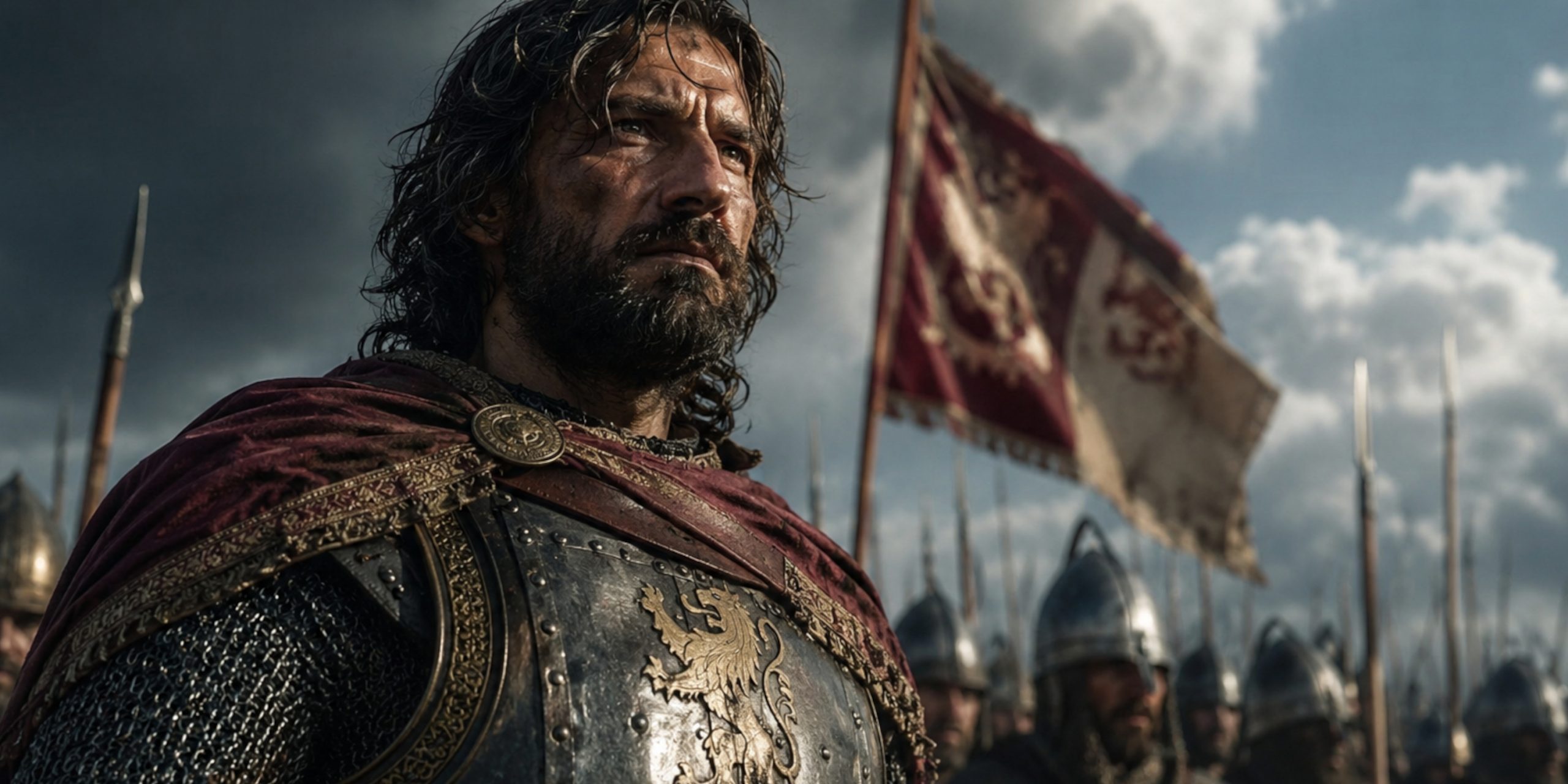
Robert Guiscard began life with very little reason to expect greatness. Born around 1015 into the minor Norman nobility of Hauteville in Normandy, he was not a king’s son or the heir to a great fortune. He was one of many younger sons searching for opportunity in a world where land, titles, and glory rarely arrived without a sword in hand.
His nickname “Guiscard” came from the Old French for “the cunning one”, and few medieval names have ever fitted better. Robert was not merely a brutal warrior. He was a strategist, politician, gambler, and survivor. He built power in a region where Byzantines, Lombards, Muslims, and rival Normans all believed they had the stronger claim.
They were mostly wrong.
By the time of his death in 1085, Robert Guiscard had transformed a band of Norman adventurers into one of the most powerful forces in the Mediterranean.
Early Life and Arrival in Italy
Robert was born into the Hauteville family, the sixth son of Tancred of Hauteville. With limited prospects in Normandy, he followed his older brothers south, where Norman mercenaries had been making names for themselves in Italy.
When he arrived around 1047, southern Italy was a political puzzle. The region was divided between:
- Byzantine territories
- Lombard principalities
- Independent city states
- Muslim-controlled Sicily
- Papal influence from Rome
- Norman mercenary lords
Robert initially received only a modest command in Calabria, a difficult region of mountains, fortified settlements, and competing loyalties. Many men would have seen it as a poor reward. Robert saw a starting point.
Through raids, alliances, marriages, and careful diplomacy, he expanded his influence. Medieval success was rarely tidy, and Robert’s career was a masterclass in controlled chaos.
Rise to Duke of Apulia and Calabria
Robert succeeded his brother Humphrey as leader of the Norman territories in southern Italy. His position was far from secure. Norman lords were famously independent, which is a polite historian’s way of saying they often preferred arguing with each other when they were not fighting everyone else.
His breakthrough came with the Treaty of Melfi in 1059, when Pope Nicholas II recognised him as:
- Duke of Apulia
- Duke of Calabria
- Future Duke of Sicily if he could conquer it
This was an extraordinary political shift. The Papacy, once an enemy of the Normans, now used them as military allies.
Robert gained legitimacy. The Pope gained dangerous friends. Medieval diplomacy rarely came without sharp edges.
Battles and Military Acumen

Robert Guiscard was one of the most effective commanders of the 11th century. His greatest strength was adaptability. He fought mountain campaigns in Italy, sieges against Byzantine cities, naval operations, and open battles against imperial armies.
Battle of Civitate (1053)
Opponents: Norman forces against Pope Leo IX and his allies
Result: Norman victory
Civitate proved that the Normans were no longer just mercenaries. Robert fought alongside other Norman commanders against a Papal coalition.
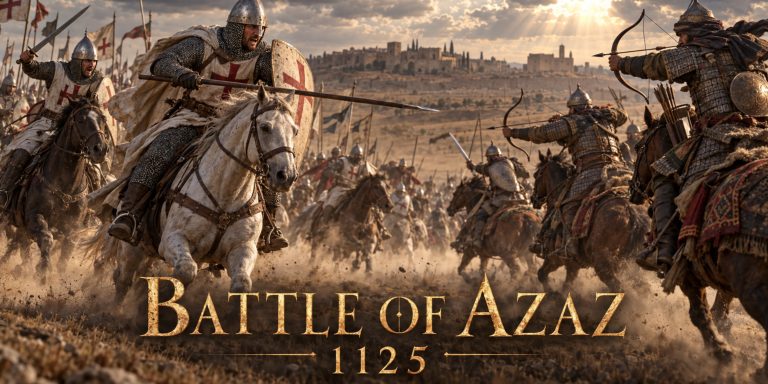
The Norman cavalry charge was devastating. Their heavily armoured knights broke enemy formations and demonstrated why Norman warfare was becoming feared across Europe.
The victory was awkward politically because capturing a Pope was not exactly ideal for public relations. The Normans treated Leo IX respectfully, eventually turning a defeated enemy into a future political partner.
Conquest of Calabria and Apulia
Robert spent years reducing Byzantine influence in southern Italy. His greatest achievement came with the capture of Bari in 1071.
Bari had been the centre of Byzantine power in Italy for centuries. Its fall effectively ended Byzantine rule on the Italian mainland.
The psychological impact was enormous. Rome’s eastern empire, the heir of Augustus and Constantine, had been pushed out by descendants of Viking settlers from northern France.
History enjoys unlikely plot twists.
Norman Conquest of Sicily (1061 to 1091)

Although completed after Robert’s death, the conquest began under his leadership alongside his younger brother Roger.
Major actions included:
- Capture of Messina in 1061
- Campaigns through eastern Sicily
- Battles against Muslim Sicilian forces
- Establishment of Norman authority across the island
Robert provided leadership, while Roger became the long-term architect of Norman Sicily.
The result was one of medieval Europe’s most fascinating societies, blending Norman, Greek, Arab, and Latin cultures.
War Against the Byzantine Empire
Perhaps Robert’s boldest campaign was his invasion of Byzantine territory.
In 1081, he defeated Emperor Alexios I Komnenos at the Battle of Dyrrhachium.
The battle showed Robert’s ability to challenge one of the most sophisticated military systems in the medieval world. The Byzantines had professional troops, experienced commanders, and centuries of military tradition.
Robert had Norman knights, ambition, and apparently no interest in knowing when something was supposed to be impossible.
Arms and Armour of Robert Guiscard’s Era
The Norman military success of the 11th century came from discipline, mobility, and effective battlefield equipment.
Norman Knight Equipment
| Equipment | Description |
|---|---|
| Mail hauberk | Knee-length chainmail armour offering strong protection while allowing movement |
| Nasal helmet | Conical helmet with nose guard, widely used by Norman cavalry |
| Kite shield | Long shield designed to protect mounted warriors |
| Lance | Primary cavalry weapon used during charges |
| Sword | Close combat weapon carried by Norman nobles and knights |
| Spear | Common among infantry and supporting troops |
Sword Types Used
Norman warriors of Robert’s era typically carried early medieval arming swords influenced by Viking-age designs.
Features included:
- Straight double-edged blade
- Broad fuller to reduce weight
- One-handed grip
- Simple crossguard
- Designed for cutting and thrusting
Many examples are classified today within the Petersen and Oakeshott sword typologies, particularly transitional forms leading toward the classic knightly sword.
These were not oversized fantasy weapons. They were practical, balanced tools created for brutal close combat.
Leadership Style and Strategy
Robert Guiscard succeeded because he understood more than battlefield tactics.
His strengths included:
- Using marriage alliances effectively
- Absorbing defeated enemies into his power structure
- Combining diplomacy with military pressure
- Maintaining loyalty among ambitious Norman warriors
- Exploiting weaknesses between rival states
He was aggressive, but rarely reckless. Robert understood timing. He knew when to attack, when to negotiate, and when yesterday’s enemy could become tomorrow’s ally.
That ability separated conquerors from ordinary warlords.
Contemporary Descriptions and Quotes
The Byzantine historian Anna Komnene, writing in The Alexiad, gave one of the most memorable descriptions of Robert:
“This Robert was Norman by birth, of obscure origin, with an overbearing character and a thoroughly villainous mind.”
Considering she was writing from the perspective of his enemies, it was not exactly a glowing review. Yet even hostile Byzantine writers recognised his ability.
Anna also acknowledged his remarkable presence:
“He was tall in stature, even surpassing the biggest men.”
The chronicler Geoffrey Malaterra, writing from the Norman perspective, presented him as brave, intelligent, and naturally suited to command.
Between admiration and criticism, the historical Robert emerges as something more interesting than either hero or villain.
Where to See Artefacts From Robert Guiscard’s Era
Very few objects can be directly connected to Robert personally, but several places preserve the world he created.
Southern Italy
Important Norman sites include:
- Cathedral of Melfi, associated with Norman political assemblies
- Bari, where Byzantine Italy came to an end
- Salerno Cathedral, linked to Robert’s patronage and final resting place traditions
Sicily
Norman Sicily provides some of the richest surviving evidence:
- Palermo’s Norman architecture
- Norman Palace
- Palatine Chapel
- Cefalù Cathedral
- Monreale Cathedral
These later structures mainly belong to the kingdom created by Robert’s successors, but they represent the political and cultural legacy his campaigns made possible.
Archaeology and Latest Research
Modern archaeology has changed how historians view the Norman expansion.
Earlier interpretations often focused purely on conquest. Current research shows a more complex transformation involving settlement, cultural exchange, and adaptation.
Important areas of study include:
Norman Fortifications
Archaeologists continue examining Norman castles throughout southern Italy and Sicily. These sites reveal how the Normans controlled territory through:
- Defensive networks
- Military colonies
- Strategic hilltop positions
- Adapted Byzantine and Islamic structures
Battlefield and Settlement Studies
Research into Norman Italy increasingly uses:
- Landscape archaeology
- Material culture analysis
- Fortification studies
- Documentary comparisons
The evidence suggests the Normans were successful not simply because they conquered, but because they learned how to govern diverse populations.
Death and Legacy
Robert Guiscard died in 1085 while campaigning against Byzantium. His dream of greater eastern conquest ended with him, but his achievements survived.
His legacy included:
- Removal of Byzantine power from mainland Italy
- Creation of Norman dominance in southern Italy
- Beginning the conquest of Sicily
- Establishing the foundations for the Kingdom of Sicily
- Expanding Norman influence across the Mediterranean
Robert belongs among the great medieval commanders because he changed the political map permanently. He arrived in Italy as a land-hungry adventurer and died as a duke whose armies challenged emperors.
Many rulers inherited kingdoms.
Robert Guiscard built one.