The conquest of Sicily between 1061 and 1091 was one of the most remarkable military campaigns of the Middle Ages. A relatively small group of Norman adventurers, originally descended from Viking settlers in northern France, crossed into Sicily and defeated a fractured but wealthy Muslim emirate that had ruled the island for over two centuries.
At first glance, the idea looked wildly optimistic. The Normans had limited manpower, were fighting across the sea, and were entering a land filled with fortified cities, experienced warriors and unfamiliar terrain. Medieval military history, however, has a habit of rewarding the people who combine ambition with terrifying confidence.
The conquest was led primarily by Robert Guiscard, Duke of Apulia, and his younger brother Roger de Hauteville, later Roger I of Sicily. It was not a simple religious war between Christians and Muslims. The reality was more complicated, involving political alliances, local rivalries, mercenaries, diplomacy and calculated opportunism.
The Sicily that emerged afterwards became one of medieval Europe’s most unusual kingdoms, blending Latin, Greek, Arab and Norman traditions into something genuinely distinctive.
Sicily Before The Norman Invasion
Before the Normans arrived, Sicily was under Muslim rule following the Arab conquest that began in the 9th century. The island had developed into a wealthy Mediterranean centre with advanced agriculture, thriving cities and connections stretching across North Africa and the Islamic world.
Important cities included:
- Palermo, one of the richest urban centres in the Mediterranean
- Syracuse, the ancient Greek city with enormous symbolic value
- Messina, controlling access between Sicily and mainland Italy
- Enna, a powerful inland fortress
By the 11th century, however, Muslim Sicily was politically divided. Rival emirs competed for power, weakening the island’s ability to resist an organised invasion.
The Normans were experts at exploiting exactly this type of situation. Their unofficial motto might as well have been “arrive with a few hundred knights and somehow leave owning the place”.
Why The Normans Invaded Sicily
Several factors encouraged the Norman invasion:
- Expansion beyond their territories in southern Italy
- Control of Mediterranean trade routes
- Desire for land and wealth
- Support from Christian authorities seeking to reclaim Sicily
- Requests for assistance from local Sicilian factions
The immediate opportunity came when the Sicilian ruler Ibn al-Thumna sought Norman support against rival Muslim leaders.
For Robert Guiscard and Roger, this was an invitation too good to ignore.
The Norman Leaders
Robert Guiscard

Robert Guiscard was one of the most formidable figures of the 11th century. His nickname “Guiscard” meant something close to “the cunning one”, which was not medieval exaggeration.
The Byzantine historian Anna Komnene later described him:
“This Robert was Norman by birth, of obscure origin, with an overbearing character and a thoroughly villainous mind.”
Considering Robert spent much of his career fighting the Byzantines, this was not exactly a neutral review. It does, however, capture the impression he made on his enemies.
Robert provided authority, strategic direction and political ambition.
Roger I Of Sicily

Roger was the younger Hauteville brother but became the true architect of Norman Sicily. Patient, adaptable and militarily gifted, he spent decades gradually reducing resistance across the island.
Unlike some medieval conquerors who treated victory as permission to break everything in sight, Roger understood that Sicily’s diversity was its strength. He kept many Muslim administrators, Greek officials and existing systems in place.
Armies, Weapons And Armour
The conquest brought together several different military traditions.
Norman Forces
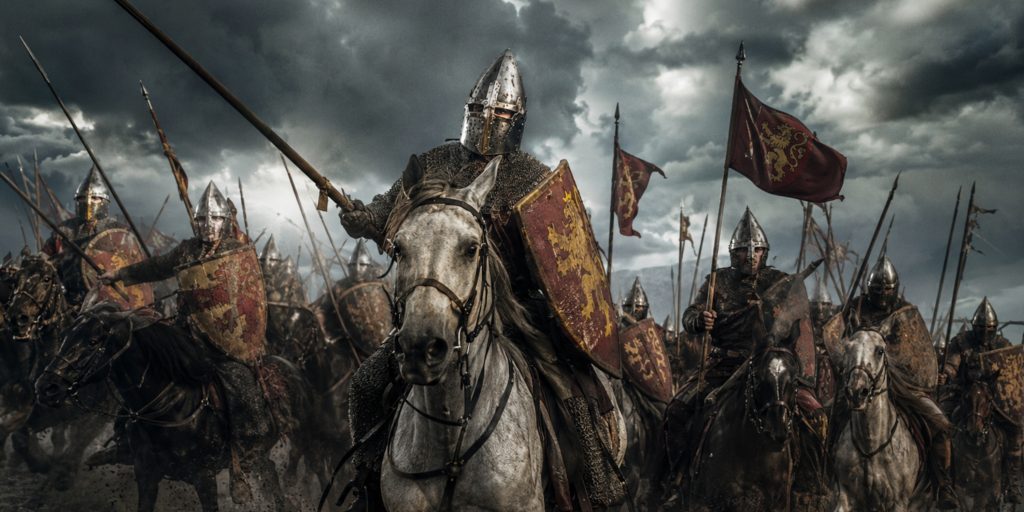
The backbone of the Norman army was heavy cavalry.
Typical equipment included:
Weapons
- Norman arming sword
- Lance
- Spear
- Dagger
- Mace
- Axe
Armour
- Mail hauberk reaching to the knees
- Conical helmet with nasal guard
- Kite shield
- Padded textile protection beneath armour
Norman cavalry tactics focused on shock charges, discipline and mobility. They were especially dangerous because they combined aggression with battlefield organisation.
Muslim Sicilian Forces
The defenders used a more varied style of warfare.
Common equipment included:
Weapons
- Curved and straight swords
- Spears
- Javelins
- Composite bows
- Daggers
Armour
- Mail armour among elite warriors
- Lamellar protection
- Helmets influenced by Islamic and Byzantine styles
Muslim Sicilian armies often relied on mobility, archery and defensive positions. The Normans discovered quickly that conquering Sicily would not be a quick raid.
Major Battles And Campaigns Of The Norman Conquest Of Sicily
Battle Of Messina (1061)

The campaign began when Robert and Roger crossed the Strait of Messina.
The Norman army was small, perhaps only several hundred knights supported by infantry. They captured Messina quickly, giving them a vital base for future operations.
This victory was crucial because it created a permanent Norman foothold on the island.
Battle Of Cerami (1063)
The Battle of Cerami became one of the legendary moments of the conquest.
Roger’s heavily outnumbered Norman force faced a much larger Muslim army. Medieval sources claim enormous enemy numbers, although these figures are almost certainly exaggerated.
The Normans won through cavalry charges, discipline and tactical timing.
The chronicler Geoffrey Malaterra wrote:
“The enemy turned their backs and fled, abandoning the field to our men.”
Malaterra wrote as a supporter of the Normans, so his account needs caution, but the victory clearly strengthened Roger’s position.
Siege And Capture Of Palermo (1071 To 1072)
Palermo was the greatest prize.
The city was wealthy, heavily defended and symbolically important. Robert and Roger launched a combined land and naval campaign, cutting off the city and forcing its surrender.
The fall of Palermo transformed the conquest. It became the Norman capital and later one of the most culturally impressive courts in medieval Europe.
Capture Of Syracuse (1085)
Syracuse remained one of the strongest centres of resistance.
Roger defeated the local ruler Ibn Abbad after a difficult campaign involving naval warfare and siege operations.
The loss of Syracuse seriously weakened remaining Muslim power.
Fall Of Noto (1091)
The final major Muslim stronghold, Noto, surrendered in 1091.
After thirty years of warfare, Sicily was under Norman control.
Few medieval conquests were instant. This was less a lightning strike and more a very determined Norman knocking on every castle door until eventually everyone got tired of answering.
Norman Strategy And Military Success
The conquest succeeded because the Normans combined several advantages:
- Elite cavalry warfare
- Flexible alliances
- Naval cooperation
- Effective siege tactics
- Political negotiation
- Willingness to use local administrators
Roger understood something many conquerors missed. Winning battles was easier than governing afterwards.
The Normans did not simply replace Sicilian society. They adapted it.
Archaeology Of The Norman Conquest Of Sicily
Archaeology reveals a Sicily shaped by cultural exchange rather than simple replacement.
Palermo
Palermo remains the greatest showcase of Norman Sicily.
Important surviving sites include:
Palatine Chapel
Built under Roger II, it represents the later flowering of Norman Sicily. Its combination of Latin Christian architecture, Byzantine mosaics and Islamic craftsmanship reflects the world created after the conquest.
Norman Palace
The Norman rulers expanded earlier Islamic structures, turning Palermo’s political centre into a royal seat.
Castles And Fortifications
Norman castles across Sicily show a gradual military occupation rather than immediate domination.
Examples include:
- Castello di Lombardia at Enna
- Paternò Castle
- Adrano Castle
Many sites combine Norman, Byzantine and Islamic influences.
Material Finds
Archaeological discoveries include:
- Coins showing changing political authority
- Ceramics reflecting Mediterranean trade
- Weapon fragments
- Architectural remains
- Inscriptions in Latin, Greek and Arabic
The evidence suggests continuity alongside conquest. Medieval Sicily did not simply change overnight because a Norman knight planted a flag somewhere.
Religion And Society After The Conquest
The Norman rulers inherited a mixed population:
- Latin Christians
- Greek Orthodox Christians
- Muslims
- Jewish communities
For much of the early Norman period, different groups continued to exist alongside one another.
Arabic remained an administrative language. Muslim craftsmen worked on royal projects. Greek traditions survived.
This tolerance had limits and changed over time, but compared with many medieval conquests Sicily’s transition was unusually pragmatic.
Contemporary Views Of The Conquest
The Norman chronicler Geoffrey Malaterra praised Roger:
“He was a lover of justice and most severe against evil men.”
As with most medieval biographies written for rulers, a small amount of scepticism is healthy. Medieval chroniclers rarely wrote “my patron was fairly average and occasionally annoying”.
Muslim perspectives were naturally very different, often seeing the conquest as part of a wider Christian advance across former Islamic territories.
The truth sits between triumph and tragedy. It was a military conquest involving violence and displacement, but it also created one of the medieval world’s most culturally fascinating societies.
Legacy Of The Norman Conquest Of Sicily
The conquest reshaped Mediterranean history.
Its consequences included:
- Creation of the Norman Kingdom of Sicily
- Growth of Palermo as a major European capital
- Increased Norman influence in Mediterranean politics
- A unique fusion of European, Byzantine and Islamic culture
- Expansion of Latin Christian power in southern Europe
The Kingdom of Sicily later became one of the wealthiest and most sophisticated states of the 12th century.
The Island Where The Normans Became Something New
The conquest of Sicily is often overshadowed by the Norman conquest of England in 1066, but in many ways Sicily was the more extraordinary achievement.
England became a Norman kingdom. Sicily became something stranger and arguably more impressive, a place where warriors from northern France ruled through a mixture of Latin ambition, Greek learning and Arab administration.
The Normans arrived as conquerors, but Sicily changed them as much as they changed Sicily. For a group famous for charging into problems with a lance first and questions later, that was perhaps their most surprising victory.