Medieval swords are often grouped together under broad labels like “knightly sword”, “longsword” or “broadsword”, but those terms barely scratch the surface. A sword from the First Crusade and one carried by a 15th-century knight in plate armour were very different weapons designed for very different problems.
That is where the Oakeshott typology comes in.
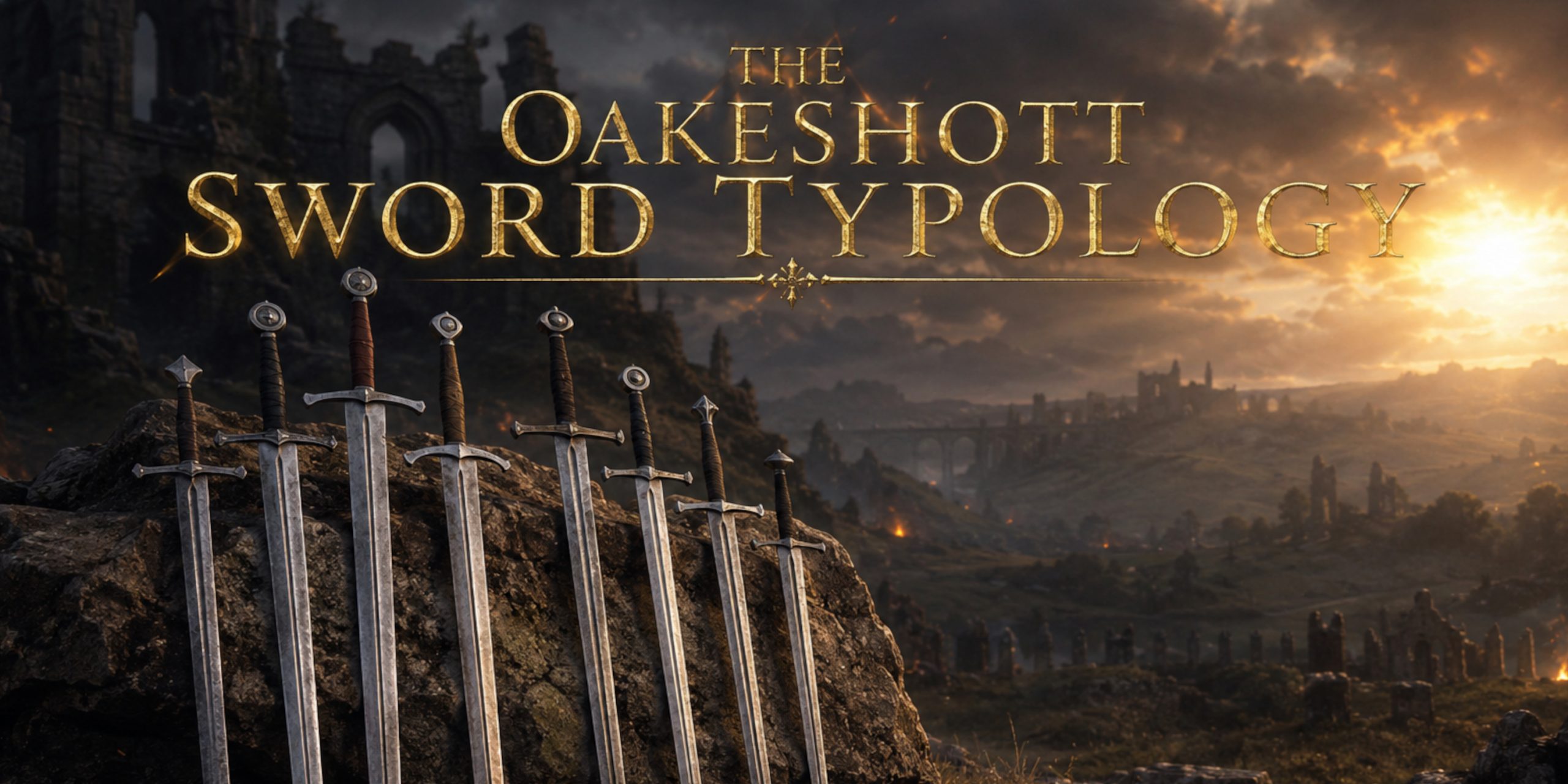
Created by British historian and sword scholar Ewart Oakeshott, this classification system remains one of the most influential ways of studying European medieval swords. Instead of sorting swords by country or owner, Oakeshott focused on the blade itself: its shape, proportions, cross-section, fuller, point design and intended use.
It sounds slightly obsessive at first. Then you spend a few hours comparing medieval swords and realise a tiny change in blade geometry can tell you centuries of military history. Welcome to the wonderfully detailed world of sword historians.
Who Was Ewart Oakeshott?
Ewart Oakeshott (1916–2002) was a British illustrator, historian and collector who transformed the study of medieval European arms.
Before his work, many medieval swords were loosely described by period or style. Oakeshott believed swords deserved the same careful classification given to archaeological finds such as pottery, coins and armour.
His major works included:
- The Archaeology of Weapons (1960)
- The Sword in the Age of Chivalry (1964)
- Records of the Medieval Sword (1991)

Oakeshott personally handled and documented hundreds of surviving swords from museums and private collections. His system built on earlier work by Jan Petersen, who had classified Viking sword hilts, but expanded the focus to medieval blades from roughly the 11th to 16th centuries.
How Does The Oakeshott Sword Typology Work?

The Oakeshott system mainly examines blade characteristics rather than decoration.
Key features include:
- Blade length
- Blade width
- Profile taper
- Cross-section
- Fuller length and shape
- Point geometry
- Cutting ability
- Thrusting ability
- Relationship with armour development
The categories run from Type X through Type XXII.
This numbering does not mean Type XXII is “better” or more advanced than Type X. Sword evolution was not like unlocking upgrades in a game. A powerful cutting sword could remain effective long after newer thrust-focused designs appeared.
Different swords solved different battlefield problems.
Oakeshott Sword Types Overview
| Type | Period | Main Purpose | Key Features |
|---|---|---|---|
| Type X | 10th–12th century | Cutting | Broad Viking-style blade, wide fuller |
| Type XI | 12th century | Cutting | Longer, narrower blade |
| Type XII | 12th–14th century | Balanced cut and thrust | Classic knightly sword shape |
| Type XIII | 13th–14th century | Heavy cutting | Large blade, often hand-and-a-half designs |
| Type XIV | Late 13th–14th century | Cut and improved thrust | Shorter blade with sharp taper |
| Type XV | 14th–15th century | Thrusting | Diamond section, armour-piercing point |
| Type XVI | 14th century | Cut and thrust | Fuller with reinforced thrusting tip |
| Type XVII | 14th–15th century | Anti-armour combat | Rigid longsword design |
| Type XVIII | 15th century | Versatile fighting | Elegant tapered blade |
| Type XIX | 15th–16th century | Military sidearm | Narrow blade, strong edges |
| Type XX | 14th–15th century | Large battlefield sword | Broad longsword blade |
| Type XXI | 15th–16th century | Civilian and military use | Renaissance-influenced design |
| Type XXII | 15th–16th century | Late medieval sword | Broad blade with complex fullers |
Type X: The Viking Legacy Sword

Type X represents the transition between the Viking Age sword and the medieval knightly sword.
These blades usually had:
- Broad cutting edges
- Rounded points
- Long central fullers
- One-handed grips
They were devastating cutting weapons designed for opponents wearing mail, helmets and lighter protection.
The famous “crusader sword” image owes much to this design.
Type XI: Longer Reach And Battlefield Change
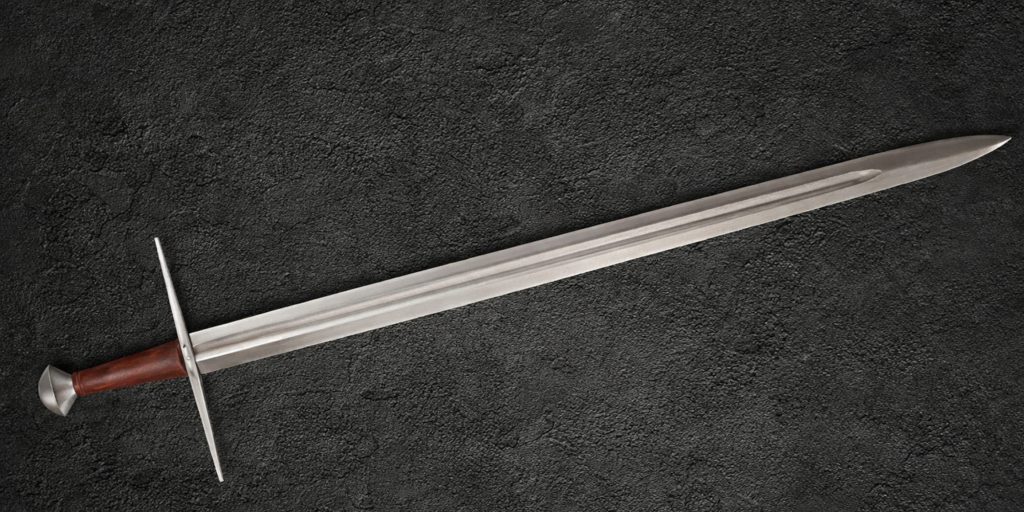
Type XI swords appeared as cavalry warfare became increasingly important.
Compared with Type X, they featured:
- Longer blades
- Narrower profiles
- Shorter grips
- Improved reach from horseback
They remained primarily cutting weapons, but medieval sword design was beginning to become more specialised.
Type XII: The Classic Knightly Sword
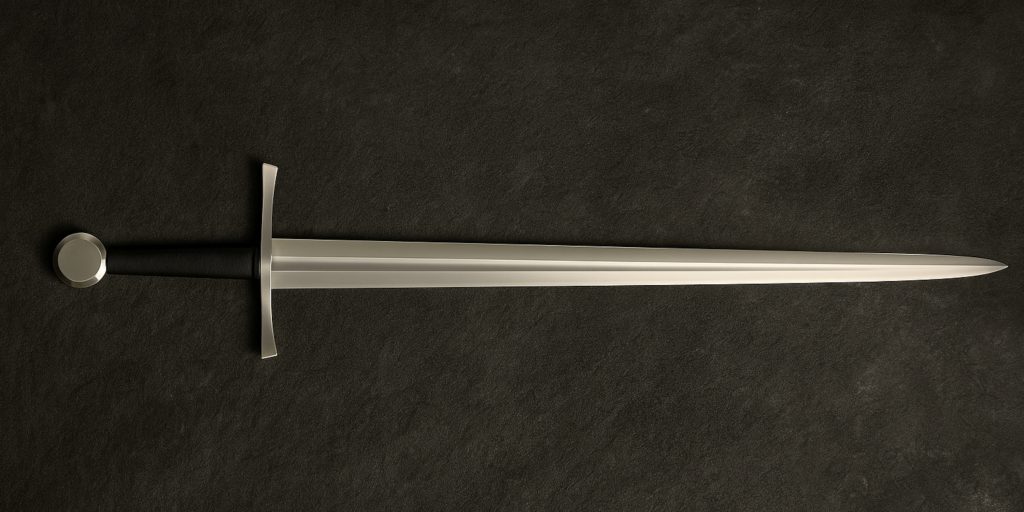
If someone imagines a medieval knight’s sword, they are probably thinking of something close to Type XII.
These weapons balanced cutting and thrusting ability.
Features included:
- Moderate blade taper
- Shorter fuller
- Sharper point
- Excellent handling
Type XII swords were widespread during the Crusading period and the High Middle Ages.
A well-made example was not a heavy lump of iron. The old myth that medieval swords were crude, oversized weapons refuses to die, rather like a bad historical movie villain.
Type XIII: The Great Cutting Sword

Type XIII swords were large and powerful weapons.
Some versions developed into hand-and-a-half swords, allowing warriors to use both hands when needed.
They featured:
- Wide blades
- Parallel edges
- Rounded points
- Long grips on larger examples
They prioritised cutting force, particularly useful before full plate armour became dominant.
Type XIV: Short, Sharp And Efficient
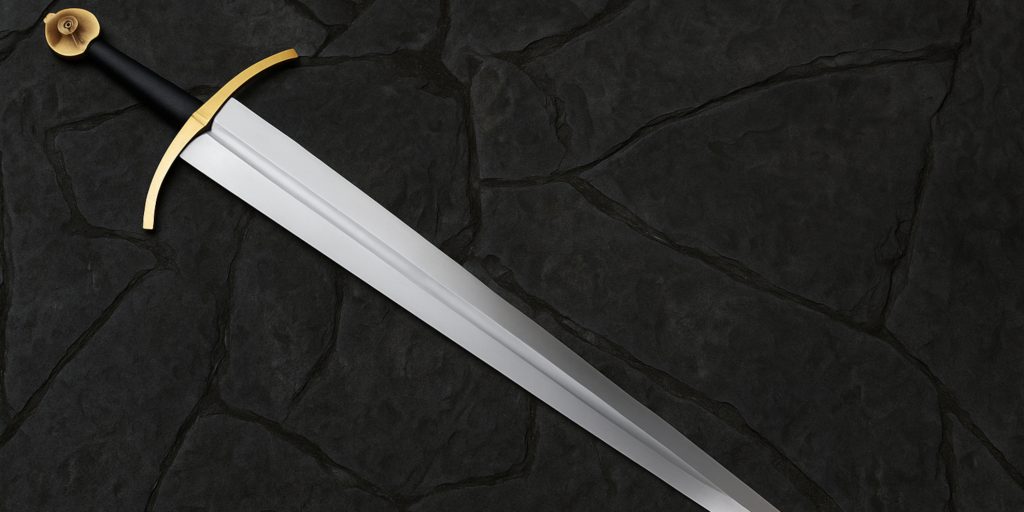
Type XIV swords became common around the late 13th and early 14th centuries.
They were:
- Shorter
- Wider near the guard
- Sharply tapered
- Better suited for thrusting
This reflected improvements in armour. As protection improved, simply hitting harder was no longer enough.
Type XV: The Armour Fighter
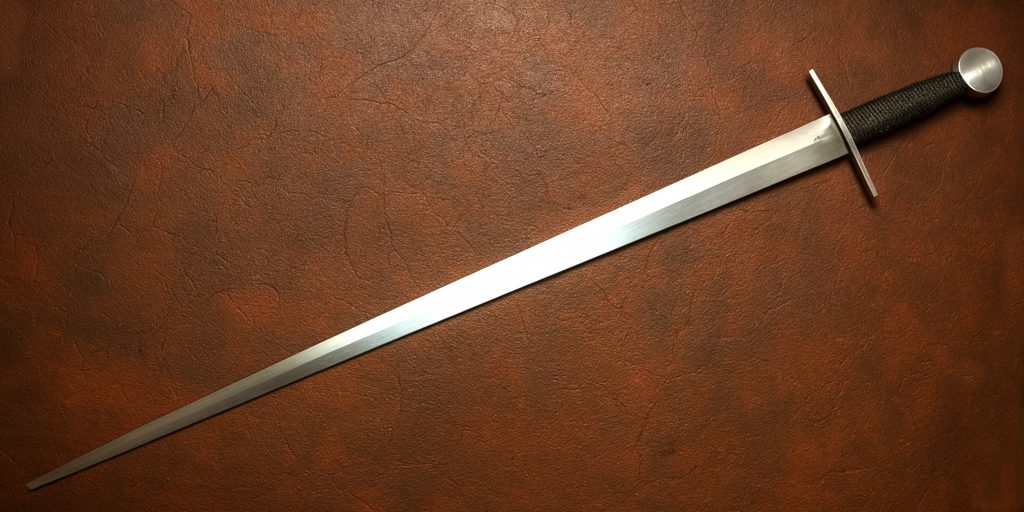
The rise of plate armour changed everything.
Type XV swords were designed around powerful thrusts rather than wide cuts.
They usually had:
- Diamond-shaped blade sections
- Very rigid construction
- Narrow points
- Little or no fuller
Against plate armour, fighters targeted gaps around:
- Visors
- Armpits
- Groin protection
- Joints
Contrary to fantasy battles, knights rarely tried to chop straight through plate armour. Medieval warriors were ambitious, not ridiculous.
Type XVI: The Hybrid Design
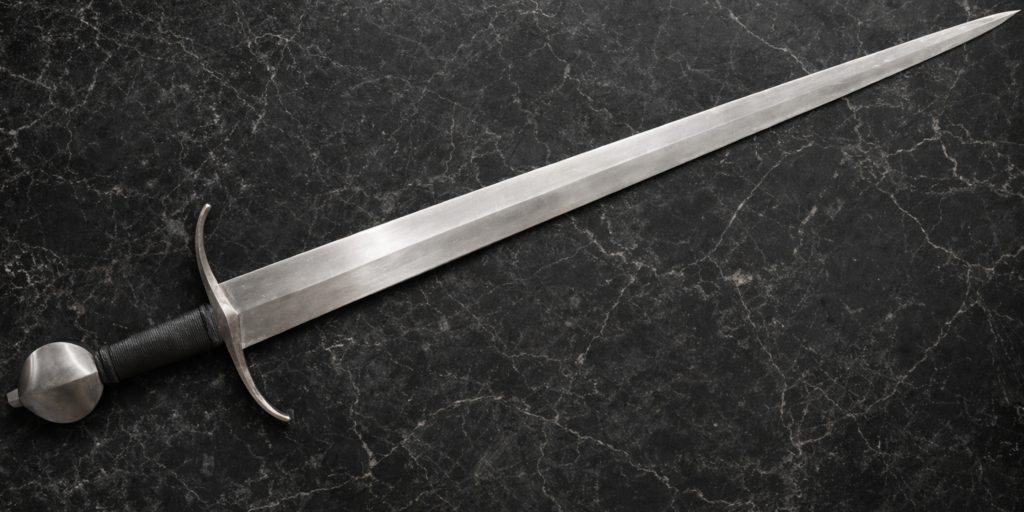
Type XVI attempted to combine older cutting ability with improved thrusting.
Common features:
- Fuller on the lower blade
- Reinforced diamond-shaped tip
- Good edge performance
- Strong point control
This was one of the great compromise designs of medieval sword making.
Type XVII: The Heavy Longsword
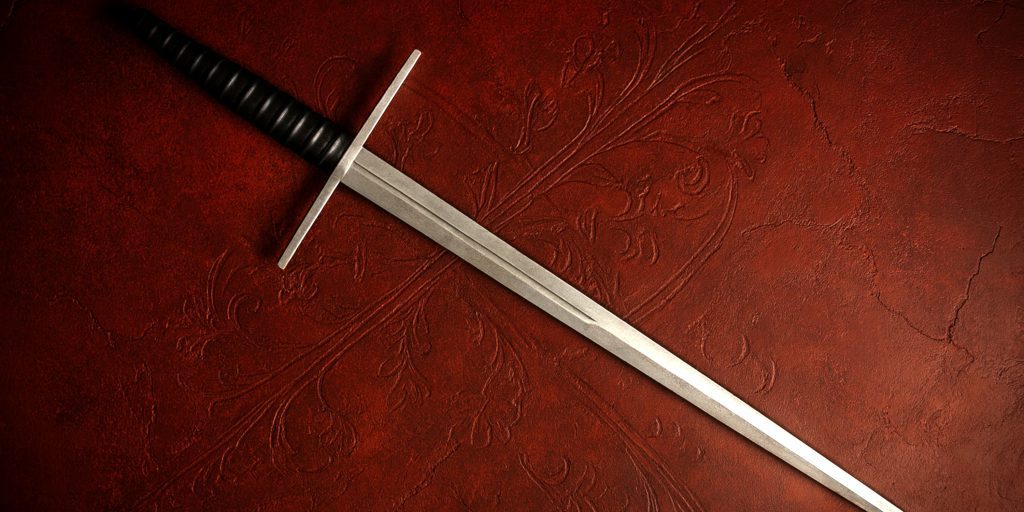
Type XVII swords appeared during the age of advanced armour.
They were:
- Long
- Stiff
- Often relatively heavy
- Optimised for two-handed control
They worked well with techniques such as half-swording, where fighters gripped part of the blade for precise thrusts.
Type XVIII: The Elegant Late Medieval Sword
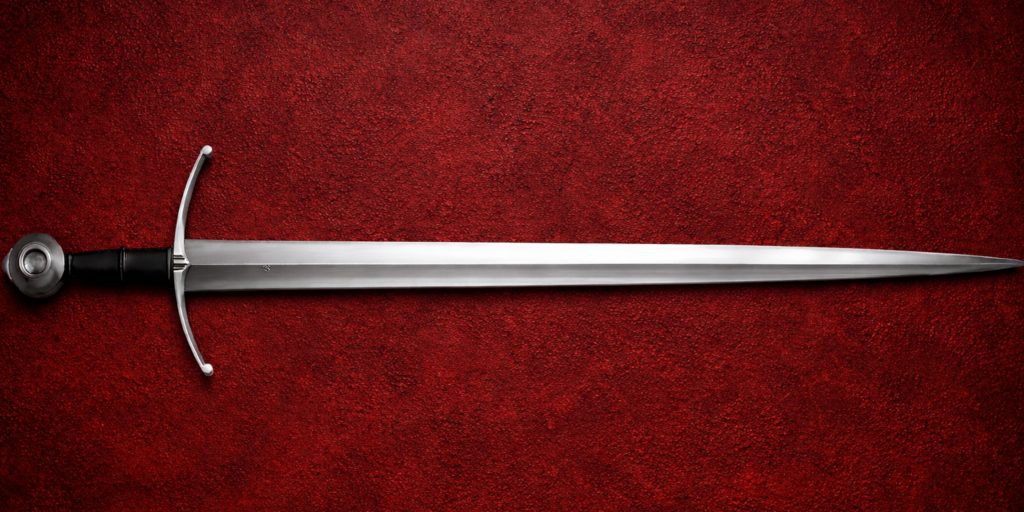
Type XVIII swords are among the most admired medieval designs.
They offered:
- Excellent balance
- Strong cutting ability
- Effective thrusting
- Refined handling
Many surviving examples show impressive craftsmanship from the 15th century.
Types XIX To XXII: The Move Toward The Renaissance
The final Oakeshott types show medieval swords moving toward Renaissance designs.
Changes included:
- More complex guards
- Longer grips
- Different blade profiles
- Increased civilian use
As firearms developed and armour declined, swords became increasingly specialised as personal weapons rather than primary battlefield tools.
How Accurate Is The Oakeshott System?
The Oakeshott typology is incredibly useful, but it is not perfect.
Medieval sword makers did not create weapons thinking:
“I shall now forge a perfect Type XVI.”
The categories were created centuries later by historians. Many swords sit between classifications or combine features from multiple groups.
It is best viewed as a guide to understanding development rather than a strict rulebook.
Famous Museums With Oakeshott-Type Swords
Important collections can be found at:
The Wallace Collection, London
One of the world’s finest displays of medieval European swords and armour, including many examples relevant to Oakeshott classifications.
Royal Armouries, Leeds
Home to an exceptional collection covering medieval warfare, sword development and armour technology.
The Metropolitan Museum of Art, New York
Contains important European medieval blades showing the transition from cutting swords to thrust-focused designs.
Musée de l’Armée, Paris
A major collection covering medieval and Renaissance arms.
Collecting Oakeshott Type Swords Today
Collectors use the typology to identify both original antiques and modern reproductions.
Popular reproduction types include:
- Type X for Viking and Norman-era enthusiasts
- Type XII for classic knightly swords
- Type XV for late medieval armour combat
- Type XVIII for elegant longswords
When examining a sword, collectors usually consider:
- Historical accuracy
- Blade geometry
- Steel quality
- Balance
- Weight distribution
- Construction method
A historically accurate sword should feel quick and responsive. Medieval fighters were not swinging metal crowbars.
Legacy Of The Oakeshott Typology
The Oakeshott classification changed how historians, collectors and enthusiasts understand medieval swords.
It revealed that European swords were not simple weapons that became progressively “better”. They were carefully engineered tools shaped by armour, battlefield tactics, technology and personal combat styles.
A sword blade is almost a document in steel. Read correctly, it tells the story of the warrior who carried it and the world that created it.