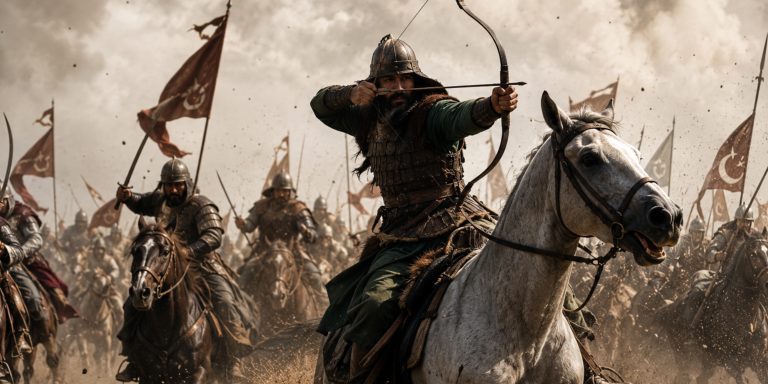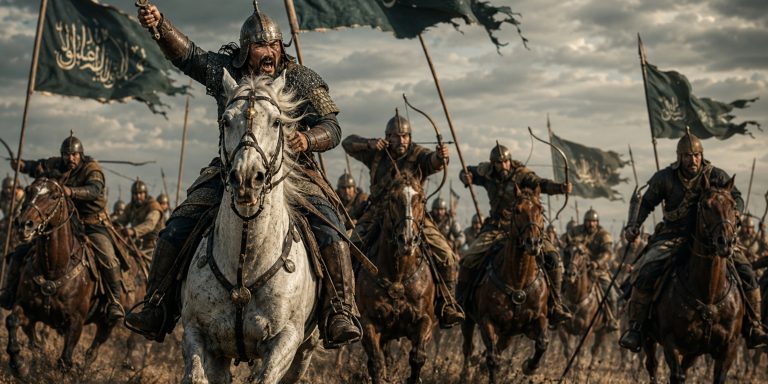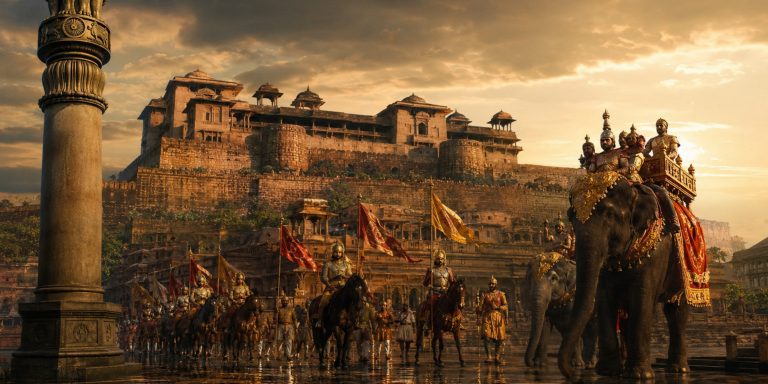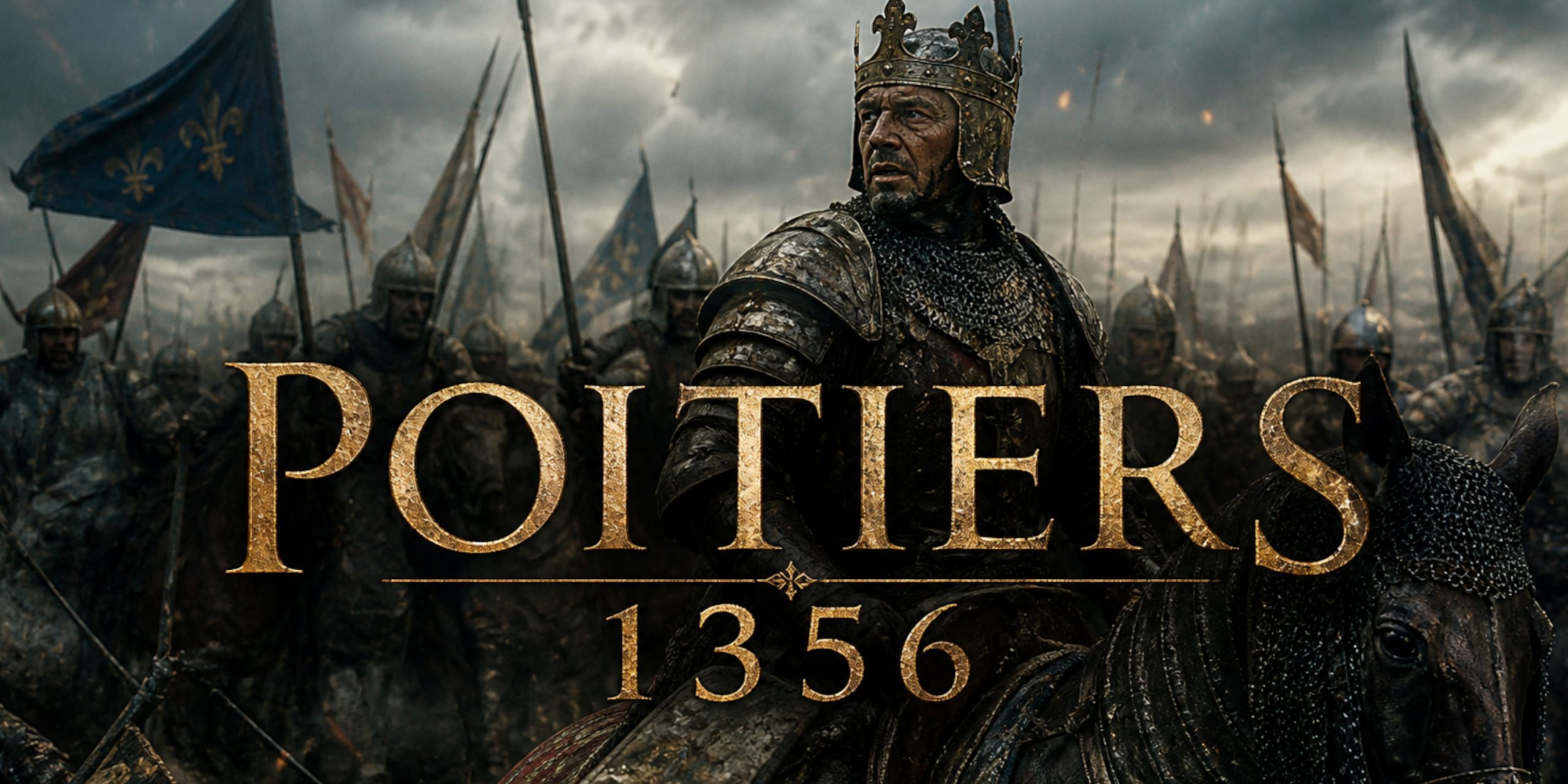
A king captured in open battle, a cavalry charge broken on uneven ground, and a smaller army that refused to behave as expected. The encounter near Poitiers sits at the heart of the Hundred Years’ War for a reason. It shows how discipline, terrain, and a stubborn refusal to follow chivalric script could upend a numerically superior force. There is also a quiet lesson in patience. The English waited, the French attacked, and history took note.
The Battle of Poitiers took place during the Edwardian phase of the Hundred Years’ War. An English force under Edward of Woodstock, later known as the Black Prince, found itself cornered by a much larger French army led by King John II. Negotiations failed. What followed was a tightly fought engagement that ended with the French king in captivity and the political balance of western Europe suddenly tilted.
Foces
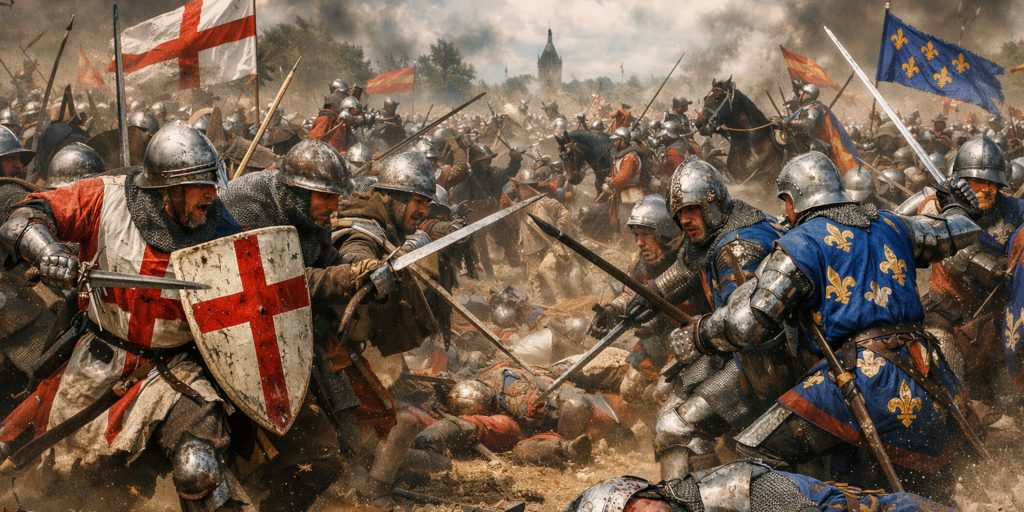
Estimates vary, though the disparity is clear enough to make the result feel improbable at first glance.
| Side | Estimated Strength | Composition |
|---|---|---|
| English-led force | 6,000 to 8,000 | Longbowmen, dismounted men-at-arms, light infantry |
| French royal army | 14,000 to 20,000 | Men-at-arms, heavy cavalry, infantry, crossbowmen |
English Force
- Commanded by Edward, Prince of Wales
- Supported by experienced captains from the campaigns in Aquitaine
- Heavily reliant on longbowmen and defensive positioning
French Force
- Commanded by King John II of France
- Included elite noble cavalry and large bodies of infantry
- Structured into multiple attacking divisions
A historian cannot help but notice the confidence on the French side. There is a sense of inevitability in their deployment. It did not survive first contact.
Arms and Armour
Leaders and Troop Composition
| Role | Typical Equipment | Notes |
|---|---|---|
| English men-at-arms | Arming swords, poleaxes, daggers | Fought dismounted to hold firm lines |
| English longbowmen | Longbows, short swords, mallets | Positioned behind cover, disruptive fire |
| French knights | Arming swords, lances, maces | Heavy armour, shock assault doctrine |
| French infantry | Spears, axes, swords | Less coordinated than mounted elite |
Key Weapon Types
- Arming sword
A one-handed blade common across both armies, suited to close fighting once formations collapsed - Longbow
The defining English weapon, capable of disrupting charges and thinning advancing lines before contact - Poleaxe
Favoured by men-at-arms for armoured combat, effective in tight, brutal engagements - Lance
The traditional knightly weapon, less effective once cavalry lost cohesion
Armour was typical of the mid 14th century transition. Plate elements were becoming more common, layered over mail. Protection was improving, though not yet at the level seen later in the century. Arrows did not need to pierce every plate to cause chaos. Horses were often the softer target, and once a knight was on foot, the tone of the fight changed quickly.
Background and Build-Up
Edward’s campaign through southern France had been one of calculated devastation. Raiding, supply disruption, and pressure on French authority forced King John II to respond. The French army moved to intercept and trap the English force near Poitiers.
There were attempts at negotiation, including mediation by church officials. Terms were discussed. Pride did the rest. Neither side wanted to concede the moral ground. When talks broke down, battle became unavoidable.
The Battle
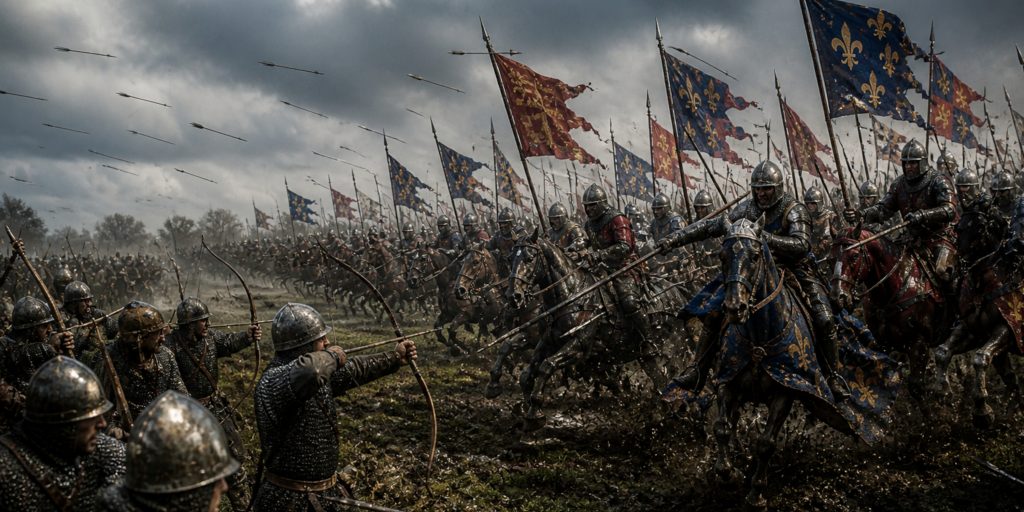
The English took up a defensive position behind hedges, vineyards, and uneven ground. It was not picturesque, though it was effective. The French advanced in successive waves.
- Initial French attacks were disorganised, slowed by terrain
- Longbow fire disrupted formations before contact
- Cavalry struggled to maintain momentum over broken ground
- English men-at-arms held firm once fighting closed
At a critical moment, the English launched a counterattack. It was not grand, just well-timed. The French line faltered. Confusion spread. In the chaos, King John II was surrounded and captured along with his son.
It is one of those moments where the narrative tightens. A king in armour, fighting stubbornly, refusing to flee. Admirable, perhaps, though not especially helpful to his cause.
Battle Timeline
| Time | Event |
|---|---|
| Morning | French army forms and advances |
| Late morning | First assaults meet heavy longbow resistance |
| Midday | Repeated attacks lose cohesion in difficult terrain |
| Early afternoon | English counterattack begins |
| Afternoon | French line collapses, King John II captured |
| Late afternoon | Fighting ends, English secure the field |
Archaeology
Physical evidence around Poitiers is less dramatic than one might expect. The nature of medieval battlefields rarely leaves clear, concentrated remains.
- Scattered arrowheads have been found in the region
- Terrain studies support descriptions of restricted movement
- No large burial pits definitively tied to the battle have been confirmed
Much of the reconstruction relies on chronicles rather than excavation. This is not unusual. Medieval battles often vanish into the landscape with frustrating subtlety.
Contemporary Accounts
Chroniclers provide colour, though not always clarity.
“The English stood firm, and shot so thick that it seemed snow.”
“The King of France fought valiantly, yet fortune turned from him.”
“Never had so many noblemen been taken in one day.”
These voices carry a mix of admiration and disbelief. The tone suggests that even contemporaries struggled to process how decisively the French attack failed.
Outcome and Consequences
- King John II captured and later ransomed
- French nobility heavily depleted through capture and loss
- English prestige greatly increased
- Led to the Treaty of Brétigny in 1360
The capture of a reigning king is rare and politically explosive. France entered a period of instability, while England gained leverage far beyond what battlefield numbers alone would suggest.
Legacy
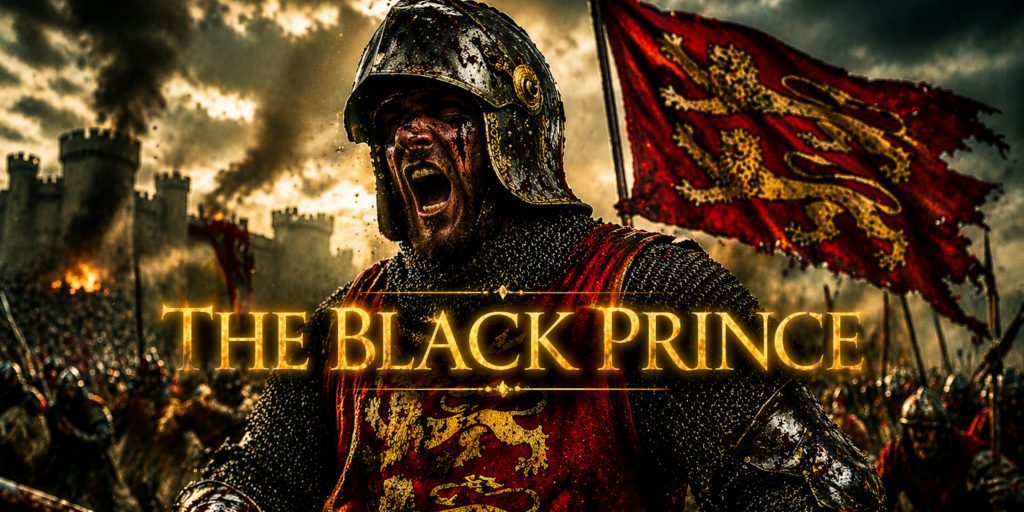
Poitiers reinforced a pattern already visible after Crécy. Cavalry alone could not break disciplined infantry supported by missile troops and favourable terrain. It also elevated the reputation of the Black Prince, who emerged as one of the most respected commanders of his age.
There is a tendency to frame this as a simple triumph of the longbow. That is too neat. Terrain, discipline, timing, and French overconfidence all played their part. Wars are rarely won by a single factor, even if one weapon gets most of the attention.