The BBC’s The Hollow Crown takes seven of Shakespeare’s English history plays, gives them an absurdly strong cast and lets several generations of monarchs discover that wearing a crown is mostly an elaborate route to insomnia.
Released in two cycles in 2012 and 2016, the series follows the English throne from Richard II’s fall to Richard III’s defeat at Bosworth. Ben Whishaw, Jeremy Irons, Tom Hiddleston, Tom Sturridge and Benedict Cumberbatch play the kings at its centre. Around them is the kind of supporting cast that makes even a minor council meeting feel faintly intimidating.
This is Shakespeare rather than a television documentary. Events are compressed, characters are reshaped and Tudor politics hangs over the portrayal of Richard III. Yet as a screen adaptation, The Hollow Crown is rich, accessible and unusually willing to show power as something lonely, grubby and physically exhausting.
The Hollow Crown at a Glance
| Detail | Information |
|---|---|
| Format | Seven television films across two series |
| Original release | 2012 and 2016 |
| Broadcaster | BBC Two in the UK |
| Plays adapted | Richard II, Henry IV Parts 1 and 2, Henry V, the three Henry VI plays and Richard III |
| Historical period | 1398 to 1485 within the drama |
| Executive producer | Sam Mendes |
| Main directors | Rupert Goold, Richard Eyre, Thea Sharrock and Dominic Cooke |
| Best suited to | Shakespeare newcomers, medieval history fans and admirers of prestige British drama |
What Is The Hollow Crown About?
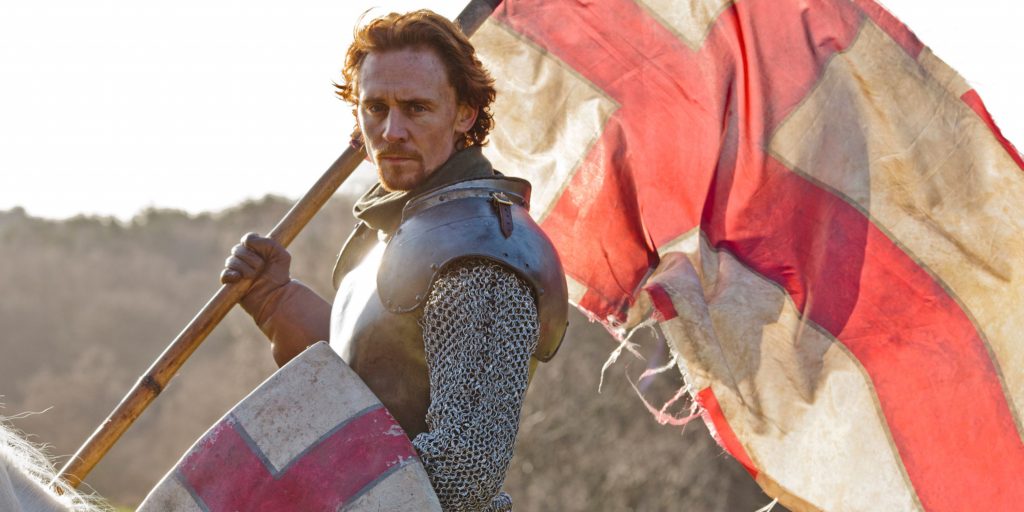
The title comes from Richard II, in which the doomed king speaks of death holding court within the hollow crown worn by rulers. That image becomes the organising idea of the entire production. Each king inherits power, but he also inherits the consequences of the last reign.
The first series adapts Shakespeare’s second historical tetralogy, often called the Henriad. Richard II loses his throne to Henry Bolingbroke, now Henry IV. The usurper struggles to secure his reign while his son Prince Hal spends his time with Falstaff. Hal eventually becomes Henry V and leads an invasion of France.
The second series, subtitled The Wars of the Roses, moves into the reign of Henry VI and the conflict between Lancaster and York. Importantly, it condenses Shakespeare’s three Henry VI plays into two films before ending with Richard III. That compression keeps the story moving, although anyone trying to build a family tree while watching may still require paper, patience and possibly professional assistance.
For reliable summaries of the original plays, the Shakespeare Birthplace Trust’s guide to Shakespeare’s works is a useful companion.
Every Film in The Hollow Crown
| Film | Central ruler | What drives the story |
|---|---|---|
| Richard II | Richard II | A king’s authority collapses after exile, confiscation and rebellion |
| Henry IV, Part 1 | Henry IV | Rebellion grows while Prince Hal is divided between court and tavern life |
| Henry IV, Part 2 | Henry IV | An ageing king approaches death and Hal must finally choose what kind of ruler he will be |
| Henry V | Henry V | The new king invades France and stakes his reign on victory at Agincourt |
| Henry VI, Part 1 | Henry VI | English power in France weakens as rival factions gather at home |
| Henry VI, Part 2 | Henry VI | Civil war consumes England and Richard of Gloucester moves towards the crown |
| Richard III | Richard III | Richard eliminates rivals, seizes the throne and meets Henry Tudor at Bosworth |
The first four films form the stronger continuous arc. Richard’s deposition poisons Henry IV’s reign, Henry’s guilt shapes Hal’s inheritance and Hal’s reinvention gives Henry V its uneasy force. The later trilogy covers more characters and political reversals in less time, so it can feel like the realm has been placed on fast-forward.
The Cast and Standout Performances
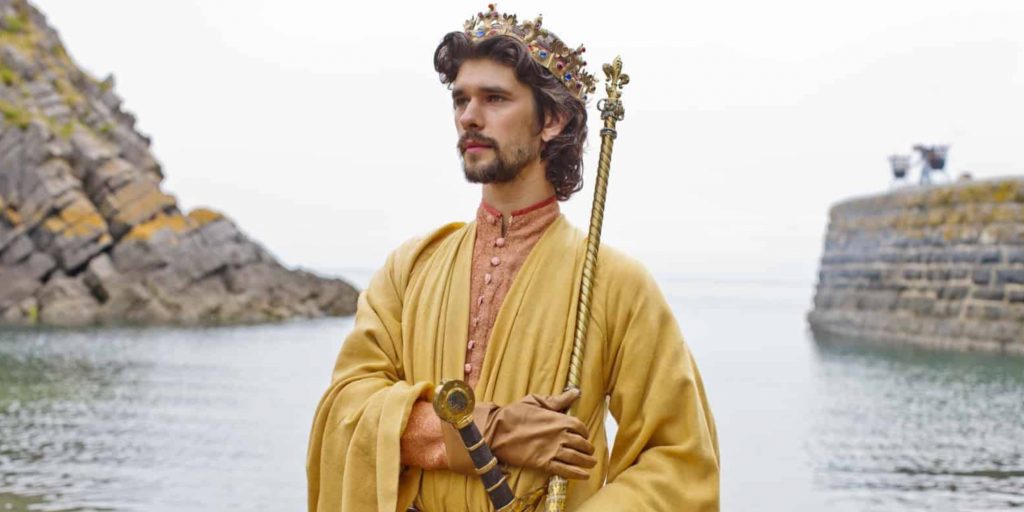
Ben Whishaw’s Richard II is the series at its most visually assured. His king is delicate, theatrical and convinced that monarchy is part of the natural order. When that belief fails, Whishaw lets the performance turn inward. Richard loses political control long before he understands what has happened, which is painful to watch and entirely the point.
Jeremy Irons gives Henry IV the physical weight of stolen power. He looks tired before the crown even has time to settle. Tom Hiddleston then makes Prince Hal’s transformation credible without pretending the old personality simply disappears. His Henry V can inspire men, threaten civilians and flirt with Katharine, sometimes with only a short pause between modes.
Simon Russell Beale’s Falstaff is funny, manipulative and terribly human. The rejection scene works because the production does not treat him as harmless comic furniture. BAFTA recognised both Beale and Whishaw for their performances in the first cycle, with Whishaw winning Leading Actor and Beale Supporting Actor at the 2013 television awards. The official BAFTA winners announcement records both awards.
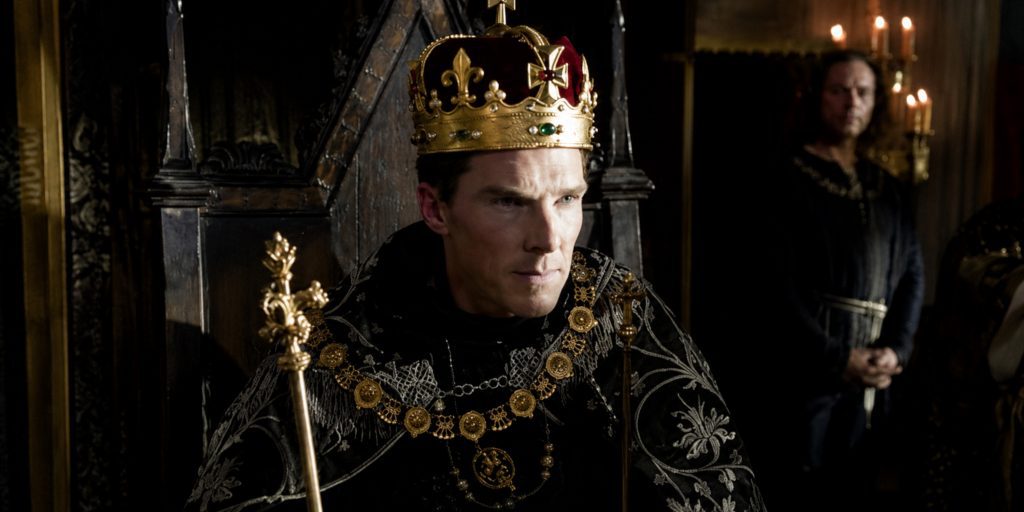
In the second cycle, Sophie Okonedo brings fierce momentum to Margaret of Anjou while Tom Sturridge plays Henry VI as a gentle, devout man catastrophically unsuited to the machinery around him. Benedict Cumberbatch’s Richard III is magnetic, amused by his own plotting and increasingly trapped by it. Judi Dench, Hugh Bonneville, Keeley Hawes and Michael Gambon add further depth to a cast that feels almost unfairly well stocked.
Why the First Series Works So Well
The 2012 films understand that Shakespeare’s histories are family dramas wearing state robes. Battles and rebellions matter, but the emotional centre lies in fathers, sons and betrayed companions.
Richard Eyre’s two Henry IV films are especially good at moving between social worlds. The court is cold, formal and anxious. Eastcheap is warm, crowded and full of appetites. Hal belongs to both until becoming king forces him to choose. His rejection of Falstaff is politically necessary and personally brutal, which is exactly why it lands.
The series also makes the language easier to follow without flattening it. Performance, framing and physical action carry the meaning when the vocabulary becomes dense. You do not need to arrive having revised every speech. The actors do the work, as actors are generally supposed to, though certain Shakespeare adaptations occasionally forget this.
The Wars of the Roses: Bigger, Bloodier and More Compressed
The 2016 cycle has a harsher texture. Courtly uncertainty gives way to executions, dynastic murder and open warfare. Director Dominic Cooke joins the condensed Henry VI material to Richard III, creating a more unified narrative than the plays usually receive on screen.
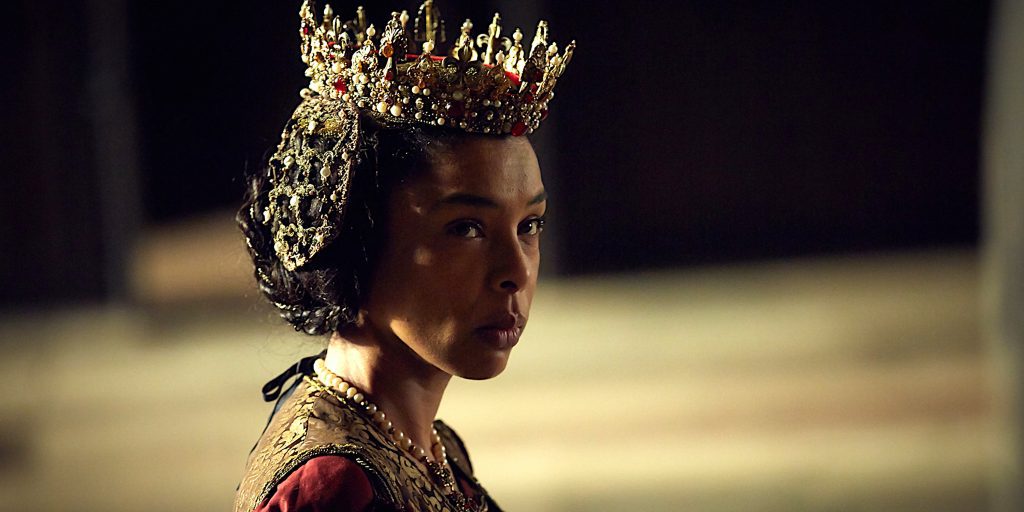
That decision has benefits. Margaret’s journey is clearer, Richard’s emergence is seeded early and the collapse of Henry VI’s rule feels relentless. It also comes at a cost. The three original Henry VI plays contain a huge web of loyalties and grievances. Compressing them into two films means some shifts in allegiance pass quickly, while several historical figures become functions of the plot rather than fully formed people.
The second cycle is still powerful television. Its PBS overview of The Wars of the Roses provides a concise guide to the three films and principal cast.
Battles, Swords and Armour
The Hollow Crown avoids the polished tournament look that can make medieval combat resemble an expensive school pageant. Its battles are muddy, confusing and intimate. Men struggle for breath, armour restricts movement and victory rarely looks clean.
The weaponry shifts with the chronology and the dramatic needs of each film:
- Arming swords appear as single-handed sidearms suited to knights and nobles, often used with a shield in the earlier settings.
- Longswords become more visible in the later medieval action, used with two hands or adapted to close armoured fighting.
- Daggers matter once combat collapses into grappling. A blade capable of reaching vulnerable gaps in armour could be more useful than a grand cutting stroke.
- Polearms provide reach and force in mass fighting. Spears, bills and other hafted weapons were central battlefield tools, even if swords naturally attract the camera.
- Longbows dominate the visual language of Agincourt, where volleys, defensive stakes and difficult ground shape the battle.
The armour generally communicates status and period effectively, from mail and layered textile protection to increasingly complete plate harness. It should not be treated as a frame-by-frame museum reconstruction. Costume design selects, simplifies and occasionally blends styles to keep characters legible on screen.
The same applies to fighting. The choreography aims for dramatic credibility rather than demonstrating a particular surviving combat treatise. It succeeds most when combat looks desperate and awkward. Real armoured fighting involved wrestling, leverage and attacks on gaps, not endless edge-to-edge sword clanging for the benefit of a nearby camera.
How Historically Accurate Is The Hollow Crown?
The short answer is that it is often visually persuasive, but its story is Shakespeare’s version of history.
Shakespeare wrote about medieval kings for audiences living under the Tudors. His sources, dramatic priorities and political environment shaped the plays. The television series adapts those plays, so some of its largest departures were already centuries old before the cameras arrived.
Richard II and Henry IV
Richard II was deposed by Henry Bolingbroke in 1399, and the seizure created a lasting problem of legitimacy for the Lancastrian dynasty. Shakespeare turns that crisis into a meditation on sacred kingship, performance and identity. The broad political transition is historical, but speeches and private confrontations belong to drama.
Prince Hal and Henry V
The reckless young Hal who abandons tavern life to become a heroic king is one of Shakespeare’s most durable character arcs. The historical Henry gained military and political experience well before taking the throne. The series preserves the dramatic transformation because without it Falstaff loses much of his function and Hal loses his most compelling internal conflict.
Agincourt took place in 1415 and ended in a major English victory, but Shakespeare gives the campaign a purposeful shape built around kingship and national identity. The film wisely retains some of the play’s darker material, including Henry’s threats and the killing of prisoners. This keeps the episode from becoming a simple patriotic victory reel.
Henry VI, Margaret and Richard III
The Wars of the Roses were not one continuous, neatly organised contest between two permanently united teams. Loyalties shifted, rivalries overlapped and later labels make the conflict appear tidier than it was.
Margaret of Anjou becomes a central force in the second cycle, although the compressed chronology intensifies her presence across events. Richard III presents the largest warning label. Shakespeare inherited and amplified a hostile tradition surrounding Richard. The historical king remains controversial, but the calculating theatrical villain is not a neutral biography.
The series is best approached as an adaptation of how Shakespeare interpreted English history. It can inspire further reading, but it should not be used to settle an argument about fifteenth-century politics. That would be asking excellent actors to perform the duties of an archive.
Themes That Give the Series Its Weight
Kingship as performance
Every ruler must persuade others that he belongs on the throne. Richard II believes ceremony creates authority. Henry IV knows force put him there. Henry V becomes a master of public language. Richard III treats rule as the final prize in a performance of deception.
Inherited violence
One unlawful seizure never stays contained. Bolingbroke’s rebellion echoes through his reign and into those of his descendants. The crown passes forward, but so does the bill.
Fathers, sons and substitutes
Henry IV fears and misunderstands Hal. Falstaff offers a comic substitute father, then discovers that affection cannot survive the requirements of kingship. Later, dynastic succession becomes even more ruthless as children are treated as claims, hostages and obstacles.
The cost of political language
These characters use beautiful words to legitimise ugly acts. That tension is central to Shakespeare and especially effective on television, where a persuasive speech can be followed immediately by its human consequences.
What Does Not Work Quite as Well?
The density remains a barrier. The series is accessible by Shakespearean standards, but it still expects attention. Characters share titles, families and ambitions, and the second cycle moves through them at speed.
The condensation of Henry VI creates the biggest strain. It strengthens the overall arc but removes breathing room from the political story. Richard III can also feel like the inevitable endpoint of a narrative designed around him, reinforcing Shakespeare’s distorted portrait without always giving viewers enough reason to question it.
There is also a visual solemnity that occasionally becomes uniform. Mud, smoke, stone rooms and haunted faces suit the material, yet four consecutive hours of royal misery can make sunlight seem historically inaccurate.
The Best Episodes Ranked
- Richard II: The most complete marriage of performance, imagery and political tragedy.
- Henry IV, Part 2: Falstaff’s decline and Hal’s accession give the series its strongest emotional ending.
- Henry V: A muscular war film that allows unease to sit beside heroism.
- Richard III: Cumberbatch drives a dark and entertaining conclusion.
- Henry IV, Part 1: Rich character work, particularly among Hal, Falstaff and Hotspur.
- Henry VI, Part 2: Violent, fast and dramatically focused, though heavily compressed.
- Henry VI, Part 1: Ambitious and well acted, but burdened by a large cast and a great deal of political groundwork.
Even the film at the bottom of this ranking is worth watching. This is less a division between good and bad than between very good and faintly less magnificent.
Is The Hollow Crown Worth Watching?
Yes, particularly if you like historical drama but find filmed theatre too static. The Hollow Crown uses landscape, weather, architecture and close-up performance to make Shakespeare cinematic without treating the text as an obstacle.
Its greatest strength is continuity. Watching the crown pass from Richard II to Henry IV, Henry V, Henry VI and Richard III makes the plays feel like one long study of political damage. Victories decay into new disputes. Sons inherit unfinished wars. Nobody receives the crown with a clean account.
Start with Richard II rather than jumping directly to Hiddleston or Cumberbatch. The emotional and political echoes are much stronger when the story is watched in order.
Where to Watch The Hollow Crown
UK streaming availability changes regularly. At the time of this update, JustWatch UK lists digital purchase options through services including Amazon Video, Apple TV Store and Sky Store, with no free streaming option shown. Box sets also remain available on DVD and Blu-ray.
Check that a listing includes both the 2012 Henriad and the 2016 Wars of the Roses cycle. Some storefronts separate them or present the films as individual episodes.
Final Verdict
The Hollow Crown is one of the strongest Shakespeare projects made for television. It is handsomely produced without becoming decorative, respectful of the language without feeling embalmed and filled with performances that give political history a pulse.
It is not a factual account of medieval England, and its visual confidence can make Shakespeare’s inventions appear more authoritative than they are. Keep that distinction in view and the series becomes more interesting, not less. This is a story about how England remembered its kings, how Shakespeare reshaped them and how power turns private weakness into public disaster.
Rating: 4.5 out of 5
Season 2
- Henry VI (Tom Sturridge): A weak monarch whose reign plunges England into civil war.
- Richard III (Benedict Cumberbatch): A chilling portrayal of ambition and villainy, delivering one of Shakespeare’s most iconic roles.