History has never been kind to generals who believed numbers alone would guarantee victory.
Again and again, enormous armies marched confidently towards battle, convinced that superior manpower would overwhelm any resistance. Yet some of history’s greatest military disasters tell a very different story. A smaller, disciplined and better led force could dismantle an opponent several times its size through intelligent planning, tactical innovation and a keen understanding of the battlefield.
These victories were far more than remarkable upsets. They altered the balance of power, ended invasions, destroyed empires and inspired military thinkers for centuries. Many are still studied at staff colleges around the world because the principles behind them remain surprisingly relevant.
As a historian, I have always found these battles irresistible. They remind us that warfare is as much a contest of minds as it is of swords. They also expose a recurring weakness shared by many great powers. Overconfidence has undone more armies than many generals would ever care to admit.
This ranking focuses on the ancient and medieval world, where outnumbered commanders achieved victories that continue to define military history.
How These Battles Were Ranked
Every battle in this list shares three important characteristics.
- A significantly smaller army defeated a much larger opponent.
- The victory resulted from superior leadership, tactics or use of terrain rather than chance.
- The outcome had lasting military or political consequences.
It is important to note that troop numbers for many ancient battles remain debated. Ancient historians frequently exaggerated enemy strength to magnify victories. Wherever possible, the figures used here reflect the broad consensus of modern scholarship while acknowledging that precise numbers remain uncertain.
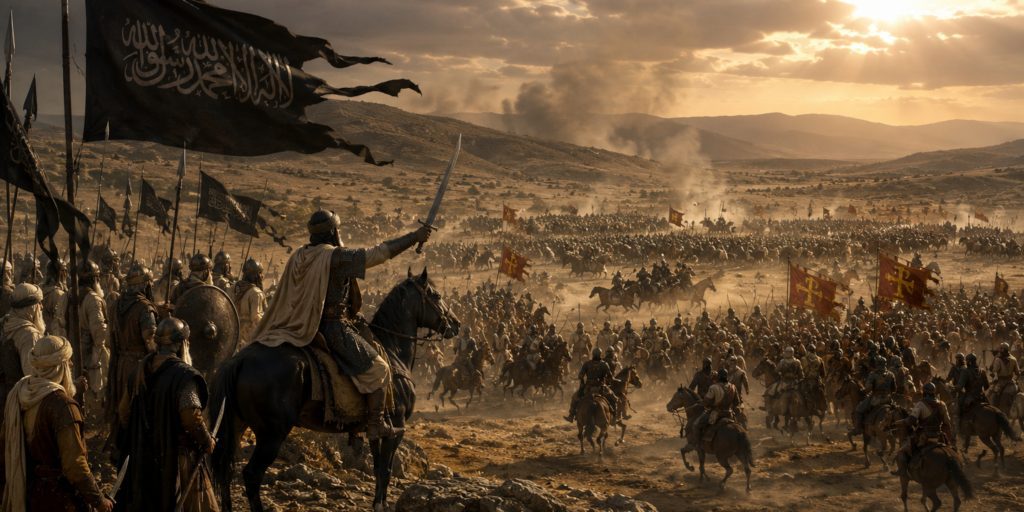
10. Battle of Ajnadayn (634)
| Winner | Rashidun Caliphate |
|---|---|
| Loser | Byzantine Empire |
| Estimated Forces | Around 20,000 Muslims versus perhaps 40,000 Byzantine troops |
The Battle of Ajnadayn marked one of the first great victories of the early Islamic conquests.
Facing a larger Byzantine army in Palestine, the Rashidun commanders relied on disciplined infantry, mobile cavalry and flexible battlefield tactics. Rather than allowing themselves to become overwhelmed, they maintained cohesion while exploiting weaknesses in the Byzantine line.
The defeat severely weakened Byzantine control of the Levant and opened the way for further Muslim expansion into Syria and beyond.
Why it ranks tenth
Although troop estimates remain debated, Ajnadayn demonstrated how superior leadership could overcome a much larger imperial army and permanently alter the political landscape of the Near East.
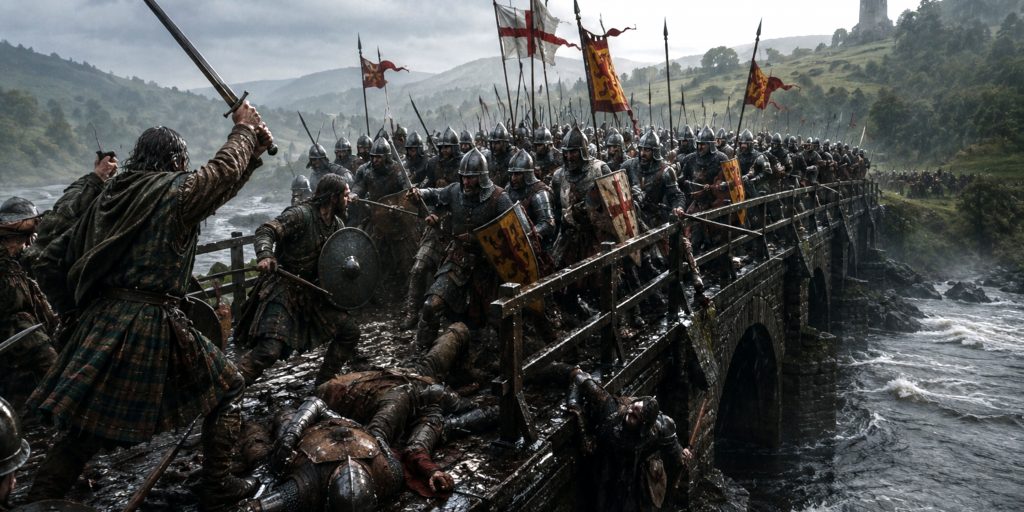
9. Battle of Stirling Bridge (1297)
| Winner | Scotland |
|---|---|
| Loser | Kingdom of England |
| Estimated Forces | Around 5,000 to 7,000 Scots versus roughly 9,000 to 12,000 English |
William Wallace and Andrew Moray understood that they could not defeat England in open ground.
Instead, they waited beside the narrow bridge crossing the River Forth.
As the English army crossed in stages, the Scots launched their attack before the full force could deploy. Thousands of English soldiers became trapped between the river and advancing Scottish spearmen.
The bridge itself became a deadly bottleneck.
Arms and armour
Scots
- Long spears
- Swords
- Axes
- Light armour
English
- Knights
- Longswords
- Crossbows
- Heavy cavalry
Why it ranks ninth
It remains one of history’s finest examples of terrain completely neutralising a superior army.
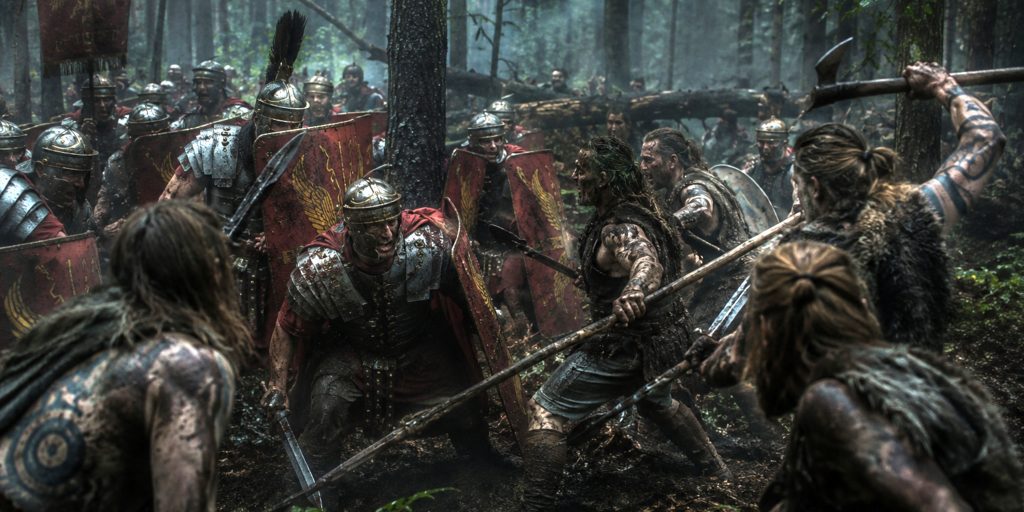
8. Battle of the Teutoburg Forest (9 CE)
| Winner | Germanic Coalition |
|---|---|
| Loser | Roman Empire |
| Estimated Forces | Around 15,000 to 20,000 warriors versus roughly 20,000 to 25,000 Romans |
Rome believed Germania had been pacified.
Arminius knew better.
Raised in Rome and trained in Roman military methods, he used that knowledge against his former allies. Luring Governor Publius Quinctilius Varus into dense woodland during heavy rain, he stretched the Roman column over many kilometres.
Unable to form proper battle lines, the legions were attacked repeatedly over three days.
By the end, three Roman legions had vanished.
Legacy
The destruction of Legions XVII, XVIII and XIX shocked the Roman Empire so profoundly that those legion numbers were never used again.
Rome effectively abandoned ambitions of expanding deep into Germania.
Why it ranks eighth
Although the armies were relatively close in size, the complete destruction of a professional Roman force makes this one of antiquity’s greatest military catastrophes.
7. Battle of Morgarten (1315)
| Winner | Swiss Confederates |
|---|---|
| Loser | Habsburg Austria |
| Estimated Forces | Around 1,500 Swiss versus between 3,000 and 8,000 Austrians |
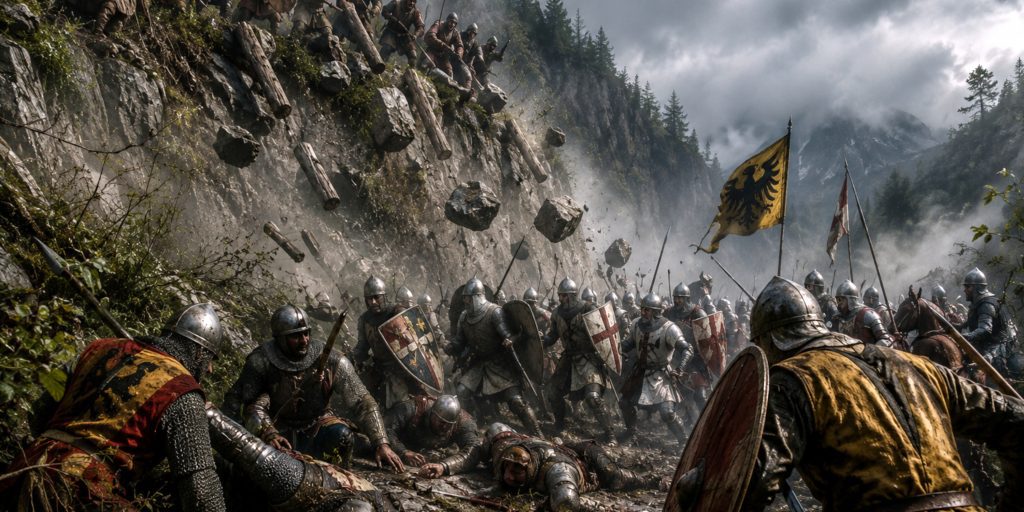
The Habsburg knights expected an easy victory.
Instead, they marched directly into a carefully prepared ambush.
Using the steep mountain slopes above the narrow pass, the Swiss unleashed rocks, timber and missiles before charging with halberds and long spears.
The Austrian cavalry found itself trapped with little room to manoeuvre.
The battle quickly descended into chaos.
Why it ranks seventh
Morgarten demonstrated that disciplined infantry fighting in restrictive terrain could defeat Europe’s finest mounted knights.
6. Battle of Marathon (490 BCE)
| Winner | Athens and Plataea |
|---|---|
| Loser | Achaemenid Persian Empire |
| Estimated Forces | Around 10,000 Greeks versus roughly 20,000 to 25,000 Persians |
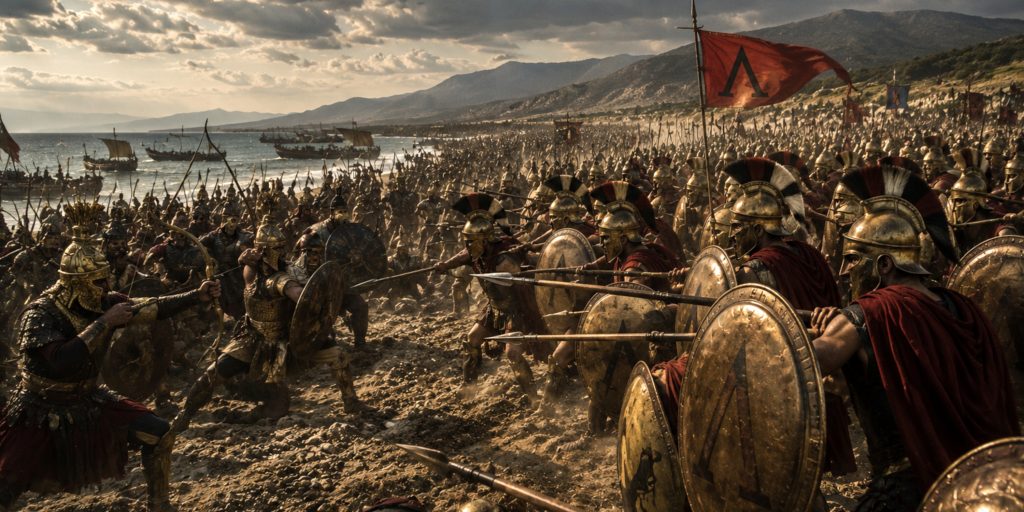
The Persians arrived expecting another straightforward conquest.
Instead, they encountered one of the most disciplined citizen armies of the ancient world.
General Miltiades strengthened both flanks of the Greek line while deliberately weakening the centre. As Persian troops advanced, the Greek wings enveloped them in one of history’s earliest successful double envelopments.
The heavily armoured hoplites proved devastating in close combat.
Estimated casualties
- Persians: around 6,400
- Greeks: approximately 192
Whether every ancient figure is accurate remains uncertain, but the imbalance speaks for itself.
Why it ranks sixth
Marathon preserved Athenian independence and became one of the defining victories of classical Greece.
5. Battle of Carrhae (53 BCE)
| Winner | Parthian Empire |
|---|---|
| Loser | Roman Republic |
| Estimated Forces | Around 10,000 cavalry versus approximately 40,000 Romans |
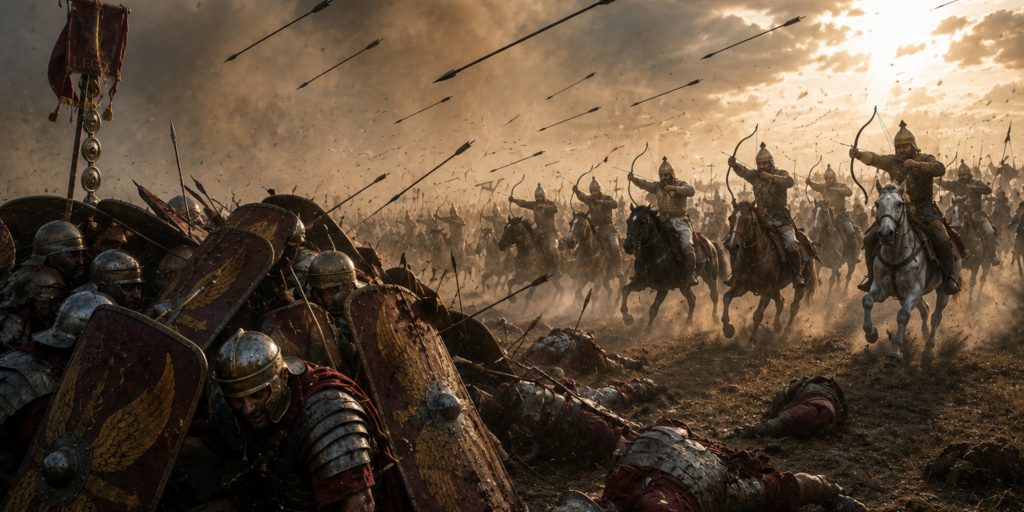
Marcus Licinius Crassus sought military glory equal to Julius Caesar.
Instead, he marched into disaster.
The Parthian general Surena avoided close combat, allowing mounted horse archers to shower Roman formations with arrows while heavily armoured cataphracts attacked weakened positions.
Roman infantry struggled against an enemy they simply could not catch.
Crassus was killed, and thousands of legionaries were either slain or captured.
Why it ranks fifth
Carrhae remains one of the greatest demonstrations of cavalry defeating a much larger infantry army.
4. Battle of Agincourt (1415)
| Winner | England |
|---|---|
| Loser | France |
| Estimated Forces | Around 6,000 English versus between 20,000 and 30,000 French |
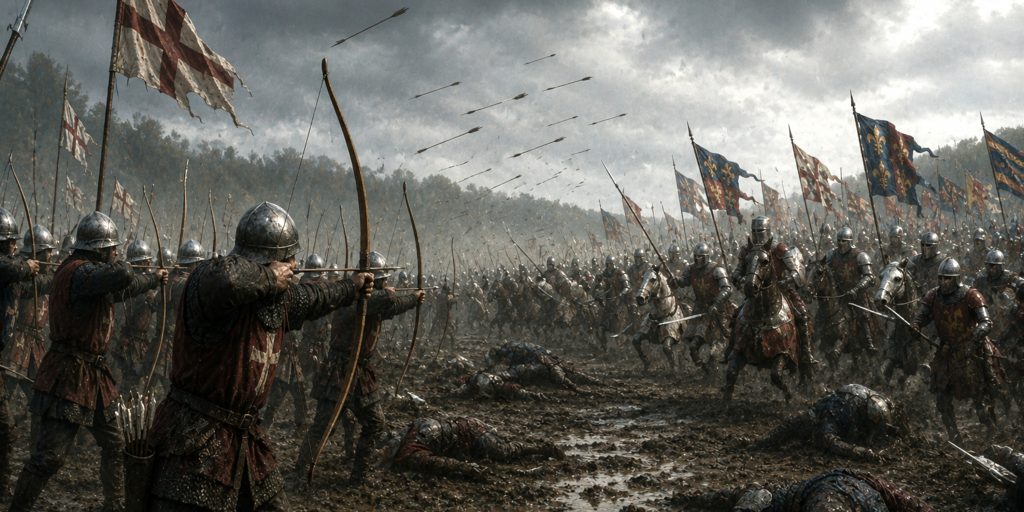
Henry V’s army was exhausted, hungry and suffering from disease.
Few expected it to survive.
Heavy rain had transformed the battlefield into deep mud before the French advance began.
As French knights struggled forward, English longbowmen unleashed continuous volleys. Men fell, horses crashed into advancing formations and heavily armoured soldiers became trapped beneath the weight of their comrades.
Sometimes the battlefield itself chooses a side.
Weapons
- English longbows
- Bodkin arrows
- Poleaxes
- Longswords
Why it ranks fourth
Agincourt became one of medieval Europe’s most famous victories and permanently enhanced the reputation of the English longbow.
3. Battle of Gaugamela (331 BCE)
| Winner | Alexander the Great |
|---|---|
| Loser | Persian Empire |
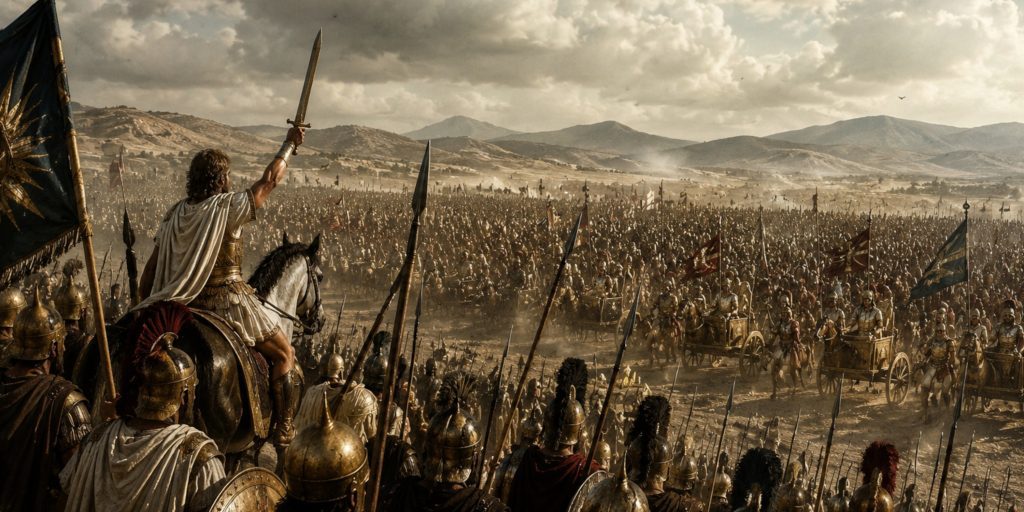
| Estimated Forces | Around 47,000 Macedonians versus perhaps 100,000 or more Persians |
Alexander faced the greatest army assembled by Darius III.
The Persians even levelled sections of the battlefield to maximise the effectiveness of their cavalry and scythed chariots.
Alexander simply changed the battle.
By drawing Persian forces away from their strongest positions, he created a gap before launching the Companion Cavalry directly towards Darius himself.
The Persian king fled.
His army soon followed.
Within months, the Achaemenid Empire had effectively ceased to exist.
Why it ranks third
Few victories have reshaped the ancient world so completely.
2. Battle of Cannae (216 BCE)
| Winner | Carthage |
|---|---|
| Loser | Roman Republic |
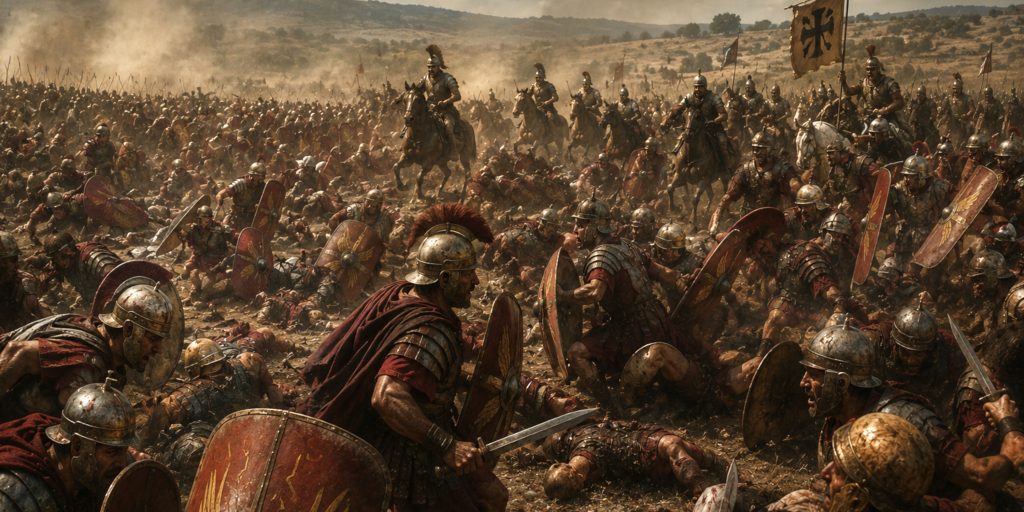
| Estimated Forces | Around 50,000 Carthaginians versus approximately 80,000 to 86,000 Romans |
If Gaugamela demonstrated strategic brilliance, Cannae demonstrated tactical perfection.
Hannibal deliberately allowed his centre to fall backwards while his strongest infantry held both flanks.
Meanwhile, his cavalry routed the Roman horse before attacking the Roman infantry from behind.
The result was a complete encirclement.
Thousands of Romans died without ever finding room to swing their swords.
Ancient casualty estimates approach 70,000 Roman dead in a single day, making Cannae one of the bloodiest defeats in military history.
Military academies still analyse Hannibal’s battle plan more than two thousand years later.
Why it ranks second
No battlefield encirclement has ever been executed with greater precision.
1. Battle of Okehazama (1560)
| Winner | Oda Nobunaga |
|---|---|
| Loser | Imagawa Yoshimoto |
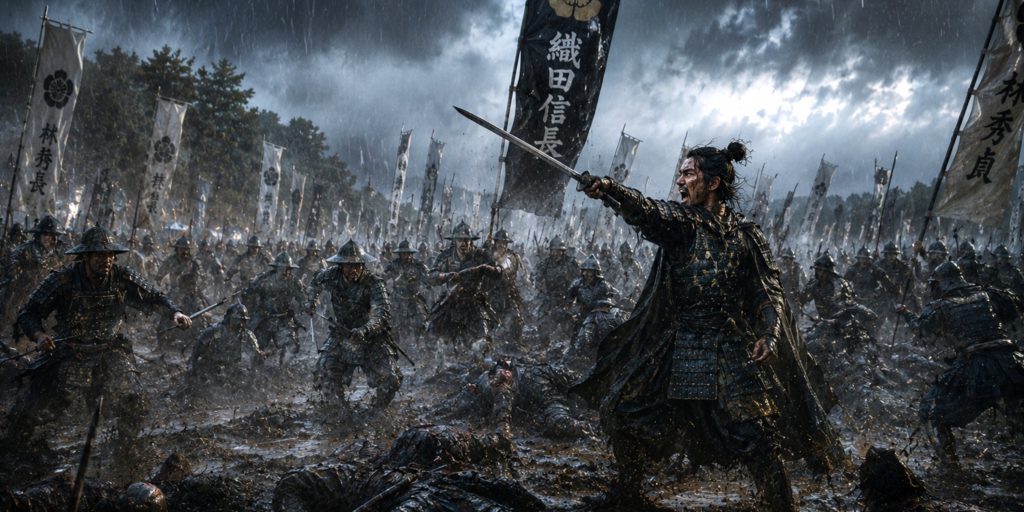
| Estimated Forces | Around 3,000 versus approximately 25,000 |
No battle better illustrates how leadership can overcome overwhelming odds.
Oda Nobunaga commanded only a fraction of Yoshimoto’s army. Conventional wisdom suggested he should retreat behind his fortifications and hope for the best.
Instead, he attacked.
Sheltered by torrential rain, Nobunaga led his men through difficult ground before launching a surprise assault directly against the Imagawa headquarters.
The larger army had relaxed, believing victory was already assured.
Yoshimoto was killed in the confusion.
His enormous force rapidly disintegrated.
The battle transformed Nobunaga from a regional warlord into one of Japan’s most influential military leaders and set the stage for the unification of the country.
Why it ranks first
No other battle on this list combines such an extraordinary numerical disadvantage with such a decisive and immediate political transformation. Okehazama remains one of history’s finest examples of a smaller army completely dismantling a vastly superior opponent through surprise, speed and fearless leadership.
Watch the guide:
Final Ranking Table:
| Rank | Battle | Date | Approximate Force Ratio |
|---|---|---|---|
| 1 | Battle of Okehazama | 1560 | 3,000 vs 25,000 (about 1:8) |
| 2 | Battle of Gaugamela | 331 BCE | 47,000 vs perhaps 100,000 or more |
| 3 | Battle of Agincourt | 1415 | 6,000 vs 20,000 to 30,000 |
| 4 | Battle of Carrhae | 53 BCE | 10,000 to 12,000 vs 35,000 to 40,000 |
| 5 | Battle of Marathon | 490 BCE | 10,000 vs 20,000 to 25,000 |
| 6 | Battle of Cannae | 216 BCE | 50,000 vs 80,000 to 86,000 |
| 7 | Battle of Morgarten | 1315 | Around 1,500 vs 3,000 to 8,000 |
| 8 | Battle of the Teutoburg Forest | 9 CE | Around 15,000 to 20,000 vs 20,000 to 25,000 |
| 9 | Battle of Stirling Bridge | 1297 | Around 5,000 to 7,000 vs 9,000 to 12,000 |
| 10 | Battle of Ajnadayn | 634 CE | Around 20,000 Muslims vs perhaps 40,000 Byzantine troops (numbers debated) |
What These Battles Teach Us
Across two thousand years of warfare, the same lessons appear repeatedly.
Leadership mattered more than numbers
Alexander, Hannibal, Miltiades, Wallace, Surena, Arminius and Nobunaga all understood how to impose their own battle plan rather than react to their opponent.
Terrain was a force multiplier
Forests, narrow bridges, mountain passes, muddy fields and concealed approaches repeatedly transformed smaller armies into formidable opponents.
Discipline defeated mass
Large armies often struggled with communication and coordination.
Smaller forces frequently acted faster, maintained tighter formations and responded more effectively when plans changed.
Arrogance proved remarkably expensive
Many larger armies entered battle convinced that victory was inevitable.
History repeatedly demonstrates that confidence unsupported by sound judgement can become a commander’s greatest weakness.
Takeaway
The greatest military victories are rarely the result of overwhelming numbers. More often, they belong to commanders who understood their enemy better than the enemy understood itself.
These battles continue to fascinate because they overturn our expectations. They remind us that history has never rewarded complacency for long. A disciplined army, inspired leadership and intelligent use of terrain could overturn impossible odds long before the first sword was drawn.
Perhaps that is why these victories still capture the imagination centuries later. They prove that, in war as in life, the largest force is not always the strongest. Sometimes it is simply the one with the furthest to fall.