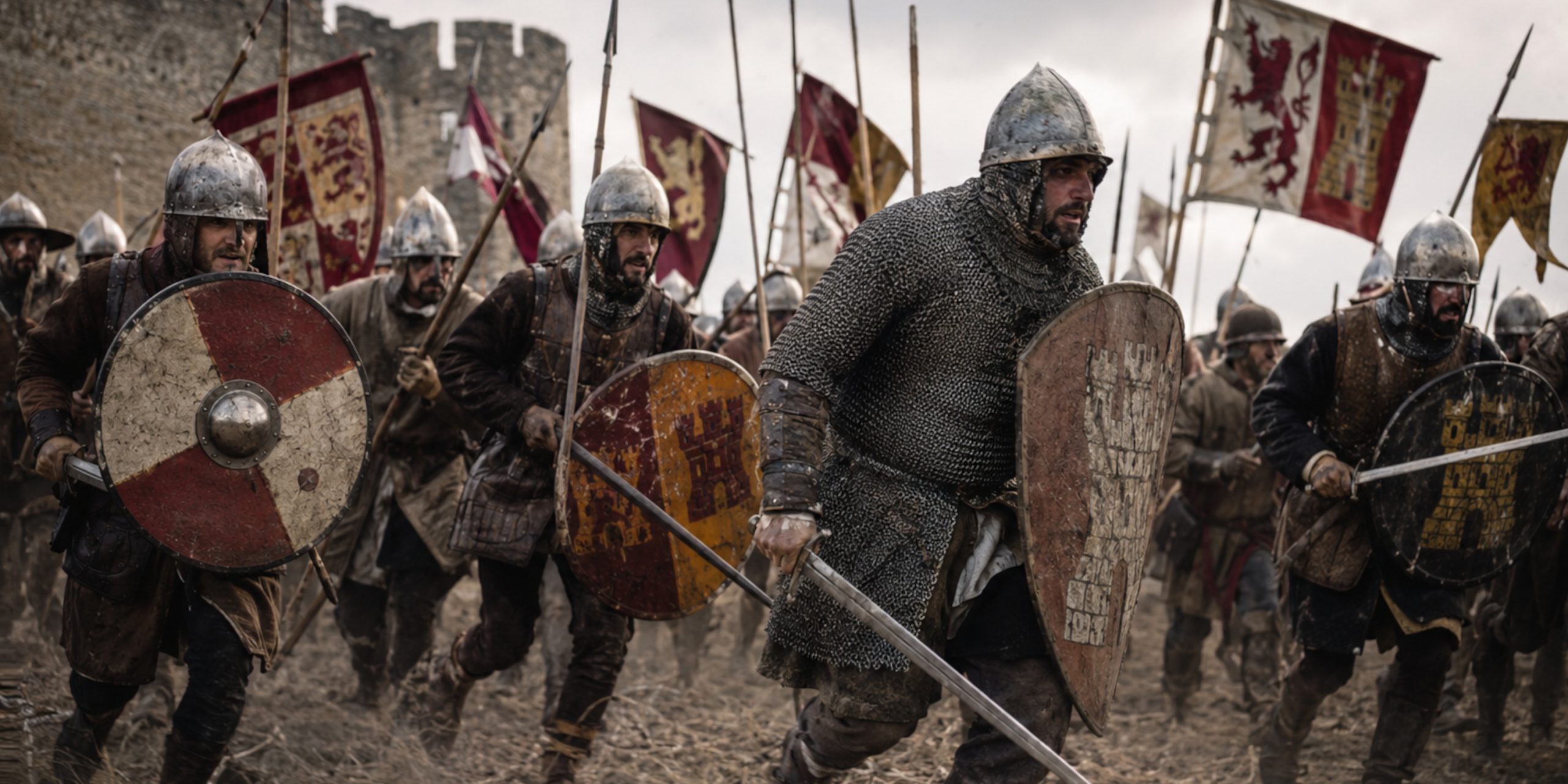
The armies of medieval Castile are often remembered through charging knights, noble houses and kings leading campaigns against Muslim and Christian rivals. Yet the kingdom’s expansion between the 12th and 15th centuries relied heavily on thousands of foot soldiers who rarely received the same attention.
The Castilian infantryman was not a single type of warrior. He could be a professional crossbowman from a town militia, a spear-carrying peasant levy, an experienced frontier fighter hardened by raids, or a well-equipped soldier serving a noble household.
Life in the infantry was rarely glamorous. Medieval chronicles loved describing noble cavalry charges, while the men holding the line with spears and shields were usually mentioned after everyone had finished admiring the horses. Unfortunately for the chroniclers, battles were rarely won by cavalry alone.
Historical Background: The Rise Of Castilian Infantry
From the 12th century onwards, the Kingdom of Castile expanded across the Iberian Peninsula during the long period of warfare known as the Reconquista. The landscape shaped the soldiers who fought there.
Unlike parts of northern Europe where feudal heavy cavalry dominated, Iberian warfare involved:
- Long-distance raids
- Castle assaults
- Mountain warfare
- Border skirmishes
- Urban militias
- Siege operations
This created a demand for adaptable infantry.
Major developments included:
| Period | Infantry Development |
|---|---|
| 12th century | Growth of municipal militias from frontier towns |
| 13th century | Increased use of crossbowmen and professional troops |
| 14th century | Infantry became more organised during Castile’s civil conflicts |
| 15th century | Soldiers became increasingly professional before the rise of Spain’s famous tercios |
By the late medieval period, Castilian foot soldiers were moving towards the disciplined infantry traditions that would later make Spanish armies feared across Europe.
Types Of Castilian Foot Soldiers
Peones
The most common infantry troops were peones, meaning foot soldiers.
They included:
- Town militia fighters
- Rural levies
- Retainers of nobles
- Frontier settlers
Equipment varied dramatically. A wealthy townsman might carry a sword and wear mail, while a poorer fighter could arrive with a spear, shield and padded clothing.
Their duties included:
- Holding defensive positions
- Guarding camps
- Supporting cavalry
- Fighting during sieges
- Protecting missile troops
Ballesteros (Crossbowmen)
The crossbow became one of Castile’s most important infantry weapons.
Castilian crossbowmen gained a strong reputation, particularly because Iberian warfare involved many sieges and defensive battles where missile weapons were devastating.
They carried:
- Crossbows
- Bolts known as quarrels
- Sidearms such as swords or knives
- Shields or pavises for protection
A trained crossbowman was valuable because he could threaten heavily armoured opponents without needing decades of training.
Naturally, knights were not thrilled that a man who had not spent his childhood learning mounted combat could ruin their afternoon from a distance.
Almogávares And Frontier Infantry
Although especially associated with Aragon and Catalonia, similar light infantry traditions existed across the Iberian frontier.
These warriors specialised in:
- Ambushes
- Raiding
- Difficult terrain
- Fast attacks
They often carried:
- Javelins
- Short spears
- Knives
- Light swords
The frontier between Christian and Muslim territories produced practical soldiers who valued mobility over appearance.
Arms And Armour Of Castilian Foot Soldiers
Castilian infantry equipment changed considerably from the 12th to the 15th centuries.
Climate, cost and battlefield needs influenced what soldiers carried. Full plate armour existed by the later period, but many infantrymen preferred lighter protection suitable for Iberian campaigning.
Helmets
Common helmet types included:
Nasal Helm (12th Century)
An older design still found among early medieval soldiers.
Features:
- Iron skull protection
- Nose guard
- Often worn with mail
Kettle Hat (Capelina)
One of the most practical infantry helmets.
Advantages:
- Wide brim protected against arrows and missiles
- Good visibility
- Affordable production
It became especially popular among crossbowmen.
Cervelliere And Bascinet
By the 13th and 14th centuries, more advanced helmets appeared.
The bascinet offered:
- Better skull protection
- Optional visor
- Compatibility with mail aventails
Sallet (15th Century)
By the late medieval period, some Castilian soldiers adopted helmets similar to those seen elsewhere in Europe.
Benefits:
- Excellent head coverage
- Better deflection against strikes
- Useful for professional infantry
Body Armour
Gambeson
The padded textile gambeson was perhaps the most important armour for ordinary soldiers.
It provided:
- Affordable protection
- Shock absorption
- Flexibility
For many infantrymen, this was the difference between surviving a blow and becoming a very short footnote in a chronicle.
Mail Armour
Mail was common among better-equipped soldiers.
Forms included:
- Mail shirts
- Coifs
- Aventails attached to helmets
Mail protected well against cuts but became less effective as stronger thrusting weapons developed.
Brigandine And Coat Of Plates
From the 14th century onwards, infantry increasingly used armour made from metal plates fixed inside fabric.
Advantages:
- Cheaper than full plate
- Easier movement
- Strong defence against weapons
Plate Armour
By the 15th century, elite infantry could possess:
- Breastplates
- Arm protection
- Leg armour
However, complete knightly armour remained expensive.
Weapons Of Castilian Foot Soldiers
Swords Used By Castilian Infantry
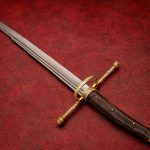
Medieval Arming Sword
The classic one-handed knightly sword was also carried by wealthier foot soldiers.
Specifications:
| Feature | Detail |
|---|---|
| Blade | Straight double-edged |
| Length | Usually 70 to 85 cm |
| Use | Cutting and thrusting |
| Grip | One handed |
It was often combined with a shield.
Espada De Guerra (War Sword)
Larger war swords became more common during the later medieval period.
Features:
- Longer blades
- Improved reach
- Powerful cuts
- Better performance against armoured opponents
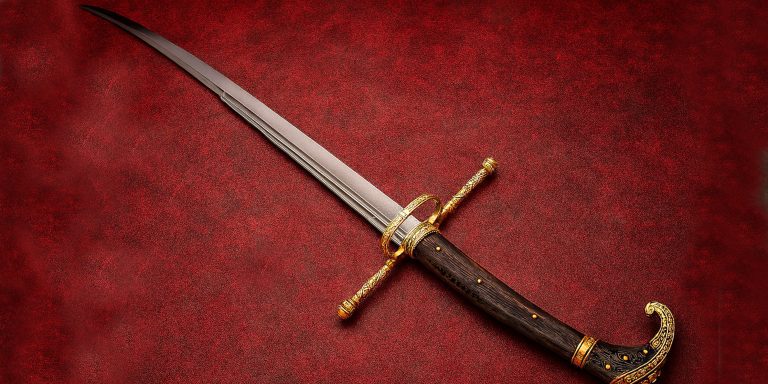
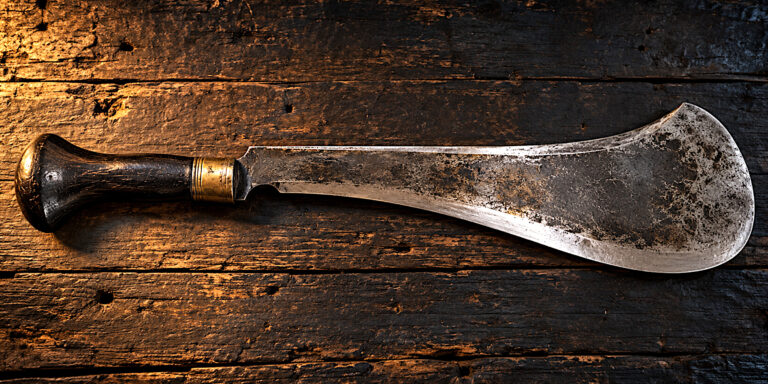
Falchion And Iberian Cutting Swords
Single-edged cutting weapons were also used.
Advantages:
- Strong chopping power
- Easier manufacture
- Effective against lightly armoured enemies
These practical blades suited soldiers who needed a weapon rather than a status symbol.
Early Espada Ropera Influences
By the late 15th century, Iberian sword design began shifting towards more specialised civilian and military swords.
The espada ropera, an ancestor of the rapier tradition, emerged among Spanish elites near the end of this period.
Other Infantry Weapons
Spears
The simplest and most widespread infantry weapon.
Used because they were:
- Cheap
- Effective in groups
- Useful against cavalry
Polearms
Late medieval Castilian infantry used weapons including:
- Guisarmes
- Bills
- Halberd-like weapons
They became increasingly important against armoured opponents.
Daggers
Common sidearms included:
- Rondel daggers
- Utility knives
- Fighting daggers
Useful in close combat, especially when armour made sword cuts less effective.
Shields
Castilian infantry used several shield types.
Adarga
A distinctive Iberian shield influenced by Muslim military traditions.
Usually:
- Made from leather
- Lightweight
- Highly manoeuvrable
Often associated with cavalry but also useful among mobile fighters.
Heater Shield
Common among heavier troops.
Features:
- Wooden construction
- Leather covering
- Heraldic decoration among wealthier soldiers
Pavise
Used heavily by crossbowmen.
Purpose:
- Protection while reloading
- Defence during sieges
- Formation fighting
Battlefield Role And Tactics
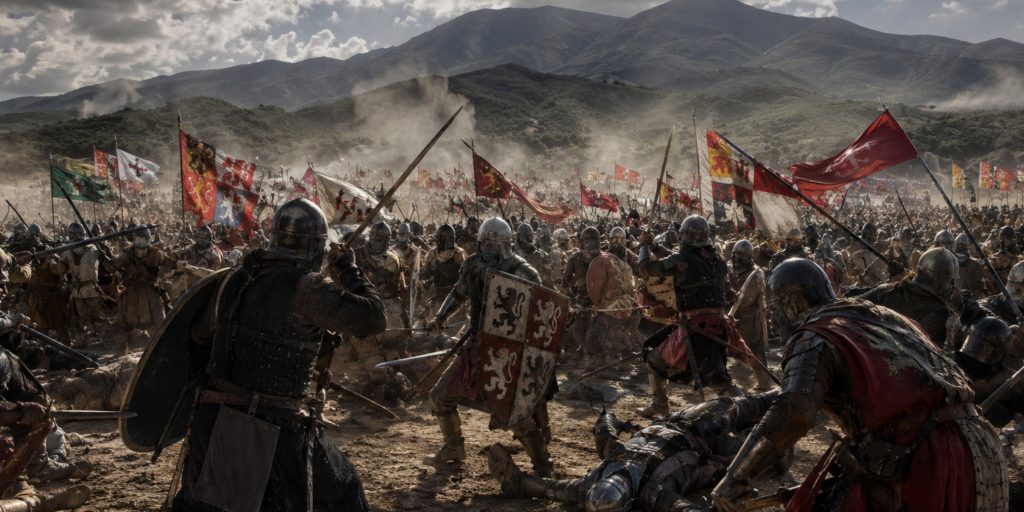
Castilian infantry rarely operated alone. Their effectiveness came from working with cavalry and missile troops.
Typical battlefield roles:
- Crossbowmen weakened enemy formations
- Spearmen protected against charges
- Infantry secured difficult terrain
- Foot soldiers assaulted and defended fortifications
At battles such as Las Navas de Tolosa (1212), infantry contributed alongside cavalry forces in breaking Almohad resistance.
During the later Castilian civil wars and conflicts with Portugal, infantry became increasingly central.
Archaeology And Surviving Evidence
Archaeological evidence provides a more realistic picture than medieval artwork, which often focused on nobles.
Important sources include:
Las Navas De Tolosa Battlefield Finds
Archaeology from the battlefield area has revealed:
- Arrowheads
- Crossbow bolt heads
- Armour fragments
- Military fittings
These finds demonstrate the importance of missile exchanges and mixed forces.
Medieval Castilian Fortresses
Excavations at castles and fortified towns have uncovered:
- Weapon fragments
- Armour pieces
- Projectile points
- Everyday military equipment
Important sites include:
- Burgos region fortifications
- Toledo defensive sites
- Castilian frontier castles in Andalusia
Manuscript Evidence
The 13th-century Cantigas de Santa María provides some of the richest visual evidence for Iberian warriors.
Images show:
- Mail armour
- Distinctive helmets
- Shields
- Swords
- Crossbows
While artistic sources need caution, they remain valuable when compared with archaeology.
Contemporary Quotes And Medieval Accounts
Medieval writers often focused on kings and nobles, but infantry appears throughout the sources.
The Primera Crónica General, compiled under Alfonso X of Castile, describes the gathering of armies containing many different warriors:
“The knights and the footmen came together, each according to his order and service.”
The chronicle tradition around Las Navas de Tolosa praised the combined effort of Christian forces:
“They fought strongly, both those on horse and those on foot.”
The Siete Partidas of Alfonso X also recognised organised military service and the importance of different roles within an army:
“Each man must know the duty that belongs to him in war.”
These writings reveal a practical medieval reality: armies were systems, not collections of heroic individuals.
Legacy Of The Castilian Foot Soldier
The infantry traditions developed between the 12th and 15th centuries helped create the foundation for Spain’s later military dominance.
The evolution went from:
- Frontier militias
- Crossbow formations
- Professional infantry companies
- Pike and firearm formations of the early modern period
By the 16th century, Spanish infantry would become among the most respected in Europe. That reputation did not appear suddenly. It grew from generations of Castilian soldiers who marched, dug, guarded, fought and usually received far fewer songs than the knights riding beside them.
The medieval Castilian foot soldier was not always elegant, but he was adaptable, stubborn and extremely difficult to remove from a battlefield. History tends to remember the crown, yet kingdoms were often built by the people carrying the spears.