The Battle of Albulena, fought on 2 September 1457, was one of the defining victories of Gjergj Kastrioti Skanderbeg’s resistance against the Ottoman Empire. After years of exhausting warfare, the Albanian leader faced a major Ottoman expedition designed to crush his rebellion once and for all.
What followed was not a simple clash of armies. It was a carefully planned deception. Skanderbeg disappeared into the mountains, allowed rumours of his defeat and abandonment to spread, then returned at the perfect moment to launch a devastating surprise attack.
For a commander who often fought outnumbered, Albulena may be the clearest example of his greatest talent: understanding when not to fight. Medieval history has plenty of brave charges that ended badly. Skanderbeg’s genius was knowing that patience could be sharper than any sword.
Historical Background
By the mid-15th century, the Ottoman Empire had expanded deep into the Balkans. After abandoning Ottoman service and returning to Albania in 1443, Skanderbeg united several Albanian nobles through the League of Lezhë and began a prolonged resistance.
Previous Ottoman campaigns had failed to destroy him, including the siege of Krujë in 1450. Sultan Mehmed II, fresh from the conquest of Constantinople in 1453, could not ignore a persistent enemy disrupting Ottoman influence in the western Balkans.
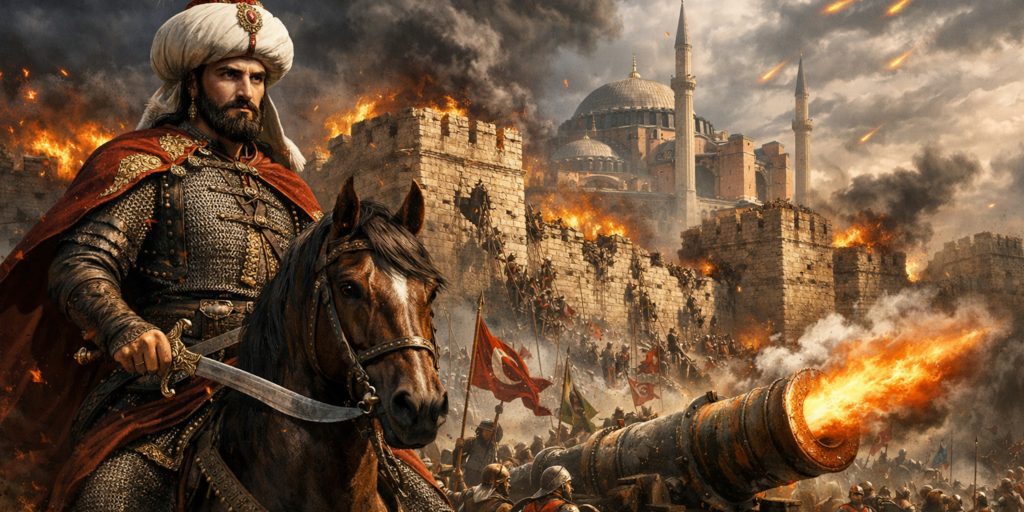
In 1457, an Ottoman army under Isak Bey Evrenoz and Hamza Kastrioti entered Albania. Hamza, Skanderbeg’s own nephew, had defected to the Ottomans and understood Albanian tactics. This made the campaign especially dangerous.
Skanderbeg responded with one of the oldest and riskiest strategies in warfare. He vanished.
Forces at the Battle of Albulena
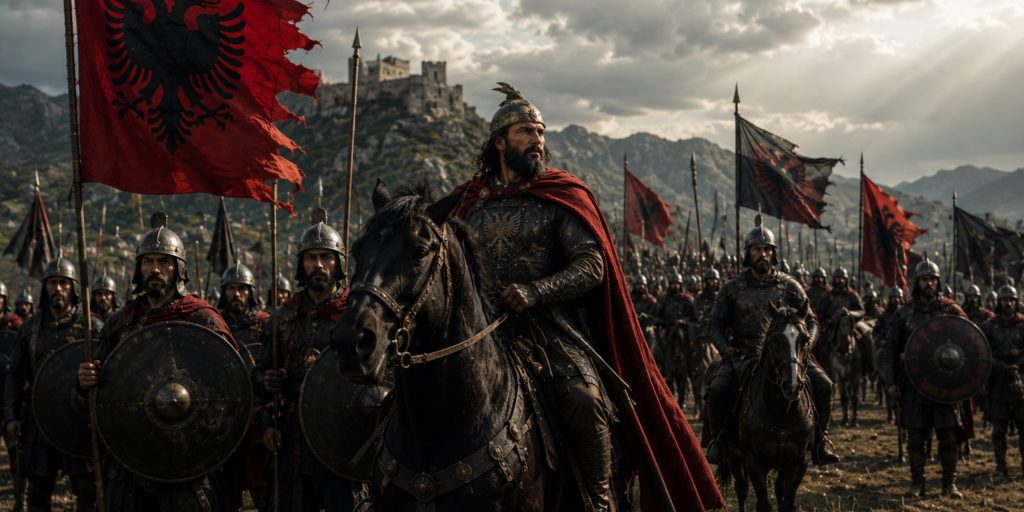
Precise medieval troop numbers are debated. Contemporary and later sources often exaggerated figures, especially when describing victories against larger enemies. The following estimates reflect a cautious interpretation.
| Army | Commander | Estimated Strength | Composition |
|---|---|---|---|
| League of Lezhë (Albanian forces) | Gjergj Kastrioti Skanderbeg | Around 8,000 to 12,000 | Cavalry, infantry, mountain fighters, noble retainers |
| Ottoman Empire | Isak Bey Evrenoz, Hamza Kastrioti | Possibly 30,000 to 50,000 | Sipahi cavalry, infantry, irregular troops, archers |
The traditional claim of 80,000 Ottoman soldiers is widely repeated but difficult to verify. Medieval writers had a habit of treating enemy numbers like fishermen describe their largest catch.
Leaders and Troop Composition
Albanian Forces
| Commander | Role |
|---|---|
| Gjergj Kastrioti Skanderbeg | Overall commander and strategist |
| Albanian noble commanders | Led regional contingents and cavalry groups |
| League of Lezhë warriors | Provided experienced local fighters |
Albanian troops relied heavily on:
- Mobile cavalry attacks
- Knowledge of mountain terrain
- Ambush warfare
- Rapid withdrawal and counterattack tactics
- Small-unit independence
Many soldiers were hardened veterans after more than a decade of fighting Ottoman campaigns.
Ottoman Forces
| Commander | Role |
|---|---|
| Isak Bey Evrenoz | Senior Ottoman commander |
| Hamza Kastrioti | Former Albanian noble, advisor and commander |
The Ottoman army included:
- Sipahi cavalry equipped for shock combat
- Light cavalry used for scouting and raids
- Infantry formations
- Archers
- Auxiliary Balkan troops
The Ottomans were experienced campaigners, but at Albulena they were drawn into fighting on Skanderbeg’s terms.
Arms and Armour Used at Albulena
The battle took place during a transitional period when medieval armour, traditional weapons and early firearms existed together.
Albanian Arms and Armour
| Equipment | Details |
|---|---|
| Swords | Arming swords, curved Balkan sabres, early forms related to the later yatagan tradition |
| Polearms | Spears, lances, axes and war hammers |
| Missile weapons | Bows, crossbows and throwing weapons |
| Armour | Mail shirts, brigandines, plate elements, helmets |
Albanian cavalry elites often used a mixture of Western European and Balkan equipment. Skanderbeg himself is traditionally associated with Italian-style armour and swords due to his connections with Naples and Venice.
Common weapons included:
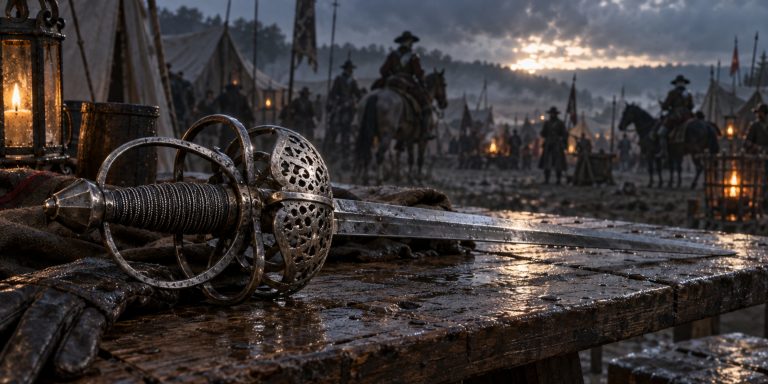
- Knightly arming sword: A straight double-edged sword suited for cutting and thrusting.
- Balkan sabre: A curved blade useful from horseback.
- Long dagger: Used in close combat when formations collapsed.
- Lance: The primary cavalry weapon before swords were drawn.
Ottoman Arms and Armour
| Equipment | Details |
|---|---|
| Swords | Kilij sabres, straight swords, fighting knives |
| Polearms | Spears and cavalry lances |
| Missile weapons | Composite bows, crossbows, early firearms |
| Armour | Mail, lamellar armour, helmets and shields |
The Ottoman kilij was especially effective for cavalry warfare. Its curved blade and widened cutting section near the tip created powerful slashing attacks.
Ottoman troops were highly professional, but even the best-equipped army becomes vulnerable when caught resting and unprepared.
The Battle Timeline

Ottoman Advance into Albania
The Ottoman army entered Albania expecting to force Skanderbeg into open battle.
Rather than defending a fortress or accepting a disadvantageous engagement, Skanderbeg withdrew.
Skanderbeg Disappears
For several weeks his army avoided contact.
Rumours spread that:
- His forces had collapsed
- His allies had abandoned him
- He had fled the region
The Ottoman commanders relaxed their guard, believing the campaign was nearly won.
The Ambush at Albulena
On 2 September 1457, Skanderbeg attacked suddenly near Albulena.
His forces struck the Ottoman camp before proper defensive formations could be created.
The surprise created:
- Confusion among Ottoman units
- Breakdown of command
- Panic among soldiers expecting little resistance
Ottoman Defeat
The Ottoman army suffered a major defeat. Hamza Kastrioti was captured and Ottoman influence in Albania suffered a serious setback.
The victory restored Skanderbeg’s reputation across Europe.
Military Analysis: Why Skanderbeg Won
Albulena shows several key aspects of Skanderbeg’s military skill.
Intelligence and Deception
His disappearance was not weakness. It was psychological warfare.
By allowing the Ottomans to believe victory was already secured, he encouraged exactly the mistake he needed.
Terrain Control
Skanderbeg rarely allowed larger armies to exploit their numbers.
He used:
- Mountain routes
- Concealed movements
- Local intelligence networks
- Difficult terrain
Timing
The attack succeeded because it came when Ottoman readiness was at its lowest.
A larger army could defeat him in a conventional battle, so he refused to offer one.
Contemporary Accounts and Quotes
Much of what survives about Skanderbeg comes through later humanist writers, particularly Marin Barleti. His work is valuable but should be read carefully, as it often presents Skanderbeg in heroic Renaissance style.
Barleti wrote of Skanderbeg’s approach to warfare:
“He conquered more by counsel than by force.”
This captures the reputation Skanderbeg gained among European observers: not simply as a fighter, but as a commander who understood movement, morale and deception.
Pope Callixtus III also praised Skanderbeg during his struggle against Ottoman expansion, reportedly calling him:
“Champion of Christ.”
The phrase reflects the religious politics of the age, although the conflict itself involved a complex mixture of power, alliances and regional survival.
Archaeology and Battlefield Evidence
The exact battlefield location of Albulena is traditionally associated with the area near modern-day northern Albania, often linked with the region around Laç and the old Mat River area.
Archaeological study of Skanderbeg’s campaigns faces challenges:
- Exact battlefield locations remain debated
- Later settlement altered medieval landscapes
- Many weapons circulated widely across the Balkans, making attribution difficult
Finds from 15th-century Albania and neighbouring regions provide evidence of:
- Mail armour fragments
- Sword blades
- Arrowheads
- Spearheads
- Fortification remains
Much of Skanderbeg-era archaeology focuses on fortified sites rather than open battlefields.
Important related sites include:
- Krujë Castle
- Medieval Albanian fortifications
- Venetian defensive sites along the Adriatic
Legacy of the Battle of Albulena
The victory at Albulena did not remove the Ottoman threat, but it ensured Albanian resistance continued for another decade.
Its importance came from:
- Restoring Skanderbeg’s political position
- Preventing immediate Ottoman domination of Albania
- Strengthening his reputation abroad
- Demonstrating the effectiveness of irregular warfare against larger armies
After Skanderbeg’s death in 1468, Ottoman pressure gradually overwhelmed Albanian resistance. Yet Albulena remained the battle that best represented his style of command.
He was not a general who won because he had endless soldiers, wealth or resources. He won because he understood the battlefield before anyone stepped onto it.
Sometimes the most dangerous army is not the one you can see approaching. It is the one you thought had already gone home.