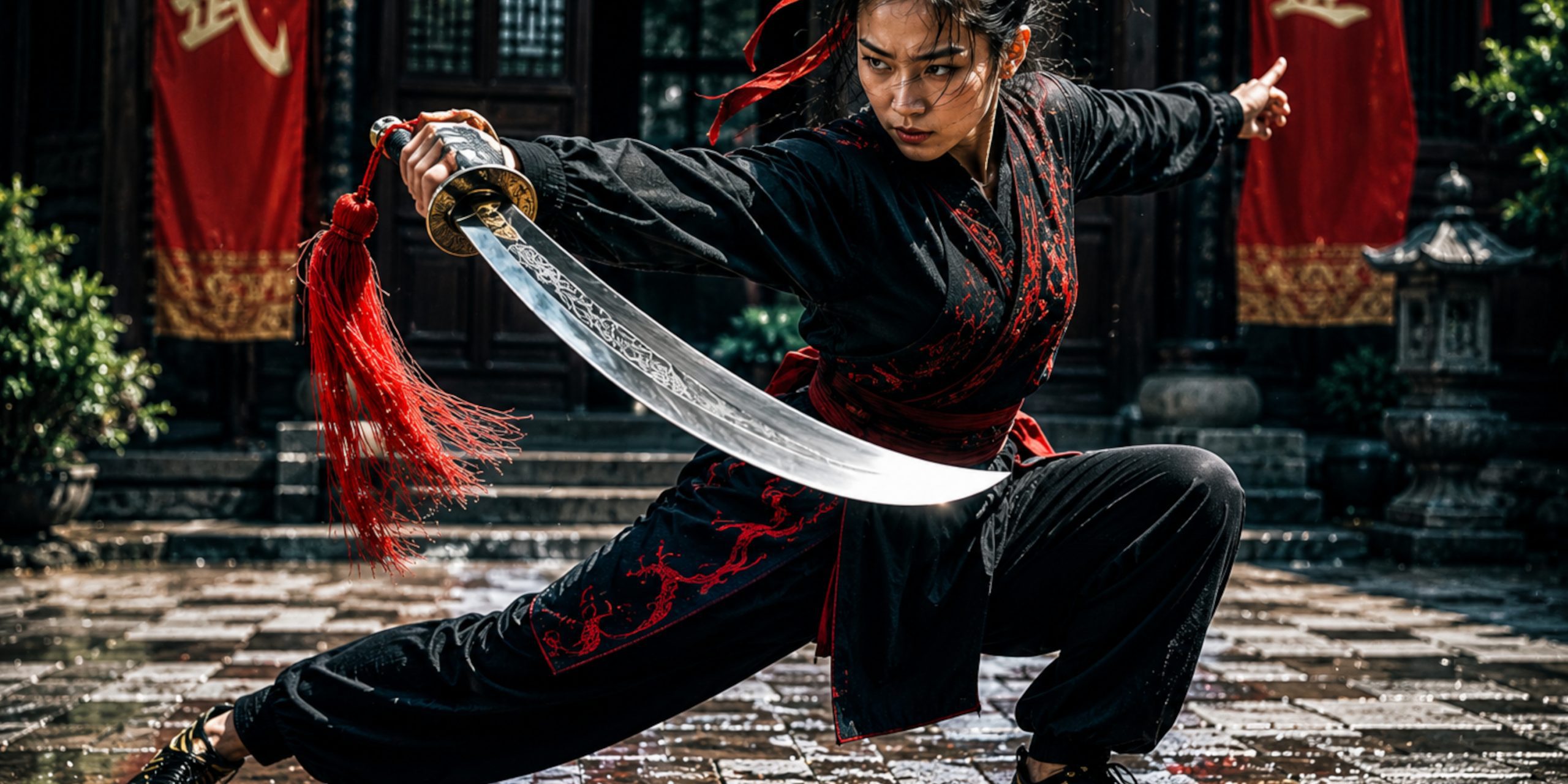
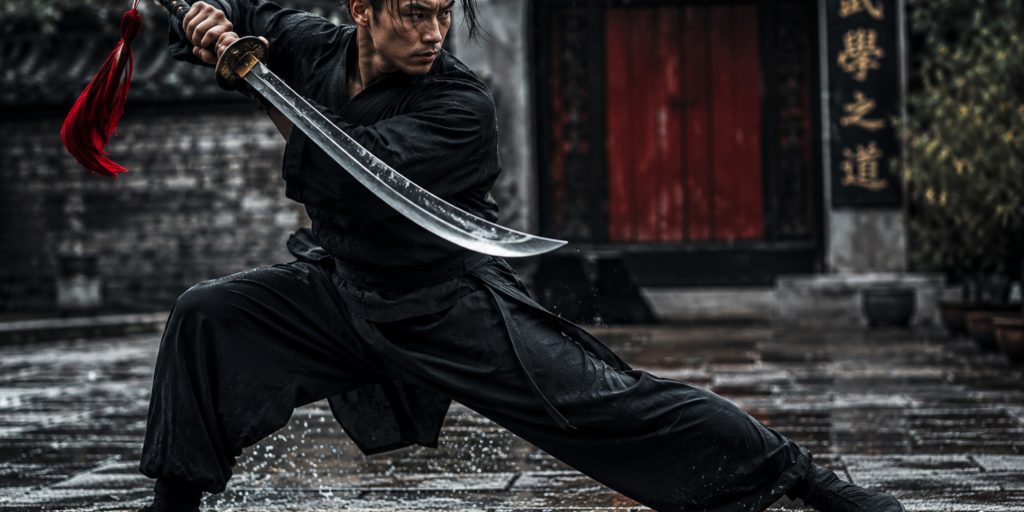
The dao is one of China’s most influential and enduring weapons. Often described as the Chinese sabre, it combined cutting power, durability and practical battlefield performance in a way that few swords could match. While the elegant straight jian became associated with scholars and nobility, the dao earned its reputation through centuries of military service.
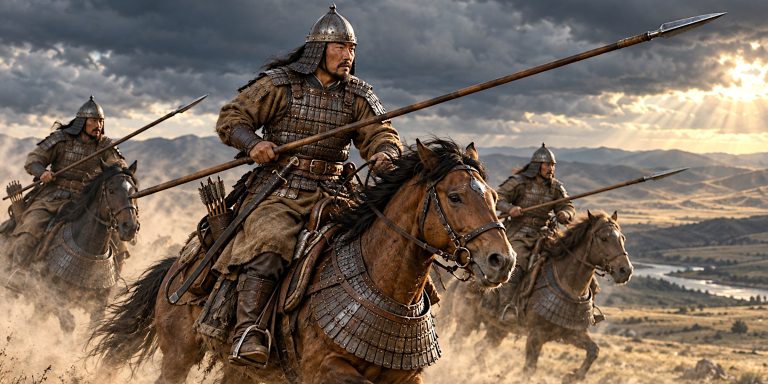
From Han cavalry charging across the northern frontiers to Ming soldiers defending against Japanese pirates and Qing bannermen riding across Asia, the dao adapted alongside Chinese warfare for over two thousand years.
Its curved blade, efficient handling and remarkable variety ensured it remained the standard military sword of imperial China until firearms finally displaced edged weapons from the battlefield.
Specification
| Feature | Typical Measurements |
|---|---|
| Weapon Type | Single edged sabre |
| Origin | China |
| Period | Han Dynasty onwards (c. 2nd century BCE) |
| Blade Length | 60 to 90 cm |
| Overall Length | 75 to 110 cm |
| Weight | 700 g to 1.5 kg |
| Blade Type | Single edged, slightly curved or straight depending on period |
| Primary Use | Military combat, cavalry, infantry, ceremonial |
| Materials | Pattern welded steel, folded steel, high carbon steel |
At a Glance
- Single edged blade designed for powerful cuts
- Usually featured a simple disc guard
- Balanced for fast slashing attacks
- Used extensively by infantry and cavalry
- Developed into numerous regional styles
- One of the Four Traditional Chinese Weapons
History and Evolution
Origins during the Han Dynasty
The earliest military dao appeared during the Han Dynasty. These swords were relatively straight and reflected the influence of earlier bronze weapons while taking advantage of increasingly sophisticated iron and steel production.
Chinese armies fighting mounted nomadic peoples discovered that single edged blades survived battlefield punishment better than thinner double edged swords.
As cavalry became increasingly important, so did the dao.
The Age of Cavalry
By the Northern and Southern Dynasties, mounted warfare dominated many campaigns.
Curved blades became more common because they allowed riders to deliver powerful slicing blows without the sword sticking in its target. Although early dao were only gently curved, this evolution laid the foundations for later Chinese sabres.
Many historians believe contact with Central Asian horse cultures accelerated this development.
Tang Dynasty
The Tang Dynasty witnessed major improvements in metallurgy and sword manufacture.
Tang dao became renowned throughout East Asia.
Their influence extended beyond China, inspiring Japanese swordsmiths during the early development of what would eventually become the katana.
Military manuals praised the dao for its versatility, making it suitable for both mounted and foot soldiers.
Song Dynasty
As China faced increasingly sophisticated enemies, sword designs diversified.
Longer blades appeared alongside specialised military variants. Soldiers often carried the dao alongside spears, bows and crossbows.
The weapon became an essential secondary arm.
Ming Dynasty
The Ming period represented one of the high points of dao development.
General Qi Jiguang introduced highly effective military training systems that emphasised the dao in combination with shields and coordinated infantry tactics.
Japanese pirate raids also influenced sword design, leading to experimentation with longer blades and stronger cutting weapons.
Several famous forms emerged during this period, including the willow leaf sabre.
Qing Dynasty
The Qing Empire standardised military equipment on an unprecedented scale.
Several official dao patterns became common throughout the imperial armies.
These included:
- Yanmaodao
- Liuyedao
- Piandao
- Niuweidao
Although firearms increasingly dominated warfare, the dao remained a standard sidearm throughout the nineteenth century.
Main Types of Dao
| Type | Characteristics | Primary Use |
|---|---|---|
| Yanmaodao | Straight blade with curved tip | Military officers |
| Liuyedao | Gentle continuous curve | Standard military sword |
| Piandao | Deep curve | Cavalry |
| Niuweidao | Broad flared tip | Civilian and martial arts |
The Liuyedao, or Willow Leaf Sabre, became the classic military dao and is the form most people imagine today.
Construction and Design
Several design features contributed to the dao’s effectiveness.
Blade
- Single sharpened edge
- Thick spine for strength
- Gentle curve improving slicing efficiency
- Excellent durability
Hilt
- Wood core
- Ray skin or cord wrapping
- Brass or iron fittings
- Disc shaped hand guard
Scabbard
Military examples were usually constructed from:
- Wood
- Leather covering
- Brass mounts
- Suspension rings for belt carry
How the Dao Was Used
The dao excelled in practical battlefield combat.
Its primary techniques included:
- Diagonal cuts
- Horizontal slashes
- Powerful downward strikes
- Draw cuts
- Defensive parries
- Shield supported fighting
Unlike many European swords, the dao prioritised cutting over thrusting.
Chinese military manuals stressed coordinated movement rather than individual duelling.
Arms and Armour
The dao was carried alongside a wide range of military equipment depending on the dynasty.
Common Companion Weapons
- Spear (Qiang)
- Ji halberd
- Bow
- Crossbow
- Fire lance
- Matchlock musket during the Ming and Qing periods
Armour
Soldiers commonly wore:
- Lamellar armour
- Brigandine
- Scale armour
- Iron helmets
- Leather protection
- Quilted jackets
The dao proved particularly effective against lightly armoured opponents, although it remained capable of damaging heavier armour through repeated blows.
Advantages
- Fast and efficient cutting weapon
- Highly durable construction
- Easier to manufacture than double edged swords
- Excellent from horseback
- Effective in close infantry combat
- Required less maintenance than more delicate blades
- Adapted well to changing military tactics
Disadvantages
- Less effective for precise thrusting
- Curved blade limited certain fencing techniques
- Performance depended heavily on cutting skill
- Inferior reach compared with spears
- Lost military importance once firearms dominated warfare
Dao vs Similar Weapons
| Weapon | Main Difference |
|---|---|
| Jian | Double edged straight sword emphasising thrusts |
| Katana | More pronounced curve with two handed emphasis |
| Talwar | Greater curve and distinctive disc pommel |
| Kilij | Broader flared tip designed for cavalry |
| Sabre | Broad family of curved military swords including the dao |
The dao occupies an important place in the wider evolution of military sabres across Eurasia.
Legacy
Few swords have enjoyed such remarkable longevity.
The dao remained in continuous military use for nearly two millennia and influenced sword development across East Asia.
Today it remains central to:
- Chinese martial arts
- Historical reconstruction
- Traditional ceremonies
- Film and television
- Museum collections
- Modern sword making
Its practicality explains why many military historians regard it as one of history’s most successful battlefield swords.
Where to See Authentic Dao Swords
Some of the finest surviving examples can be found in:
| Museum | Country |
|---|---|
| Palace Museum, Beijing | China |
| National Museum of China | China |
| Shanghai Museum | China |
| British Museum | United Kingdom |
| Royal Armouries, Leeds | United Kingdom |
| Metropolitan Museum of Art | United States |
Archaeology
Archaeological discoveries continue to expand our understanding of the dao.
Excavated Han Dynasty tombs have revealed early iron dao with remarkably well preserved blades, confirming the weapon’s importance centuries before its later military prominence.
Tang Dynasty burials have produced finely crafted examples with sophisticated pattern welded steel, demonstrating the advanced metallurgical techniques achieved by Chinese swordsmiths.
Excavations of Ming military fortifications and frontier garrisons have uncovered damaged dao alongside arrowheads, armour fragments and firearms, offering valuable evidence of how traditional swords continued to serve alongside increasingly modern weapons.
These discoveries help trace the gradual evolution from relatively straight Han blades to the gently curved military sabres that became synonymous with later imperial armies.
Collectors Guide
Authentic dao remain highly sought after.
Collectors should evaluate:
- Dynasty and provenance
- Blade condition
- Original polish
- Maker’s marks
- Scabbard originality
- Hilt fittings
- Restoration work
- Documentation
Modern reproductions vary enormously in quality, making provenance one of the most important factors.
Typical Auction Prices
| Type | Typical Price |
|---|---|
| Modern decorative reproduction | £80 to £300 |
| Quality modern reproduction | £400 to £1,200 |
| Qing military dao | £2,500 to £8,000 |
| Fine Qing officer dao | £8,000 to £20,000 |
| Ming dynasty examples | £15,000 to £50,000+ |
| Museum quality or exceptional provenance | £75,000+ |
Exceptional imperial presentation swords have sold for considerably more at major international auctions.
Frequently Asked Questions
Is the dao the same as a katana?
No. While both are single edged swords, they developed independently. The dao generally features broader blades, more varied forms and was used across many different military roles.
What is the difference between the dao and the jian?
The dao is single edged and optimised for cutting, while the jian is double edged and better suited to balanced cutting and thrusting.
Did Chinese soldiers actually use the dao in battle?
Yes. It served as China’s primary military sword for many centuries and saw extensive battlefield use from the Han Dynasty through the Qing Dynasty.
Which type of dao was most common?
The Liuyedao, or Willow Leaf Sabre, became the standard military sword during the Ming and Qing dynasties.
Takeaway
The dao is sometimes overshadowed in popular culture by the Japanese katana, yet its historical impact is arguably broader. It served imperial armies for nearly two thousand years, evolved alongside changing tactics and metallurgy, and proved adaptable enough to remain relevant across countless campaigns. If there is a hallmark of successful military design, it is longevity, and by that measure the dao stands among the greatest swords ever forged.