The Almoravids are one of those dynasties that tend to get flattened into a footnote between “the collapse of Islamic Spain” and “the rise of the Almohads”. Which is deeply unfair. They were not a mere transition. They were empire builders, religious reformers, desert warriors, city founders, patrons of trade, and occasionally the sort of rulers who made everyone around them slightly nervous at dinner.
At their height, the Almoravids ruled a vast territory stretching from modern Mauritania and Morocco into much of Al-Andalus in Spain. They emerged from the Sahara with camels, conviction, and a remarkable ability to organise people who had spent generations fighting one another. Within decades they had created one of the most powerful states in the western Islamic world.
And yet, like many dynasties forged in austerity and zeal, they eventually discovered that ruling prosperous cities is rather different from conquering them.
Who Were the Almoravids?
The Almoravids were a Berber Muslim dynasty originating among the Sanhaja tribes of the western Sahara. Their name derives from the Arabic al-Murabitun, often translated as “those of the ribat”, referring to a religious retreat or frontier monastery.
In practice, they were part religious reform movement and part military confederation. Their roots lay in a desire to strengthen Islamic practice among the tribes of the Sahara, many of whom followed Islam but blended it with local customs that stricter scholars found questionable.
This reform movement was spearheaded by Abdallah ibn Yasin, a theologian whose reputation suggests he was not especially relaxed at social gatherings. Ibn Yasin demanded strict religious discipline, obedience, and moral reform. Some tribes resisted him violently. Others embraced his teachings with almost alarming enthusiasm.
From this combination of faith and warfare emerged the Almoravid state.
The Rise of the Almoravids
The movement began around the 1040s in the western Sahara. Ibn Yasin allied himself with Yahya ibn Umar, a leader of the Lamtuna tribe. Together they launched campaigns to unite the Sanhaja tribes under a more disciplined Islamic order.
After Yahya ibn Umar’s death, leadership eventually passed to Abu Bakr ibn Umar and then, more significantly, to Yusuf ibn Tashfin.
Yusuf ibn Tashfin became the true architect of Almoravid greatness.
He was pragmatic, disciplined, politically astute, and far less theatrical than many medieval conquerors. Medieval chroniclers often portray him as austere in dress and manner. Frankly, compared with the silk-loving taifa rulers of Al-Andalus, he must have looked like a man arriving at a banquet to discuss tax reform.
Under Yusuf, the Almoravids expanded rapidly across Morocco.
The Founding of Marrakesh
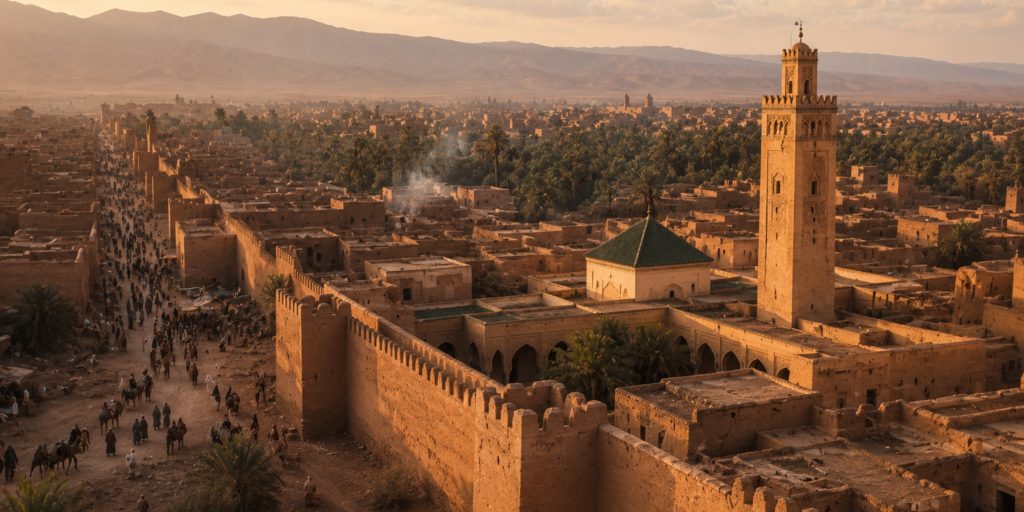
One of the Almoravids’ greatest achievements was the founding of Marrakesh around 1070.
Before the Almoravids, Marrakesh did not exist as a major city. They transformed it into a political and military centre strategically positioned between the Sahara, the Atlas Mountains, and the trade routes of North Africa.
Marrakesh became the beating heart of the dynasty.
The city reflected Almoravid priorities. It was practical, fortified, commercially active, and tied closely to trans-Saharan trade. Gold from West Africa flowed northward through Almoravid-controlled routes, enriching the dynasty and helping fund its armies.
Modern Marrakesh still carries traces of this foundation, though today one is more likely to encounter tourists negotiating over lamps than camel caravans carrying Saharan gold.
The Almoravids and Al-Andalus
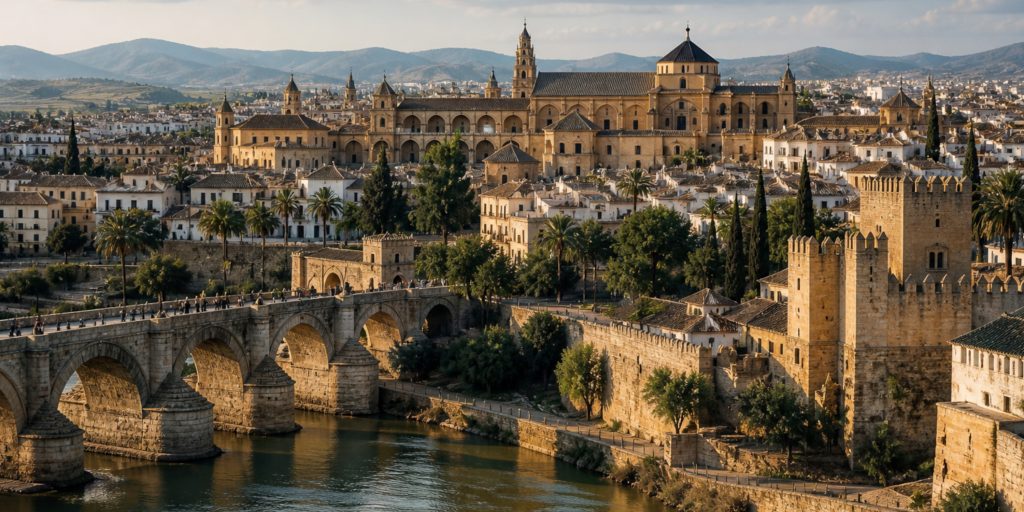
By the late 11th century, Islamic Spain was politically fragmented. The once mighty Umayyad Caliphate of Cordoba had collapsed, leaving numerous taifa kingdoms competing with one another.
These taifa rulers were wealthy and cultured, but militarily weak. Christian kingdoms in northern Spain, especially Castile under Alfonso VI, pressed steadily southward.
The crisis intensified when Alfonso VI captured Toledo in 1085. This shocked the Islamic world of Iberia.
Desperate taifa rulers appealed to Yusuf ibn Tashfin for help.
Inviting hardened desert reformers into your country because you need military assistance has historically been a decision with mixed long-term results.
The Battle of Sagrajas (Zallaqa), 1086
Yusuf ibn Tashfin crossed into Iberia in 1086 and confronted Alfonso VI at the Battle of Sagrajas, also called Zallaqa.
The battle was a major Almoravid victory.
Almoravid forces combined disciplined infantry, cavalry, and experienced desert troops. Contemporary accounts describe brutal fighting and enormous casualties. Alfonso VI survived, but his army was shattered.
The victory temporarily halted Christian expansion.
It also convinced Yusuf that the taifa rulers were incapable of governing effectively. Many taifa kings were viewed by Almoravid reformers as decadent, politically unreliable, and insufficiently Islamic.
The Almoravids soon began annexing the taifa kingdoms themselves.
Almoravid Rule in Spain
By the early 12th century, the Almoravids controlled much of Al-Andalus.
Their rule brought greater political unity and stronger military resistance against the Christian kingdoms. They repaired fortifications, strengthened armies, and restored a degree of central authority.
Yet Almoravid rule was not universally loved.
Many Andalusi elites disliked the dynasty’s religious conservatism and austere style. The sophisticated urban culture of cities like Seville and Cordoba did not always blend comfortably with Saharan reformism.
There is a familiar historical pattern here. Revolutionary movements often thrive while denouncing luxury, then inherit cities full of poets, musicians, tax officials, and expensive carpets.
The Almoravids also imposed stricter interpretations of Islamic law. Some intellectuals and philosophers found themselves under pressure. The atmosphere became more conservative than under the taifa courts.
Still, the image of the Almoravids as joyless fanatics can be exaggerated. Their empire remained commercially vibrant and culturally connected to both Africa and Iberia.
Almoravid Military Strength
The Almoravid army was formidable.
Its core came from Berber tribal cavalry hardened by desert warfare. Camels were used extensively for logistics and mobility in North Africa, though horses dominated Iberian battlefields.
Weapons and Armour
Almoravid soldiers commonly used:
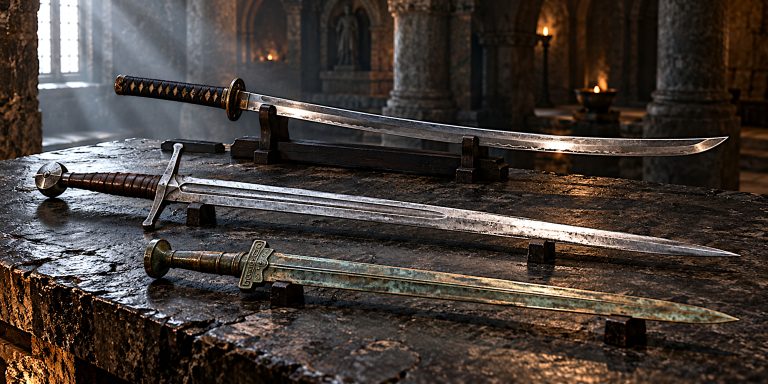
- Straight double-edged swords
- Spears and lances
- Composite bows
- Javelins
- Round leather shields
- Quilted armour and mail shirts
Berber cavalry proved highly mobile and disciplined. Black African troops from regions south of the Sahara also served within Almoravid armies, especially in later periods.
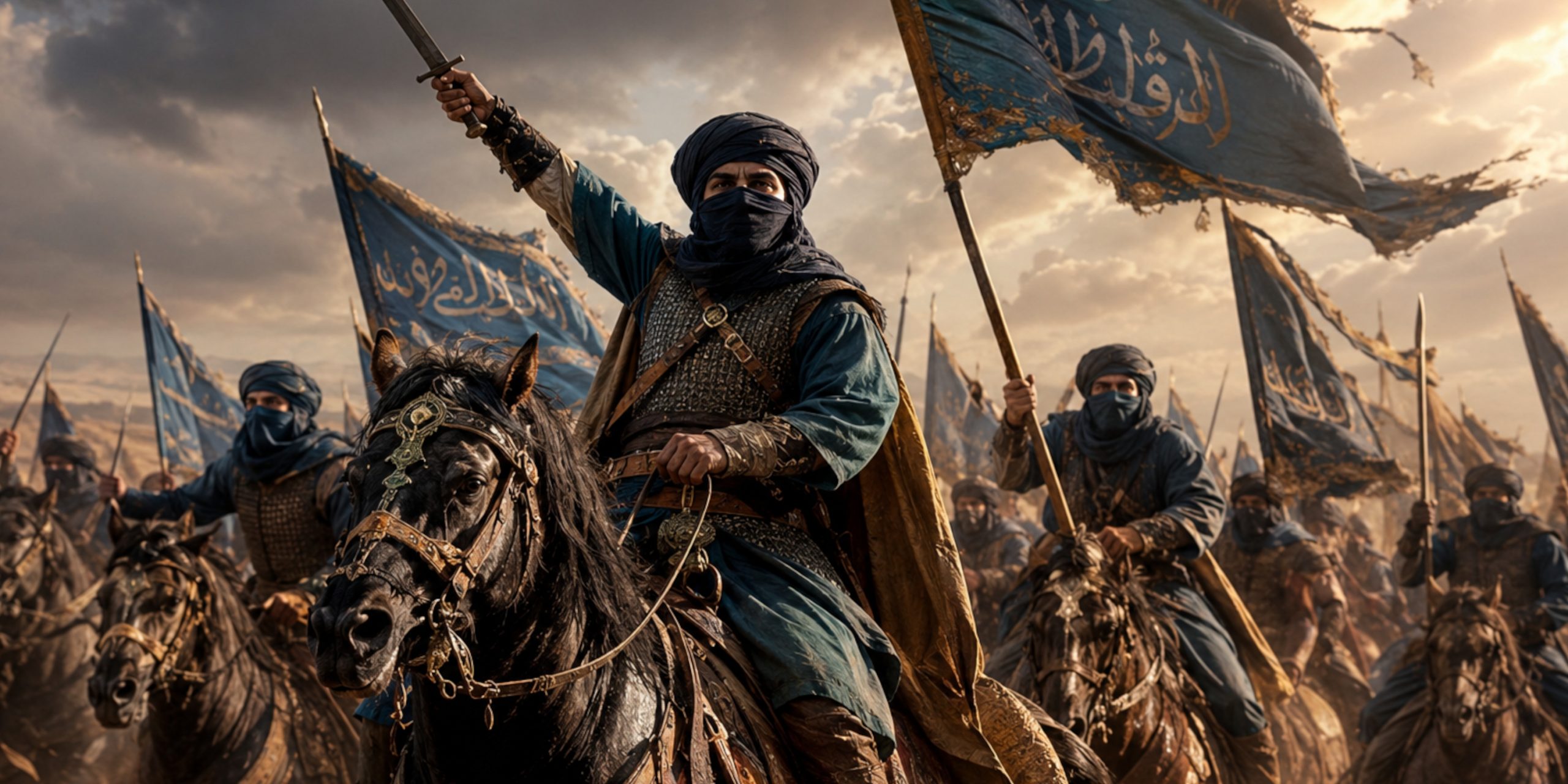
One notable feature was the famous face veil worn by many Almoravid warriors, particularly the Sanhaja tribes. These veils became a symbol of status and identity. Medieval observers found them deeply distinctive.
European chroniclers occasionally described the Almoravids with a mixture of fear, fascination, and mild confusion, which rather sums up medieval cross-cultural writing in general.
Trade and Wealth
The Almoravid Empire prospered through control of trans-Saharan trade.
Gold from the Ghana Empire and neighbouring regions passed through Almoravid networks into North Africa and Europe. Salt, slaves, textiles, and luxury goods also moved along these routes.
This trade wealth strengthened cities like Marrakesh, Fez, and Sijilmasa.
The Almoravids minted high-quality gold dinars that circulated widely across the Mediterranean world. Their economic influence extended far beyond their military frontiers.
In many ways, the dynasty sat at the crossroads of Africa and Europe.
Religion and Society
Religion stood at the centre of Almoravid identity.
They followed the Maliki school of Sunni Islam and promoted legal orthodoxy across their territories. Religious scholars gained influence under Almoravid rule.
Their reformist origins shaped the dynasty’s culture. Early Almoravid leaders emphasised simplicity, discipline, and religious duty.
That said, ruling a wealthy empire inevitably altered the movement. Later Almoravid rulers became more courtly and urbanised. Critics accused them of abandoning the very austerity that had made them powerful.
History can be quietly cruel in this way.
Architecture and Cultural Legacy
The Almoravids contributed significantly to western Islamic architecture.
Though fewer Almoravid structures survive compared with later Almohad monuments, their influence was substantial.
They expanded cities, built mosques, developed irrigation systems, and introduced architectural forms that shaped Moroccan and Andalusi design for generations.
Important Almoravid sites include:
- The Almoravid Qubba in Marrakesh
- Expansions to the Qarawiyyin Mosque in Fez
- Fortifications across Morocco and Spain
Their artistic style tended toward geometric decoration and restrained elegance rather than overwhelming ornamentation.
Even their architecture feels faintly disciplined.
The Decline of the Almoravids
By the early 12th century, cracks had begun to appear.
Several problems weakened the dynasty:
- Internal tribal tensions
- Resistance in Al-Andalus
- Military pressure from Christian kingdoms
- Economic strain
- Growing criticism from rival reformers
The most dangerous challenge came from the Almohads.
The Almohads emerged from the Atlas Mountains preaching an even stricter reformist message than the Almoravids themselves. They accused the Almoravids of corruption and religious failure.
One cannot help noticing the irony.
The Almoravids had risen by condemning laxity and division. Now another movement condemned them in almost identical language.
The Almohads steadily dismantled Almoravid power. Marrakesh finally fell in 1147, marking the effective end of the dynasty.
Yusuf ibn Tashfin, The Dynasty’s Greatest Ruler
No figure towers over Almoravid history more than Yusuf ibn Tashfin.
He transformed a tribal religious movement into a transcontinental empire. He founded Marrakesh, halted Christian expansion in Iberia, and established one of the most powerful states in western Islamic history.
Contemporary chroniclers often admired his piety and restraint.
Unlike many rulers of the age, Yusuf cultivated an image of modesty. He reportedly dressed simply and avoided excessive luxury.
Whether entirely sincere or carefully political, it proved remarkably effective.
He died around 1106, leaving behind an empire at its height.
The Almoravid Legacy
The Almoravids reshaped the history of North Africa and Spain.
They united Morocco politically, strengthened Sunni Islam in the western Maghreb, revived resistance in Al-Andalus, and tied Saharan trade routes more closely to Mediterranean politics.
Without them, the Christian reconquest of Iberia may have accelerated dramatically after the fall of Toledo.
Their dynasty also marked the beginning of Marrakesh as a great imperial capital.
Modern discussions of medieval Spain often focus heavily on Cordoba, Granada, or the Christian kingdoms. Yet the Almoravids remind us that the story of Iberia cannot be separated from North Africa.
The Strait of Gibraltar was never truly a barrier. It was a corridor.
And the Almoravids crossed it with astonishing force.