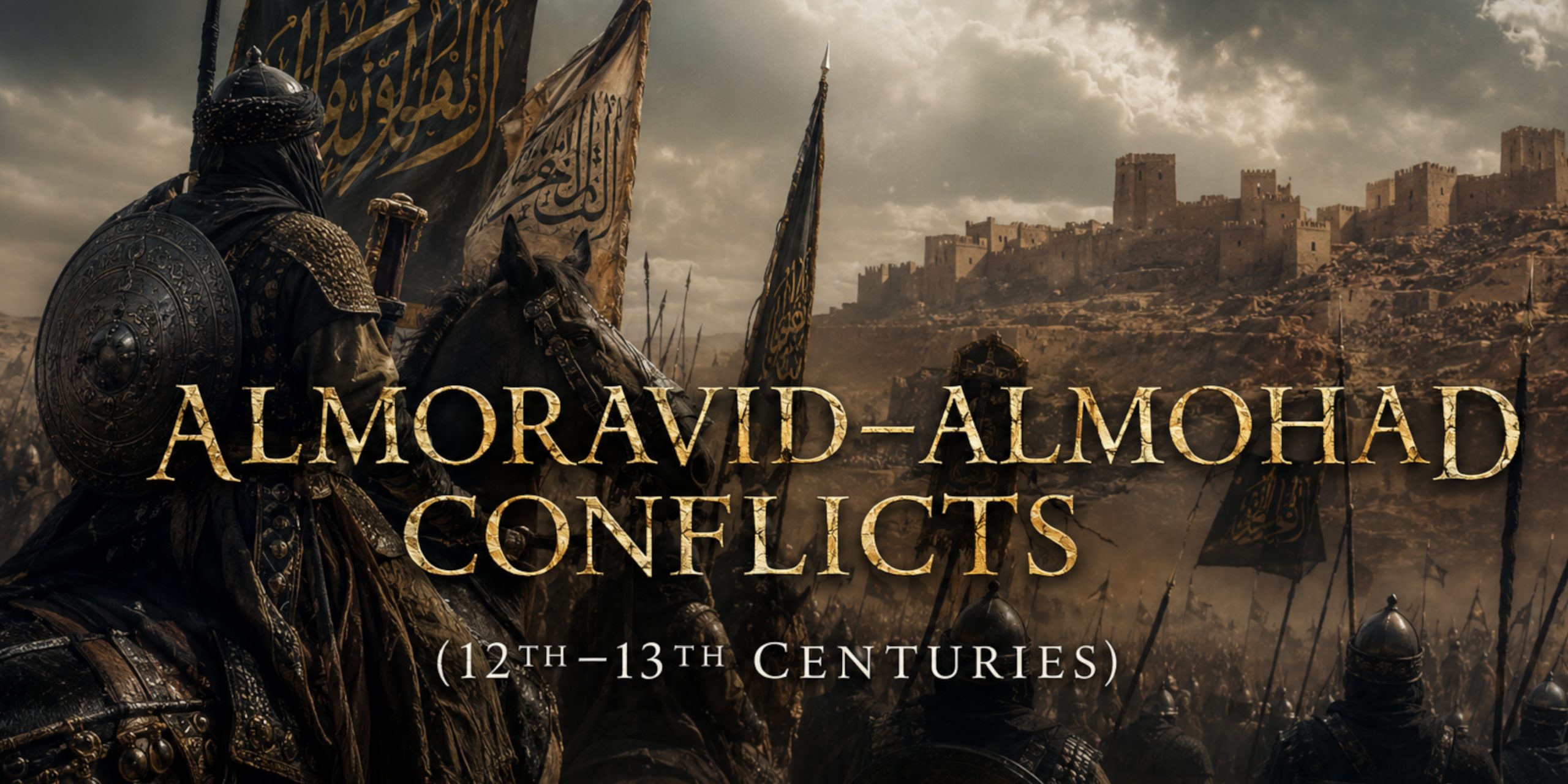
The struggle between the Almoravids and Almohads was not merely a dynastic quarrel between rival North African powers. It was a furious contest over faith, legitimacy, trade, military authority and the future of the western Islamic world. At stake were Morocco, al-Andalus, Saharan trade routes and the right to claim moral leadership over Islam in the Maghreb.
The Almoravids arrived first. Hardened desert reformers from the Sahara, they built an empire stretching from Senegal to Spain. Then came the Almohads, mountain revolutionaries with an even stricter religious vision and a remarkable talent for dismantling everything the Almoravids had built.
The result was decades of siege warfare, tribal revolts, massacres, shifting loyalties and political chaos that reshaped North Africa and Iberia. Medieval chroniclers often described the conflict in apocalyptic terms. One suspects they were not entirely exaggerating.
Origins of the Conflict
The Almoravid movement emerged during the 11th century among the Sanhaja Berber tribes of the Sahara. Guided by religious reformers such as Abdallah ibn Yasin, they promoted a strict interpretation of Sunni Islam rooted in Maliki law.
Their military success was astonishing. By the late 11th century they controlled Morocco, large parts of modern Algeria and much of Islamic Spain.
Yet success created problems.
The Almoravid elite became increasingly urbanised and wealthy. Marrakesh transformed into a sophisticated imperial capital. Courts grew elaborate. Taxes expanded. Critics accused the ruling class of abandoning the austere religious principles that had justified their rise in the first place. History has a habit of doing this. Revolutionary puritans often become precisely the people they once shouted at.
Into this atmosphere stepped Ibn Tumart.
A charismatic Berber preacher from the Atlas Mountains, Ibn Tumart denounced the Almoravids as corrupt and insufficiently Islamic. He declared himself the Mahdi, a divinely guided reformer, and built a revolutionary movement among the Masmuda Berbers.
The Almohad challenge rapidly evolved from theological criticism into open war.
Religious Ideology and Political Power
Religion sat at the centre of the conflict.
The Almoravids defended traditional Sunni orthodoxy and Maliki jurisprudence. Their legitimacy rested on defending Islam against Christian kingdoms in Iberia and maintaining unity across the western Islamic world.
The Almohads considered this insufficient.
Ibn Tumart promoted a more radical doctrine emphasising divine unity, strict monotheism and rejection of what he saw as theological compromise. Almohad ideology also attacked anthropomorphic interpretations of God and condemned scholars who tolerated them.
This ideological divide became politically explosive.
To the Almohads, defeating the Almoravids was not simply rebellion. It was purification.
Contemporary chroniclers describe fiery sermons, public denunciations and purges against those who refused Almohad doctrine. Some cities surrendered peacefully. Others were stormed with grim enthusiasm.
The Rise of the Almohad War Machine
After Ibn Tumart’s death around 1130, leadership passed to Abd al-Mu’min, arguably one of the most formidable rulers in medieval North African history.
He transformed a mountain religious movement into a disciplined imperial army.
Almohad forces combined:
- Masmuda Berber tribal infantry
- Cavalry from allied North African groups
- Andalusian troops
- Religious zealots loyal to the movement
- Skilled siege engineers
Their armies moved aggressively across Morocco, targeting Almoravid strongholds one by one.
The Almoravids fought stubbornly, but their empire was overstretched. Tribal loyalties fractured. Garrisons fell. Rivals sensed weakness. Meanwhile Christian kingdoms in Iberia were pressing southward.
It was an exceptionally inconvenient moment for an empire to collapse.
Key Battles of the Almoravid–Almohad Conflicts
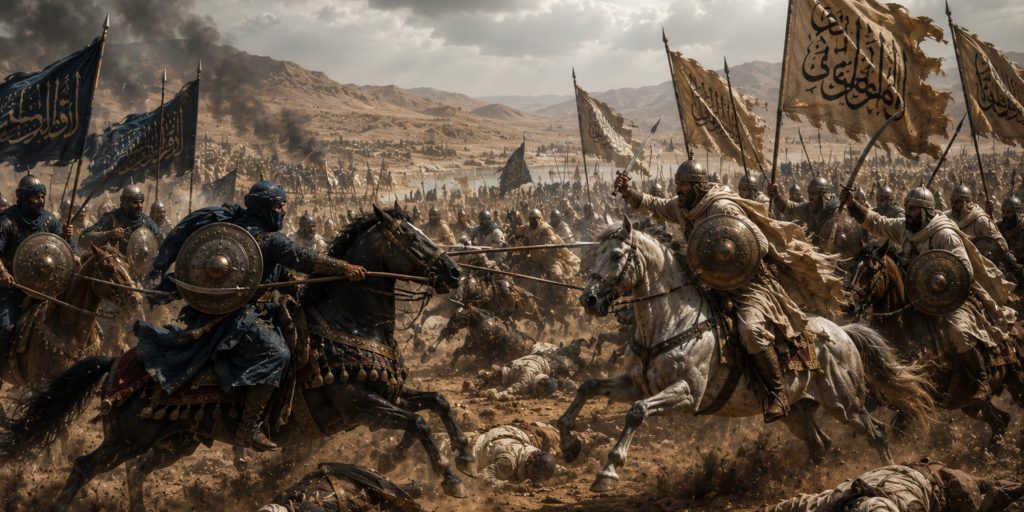
Battle of al-Buhayra (1130)
One of the earliest major clashes occurred near Marrakesh.
The Almohads attempted to strike directly at the Almoravid capital but suffered a severe defeat. Almoravid cavalry and defensive organisation proved highly effective, and the Almohads lost many experienced fighters.
Yet the victory only delayed the inevitable.
The Almoravids failed to crush the movement completely, allowing the Almohads time to regroup in the Atlas Mountains.
Siege and Fall of Marrakesh (1147)
The decisive moment came with the Almohad capture of Marrakesh.
After prolonged campaigning and siege warfare, Almohad forces entered the city in 1147. The last Almoravid ruler, Ishaq ibn Ali, was killed during the collapse.
Contemporary sources describe massacres following the conquest, particularly against officials and religious scholars associated with the Almoravid regime.
The fall of Marrakesh effectively ended Almoravid imperial power.
The Almohads inherited their territories, armies and problems.
As many conquerors eventually discover, ruling an empire is considerably harder than dramatically conquering one.
Campaigns in al-Andalus
The conflict spilled into Islamic Spain.
Both dynasties viewed al-Andalus as essential. It provided prestige, revenue and strategic depth against Christian kingdoms such as Alfonso VII and later Alfonso VIII.
Almohad armies crossed repeatedly into Iberia during the 12th century. Their victories temporarily restored Muslim military power in the peninsula.
The most famous success came later at the:
- Battle of Alarcos (1195)
Here the Almohads inflicted a devastating defeat on Castilian forces. Contemporary Muslim chroniclers celebrated it as divine vindication.
Yet triumph proved temporary.
The later defeat at the Battle of Las Navas de Tolosa in 1212 shattered Almohad dominance in Iberia and accelerated imperial decline.
Arms, Armour and Warfare
The wars reflected the military culture of the western Islamic world during the High Middle Ages.
Almoravid and Almohad armies used:
- Straight double-edged swords
- Curved saif blades
- Spears and javelins
- Composite bows
- Large leather shields
- Chain mail and lamellar armour
- Turban helmets and conical iron helmets
Cavalry remained decisive, particularly among elite Berber and Andalusian forces.
Almoravid armies were heavily influenced by Saharan mobility and desert warfare traditions. Almohad forces incorporated greater administrative organisation and increasingly sophisticated siege tactics.
Contemporary accounts frequently mention drums, banners and religious chanting before battle. Medieval warfare in the Maghreb was rarely quiet. Entire armies announced themselves with enough noise to frighten livestock several valleys away.
Archaeology and Material Evidence
Archaeological evidence from the Almoravid and Almohad periods continues to reshape understanding of the conflict.
Excavations in Marrakesh have uncovered:
- Almoravid defensive structures
- Urban walls and gates
- Pottery workshops
- Water systems
- Military architecture later modified by Almohads
The Almoravid Qubba in Marrakesh remains one of the finest surviving architectural examples from the period.
Meanwhile Almohad construction projects reveal the scale of their ambitions. Their rulers built monumental mosques, fortifications and administrative centres across North Africa and Iberia.
Archaeologists working in Seville and Rabat have linked surviving structures to Almohad military and political expansion.
Weapons fragments, horse equipment and ceramics from fortified sites help reconstruct patterns of warfare and trade.
Coinage has proven especially valuable. Almohad coins often carried ideological inscriptions reflecting the movement’s religious identity and political messaging.
Even medieval states understood branding.
Contemporary Quotes
The medieval chronicler Ibn Idhari described the Almohad rise with a mixture of awe and dread:
“The people rallied to Ibn Tumart in countless numbers.”
Meanwhile Ibn Khaldun later reflected on the collapse of dynasties in the Maghreb with observations that fit the Almoravid experience rather neatly:
“Luxury corrupts royal authority.”
A Christian chronicler writing after Almohad victories in Iberia remarked:
“The earth trembled beneath their multitude.”
Medieval chroniclers were fond of dramatic phrasing, though to be fair, large cavalry armies probably did make quite an impression.
Decline of the Almohads
Ironically, the Almohads eventually suffered many of the same problems that had weakened the Almoravids.
Internal rivalries intensified. Tribal unity fractured. Provincial governors gained autonomy. Defeats in Iberia damaged prestige and finances.
By the mid-13th century, Almohad authority had largely collapsed.
Successor dynasties emerged across the Maghreb, including the Marinids in Morocco and the Hafsids in Tunisia.
The western Islamic world fragmented into competing states once again.
Legacy of the Conflicts
The Almoravid–Almohad conflicts transformed North Africa and medieval Spain.
They shaped:
- The religious culture of the Maghreb
- The political structure of Morocco
- Islamic military organisation in Iberia
- Trade across the Sahara
- Urban development in Marrakesh and Seville
- Relations between Berber tribes and imperial authority
The wars also revealed a recurring pattern in medieval history. Reform movements often rise through promises of purity and justice, then struggle to avoid becoming the very systems they overthrew.
The Almoravids and Almohads left behind remarkable architecture, complex intellectual traditions and some of the most dramatic military campaigns of the medieval western Islamic world.
They also left a cautionary tale about power, certainty and the difficulty of governing empires held together by faith and conquest.
Which, frankly, rarely ends quietly.