The New Model Army was not simply another force raised in the long tradition of English warfare. It was a deliberate break with that tradition, a professional army built in the middle of a civil war that had already gone badly wrong for Parliament. Formed in 1645, it brought discipline, ideology, and an unsettling sense of purpose to the battlefield.
As a historian, I often think of it as the moment England realised that war could be organised rather than improvised. That may sound obvious, but for much of the 17th century, it plainly was not.
Origins and Formation
By 1644, Parliament’s war effort against King Charles I was faltering. Regional armies lacked coordination, commanders were entangled in politics, and victories were inconsistent at best. The solution came in the form of the Self-Denying Ordinance, which forced Members of Parliament to resign military commands.
This cleared the way for a new kind of army.
The New Model Army was established in early 1645 under the leadership of Sir Thomas Fairfax, with Oliver Cromwell emerging as its most formidable cavalry commander. It was centrally funded, nationally recruited, and structured with a clarity that earlier forces lacked.
This was not a feudal host or a loose coalition. It was something closer to what we would recognise as a modern standing army.
Structure and Organisation
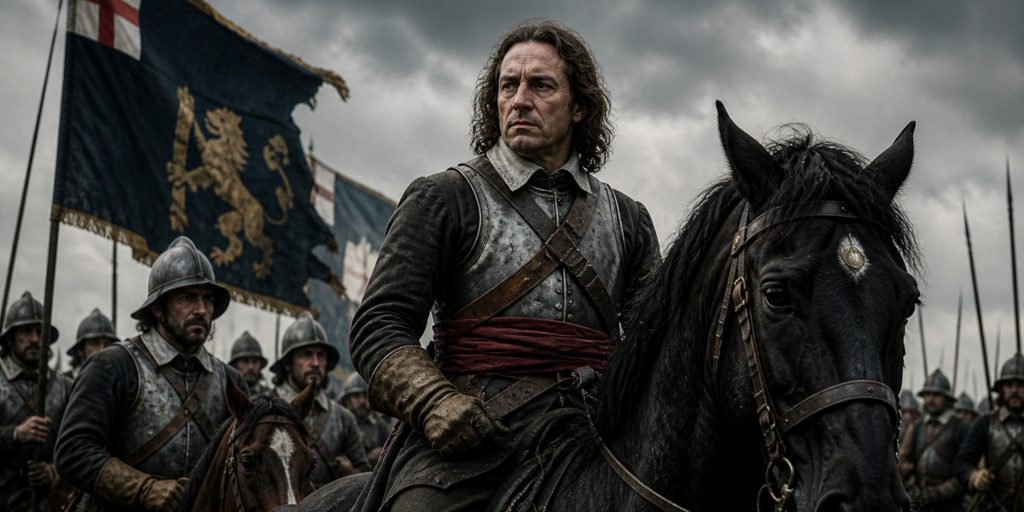
The army was standardised in a way that would have seemed almost radical at the time.
- Around 22,000 men at full strength
- Divided into infantry, cavalry, and dragoons
- Officers appointed on merit rather than solely on birth
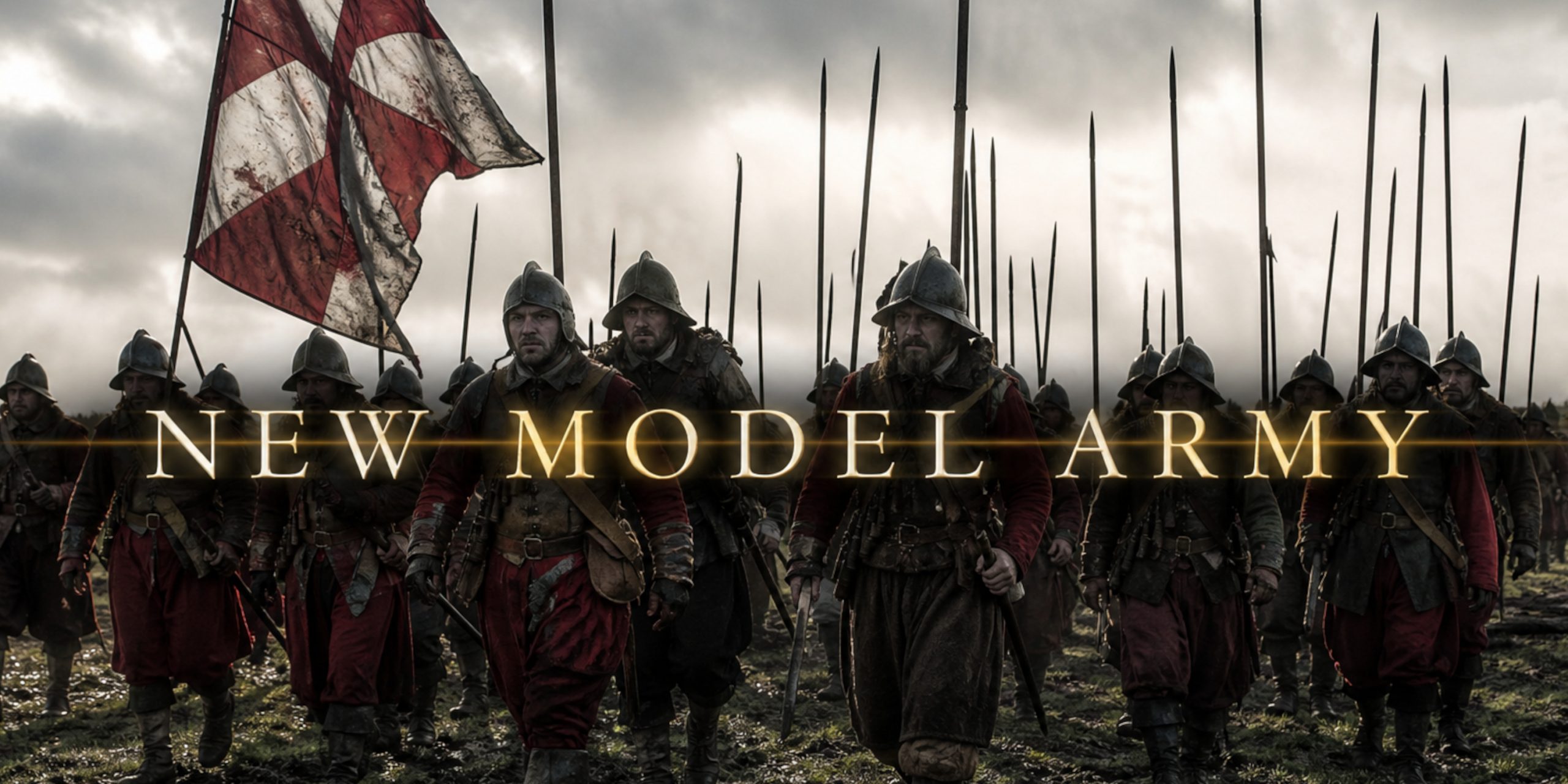
Infantry regiments were the backbone, typically armed with muskets and pikes. Cavalry, often associated with Cromwell’s Ironsides, were trained to charge in disciplined formations rather than dissolve into chaotic pursuit.
Uniformity extended even to clothing. Soldiers were issued red coats, one of the earliest examples of a standardised military uniform in England. Practical, visible, and rather symbolic, it hinted at unity in a country tearing itself apart.
Belief and Motivation
What truly set the New Model Army apart was not just its structure, but its mindset.
Many soldiers were driven by strong Protestant beliefs, particularly Puritanism. They saw themselves not merely as fighters, but as instruments of divine will. Sermons, prayer meetings, and religious debate were part of army life.
This produced a force that was both disciplined and deeply ideological. A combination that tends to make historians slightly nervous.
It also made the army politically aware. Soldiers discussed governance, rights, and the future of England with a seriousness that went well beyond their official role.
Discipline and Conduct
Discipline was strict, sometimes brutally so.
- Looting and mistreatment of civilians were punished
- Regular pay was prioritised, though not always delivered on time
- Training was consistent and enforced
There was an expectation that soldiers would behave as representatives of a cause, not just participants in a conflict. That expectation was not always met, but it was certainly more than lip service.
Compared to many contemporary armies, the New Model Army had a reputation for restraint. Not perfect restraint, of course, but enough to be noticed.
Battlefield Performance
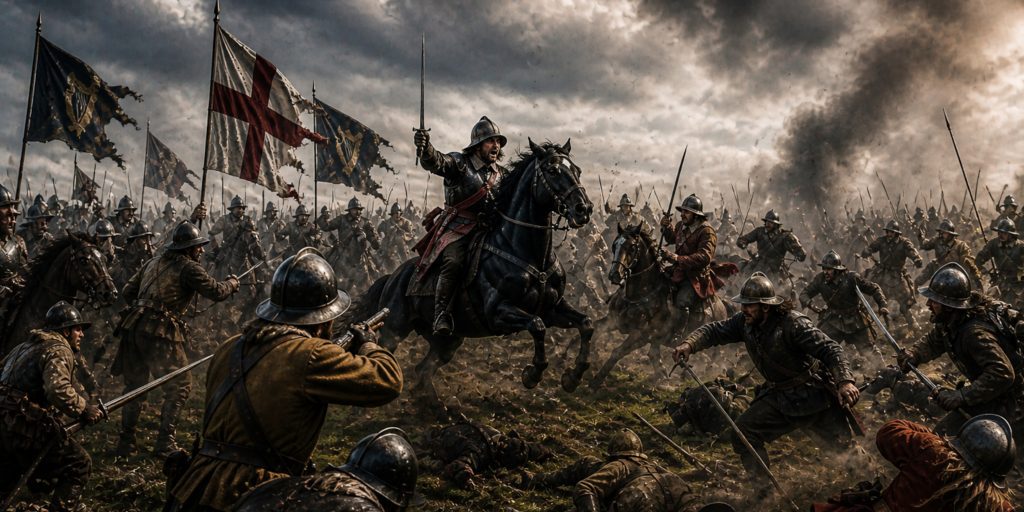
The army’s impact was immediate and decisive.
Its most famous victory came at the Battle of Naseby in 1645, where it effectively shattered the main Royalist field army. The discipline of its infantry and the controlled aggression of its cavalry proved overwhelming.
Subsequent campaigns saw the New Model Army tighten its grip across England. By 1646, the First English Civil War was largely decided.
One cannot help but admire the efficiency, even while acknowledging the grim reality behind it.
Political Power and Influence
After the war, the New Model Army did not quietly disband. That would have been far too convenient.
Instead, it became a powerful political force. Soldiers demanded back pay, legal protections, and a voice in the settlement of the kingdom. This led to a series of debates and confrontations with Parliament.
The army played a direct role in the events that led to the trial and execution of Charles I in 1649. That is a remarkable sentence to write, even now.
An army, created to defend Parliament, ultimately reshaped the state itself.
Legacy
The New Model Army left a lasting mark on British military and political history.
- It demonstrated the effectiveness of a professional, centrally organised army
- It blurred the line between military and political authority
- It contributed to the temporary establishment of a republic under Cromwell
Its influence can be traced in the later development of the British Army, though not always comfortably. Standing armies, after all, have a habit of raising difficult questions about power and control.
Takeaway
The New Model Army was efficient, principled, and at times unsettlingly self-assured. It fought with conviction and, on occasion, governed with it too.
There is a temptation to see it as either heroic or dangerous. In truth, it was both. A product of crisis that became something larger than its creators intended.
If there is a lesson here, it is that armies built to win wars do not always stop at the battlefield. History rarely grants us such neat endings, and the New Model Army is a fine example of that enduring inconvenience.