Hamilcar Barca does not enjoy the same immediate recognition as his son, yet without him there is no Hannibal as history remembers him. He emerges from the record in the darkest hour of Carthage’s fortunes during the First Punic War and refuses to accept decline as inevitable. That alone sets him apart.
To read the ancient sources is to sense a man who preferred action over ceremony, calculation over bravado. He was not merely holding the line against Rome. He was reshaping how Carthage fought.
Background and Rise to Command
Hamilcar came from the Barcid family, a lineage that would become synonymous with resistance to Rome. His rise coincided with Carthage’s struggle to maintain its position in Sicily against a relentless Roman advance.
By the later stages of the First Punic War, Carthage had suffered repeated naval defeats. The war might have been lost outright if not for Hamilcar’s appointment. He took command in Sicily around 247 BC and immediately shifted the tone of the conflict.
Rather than attempt to match Rome in set piece battles, he turned to mobility, terrain, and surprise. It was not a romantic approach. It was practical, almost stubbornly so.
Arms and Armour
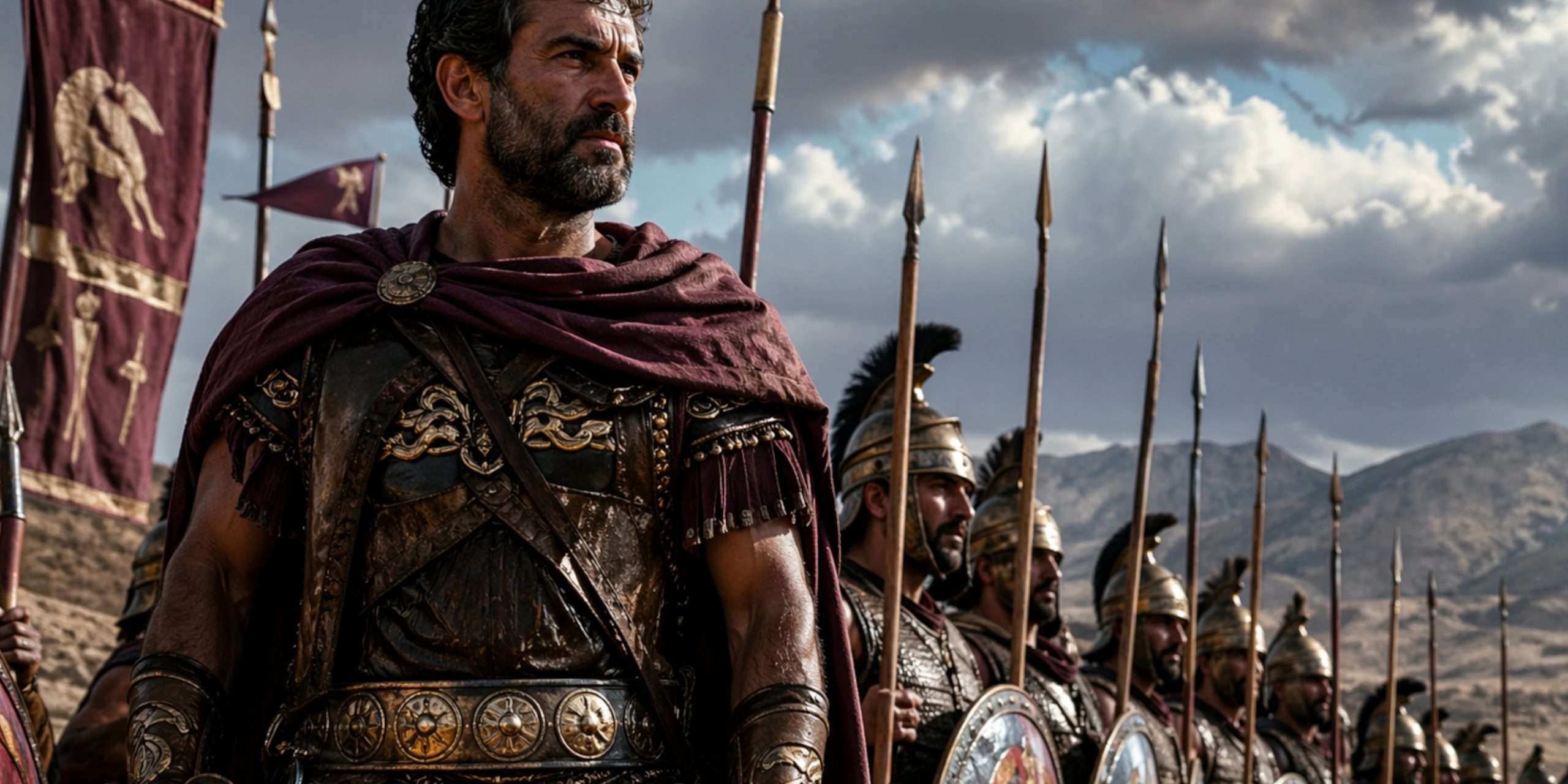
Carthaginian armies under Hamilcar were not uniform in appearance or equipment. They were a composite force drawn from across the western Mediterranean.
Core Equipment and Troop Types
- Infantry
- Libyan heavy infantry equipped with long spears and large shields
- Iberian warriors using short swords similar to the later gladius
- Light troops with javelins for skirmishing
- Cavalry
- Numidian light cavalry, fast and elusive, armed with javelins
- Iberian and Libyan cavalry with heavier gear for shock action
- Command and Elite Elements
- Officers likely wore bronze helmets and cuirasses, often influenced by Greek styles
- Round shields and spears remained standard for leadership figures
Weapons in Use
- Short slashing swords from Iberia
- Spears and javelins for both close combat and ranged harassment
- Large round or oval shields, often decorated but built for durability
Hamilcar’s real weapon, though, was how he used these men. He did not rely on a single arm of the army. He blended them, letting each do what it did best.
Campaigns in Sicily
Hamilcar’s Sicilian campaign reads like a lesson in controlled aggression. He established a base at Mount Heircte, a strong natural position overlooking the coast. From there, he launched raids that harassed Roman supply lines and morale.
Key Features of His Strategy
- Avoidance of large scale pitched battles
- Use of high ground and fortified camps
- Rapid strikes followed by withdrawal
- Psychological pressure through unpredictability
Later, he shifted operations to Mount Eryx, maintaining pressure despite limited resources. It was a stubborn campaign, perhaps even defiant to the point of frustration for Roman commanders.
One cannot help but admire the discipline required. Many generals talk of patience. Few sustain it under such pressure.
The Mercenary War and Ruthless Efficiency
After the First Punic War ended in defeat for Carthage, a new crisis erupted. Unpaid mercenaries revolted, turning on their former employers in what became a brutal and chaotic conflict.
Hamilcar was recalled and given command. His approach was direct and uncompromising.
His Conduct in the War
- Rapid reorganisation of loyal forces
- Strategic use of negotiation followed by decisive betrayal when necessary
- Harsh reprisals to discourage further rebellion
Ancient writers describe the war as one of exceptional cruelty. Hamilcar did not shrink from this. He understood that hesitation could mean the destruction of Carthage itself.
It is here that his character becomes clearer. He was not needlessly cruel, but he was prepared to be when the situation demanded it.
Expansion into Iberia
Hamilcar’s most lasting achievement came after internal stability was restored. He turned to Iberia, not as a refuge, but as a foundation for future strength.
Objectives in Iberia
- Secure mineral wealth, especially silver
- Recruit and train new armies
- Establish a power base independent of Carthaginian politics
Over several years, he expanded Carthaginian influence across southern Iberia. This was not mere conquest. It was preparation.
He died in battle around 228 BC, reportedly while leading a rearguard action during a retreat. Even in death, he was fighting.
Military Acumen
Hamilcar’s reputation rests on more than resilience. His methods reveal a commander who understood limits and exploited them.
Defining Traits
- Mastery of irregular warfare
- Strong use of terrain and defensive positioning
- Integration of diverse troop types
- Willingness to adapt rather than force outcomes
He lacked the resources of Rome, yet managed to prolong resistance and preserve Carthaginian military credibility.
There is a quiet intelligence to his approach. He did not chase glory. He pursued advantage.
Archaeology and Material Evidence
Physical evidence of Hamilcar’s campaigns is scattered but telling.
Key Archaeological Insights
- Fortified positions in western Sicily linked to Carthaginian occupation
- Iberian sites showing increased Carthaginian presence and military organisation
- Coinage from Iberia reflecting Barcid authority and economic expansion
Excavations in southern Spain have revealed mining operations and settlement patterns that align with the Barcid strategy of resource extraction and control.
These finds do not shout his name, but they reflect his design.
Where to See Artefacts Today
Material connected to Hamilcar’s world is dispersed across several major collections.
- Museums in Carthage, modern Tunisia, housing Punic artefacts and inscriptions
- Collections in Spain, particularly in regions linked to Barcid expansion
- European museums with Punic military equipment, coins, and inscriptions
While no display case is labelled with his personal belongings, the broader Carthaginian material culture offers a tangible link to the world he shaped.
Legacy
Hamilcar’s greatest legacy is not a battlefield victory. It is continuity.
He ensured that Carthage did not simply fade after defeat. He rebuilt its strength, secured new resources, and raised a generation that would challenge Rome again.
His son Hannibal inherited more than command. He inherited a strategy, a mindset, and perhaps a sense of unfinished business.
There is a tendency to see Hamilcar as a prelude. That does him a disservice. He was the foundation.
Takeaway
Studying Hamilcar Barca leaves an impression of restraint paired with intensity. He was not a grandstanding figure. He was something more useful, a commander who understood survival before triumph.
History often celebrates the dramatic victory. Hamilcar reminds us that endurance, properly applied, can shape events just as profoundly.
And perhaps more quietly, he teaches that the most dangerous legacy is not what a man achieves, but what he sets in motion.