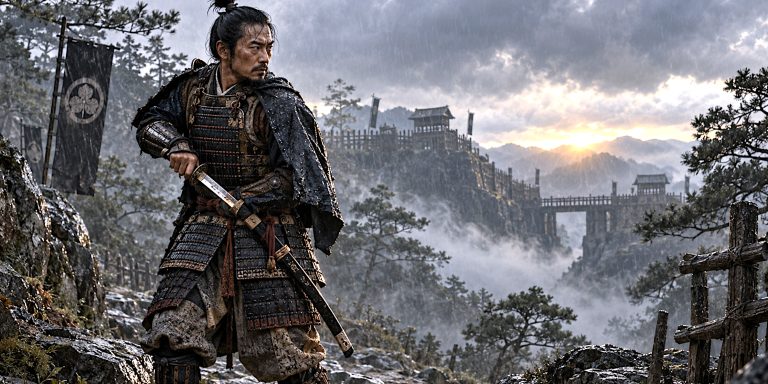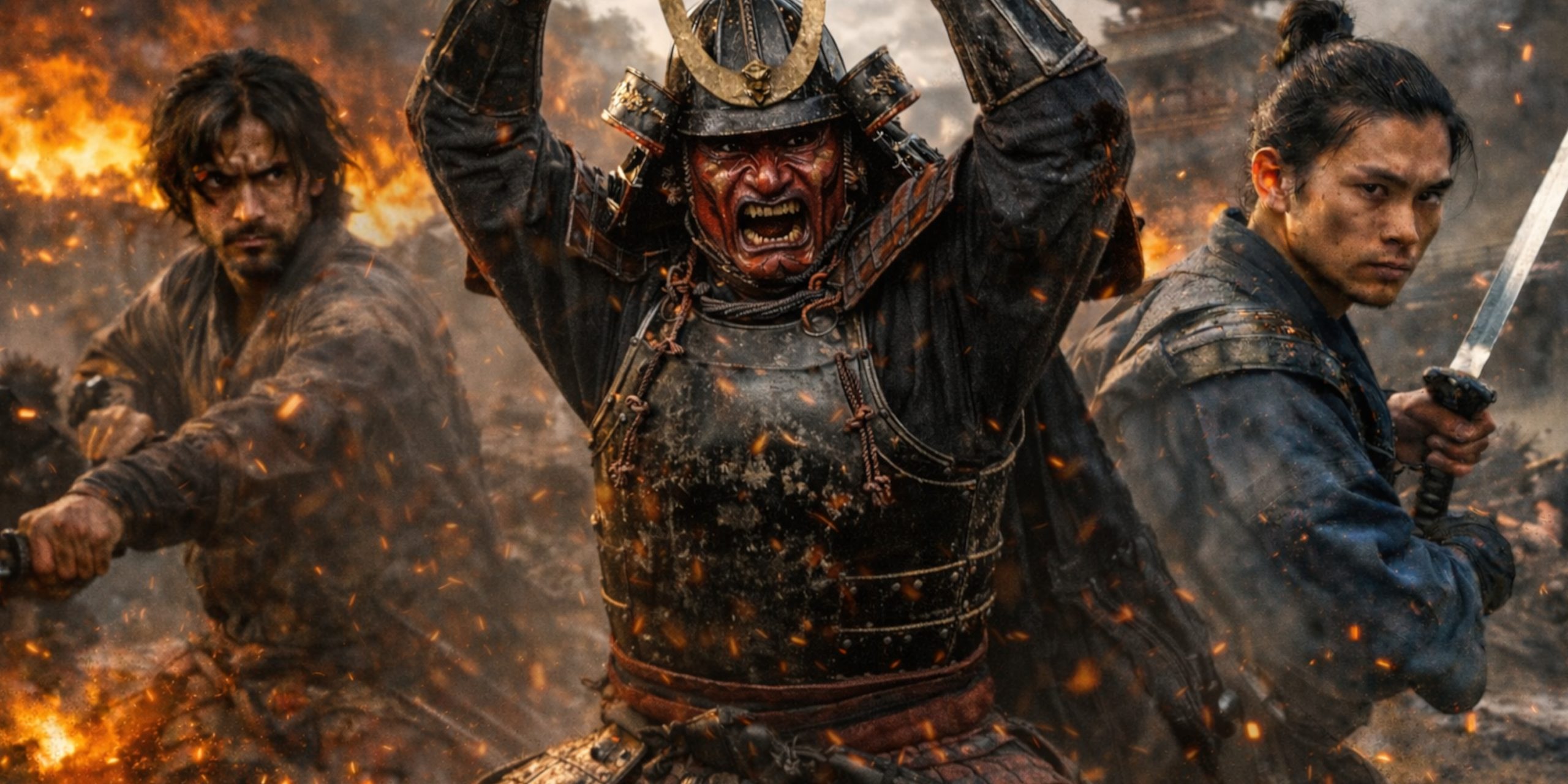
If you have ever watched a samurai stride slowly through a village while everyone else suddenly remembers they left the oven on, this list is for you.
Samurai television has a strange magic. One minute it is all politics, honour and quietly judging someone for holding a teacup incorrectly. The next, somebody gets launched through a paper wall and you are sitting upright like you have just heard your own name in a crowded room.
The best samurai series do far more than sword fights. They capture the tension of feudal Japan, the pressure of loyalty, the danger of ambition and the quiet terror of being the one poor messenger who has to tell a warlord that things have gone badly.
Below is a ranked list of the very best samurai TV series, from legendary classics to newer shows that prove there is still plenty of life in the genre.
What Makes a Great Samurai Series?
A great samurai show needs at least three things:
- Characters who feel like real people, not walking philosophy quotes with swords
- A world that feels lived in, muddy, political and occasionally deeply unfair
- Sword fights that actually mean something
The best series understand that a duel is only interesting if you care who walks away. A samurai drama without stakes is just two men aggressively rearranging the air.
15. House of Ninjas
House of Ninjas is technically more ninja than samurai, but it still deserves a place here because it taps into the same world of tradition, family duty and ancient codes colliding with modern life.
The series follows the Tawara family, former ninjas who are dragged back into a dangerous conflict. Think family drama mixed with espionage, then throw in enough stealth scenes to make you suddenly believe every dark hallway in your house is suspicious.
Why it works:
- Stylish modern take on Japanese warrior traditions
- Strong family dynamic
- Surprisingly emotional beneath the action
It is not a pure samurai series, but it scratches a similar itch.
14. Samurai Gourmet
This one is the oddball on the list. There are no epic battles. No warlords. Nobody dramatically stares at a mountain before making an important decision.
Instead, Samurai Gourmet follows a retired man who imagines his inner samurai guiding him through everyday life, mostly while eating lunch.
It sounds ridiculous. It is ridiculous. It is also weirdly brilliant.
Watching a man approach a bowl of ramen with the intensity of a duel is somehow both funny and strangely moving.
Why it works:
- Charming and genuinely funny
- Clever use of samurai ideals in modern life
- The easiest show on this list to watch in one sitting while becoming dangerously hungry
13. The Samurai Trilogy TV Adaptations
Several Japanese television adaptations of the famous Musashi story have appeared over the years, usually based on Eiji Yoshikawa’s novel. They follow Miyamoto Musashi from reckless young fighter to disciplined swordsman.
The story itself is one of the foundations of samurai fiction. A talented warrior learns, usually the hard way, that being good with a sword and being wise are not remotely the same thing.
Some versions are better than others, but the Musashi adaptations remain essential if you want to understand where half of modern samurai stories got their ideas.
12. Hyouge Mono
If you think samurai series are all duels and battlefield speeches, Hyouge Mono is here to surprise you.
This anime follows Furuta Sasuke, a samurai obsessed with tea ceremonies, art and status during the age of Oda Nobunaga.
Yes, there are politics and war. There is also an alarming amount of discussion about pottery.
Oddly, it works.
The show turns art, ceremony and social ambition into something just as tense as battle. It is basically a samurai drama for people who enjoy watching somebody silently judge a vase.
11. Age of the Samurai: Battle for Japan
This documentary-drama series covers the rise of Oda Nobunaga, Toyotomi Hideyoshi and Tokugawa Ieyasu.
If you have ever watched a samurai series and thought, “Wait, who is this bearded man shouting at everyone and why are people terrified of him?” this is the perfect place to start.
The show combines interviews, narration and dramatic reenactments. The historical detail is strong, even if some of the slow-motion sword scenes occasionally feel like the producers discovered fog machines and became emotionally attached.
Why it works:
- Great introduction to the Sengoku period
- Clear and accessible storytelling
- Useful background before watching more complex samurai dramas
10. Zatoichi
Zatoichi began as a film and television phenomenon, following the blind swordsman Ichi as he wanders through Japan helping the vulnerable and humiliating criminals.
The TV series version captures everything that makes the character great. Ichi appears harmless, people underestimate him, then a few moments later they are making some very poor life choices.
There is something timeless about Zatoichi. He is part folk hero, part wandering ronin, part man who just wants five minutes of peace and absolutely never gets it.
9. Shigurui: Death Frenzy
This anime is not for everyone.
Shigurui is brutal, bleak and occasionally feels like it was designed by someone who looked at normal samurai stories and decided they were not emotionally devastating enough.
The story follows two warriors locked in a deadly rivalry. The atmosphere is oppressive, the violence is harsh and every character seems one bad day away from complete disaster.
Still, it is one of the most powerful and visually striking samurai series ever made.
Why it works:
- Extraordinary art style
- Uncompromising look at violence and obsession
- One of the darkest samurai stories on television
8. Blue Eye Samurai
Blue Eye Samurai arrived with very high expectations and somehow managed to exceed them.
The series follows Mizu, a mixed-race swordswoman seeking revenge in Edo-period Japan. The animation is gorgeous, the action is sharp and the writing gives every major character enough depth to feel human.
Most importantly, Mizu is the sort of protagonist who is impossible to ignore. She is furious, stubborn, clever and so committed to revenge that she makes most action heroes look like they are merely running errands.
Why it works:
- Stunning animation
- Great fight choreography
- Strong emotional core beneath the violence
There are very few modern samurai series that feel this fresh.
7. Rurouni Kenshin
The original anime version of Rurouni Kenshin remains one of the most beloved samurai series ever made.
Kenshin Himura is a former assassin trying to leave violence behind. Naturally, the universe responds to this decision by sending absolutely everyone with a sword directly into his path.
The mix of humour, emotion and action still works decades later. Kenshin is an excellent lead because beneath the red hair and polite smile is somebody carrying a frankly alarming amount of emotional damage.
The Kyoto arc in particular is outstanding. If you reach that part and do not immediately want to watch the next episode, you may have accidentally become a statue.
6. The Makanai: Cooking for the Maiko House
This is not a samurai series in the traditional sense, but it captures the same fascination with Japanese tradition, ritual and quiet human drama.
The show follows two girls in Kyoto, one training to become a maiko and the other finding her place through cooking.
It earns a place here because if you love the atmosphere of historical Japanese storytelling, this series feels like stepping into that world without the constant risk of being challenged to a duel before breakfast.
It is gentle, beautifully made and strangely addictive.
5. Sanada Maru
Sanada Maru is one of the best modern Japanese historical dramas. It follows Sanada Yukimura during the final years of the Sengoku period and the rise of Tokugawa power.
The strength of the show is its balance. It has political scheming, battlefield drama, humour and enough family tension to make every dinner scene feel like somebody should maybe hide the knives.
Yukimura himself is fascinating because he is not presented as a flawless hero. He is clever, loyal and brave, but he also makes mistakes and struggles with impossible choices.
If you want a series that captures the complexity of samurai history, start here.
4. Musashi
The 2003 NHK series Musashi is one of the definitive television versions of Japan’s most famous swordsman.
Based on the life of Miyamoto Musashi, the series follows his journey from reckless youth to legendary warrior.
What makes this version stand out is the way it slows down and lets Musashi grow. He is not instantly wise or unstoppable. In fact, early on he spends a surprising amount of time making very questionable decisions.
Which, to be fair, is far more believable.
The battles are strong, the historical detail is excellent and the central performance gives Musashi a real sense of humanity.
3. Lone Wolf and Cub
Lone Wolf and Cub is one of the great samurai stories in any medium.
The television version follows Ogami Ittō, a disgraced executioner travelling across Japan with his young son while seeking revenge.
There is something unforgettable about the image of a silent ronin pushing a child in a cart while somehow also being the most dangerous man in every room.
The series has action, tragedy and a sense of loneliness that gives it surprising emotional weight. It also has some of the coolest sword fights in the genre, which certainly does not hurt.
2. Shōgun
The recent version of Shōgun is extraordinary.
Set in early seventeenth-century Japan, the series follows the arrival of English sailor John Blackthorne and his relationship with Lord Toranaga.
The political intrigue is brilliant. Every conversation feels dangerous. Half the cast can destroy your life with nothing more than a polite smile and a carefully timed pause.
The real star of the show, though, is the world itself. The series feels rich, detailed and utterly convincing. It treats Japanese history and culture with respect while still delivering drama that is impossible to stop watching.
There are battles, but the quiet scenes are often even more powerful. One look across a room can carry more tension than an entire battle sequence in some other shows.
1. It Has to Be Shōgun 1980 and the Original Samurai Epics
For pure influence, the original generation of classic samurai television still sits at the top.
The 1980 version of Shōgun changed how Western audiences saw samurai stories. Alongside long-running Japanese period dramas such as Mito Kōmon and Abarenbō Shōgun, it helped bring the genre to a wider audience.
Yet if one title deserves the top spot overall, it is the original Shōgun.
It has scale, political intrigue, memorable characters and a sense of discovery that still works today. Watching it now is a bit like opening an old history book and realising it is somehow more dramatic than half the shows being made now.
The production may show its age in places. Some wigs look like they lost a fight with the wind. But the writing, performances and atmosphere remain fantastic.
Honourable Mentions
A few more series deserve a mention:
- Mito Kōmon
- Abarenbō Shōgun
- Onihei
- Samurai Champloo
- Peacemaker Kurogane
- Shinsengumi!
- The Yagyu Conspiracy
- The Tale of the Eight Samurai adaptations
- Seven Swords, which is technically a wuxia series rather than a samurai drama, but close enough in spirit that most fans of sword-heavy historical epics will probably enjoy it and how could we not…
- Taiga dramas such as Fūrin Kazan and Gunshi Kanbei
If you finish the main list and somehow still want more samurai television, firstly, excellent. Secondly, these are all worth your time.
Which Samurai Series Should You Watch First?
If you want pure action, start with Blue Eye Samurai or Rurouni Kenshin.
If you want something historical and political, watch Shōgun or Sanada Maru.
If you want a classic wandering swordsman story, go for Zatoichi or Lone Wolf and Cub.
And if you want something genuinely strange but oddly delightful, try Samurai Gourmet. There is a good chance you will end up craving noodles at two in the morning and wondering whether your local café deserves the silent approval of your imaginary inner samurai.
That, honestly, feels like the correct way to end a samurai marathon.