The Battle of Shrewsbury, fought on 21 July 1403, was one of the most brutal clashes of late medieval England. It brought King Henry IV face to face with a rebellion led by Sir Henry “Hotspur” Percy, a warrior whose reputation for courage was already legendary.
Unlike many medieval confrontations where armies spent days manoeuvring before one side slipped away, Shrewsbury became a direct and violent test of power. Two English armies, equipped in similar fashion and fighting with similar methods, collided outside the town. The result was a battle where tactics, leadership and a terrifying exchange of longbow fire mattered more than national identity.
It was also the first major battle where English longbowmen faced each other in large numbers. After decades of using archery to devastating effect against enemies abroad, the English discovered the unpleasant reality of standing on the receiving end.
Background: Why Did The Battle Of Shrewsbury Happen?
Henry Bolingbroke seized the English throne in 1399, removing Richard II and becoming King Henry IV. His rise depended heavily on support from powerful noble families, particularly the Percys of Northumberland.
The relationship quickly deteriorated.
The Percy family believed they had not been properly rewarded for their loyalty, especially after their victories defending northern England against Scottish forces. Arguments over money, prisoners and political influence pushed them towards rebellion.
Key causes included:
- Disputes over ransom payments for Scottish prisoners captured at the Battle of Homildon Hill
- Percy frustration over royal authority in northern England
- Welsh rebellion under Owain Glyndŵr weakening Henry’s position
- Questions over Henry IV’s legitimacy as king
Hotspur marched south hoping to gather allies, but Henry reacted faster than expected and intercepted him near Shrewsbury.
Forces At The Battle Of Shrewsbury
Exact numbers remain debated. Medieval chroniclers often exaggerated figures, but historians generally agree that both armies were similar in size.
| Army | Commander | Estimated Strength | Key Troops |
|---|---|---|---|
| Royal Army | King Henry IV | Around 10,000 to 14,000 | Men-at-arms, knights, longbowmen, infantry |
| Rebel Army | Henry “Hotspur” Percy | Around 8,000 to 12,000 | Northern retainers, Cheshire archers, knights, infantry |
The armies were close enough in strength that leadership and battlefield discipline became decisive.
Leaders And Troop Composition

Royal Forces
| Leader | Role |
| King Henry IV | Overall commander |
| Henry, Prince of Wales (future Henry V) | Commanded part of the royal army |
| Thomas Arundel | Political and religious supporter |
| George Dunbar, Earl of March | Experienced Scottish ally |
Troops included:
- Household knights loyal to the crown
- Professional men-at-arms
- Longbow formations
- Local levies
- Retainers from loyal nobles
The young Prince Henry played a significant role and was famously wounded during the battle.
Rebel Forces

| Leader | Role |
| Sir Henry “Hotspur” Percy | Rebel commander |
| Thomas Percy, Earl of Worcester | Senior Percy advisor |
| Archibald Douglas | Scottish noble and experienced fighter |
Troops included:
- Percy household soldiers
- Northern English veterans
- Cheshire longbowmen formerly associated with Richard II
- Scottish fighters under Douglas
Hotspur’s army was experienced, aggressive and dangerous. Many of these men were hardened border fighters rather than inexperienced rebels.
Arms And Armour Used At Shrewsbury

The Battle of Shrewsbury took place during a transitional period in medieval warfare. Armour was becoming more sophisticated, while battlefield weapons were increasingly designed to defeat heavily protected opponents.
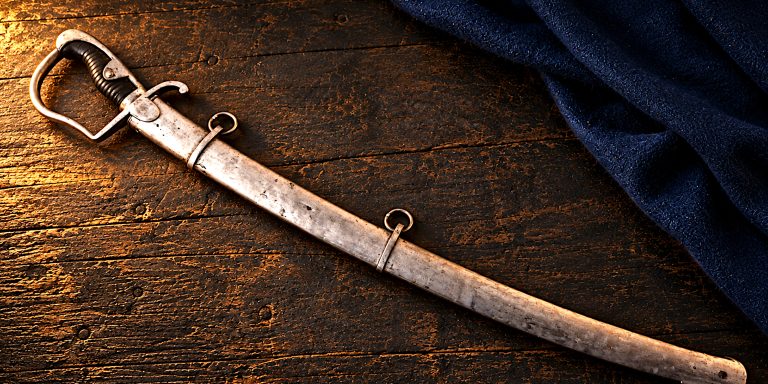
Swords Used
Several sword types would have appeared among knights and men-at-arms.
| Sword Type | Use |
| Arming Sword | One-handed knightly sword used with a shield or buckler |
| Longsword | Two-handed or hand-and-a-half weapon for armoured combat |
| Estoc | Thrusting sword designed to exploit gaps in plate armour |
| Falchion | Single-edged cutting sword used by some infantry |
The sword was still a symbol of status, but by 1403 it was often a secondary battlefield weapon. A knight usually preferred something heavier when facing another man wrapped in expensive metal.
Other Weapons
Longbow
The defining weapon of Shrewsbury.
- Made mainly from yew
- Effective range often over 200 metres
- Used bodkin and broadhead arrows
- Capable of injuring horses and finding armour gaps
The opening arrow exchange was reportedly devastating.
Poleaxe
Favoured by knights fighting on foot.
Advantages:
- Axe blade for striking
- Hammer face for crushing armour
- Spike for thrusting
Billhook And Polearms
Used by infantry to:
- Pull riders from horses
- Break formations
- Attack vulnerable armour joints
Daggers
Weapons such as the rondel dagger were used in close combat, especially against armoured opponents.
Armour At The Battle
Elite fighters wore:
- Bascinet helmets with visors
- Mail aventails protecting the neck
- Plate breastplates
- Arm and leg plate defences
- Gauntlets
- Padded gambesons beneath armour
The early 15th century was moving towards full plate harness, but armour quality varied greatly depending on wealth.
A nobleman might enter battle wearing a fortune in steel. A poorer infantryman might arrive hoping his padded jacket and confidence lasted longer than the first arrow volley.
Battle Timeline

Morning, 21 July 1403
The two armies formed near Shrewsbury. Negotiations were attempted but failed.
Opening Phase
Archers on both sides began shooting.
The exchange was exceptionally fierce because both armies contained skilled English longbowmen.
Main Assault
Hotspur launched an aggressive attack against the royal army.
His forces pushed hard towards Henry IV’s position, attempting to kill the king and end the battle quickly.
Prince Henry Is Wounded
The future Henry V was struck in the face by an arrow.
Remarkably, he survived after a dangerous surgical procedure removed the arrowhead.
Death Of Hotspur
During the fighting, Henry Percy was killed.
His death shattered rebel morale. Without their charismatic commander, resistance collapsed.
Aftermath
The royal army secured victory.
Captured rebel leaders, including Thomas Percy, were executed.
Contemporary Accounts And Quotes
Medieval sources recorded the shock caused by the violence of the battle.
The chronicler Thomas Walsingham described the intensity:
“The arrows fell like leaves in autumn.”
The wound suffered by Prince Henry became one of the most famous medical cases of medieval England. Surgeon John Bradmore later recorded his treatment in Philomena, explaining how a special instrument was created to remove the embedded arrowhead.
Hotspur’s reputation survived defeat. William Shakespeare later transformed him into one of his most memorable characters in Henry IV Part 1, presenting him as courageous, impatient and almost dangerously committed to honour.
Archaeology Of The Battle Of Shrewsbury
The battlefield has been studied through archaeology, landscape analysis and metal detecting surveys.
Findings connected with the battlefield landscape include:
- Arrowheads consistent with medieval military use
- Possible weapon fragments
- Personal objects linked to soldiers
- Evidence helping identify troop positions
Battlefield archaeology remains difficult because:
- Medieval weapons were valuable and often collected after fighting
- Armour was recovered and reused
- The landscape has changed over six centuries
Battlefield Church, built shortly after the battle, remains one of the strongest physical reminders of the conflict.
Where To See Artefacts Connected To The Battle
Shrewsbury Museum And Art Gallery
Visitors can explore the wider medieval history of Shropshire and the Welsh Marches.
Relevant displays include:
- Medieval weapons
- Local archaeological finds
- Objects linked to regional warfare
Battlefield 1403 Site
The battlefield area offers:
- Walking routes
- Historical interpretation
- Views across the original landscape
Royal Armouries, Leeds
Although not displaying a dedicated Shrewsbury collection, it contains outstanding examples of weapons and armour from the same period:
- Longswords
- Poleaxes
- Plate armour
- Longbow-related material
Military Analysis: Why Did Henry IV Win?
Henry IV’s victory came down to several factors.
Speed
The king reacted quickly and stopped Hotspur from gathering more support.
Experience
The royal army contained capable commanders and disciplined troops.
Survival Of Command
Hotspur’s attack almost worked, but Henry IV survived. Medieval battles often collapsed once a leader died.
Hotspur’s Death
The loss of the rebel commander was decisive. His personal courage was unquestionable, but charging into the centre of a medieval battlefield was not exactly a long-term career strategy.
Legacy Of The Battle Of Shrewsbury
The battle secured Henry IV’s throne at a critical moment and proved the Lancastrian dynasty could survive internal rebellion.
For Prince Henry, later Henry V, Shrewsbury became part of his warrior reputation. The young prince who survived an arrow wound would later lead England at Agincourt.
For Hotspur, defeat created a different kind of immortality. He failed politically, but his image as the fearless medieval knight endured through history and literature.
Shrewsbury remains fascinating because it was not a simple story of good against evil. It was a clash between ambitious, talented and ruthless men fighting over loyalty, power and legitimacy. Medieval England rarely produced tidy heroes, but it certainly produced unforgettable characters.